REVIEW · TOMAR
Coimbra: Knight Templar route
Book on GetYourGuide →Operated by Epicocentro · Bookable on GetYourGuide
Templars built more than monuments. This Coimbra route is a tight, story-driven walk through Castelo de Soure and the Convento de Cristo, where the Knights Templar’s military faith meets Portugal’s royal politics. I especially like how the guide ties the Knights to pilgrim protection in Holy Land and Santiago, and how you get real on-site context instead of vague legends. One possible drawback: it’s history-heavy and moves at a brisk pace in just five hours.
You’ll ride with transportation included and stay in a very small group (up to 4), which makes questions easy and keeps the guide from rushing your pace. It’s also led live in Portuguese or English, so you get explanations that actually match what you’re seeing.
If you’re the type who enjoys how big political alliances formed out of personal friendships, you’ll probably enjoy this route a lot. If you want a purely scenic day with minimal talking, this one may feel more lecture than sightseeing.
In This Review
- Key takeaways before you go
- The Knights Templar story, focused on Portugal (not just slogans)
- Castelo de Soure: the first Templar castle in Portugal
- Convento de Cristo: the Templars’ largest treasure
- The Afonso Henriques connection: power built on personal friendship
- What 5 hours feels like in real life
- Price and value: is $188 per person worth it?
- Guide style and language: what to expect from the experience
- Practical prep: what to bring for a comfortable 5 hours
- Who should book this Knight Templar route from Coimbra?
- Should you book? My decision guide
- FAQ
- How long is the Coimbra Knight Templar route?
- What sites are included on this tour?
- What languages is the guided tour offered in?
- How big is the group?
- Is transportation included?
- What is the cancellation policy?
Key takeaways before you go
- Castelo de Soure as a starting point: See the first Templar-built castle in Portugal and hear how it fit their mission.
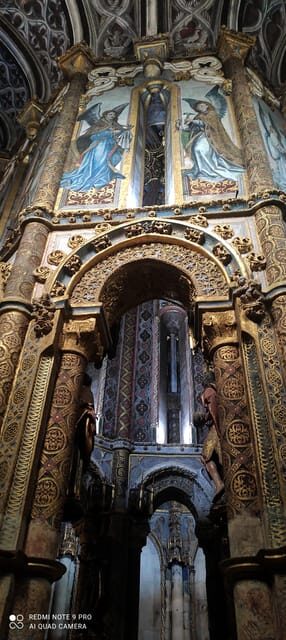
- Convento de Cristo as the payoff: Focus on the Templars’ biggest treasure on this route.
- The Afonso Henriques friendship thread: Learn how Templar master Gualdim País connected with King D. Afonso Henriques.
- Small group touring (max 4): Easier questions, less waiting, and a calmer pace.
- A guide who can handle architecture talk: If your guide covers Manueline details, you’ll get more out of the stop at Convento de Cristo.
- Comfort matters for 5 hours: Good shoes and water are not optional on days with walking + transfers.
The Knights Templar story, focused on Portugal (not just slogans)
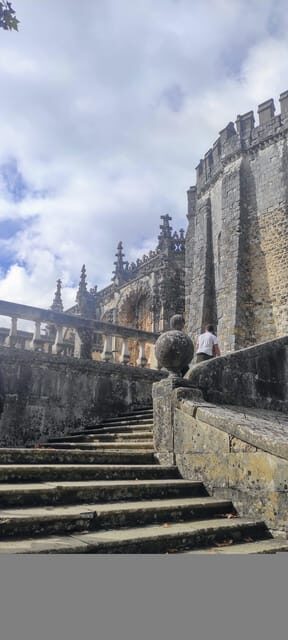
The appeal of the Coimbra: Knight Templar route is that it doesn’t treat the Knights like a Halloween costume. You get a clear, practical picture of who the Templars were: warrior monks who protected Christian pilgrims traveling toward the Holy Land and Santiago, then got pulled into conflict with Muslims and Moors as they defended Christian interests.
That mission matters for what you’ll see today. Castles and religious sites weren’t only symbolic. They were tools—places to organize protection, project authority, and secure power through alliances. A lot of “Templar tours” stop at drama. This one stays grounded in how their Portuguese role formed.
You can also read our reviews of more tours and experiences in Tomar.

Castelo de Soure: the first Templar castle in Portugal
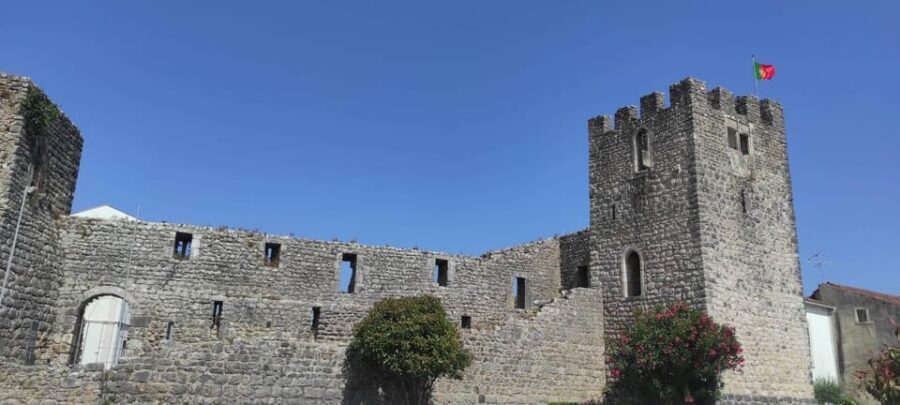
This stop gives you the anchor point of the entire route: Castelo de Soure, described as the first castle built by the Templar Knights in Portugal. I love starting with a place like this because it gives shape to the rest of the story. Without it, Convento de Cristo can feel like a standalone monument. With it, you understand the Templars were building a network, not just leaving behind myths.
At this castle, the guide’s job is to turn stone into context. You should expect a guided visit designed to connect the castle’s purpose to the Templars’ broader work: safeguarding travelers, exerting control, and backing Christian causes in a changing medieval landscape.
What to watch for (practically):
- Wear comfortable shoes. Castle surfaces can be uneven, and five hours adds up quickly.
- Bring a camera, but also look up often. Castle architecture and layout are part of the lesson, not just background.
Possible drawback: castles can be windy and sunny, and your time is limited. Plan to move efficiently through the viewpoints your guide highlights, and don’t expect long free-roaming.
Convento de Cristo: the Templars’ largest treasure
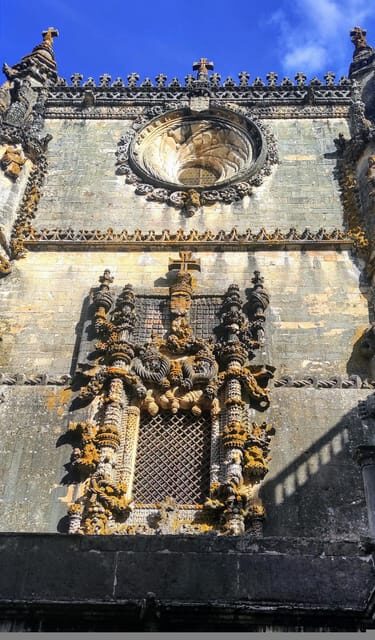
Then you shift from “military base” energy to something more ceremonial and powerful: the Convento de Cristo, presented as the Templars’ largest treasure. This is where the route feels like it really earns its name. If Castelo de Soure gives you the starting point, Convento de Cristo shows you the payoff—what the Knights valued, and what they built when they had serious backing.
I like that the guide doesn’t isolate religious architecture from politics. The Templars were warrior monks, but they also operated in a world of rulers, agreements, and legitimacy. The “treasure” part isn’t only about wealth; it’s also about influence and spiritual authority.
One detail from a guide named Monica really stuck with me: she was attentive, enthusiastic, and particularly good at explaining Manueline architecture during the Convento de Cristo stop. Even if your own guide uses different examples, the key idea is the same—architecture gets much easier to read when someone points out what’s going on and why it matters.
Practical tips for getting more out of Convento de Cristo:
- Use your guided time to ask what features belong to which period, because the building details can overlap visually.
- Bring sunscreen. Monuments plus daylight can surprise you.
- Use water strategically; pace yourself so you can keep listening without getting worn out.
The Afonso Henriques connection: power built on personal friendship
A major theme of this tour is political alliance, and it lands through a specific, human link. You’ll learn about the friendship between Templar Master Gualdim País and King D. Afonso Henriques. This isn’t presented as a generic “the king supported the Templars” story. It’s framed as a relationship that helped shape an alliance.
I like this angle because it makes medieval history feel less like a distant textbook. It’s still about armies and institutions, but it turns on something personal: trust, cooperation, and shared interests. When you hear how their relationship helped align the Templars’ presence in Portugal, the monuments stop being random stops on a map. They become evidence.
What 5 hours feels like in real life
The route is designed for a 5-hour visit, which is a sweet spot for people who want meaningful history without burning a whole day. You start in Coimbra and return there at the end, so you aren’t stuck planning a separate full-day logistics puzzle.
Because it’s a small group (limited to 4 participants), the pace tends to feel intentional rather than conveyor-belt. You should still plan for walking and standing for guided explanations at the sites. The time is short enough that you’ll likely concentrate on the guide’s chosen highlights rather than trying to explore independently for hours.
Who this timing suits best:
- First-time visitors to Coimbra who want a “big story” excursion.
- Travelers who like guided context more than self-guided wandering.
- People balancing other plans in the same day.
Price and value: is $188 per person worth it?
At $188 per person, this tour isn’t the cheapest option, but it also doesn’t feel overpriced for what you get—if your priority is guided, on-site interpretation.
Here’s what you’re paying for, in practical terms:
- Guided visits of both Castelo de Soure and Convento de Cristo
- Entrance to Convento de Cristo
- Transportation as part of the experience
- Live interpretation in Portuguese or English
- A small group size that generally helps you get more out of each stop
If you were to handle this independently, you’d likely spend money on getting from Coimbra to the sites, figuring out what to look for, and paying separately for guided explanations or tickets. This tour bundles the moving pieces with a guide who connects the dots—especially the Templars’ mission and the Afonso Henriques alliance thread.
My take: if you enjoy history that links people, places, and motives, this price starts to look fair. If you mainly want casual sightseeing with minimal explanation, you’ll get less value per hour.
Guide style and language: what to expect from the experience
You’ll have a live tour guide who speaks Portuguese and English. That matters, because the story isn’t generic—it includes specific names and relationships: Gualdim País and King D. Afonso Henriques, plus the Templars’ pilgrim-protection mission.
In one standout example, a guide named Monica was described as attentive, enthusiastic, and skilled at making the Knights’ role in Portuguese history feel real. She also helped the group find an authentic Portuguese restaurant during the time for exploration, which is a small detail, but it’s the kind of practical support that can improve your day beyond the monuments themselves.
Your own guide may have a different style, but for this route, the best guides tend to do the same three things:
- explain the mission in plain language,
- connect the mission to what you see in each site,
- and give you “readable details” so you can follow along without needing a textbook.
Practical prep: what to bring for a comfortable 5 hours
This is the kind of tour where comfort affects how much you enjoy the story. Pack like you’ll be outside and on the move.
Bring:
- Comfortable shoes (castle and monument walking)
- Camera (there will be photo-worthy viewpoints and architectural details)
- Sunscreen (bright daytime can hit hard)
- Water (you’ll want it to keep listening comfortably)
If you’re prone to getting tired from sitting and standing shifts, plan to pace yourself during transitions. Take quick sips of water rather than waiting until you feel overheated.
Who should book this Knight Templar route from Coimbra?
Book it if:
- you like medieval history tied to real places,
- you want a guided explanation that includes the Templars’ Portuguese importance,
- you’re intrigued by the human link between Gualdim País and King D. Afonso Henriques,
- you prefer small-group touring (up to 4) over crowds.
Consider skipping or pairing it with something lighter if:
- you want a break from guided talking,
- you’re hoping for mostly free time at each site,
- you don’t care much about historical context.
Should you book? My decision guide
I’d book this Coimbra: Knight Templar route if your goal is to understand how the Knights Templar mattered in Portugal—and you want that story explained at the exact places where it’s visible. The combination of Castelo de Soure (the start), Convento de Cristo (the big treasure), and the alliance thread around Gualdim País makes the day feel coherent, not random.
If you do book, do one smart thing: show up ready to listen. In a route this focused and guided, your enjoyment will track directly with how much you lean into the story.
FAQ
How long is the Coimbra Knight Templar route?
It lasts 5 hours.
What sites are included on this tour?
You’ll visit Castelo de Soure with a guided tour and you’ll also visit Convento de Cristo with entrance included.
What languages is the guided tour offered in?
The tour is offered in Portuguese and English.
How big is the group?
It’s a small group limited to 4 participants.
Is transportation included?
Yes, transportation is included.
What is the cancellation policy?
You can cancel up to 24 hours in advance for a full refund.