REVIEW · SETUBAL
Lisbon: Via Ferrata Setubal’s Arrábida Natural Park
Book on GetYourGuide →Operated by WIND · Bookable on GetYourGuide
One of Lisbon’s best wild thrills is vertical. This via ferrata + abseiling adventure takes you into Arrábida Natural Park to work your way through the dramatic Fenda da Arrábida rock formations.
I love how it feels properly organized: a real safety briefing, full harness setup, and a guide right there while you move over caves and dozens-of-meters-high rock walls.
I also like that it’s not just a workout. The guides connect what you’re doing to the local plants and the geology, so the views from above feel earned.
One thing to think about: this activity has clear safety restrictions and it’s not for kids under 10 or people with back/heart or mobility issues, plus weather can force changes.
In This Review
- Key highlights to notice before you book
- Arrábida Natural Park: the setting that turns a day trip into an adventure
- The core experience: safety briefing, gear, and how the system keeps you moving
- Entering the Fenda da Arrábida: caves, high walls, and that real-rock feel
- Views over Sesimbra and Setúbal: why the hard parts feel worth it
- The guide factor: what makes this better than a basic adventure
- What you’ll do hour by hour (the real rhythm of the day)
- Price and value: why $76 can make sense here
- Meeting point: how to find it without turning your day into a scavenger hunt
- What to bring (and what to wear): small choices that prevent big headaches
- Who this suits best (and who should skip it)
- Timing, weather, and the 2-person minimum: plan like a pro
- Should you book WIND’s Arrábida via ferrata + abseiling?
- FAQ
- How long is the via ferrata and abseiling experience?
- How much does it cost?
- Is transportation included from Lisbon?
- What gear is included?
- What should I bring?
- Are open-toed shoes allowed?
- Is the activity suitable for beginners?
- What happens if weather or safety conditions affect the activity?
Key highlights to notice before you book
- Fenda da Arrábida’s steep, natural rock obstacles (including caves and high rock walls) that make the route feel like a real wilderness challenge
- Beginners can start here, with helmet, harness, and a double safety lanyard system that keeps you connected as you climb and descend
- Guides bring the area to life, with local facts on fauna/flora and explanations of geology that make the park feel bigger than it looks
- You’ll spend real time on climbing and abseiling, not just a scenic walk, so the adrenaline-to-sitting-ratio stays high
- Photo help along the way: some groups get pictures/videos shared after, which matters when you’re focused on foot placement
- Optional van transport can save you hassle if you don’t want to manage the drive yourself
Arrábida Natural Park: the setting that turns a day trip into an adventure
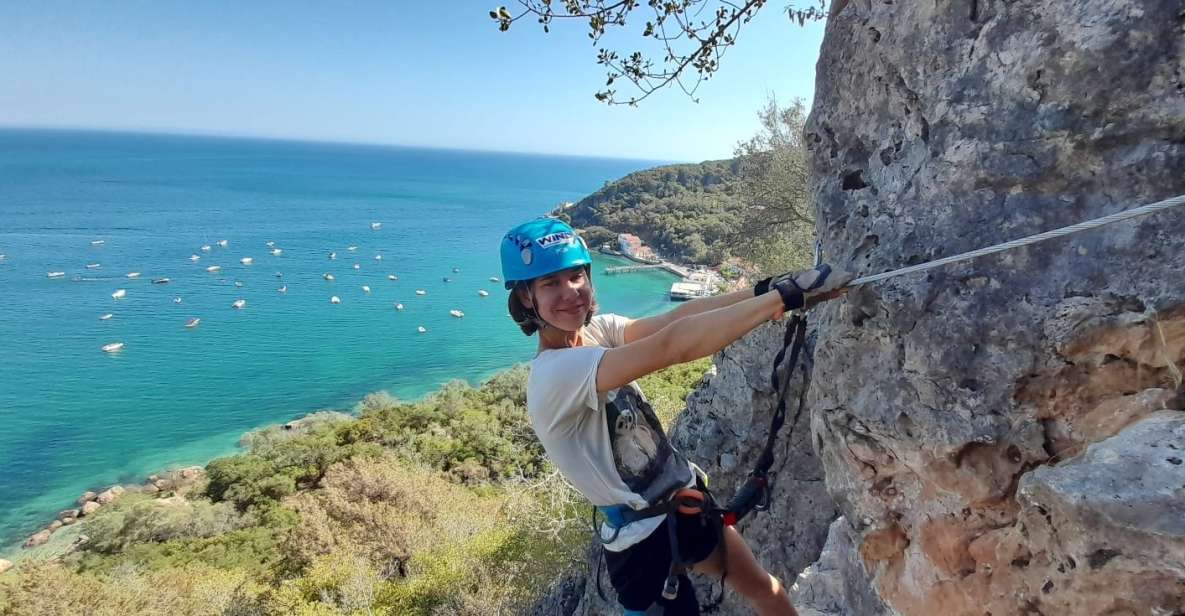
If you’ve only seen Lisbon from viewpoints, this is the contrast. You’re leaving the city rhythms and getting into the Arrábida Natural Park world of rock, scrubby Mediterranean plants, and coastal terrain. The big draw is that you’re not doing a short “display” course. You’re working through the famous Fenda da Arrábida, a striking geo-monument area with caves and tall rock walls.
The practical part: Arrábida’s terrain means the experience feels physical and outdoorsy. You’ll be moving across natural surfaces, not just following a fixed trail. That’s why it’s so memorable even if you’ve done via ferrata before—several people noted the day involves more rock scrambling and rappelling than they expected.
You can also read our reviews of more tours and experiences in Setubal.
The core experience: safety briefing, gear, and how the system keeps you moving
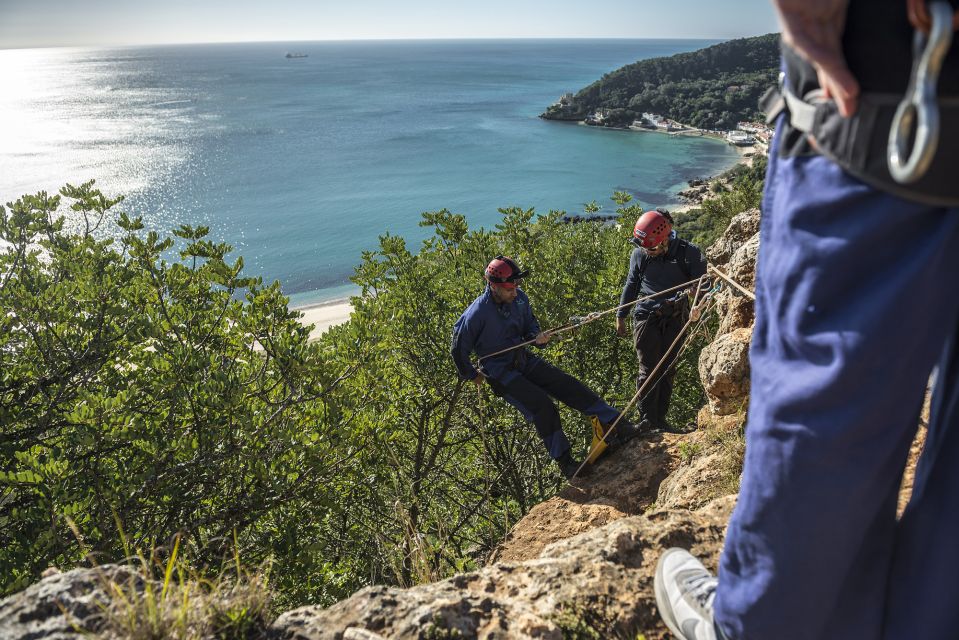
Your day starts with a safety briefing and equipment introduction. You’ll get a helmet plus harness, and the setup uses a double safety lanyard so you stay secured as you progress.
This matters because via ferrata and abseiling look scary from the ground, but the equipment system is what makes the activity workable for beginners. You’re not just handed a rope and sent off. You learn how you’ll connect, what to do when you’re clipping in, and how to move through different sections.
Then you’ll head by van to the starting point. On the way, you get context about the area—fauna, flora, and geology—so when you arrive at the rock, it’s not just “climb because climbing.” It becomes, “Climb because this rock is here for a reason, and this plant survives here for a reason.”
The guides are accredited by the National Mountaineering School under Portugal’s Federation of Camping and Mountaineering, which is exactly the kind of detail that helps you trust the instruction rather than guess.
Entering the Fenda da Arrábida: caves, high walls, and that real-rock feel
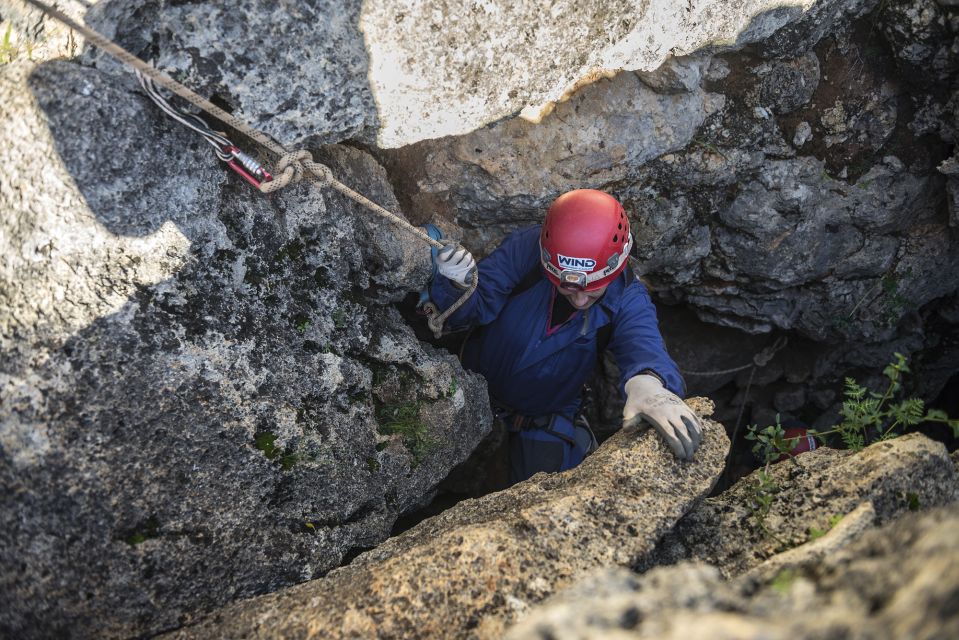
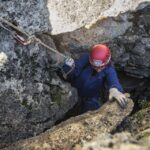
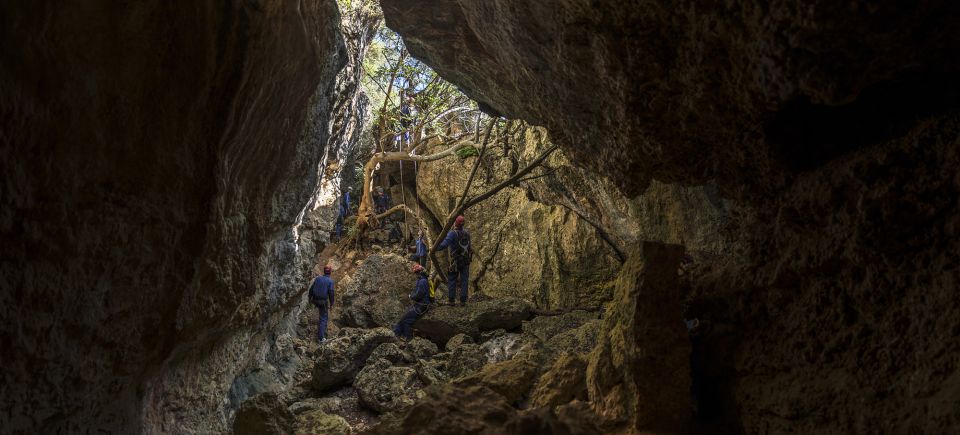
Once you’re at the rock, you’re in Fenda da Arrábida territory. Think tall natural rock walls and caves hidden within the park. The route uses a mix of progress styles—climbing sections and via-ferrata style movement, plus abseiling parts where you descend using ropes.
What I’d tell you to expect emotionally: the first minutes can feel like “okay, I really am doing this.” After that, the system and coaching take over. In groups I’ve seen reviewed for this activity, guides like Rafael (and also Samuel, Sandro, and Simon in other cases) kept people calm by giving clear instructions and stepping in only when needed. That’s the ideal approach—firm, not hovering.
What you’ll probably notice: some sections can feel more demanding than a first-time via ferrata elsewhere. One person described it as more challenging because of extra rock scrambling and rappelling involvement. So if you’re brand new, you can still do it—but come ready for uneven footing and moments where you concentrate more than you “waltz.”
Views over Sesimbra and Setúbal: why the hard parts feel worth it
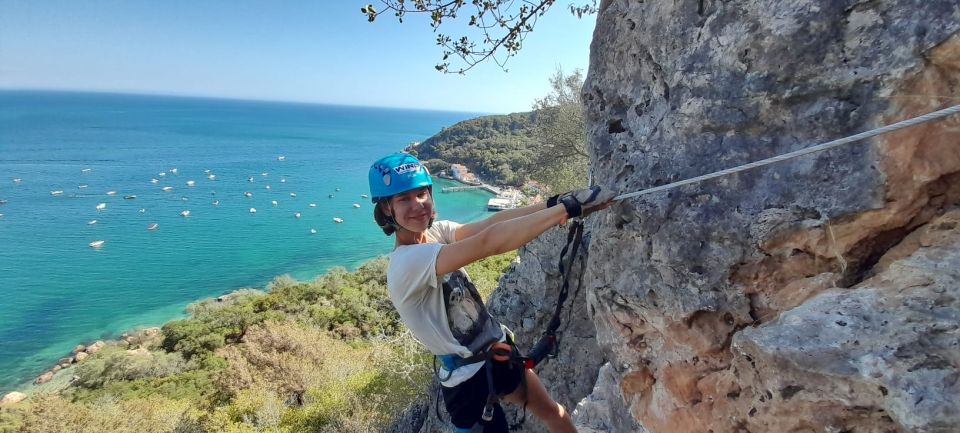
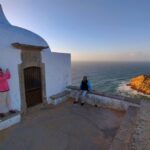
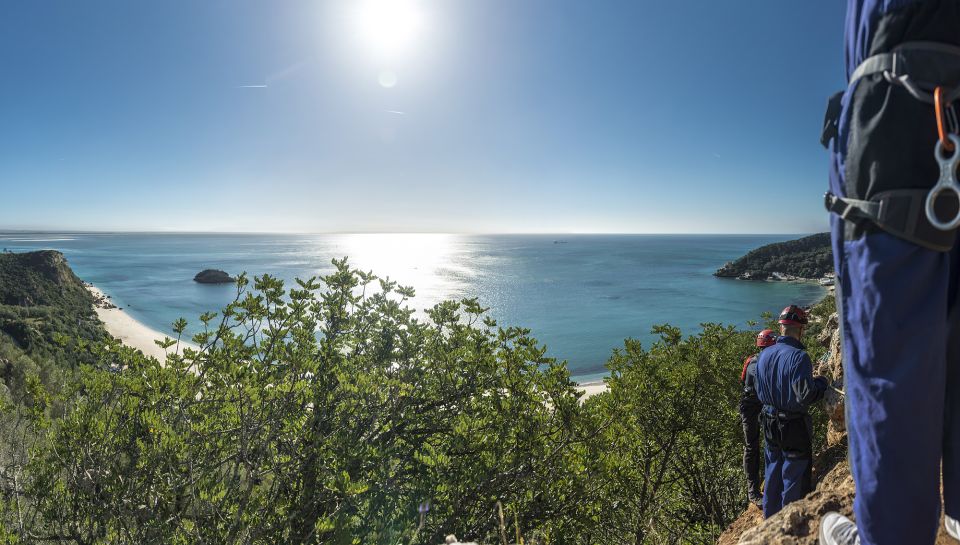
The park sits between the picturesque town of Sesimbra and the city of Setúbal, less than an hour’s drive from Lisbon. You get that coastal proximity visually, especially on the higher rock sections. The views tend to feel jaw-dropping because you’re seeing the coastline and water while you’re suspended above it.
But here’s the practical angle: you’ll earn the view by paying attention. Your brain locks onto handholds, stance, and where your next clip goes. After you finish a tough section, the view lands harder because you’re not just looking—you’ve just survived a steep moment (the safe kind).
If you go during hot weather, be ready for heat. People specifically warned about how hot it can get, so pack water seriously. You also get water and energy bars included, but that doesn’t erase the need for your own hydration habits.
The guide factor: what makes this better than a basic adventure
Most adventure activities stand or fall on coaching. In this one, the repeated theme is that guides are engaged and instructive without turning the trip into a lecture.
When groups mention Rafael, it’s usually for two things:
1) he explains equipment and techniques clearly enough for first-timers, and
2) he ties the route to local details—things like native plants such as rosemary, plus geology and the shapes of the rock.
Other names show up too, like Samuel and Sandro, with similar praise for making beginners comfortable and taking good photos/videos while you climb. So the overall pattern looks consistent: guides help you focus, keep you safe, and make the day feel like you’re learning the park, not just passing through it.
And yes, humor shows up. More than one guide is described as friendly and story-driven, which helps when you’re stressed about the next move.
What you’ll do hour by hour (the real rhythm of the day)
You’re booked for about 4 hours total. That time includes briefing, equipment, van transfer, the actual climbing/abseiling segments, and a debrief at the end.
Here’s the rhythm you can plan around:
1) Safety briefing + gear fit
You get helmet and harness fitted correctly, plus instruction on the double lanyard system. This is when you learn the basics that stop you from panicking later.
2) Van ride to the starting point
This time is more than travel. You hear about the natural area, what you’re likely to see in terms of flora/fauna, and what makes the rock formations special.
3) Via ferrata progression + climbing sections
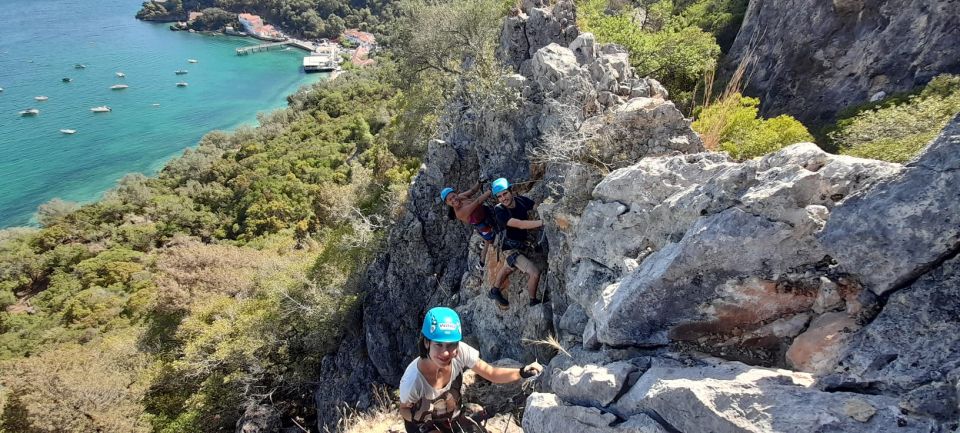
You move through obstacles using a mix of via-ferrata technique and climbing. You’ll be on sections where you need stable foot placement and confident handholds.
4) Abseiling (rappelling) and controlled descents
This part is the part people remember. You descend with rope systems provided by the activity (including a figure 8 descender and safety carabiner in the gear list), guided so you maintain control and timing.
5) Debrief back at the end point
At the end, you return for a debrief—time to process what you did and ask any last questions.
If you’re wondering whether it feels like “real adventure” time: yes. One of the most repeated positives is that you don’t just walk around. You’re working your way through obstacles.
Price and value: why $76 can make sense here
At $76 per person, this isn’t a budget “just a tour bus” activity. But it includes the stuff that usually costs extra elsewhere: a certified instructor/guide, helmet + harness + double safety lanyard, abseiling rope plus descender gear, safety carabiners, experience liability insurance, and water/energy bars.
Transportation to the park is not included by default (it’s available per request for an extra cost), so your total value depends on whether you need that van ride. If you’re already comfortable getting to the meeting point, you can keep costs tighter. If you don’t want to think about logistics, the optional pickup can be worth it simply for stress reduction.
In plain terms: you’re paying for safety systems and qualified supervision, not just scenery.
Meeting point: how to find it without turning your day into a scavenger hunt
You meet at Creiro’s Beach. When you reach Creiro’s Beach, turn right, and you’ll find the team after Anicha Bar.
If you’re driving, arrive early enough to settle your nerves and get your shoes situation right. If you’re taking the optional transport service, follow your provider instructions for pickup timing.
And bring the right footwear—open-toed shoes are not allowed, which is fair given ropes and rock friction.
What to bring (and what to wear): small choices that prevent big headaches
For via ferrata and abseiling, your clothing is mostly about comfort and protection. The list is simple:
- windbreaker
- food (you’ll get water and energy bars, but having extra helps)
- water
- sports shoes
- sportswear
- daypack
Closed sports shoes matter. You’ll be stepping on rock, and you want grip and protection for your feet. Think sneakers you’d trust on uneven ground—not sandals.
One extra practical tip from the general vibe of the day: if you’re going in warmer months, bring enough fluids for yourself. Even with water provided, heat can hit fast near the coast.
Who this suits best (and who should skip it)
This is a beginner-friendly adventure, and people do it as a first proper via ferrata and first-time abseiling. If you’re active and comfortable with heights in principle, you’ll likely do fine once the harness system is on.
It’s also designed for couples and groups, with options mentioned for birthdays, bachelor/bachelorettes, and school or corporate events.
But it’s not suitable for:
- children under 10
- pregnant women
- people with back problems
- people with mobility impairments
- people with heart problems
- people with visually impaired people
Also note: meteorological conditions and other logistic or safety conditions can restrict the experience. In that case, you’ll get an alternative experience or reschedule.
Timing, weather, and the 2-person minimum: plan like a pro
There’s a minimum of two people per course, so if you book solo, your confirmation depends on enough participants meeting that threshold. And weather matters. If conditions aren’t safe, the activity won’t be forced.
So if your schedule is tight, pick a time window with backup plans. The good news is you’ll usually get offered an alternative or reschedule rather than getting stuck with nothing.
Should you book WIND’s Arrábida via ferrata + abseiling?
Yes, you should book this if you want real vertical adventure with proper safety gear, qualified instruction, and a stunning coastal setting close to Lisbon. The value is strongest when you factor in the included equipment, insurance, and the fact that guides like Rafael (plus others such as Samuel, Sandro, and Simon) consistently focus on making beginners comfortable while still delivering a serious route.
Skip it if you’re dealing with the listed medical/safety restrictions, or if you dislike physical challenges and heights. Also, don’t underestimate heat—come ready with water and the right shoes.
If you want a day that mixes adrenaline, nature education, and a view you can actually brag about afterward, this is a smart pick.
FAQ
How long is the via ferrata and abseiling experience?
The activity lasts about 4 hours.
How much does it cost?
It costs $76 per person.
Is transportation included from Lisbon?
Transportation service is not included, but you can request it for an extra cost.
What gear is included?
You get a helmet, harness, double safety lanyard, and abseiling equipment such as a rope, figure 8 descender, and safety carabiner.
What should I bring?
Bring a windbreaker, food, water, sports shoes, sportswear, and a daypack.
Are open-toed shoes allowed?
No. Open-toed shoes are not allowed.
Is the activity suitable for beginners?
Yes. It’s described as beginner-friendly and accessible for all levels, though the route can still be physically demanding at times.
What happens if weather or safety conditions affect the activity?
The experience is subject to restrictions due to meteorological or other logistic and safety conditions. If that happens, the provider proposes an alternative experience or a reschedule.