REVIEW · PORTINHO DA ARRABIDA
Portinho da Arrábida: Coasteering Boat Tour
Book on GetYourGuide →Operated by Discover The Nature - Outdoor Events · Bookable on GetYourGuide
One coastline. Lots of ways to get wet. Portinho da Arrábida coasteering is a hands-on, action-packed way to see Arrábida Natural Park from the waterline up. You’ll move through cliffs, sea caves, and coves with professional guidance, not just admire scenery from a boat.
I especially like how the day stacks different skills in real time—rappelling, climbing techniques, and zip line—so it feels more complete than the typical single-activity tour. The other big plus for me is the mix of adrenaline and scenery: sea caves, crystal-clear water, and cliff jumps with heights that vary from 1 to 10 metres.
One consideration: this is physical adventure with heights and water involved, so it helps to be comfortable following instructions and moving over uneven rock. Also, you’ll want proper water shoes and a towel, because you’re not doing a dry sightseeing version of Arrábida.
In This Review
- Key things that make this coasteering tour worth your time
- Portinho da Arrábida: why this coasteering circuit feels like real Arrábida
- Meeting at Portinho Arrábida Beach: what to bring and how the day starts
- The 800-metre route: cliffs, confined spaces, and constant movement
- Gruta de Sta. Margarida and Arrábida sea caves: the watery side of geology
- Vertical thrills: rappelling, rock climbing, and zip line landings in the water
- Cliff jumps 1 to 10 metres: how to choose your comfort level
- Safety, insurance, and boat support: why this feels controlled
- Price and time value: is $82 for 4 hours a fair deal?
- Who this tour fits best (and who should rethink it)
- Should you book Portinho da Arrábida coasteering?
- FAQ
- How long is the Portinho da Arrábida coasteering boat tour?
- Where do I meet for the tour?
- What activities are included during the coasteering route?
- Are the cliff jumps and other obstacles compulsory?
- What safety gear and wetsuit are provided?
- What should I bring or wear?
- Is a meal included?
- What’s the cancellation and payment flexibility?
- Done deal: should you pick this tour for your trip?
Key things that make this coasteering tour worth your time
- 800-metre circuit with nonstop variety instead of one trick done repeatedly
- Sea caves + Gruta de Sta. Margarida with its 17th-century sanctuary
- Non-compulsory obstacles with alternatives so you can keep going safely
- Gear handled for you: 5.5mm wetsuit, helmet, harness, gloves, life jacket
- Zip line water landing plus cliff jumps ranging from 1–10 metres
- High-energy guiding, with instructors named Rui and Marco showing up in recent groups
Portinho da Arrábida: why this coasteering circuit feels like real Arrábida
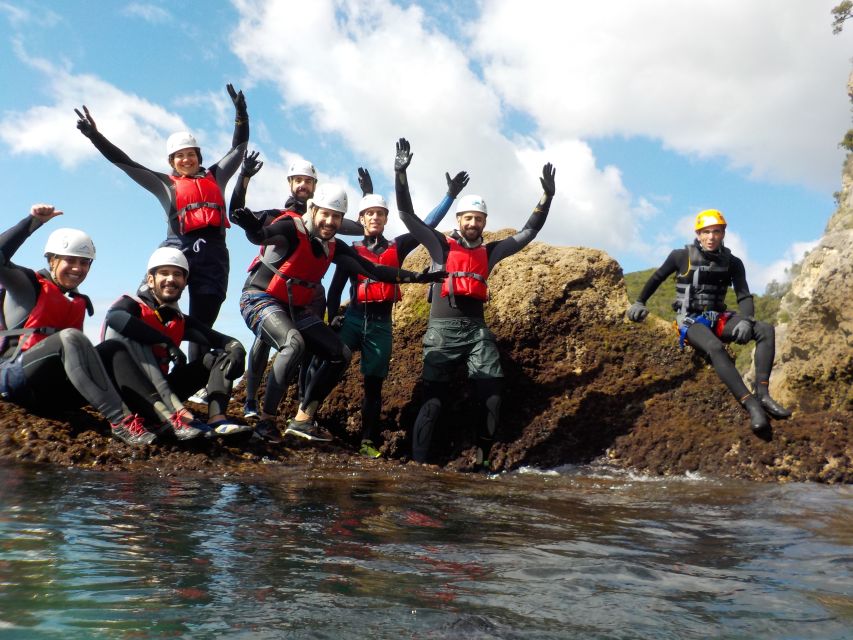
Arrábida Natural Park is known for dramatic coastline, and this tour uses that setting like a playground. Instead of “look, don’t touch,” you actually travel along the coast’s obstacles—cliffs, tight spaces, and cave passages—while professionals keep you safe and moving.
What makes this itinerary special is the density of experiences. In about 4 hours, you get sea caves, swimming sections, climbing skills, and multiple adrenaline moments. It’s built like an active route through a natural area that otherwise takes serious effort to explore on foot.
And the coastline here is genuinely distinctive: cliffs and escarpments, sea caves and coves, and beaches that you only really understand when you’re close to the rock and water. You come away feeling like you covered Arrábida in a way normal beach time can’t match.
You can also read our reviews of more boat tours in Portinho Da Arrabida
Meeting at Portinho Arrábida Beach: what to bring and how the day starts
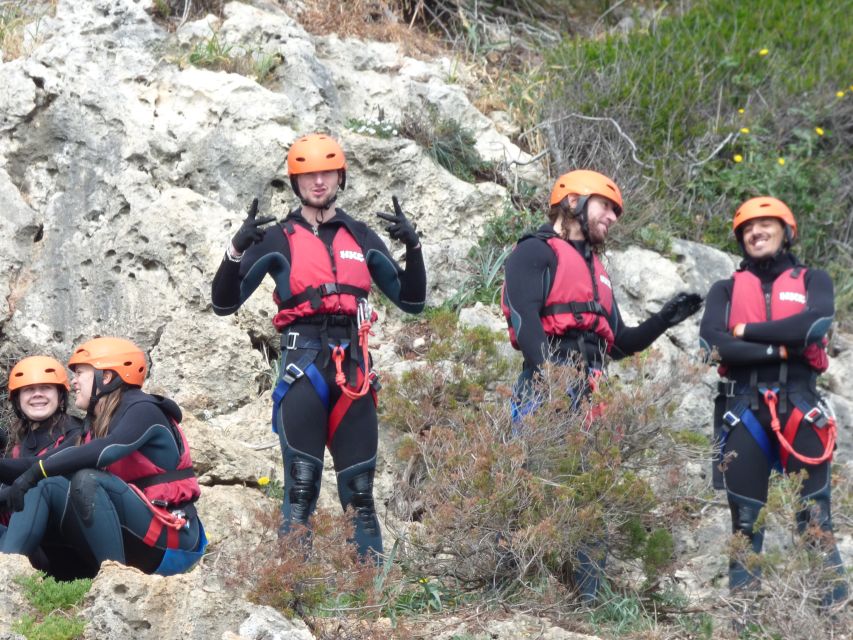
You meet at Portinho Arrábida Beach inside Arrábida Natural Park. The setting can feel more like a forest-side access than a postcard beach, so I’d plan to arrive early and follow the team’s instructions without rushing.
Dress for wet work. You’ll be given a 5.5mm diving suit, plus helmet, life jacket, gloves, and a climbing safety harness. The key is that your personal gear matters too.
Bring:
- Shoes you can wear in the water (not bare feet)
- A beach towel
- An extra pair of sneakers for after
- Spare hair ties if you have long hair
If you forget any of that, the tour still runs, but your comfort after the swims and wetsuit time won’t be great. This is the kind of activity where small preparedness details make the whole day feel easier.
The 800-metre route: cliffs, confined spaces, and constant movement
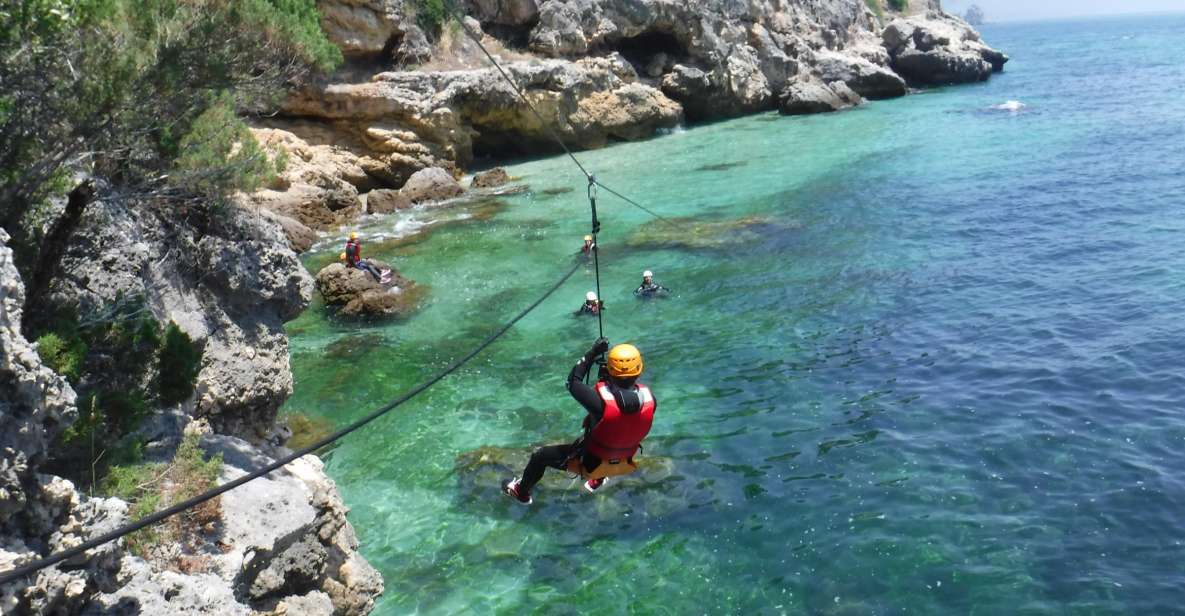
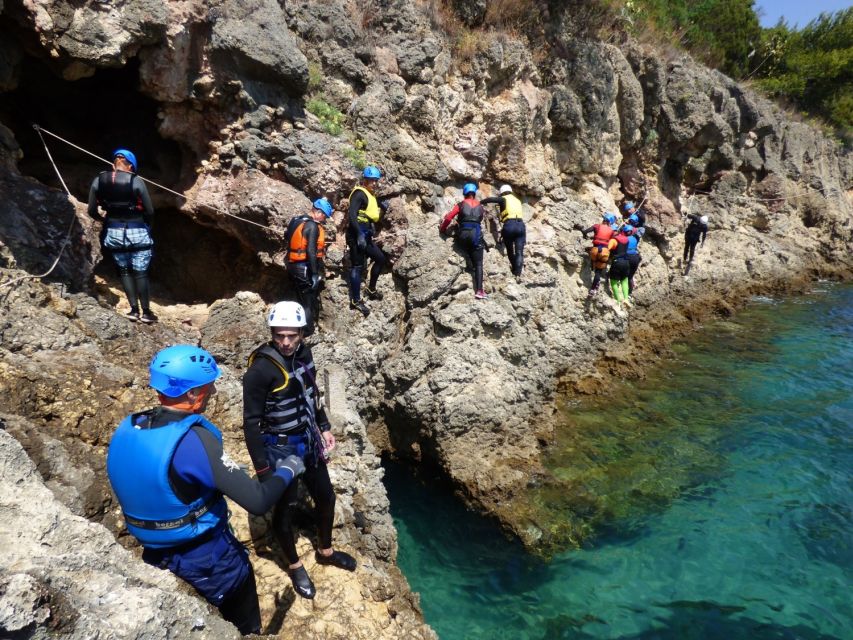
The core of the experience is a roughly 800-metre long circuit along the coastline. You’ll cross natural obstacles that force you to change how you move: sometimes you’re walking, sometimes climbing, sometimes descending with ropes, and sometimes you’re simply sliding through a tight stretch carefully.
Here’s how that translates into what you’ll actually do:
- Ropes and controlled descents (abseiling) when the coastline drops into the waterline
- Climbing using a handrail technique (about 50 metres long) rather than random scrambling
- Confined spaces, including cave sections like the Gruta de Sta. Margarida, where movement needs to be precise
- Swimming connection sections inside the aquatic environment to link route pieces
One big confidence-builder: none of the obstacles are compulsory. There are always alternatives, so if something doesn’t fit your comfort level that day, the route should still keep you participating.
That matters because coasteering can scare people off when they imagine only one scary option. Here, the pace is still adrenaline-heavy, but you’re not forced into a single “do it or drop out” structure.
Gruta de Sta. Margarida and Arrábida sea caves: the watery side of geology
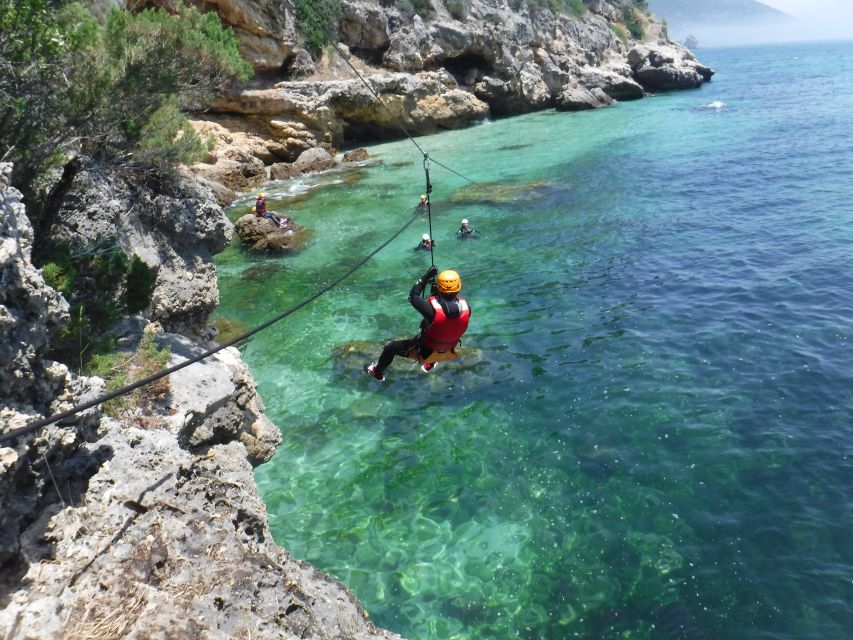
The sea caves are a highlight, not a side quest. You’ll explore cave areas as part of the route, including Gruta de Sta. Margarida, which features a 17th-century sanctuary. That combination—religious space tucked into a coastal cave—adds a surprising human layer to the geology.
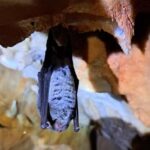
You might also see wildlife. Some groups have noted bats inside the caves. I wouldn’t plan your whole day around that, but it’s a nice reminder that these caves aren’t just “pretty rocks”—they’re living habitat.
A practical note: caves and confined coastal spaces change how sound and light work. Expect to follow the team’s instructions closely and move deliberately. If you’re nervous about tight areas, remember the tour is designed with alternatives, so you’re not trapped into a single route choice.
Vertical thrills: rappelling, rock climbing, and zip line landings in the water
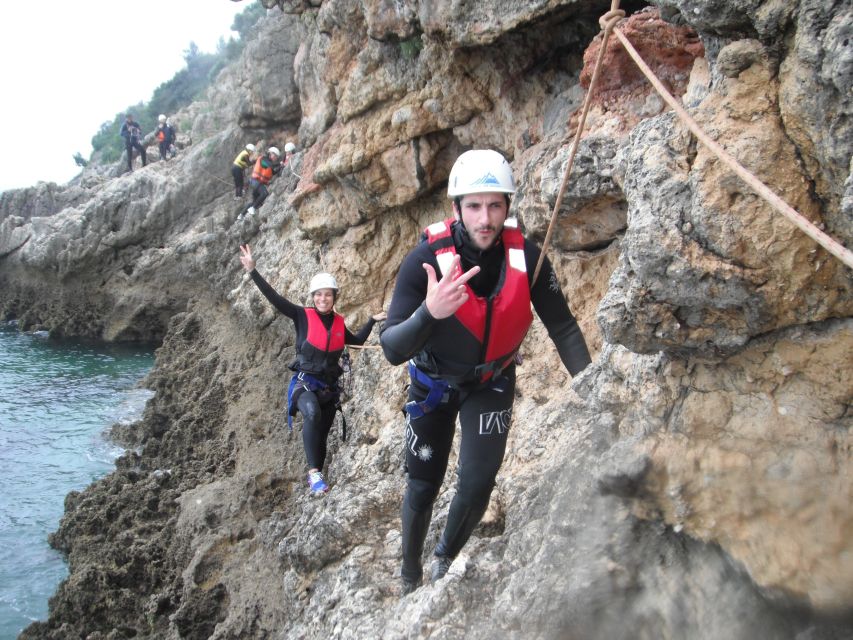
This isn’t coasteering that stays at the “walk and swim” level. You’ll get real technique training during the day—rock movement, safe rope work, and a zip line component.
The tour’s “vertical” portion includes:
- Rock climb sections (with coaching so you’re not guessing)
- Rappelling down coastal features when the route requires it
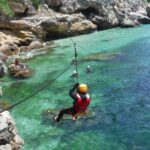
- Zip line sliding down a steel cable and landing in the water
That zip line detail is more than just a stunt. It forces you to transition from rope mechanics to controlling your body for entry and buoyancy right away. The team’s job is to make that shift feel controlled instead of chaotic.
One more helpful reality check: adventure days can change with conditions. On at least one occasion, a group noted that the zip line wasn’t set up for their tour, and the guide filled the gap with an extra repelling exercise. So if you’re booking for one specific moment, keep flexibility in your mindset.

Cliff jumps 1 to 10 metres: how to choose your comfort level
Cliff jumping is a headline here, and it’s not a one-height trick. Heights vary between 1 and 10 metres, so your jump option depends on the safe setup and your comfort.
The best part is that the day is structured to help you keep participating. Even if you skip a jump or choose a lower height, you can still stay in the adventure flow through caves, rope work, and route segments.
The guiding approach seems to be: explain what to do, coach you through positioning, and watch safety closely. In recent groups, instructors like Rui, Marco, and the team have been praised for making people feel secure and for coaching specifically during jump moments.
My practical advice: don’t treat the jump like a “moment of courage” you have to force. Treat it like a skill you’re allowed to learn at your pace—ask questions, watch others, and choose the option that lets you finish the day feeling proud, not panicked.
Safety, insurance, and boat support: why this feels controlled
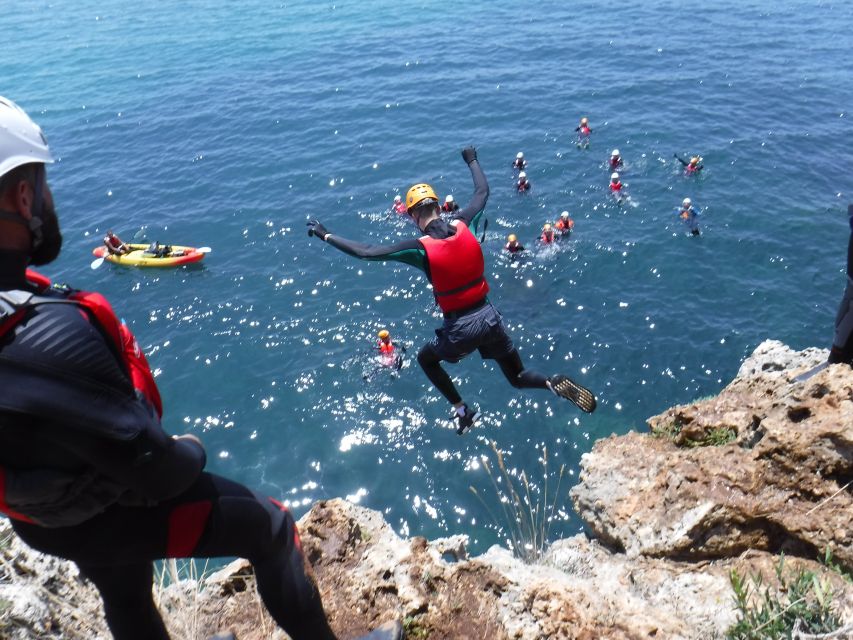
Coasteering looks wild from the outside. The difference between “wild” and “unsafe” is systems, and this tour is built around safety gear and professional handling.
Included safety pieces:
- Helmet
- Life jacket
- Gloves
- Climbing safety harness
- Activity insurance
- Boat support
Boat support matters more than many people think. Coastal routes can require assistance for logistics, timing, or recovery, and a support boat gives the team extra flexibility to keep everyone on track.
The wetsuit isn’t just comfort; it’s part of protecting you during extended time in cold-ish water and wet rock work. A 5.5mm diving suit is a meaningful thickness for this kind of coastal adventure.
And since the obstacles are not all compulsory, safety planning isn’t just about gear—it’s also about offering alternatives when someone needs a different path.
Price and time value: is $82 for 4 hours a fair deal?
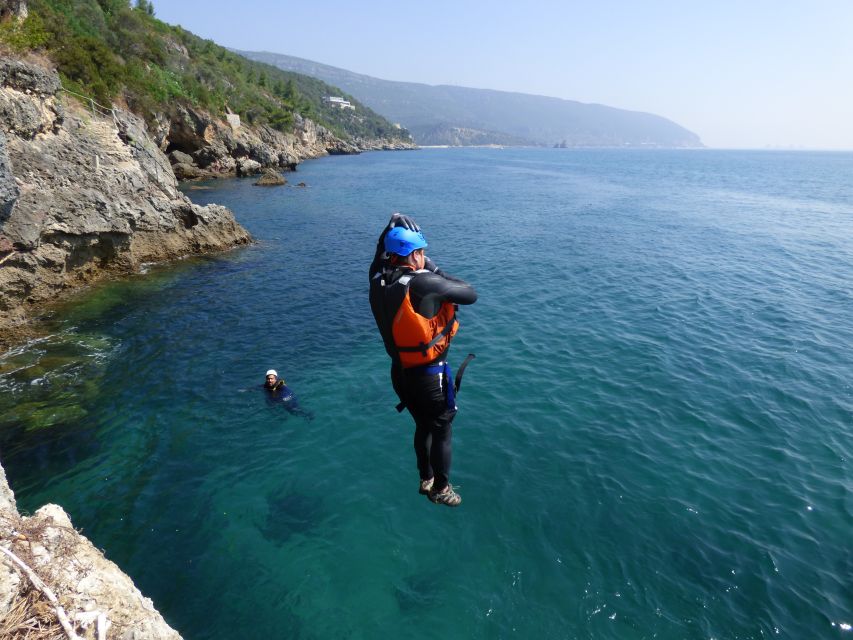
$82 per person for a 4-hour coasteering session can feel like a lot until you break down what’s included. You’re not just paying for a guide. You’re paying for gear, insurance, and the support system that makes rope work and water entries manageable.
For your money you get:
- Professional instruction throughout the route
- Full personal safety kit: wetsuit, helmet, harness, life jacket, gloves
- Activity insurance
- Boat support
That’s why this feels closer to an activity package than a basic tour. If you were to book lessons, rent gear, and arrange transport support separately, the total would typically climb quickly.
It’s also time-efficient. You get a coastline circuit plus multiple adrenaline moments without losing half the day to travel. For people with limited time in Lisbon area, this is a strong “do something memorable and specific” option.
Who this tour fits best (and who should rethink it)
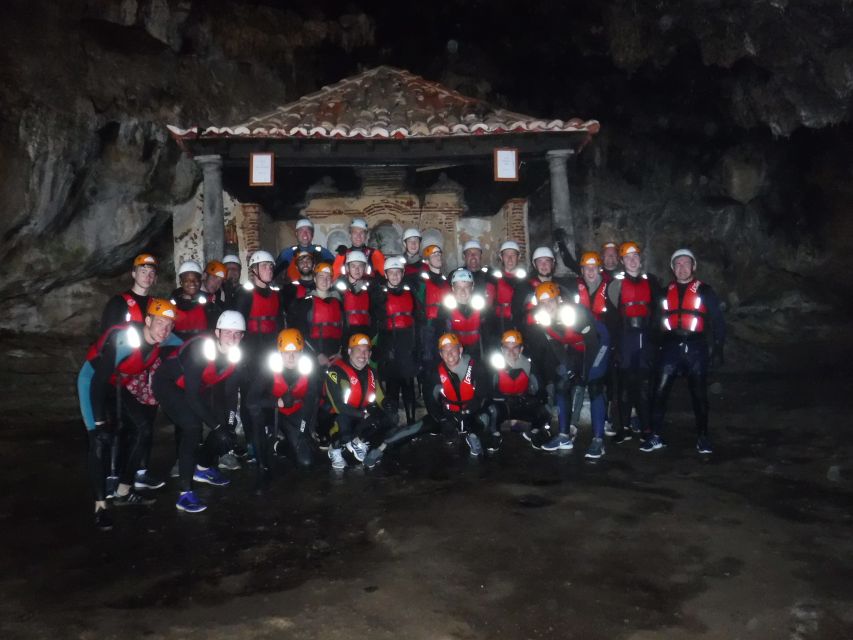
This is best for you if you want:
- Action-packed adventure in one day, not a slow sightseeing loop
- A mix of skills: climbing, rappelling, zip line, cave navigation, and swimming segments
- A tour where your comfort matters because obstacles have alternatives
You should rethink it if you strongly dislike heights, tight spaces, or the idea of changing between rock work and water entry repeatedly. Even with alternatives, the setting is still coastal rock and water, and the day includes cliff jump options at heights up to 10 metres.
If you’re someone who likes structure in adventurous activities—clear coaching, safety gear, and a planned route—this kind of coasteering hits the sweet spot.
Should you book Portinho da Arrábida coasteering?
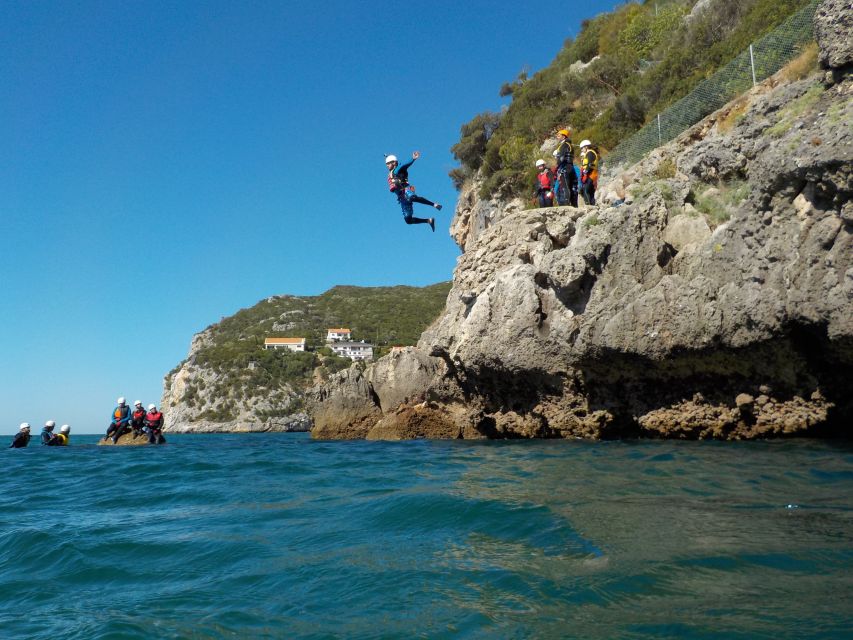
Yes, if you want an Arrábida experience that feels earned, hands-on, and packed into a short window. This is the kind of day that leaves you with specific memories: cave passages, rope descents, zip line water landing, and the moment you finally commit to a jump height that feels right.
Book with confidence if:
- You’re comfortable following instructions and moving on uneven terrain
- You can bring water-ready shoes, a towel, and spare sneakers
- You want adrenaline with a team that emphasizes safety
Hold off (or choose another style of tour) if you’re looking for a calm, purely scenic day. This is adventure work on the coastline, and even though obstacles aren’t compulsory, the overall vibe is still high-energy.
FAQ
How long is the Portinho da Arrábida coasteering boat tour?
The experience lasts about 4 hours.
Where do I meet for the tour?
You meet at Portinho Arrábida Beach in Arrábida Natural Park.
What activities are included during the coasteering route?
The route includes overcoming coastal obstacles such as cliffs and confined spaces, with skills like abseiling (rappelling), rock climbing, and a zip line. You’ll also explore sea caves, swim in connection sections, and have the option of cliff jumps from 1 to 10 metres.
Are the cliff jumps and other obstacles compulsory?
No. The route is designed so that none of the obstacles are compulsory, and there are alternative options so you can continue along the route.
What safety gear and wetsuit are provided?
You’re provided with a 5.5mm diving suit, life jacket, gloves, helmet, and a climbing safety harness, plus activity insurance and boat support.
What should I bring or wear?
Wear shoes you can use in the water. Bring a beach towel and an extra pair of sneakers for after. If you have long hair, tie it back and bring spare elastic bands.
Is a meal included?
No meals are included.
What’s the cancellation and payment flexibility?
You can cancel up to 24 hours in advance for a full refund. There’s also an option to reserve now and pay later.
Done deal: should you pick this tour for your trip?
If you’re the type who likes doing real activities in nature—caves, climbing skills, rope work, and actual time in the water—this is a strong choice. It’s also a good match for mixed comfort levels because the route offers alternatives instead of a one-size-fits-all demand.