REVIEW · LISBON
Lisbon: Graça Church | Convent & Terrace viewpoint access
Book on GetYourGuide →Operated by Sé de Lisboa and Torre da Igreja · Bookable on GetYourGuide
Lisbon feels closer from Graça. With entry to the Convent & Church of Nossa Senhora da Graça, plus terrace access, you get history up close and panoramic terrace views over the city. Expect sweeping sightlines to St. George’s Castle, the Tagus River, the Old Bridge, and even Cristo Rei in the distance.
What I like most is how the visit balances views with real interior details. I especially love the chance to walk through the convent spaces where azulejo-style tile panels and quiet rooms do the talking, not just the skyline. One consideration: you’ll be doing a climb and some stairs, and this isn’t a good fit if you use a wheelchair or you’re sensitive to altitude or uneven walking.
In This Review
- Key highlights you’ll feel immediately
- Where Graça fits into Lisbon (and why the viewpoint is worth it)
- Price and ticket value: $7 for terrace + convent access
- The convent entry: what you’ll explore inside
- Cloister and 18th-century tiles: the interior detail fans will love
- Church of Graça: gilded woodwork and grisaille ceiling paintings
- High choir and upper cloisters: the access that makes this ticket feel special
- The terrace viewpoint: St. George’s Castle, Tagus River, Old Bridge, Cristo Rei
- Timing and comfort tips for a smooth 1-hour visit
- Who should book this Graça Church convent and terrace access
- Should you book Graça Church Convent & Terrace access?
- FAQ
- How long is the Graça Church Convent & Terrace experience?
- What’s included in the ticket?
- Do I need to exchange a voucher?
- How much does it cost?
- What languages are available?
- Is this experience wheelchair accessible?
- Is it suitable for people with altitude sickness?
Key highlights you’ll feel immediately
- Terrace panorama that reaches from St. George’s Castle to the Tagus, the Old Bridge, and Cristo Rei
- 700+ years of layered building history, starting with construction in 1271
- Cloister and church details you can actually take time with: 18th-century tile panels, gilded woodwork, and ceiling paintings in grisaille
- Access beyond the basics: high choir and upper cloisters are part of the ticket
- A calmer vibe inside the church and monastery areas if you want a break from the outdoor crowd
- Bring camera and binoculars for the long-range view once you’re up on the terrace
Where Graça fits into Lisbon (and why the viewpoint is worth it)
Graça sits in that sweet spot where Lisbon’s rooftops turn into a real city, with layers you can read from above. The Convent of Nossa Senhora da Graça isn’t just a pretty church stop. It’s a place where you can bounce between two kinds of Lisbon: the stone-and-tile interior with its stories, and the terrace viewpoint where the city stretches out in every direction.
This is exactly why the terrace access matters. You’ll see the classic views you came for, but you’ll also spend time in a complex that has been standing (and rebuilding) through centuries. When you’re looking across the Tagus or finding the Old Bridge far below, it’s easier to understand why this spot became important in the first place.
You can also read our reviews of more tours and experiences in Lisbon.



Price and ticket value: $7 for terrace + convent access
At about $7 per person for a 1-hour visit window, this ticket is good value if you care about more than one photo stop. A typical viewpoint ticket is often just that: walk up, snap pictures, leave. Here, your ticket includes entry to the Convent & Church of Graça, and it also includes access to the terrace, the high choir, and the upper cloisters.
That blend is the big win. You’re paying for time in an important religious complex (with multiple rooms to explore), and you’re also paying for the best payoff part: the elevated city view.
The convent entry: what you’ll explore inside
You’ll start with the Convent of Nossa Senhora da Graça, a major complex in Lisbon. Its origins trace back to the year 1271, when construction began at the location then called Almofala. It started as an Augustinian convent, and the invocation shifted over time until it became Nossa Senhora da Graça.
Even without a long guided script, the building’s age shows in the way the spaces feel. You’ll move through areas that connect the church world to the convent world: places where people once lived, prayed, and organized religious life. After the 1755 earthquake, the complex was destroyed and later restored in a late Baroque style, which helps explain why some details feel dramatic and “crafted,” not plain.
What I’d plan for: slow down. This is not a quick walk-through. You’ll want time to look at the cloister areas and the interior surfaces, because the design isn’t just decorative. Those details are part of the reason the place still draws people in.
Cloister and 18th-century tiles: the interior detail fans will love
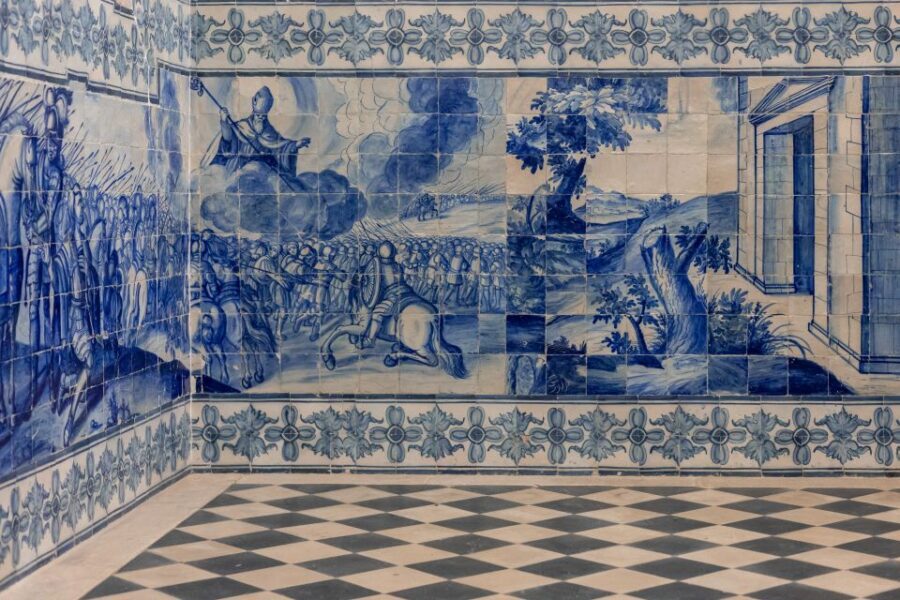
The convent’s cloister and its 18th-century tile panels are a highlight for a very simple reason: you can stand there and really look. Tiles at Graça don’t feel like background. They’re the main event if you like Portuguese religious art, ceramics, and storytelling in visual form.
The best part is that the contrast makes sense. From the terrace you’ll get the sweeping skyline view. Inside, the experience is more intimate and human-scale. If you like architecture, this is the kind of stop where one room leads to the next because you start noticing patterns, materials, and the way light lands on surfaces.
Also, the visit has a nice practical rhythm. One review noted that many people stick to the outdoor Miradouro da Graça area, so the church and monastery spaces can feel quieter. If you time your attention right, you get both: outdoor views and some indoor calm.
Church of Graça: gilded woodwork and grisaille ceiling paintings
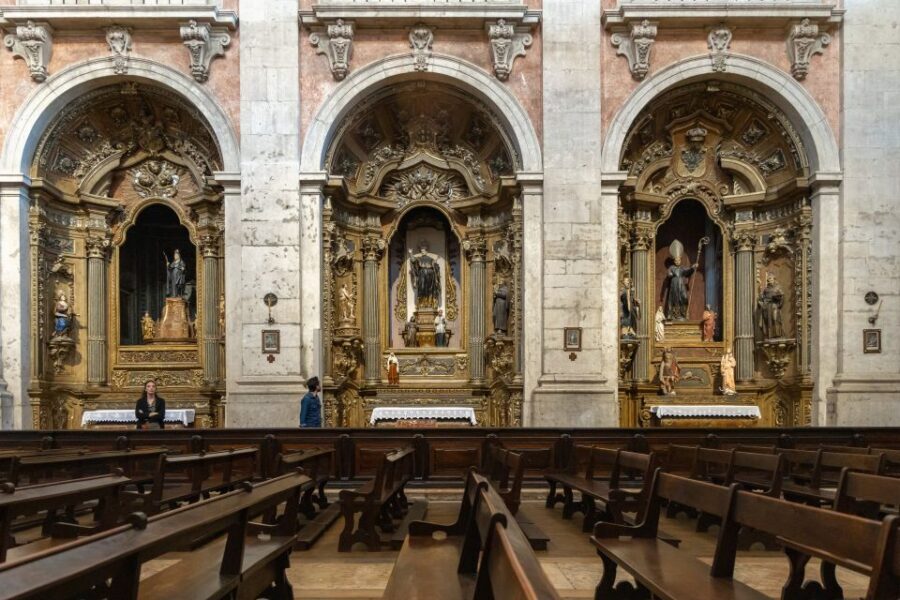
The church is where the “show your work” side of the complex comes through. Expect gilded woodwork and ceiling paintings done in grisaille, a style where images are rendered in shades of gray to create a sculptural, painted effect.
This is the kind of interior that rewards a few extra minutes. If you rush, you miss the contrast between the gold elements and the softer ceiling tones. If you take it slow, you’ll start spotting how the design ties into the Baroque restoration era—more depth, more dramatic visual composition, and more deliberate focal points.



High choir and upper cloisters: the access that makes this ticket feel special
Here’s the practical part that makes the ticket different from many “see the church, move on” experiences. Your entry includes access to the high choir and the upper cloisters.
Even if you’re not a hardcore architecture person, this matters because it changes your viewpoint inside the complex. You’ll get to stand in spaces that aren’t just the ground-floor public areas. The energy is different up there—more elevated perspective, more sense of how the building functioned beyond the main hall.
If you’re short on time, focus on this order:
- First: church details (you can’t recreate them later)
- Second: cloister and tiles (your eyes will keep finding new patterns)
- Third: upper areas (high choir and upper cloisters) before the terrace climb
The terrace viewpoint: St. George’s Castle, Tagus River, Old Bridge, Cristo Rei
Now for the reason most people come: the terrace. After your convent and church visit, you climb to an exterior terrace facing one of Lisbon’s best panoramic viewpoints.
The view is the classic Lisbon set list:
- St. George’s Castle
- The Tagus River
- The Old Bridge
- Far into the distance, Cristo Rei (the Christ Statue)
What you should do once you’re up there: pause and scan. Start with the closest big shapes (castle and river), then trace lines across to the bridge. Only then look to the horizon for Cristo Rei. That order helps you build a “map” of Lisbon in your head, which makes the photos better and more meaningful.
If the sky is hazy, you might still get a strong sense of depth, but distant details will soften. On clear days, you’ll feel that rare thing: the city looks layered, not flat.
Timing and comfort tips for a smooth 1-hour visit
Your ticket is valid for 1 hour from first activation, so treat this like a focused visit, not a half-day wander. A calm plan is:
- Walk in, exchange voucher, then settle into the church and cloister
- Save the high choir and upper cloisters for after you’ve seen the main interior highlights
- Finish with the terrace for the views while your legs still have energy
Comfort note: Lisbon hills are real. Even if you feel fine, plan for stairs and a steady climb. A winter review mentioned cold and wind, and that matches what you should expect on terraces. Wear layers, bring a windproof outer layer if you’re visiting in cooler months, and don’t rely on the weather to be gentle.
Who should book this Graça Church convent and terrace access
This visit is a strong fit if you:
- Want a Lisbon viewpoint that comes with more than one room to explore
- Like Portuguese churches with strong interior details (tiles, woodwork, painted ceilings)
- Appreciate places that show layers of time, from medieval origins to later restoration
- Prefer a stop where you can find quieter moments inside the complex
It’s not a good fit if you:
- Use a wheelchair
- Have altitude sickness concerns (or you know you get symptoms with climbs)
Should you book Graça Church Convent & Terrace access?
Yes, if you want the best value blend of interior history + a top-tier Lisbon panorama in about an hour. The $7 price works because your ticket includes more than a quick look: terrace access plus high choir and upper cloisters means you actually get to experience the complex, not just stand outside.
Book it if you’ll enjoy tiles, church interiors, and views from above. Skip it only if stairs are a problem for you or if you’re sensitive to altitude and hills. Otherwise, this is the kind of Lisbon stop that leaves you with two memories at once: the quiet stone-and-tile rooms inside, and the city unfolding outside.
FAQ
How long is the Graça Church Convent & Terrace experience?
The entry is valid for 1 hour from first activation.
What’s included in the ticket?
It includes entry to the Convent & Church of Graça, plus access to the terrace, the high choir, and the upper cloisters.
Do I need to exchange a voucher?
Yes. You must present your voucher at the ticket office and exchange it for an entrance ticket.
How much does it cost?
The price listed is $7 per person.
What languages are available?
The host or greeter is available in Portuguese and English.
Is this experience wheelchair accessible?
No. It is not suitable for wheelchair users.
Is it suitable for people with altitude sickness?
No. It is not suitable for people with altitude sickness.