REVIEW · LISBON
Lisbon: History, Stories and Lifestyle Walking Tour
Book on GetYourGuide →Operated by LISBOA AUTÊNTICA LDA · Bookable on GetYourGuide
Lisbon is a city of hills and chapters. This 3-hour walk strings together Bairro Alto history, Alfama atmosphere, and big viewpoints like Miradouro São Pedro de Alcântara, plus an iconic tram ride. You also get a few interiors that turn background info into something you can actually see.
I especially like how the guide connects events to street corners. Guides such as Paulo, Ana, and Ricardo are the kind of storytellers who make dates feel practical, not random. I also like the built-in break with coffee and cake, so the tour is more than just standing in the wind taking photos.
One possible drawback: the route is hilly. You’ll walk on slopes and steps, so comfortable shoes matter, and in rain you may get a bit wet even with good guiding.
In This Review
- Key highlights to look forward to
- First impressions: why this route feels like Lisbon
- Bairro Alto: a 16th-century start with a real-world history lesson
- Miradouro São Pedro de Alcântara: views that help you read the city
- San Roque Church: Mannerist and Baroque details you can actually spot
- Carmo Convent and Church: Gothic architecture and the 1974 revolution link
- Santa Justa elevator area: the viewpoint reset for Baixa
- Baixa street life: a practical break in the middle
- Tram ride: why Lisbon’s famous streetcar belongs on a history tour
- Portas do Sol and the edge of Alfama
- Alfama walk: fado culture and the feel of everyday Lisbon
- Ending at Lisbon Cathedral: 1150 and a timeline in stone
- Price, pacing, and who this tour suits best
- Should you book it?
- FAQ
- How long is the Lisbon: History, Stories and Lifestyle Walking Tour?
- What’s included in the price?
- Is hotel pickup and drop-off included?
- What areas and landmarks do we visit?
- What languages are available for the guide?
- Do private or small group options exist?
- Is there free cancellation?
Key highlights to look forward to
- Bairro Alto’s post-1755 earthquake story, and how that reshaped the neighborhood
- Miradouro São Pedro de Alcântara for wide views over Baixa and the south bank of the Tagus
- San Roque Church’s art inside, from gilded details to Mannerist and Baroque style
- Gothic Carmo Convent and Church, plus the site where the Carnation Revolution started in 1974
- Santa Justa area to Baixa, giving you a viewpoint reset and an easy way to orient yourself
- Alfama’s lanes and fado culture, with attention to local saint festivals, especially St. Anthony
First impressions: why this route feels like Lisbon
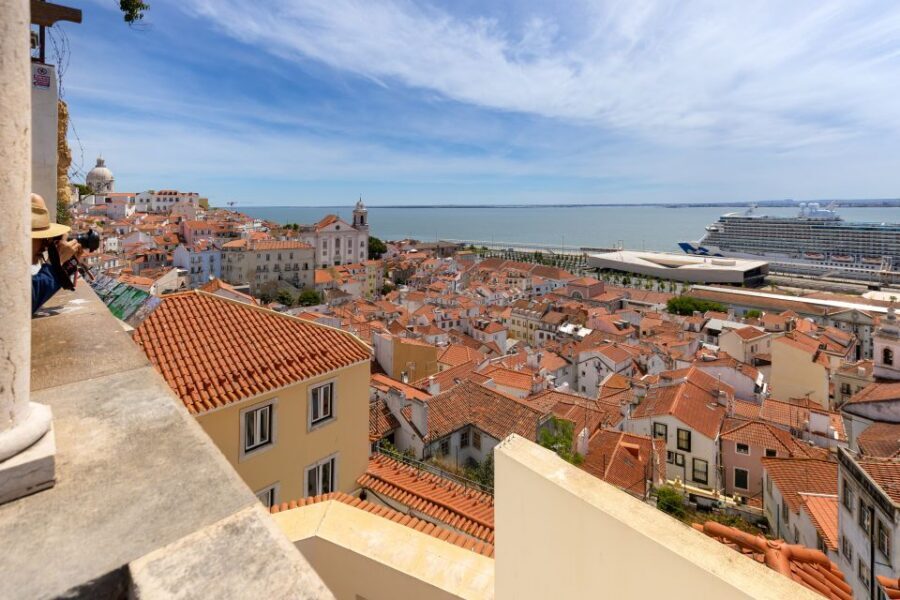
Lisbon has a habit of forcing you to choose between scenery and sense. This tour solves that. You start with Bairro Alto, then move through the central city (Baixa), and end in Alfama, the oldest neighborhood. Along the way, the guide points out how the city’s shape controls everything: where people live, where you can see, and how history leaves marks.
The 3-hour timing is also smart. It’s long enough to cover several meaningful areas, but short enough that you still have energy for dinner plans, tram hopping, or a second wander afterward. At $29 per person, it’s also one of those deals where you’re paying mostly for local storytelling and smart routing, not for a pile of entry tickets you might never use.
You can also read our reviews of more walking tours in Lisbon



Bairro Alto: a 16th-century start with a real-world history lesson
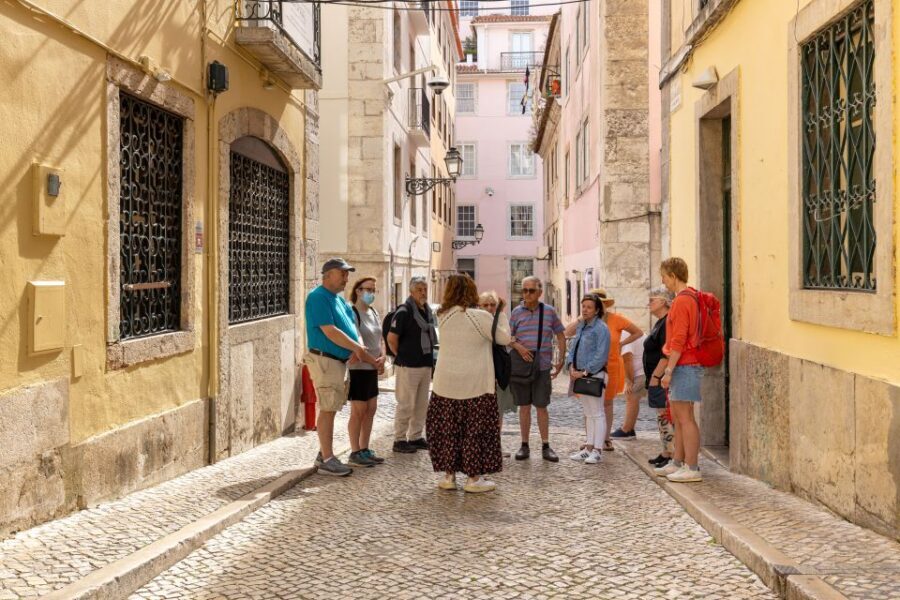
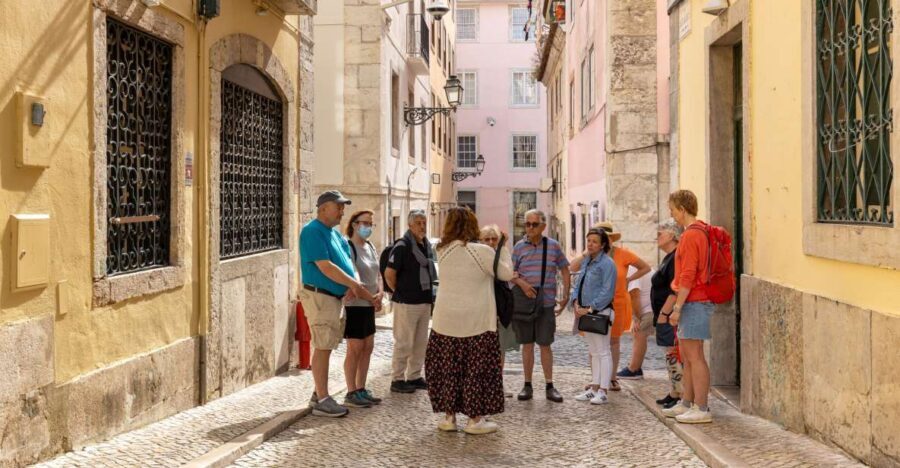
You begin in Bairro Alto, dating back to the 16th century. From the first stretch, you’ll notice how Bairro Alto sits above the city like a lookout. That location matters, because it connects directly to Lisbon’s bigger turning points.
The guide’s story here focuses on renewal after the 1755 earthquake. After that disaster, families shifted toward this area from Baixa and other parts of town, helping kick off a long process of rebuilding. It’s the kind of history that makes sense when you’re standing on the ground and walking the streets that grew after the quake.
Practical tip: bring your “photo legs.” This opening phase is where you’ll likely want quick pauses for angles—especially if your camera favors higher vantage points.
Miradouro São Pedro de Alcântara: views that help you read the city
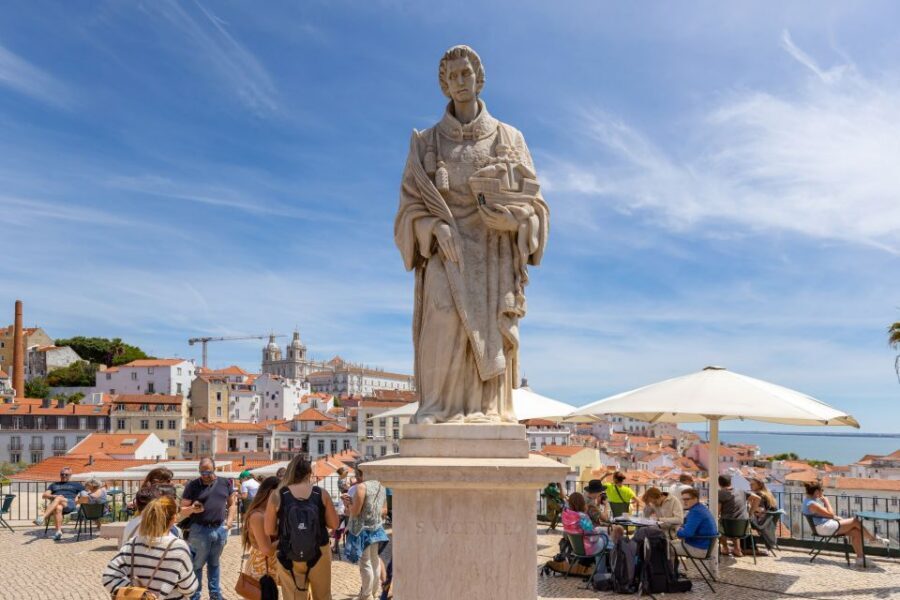
Next comes Miradouro São Pedro de Alcântara and the garden setting around it. This is one of those places where Lisbon’s hills stop being a nuisance and start becoming a tool.
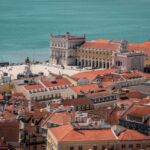
From here you can see Baixa and the south bank of the Tagus River. That visual connection is more than pretty. It helps you understand why certain neighborhoods feel connected but also separate—water, elevation, and street patterns all work together.
What I like about this stop is the rhythm: you get a viewpoint, you get context, then you move on. You’re not just staring at rooftops. You’re learning how the city is laid out.
San Roque Church: Mannerist and Baroque details you can actually spot
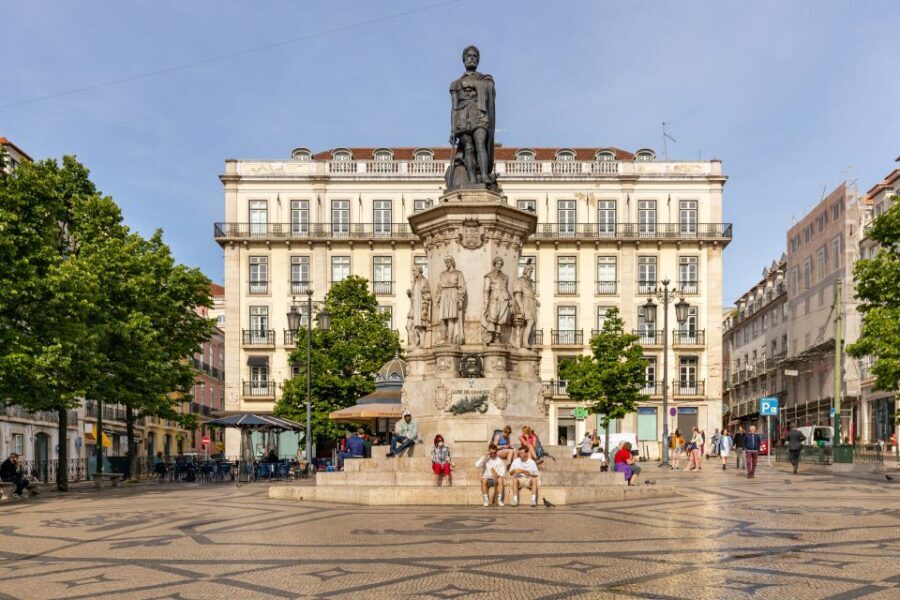
You’ll pass by San Roque Church, built by the Jesuits. The exterior is described as austere, but the inside is where the church becomes a mini museum.
Expect to spend time looking at the gilding, tiles, and paintings. The tour frames these features as examples of Mannerist and Baroque styles, and that matters because you’ll start recognizing what you’re seeing instead of just taking in “pretty decoration.”
If you’re the type who usually skips churches because you think they’ll feel the same, this is a good counterexample. The art details are the focus, and the guide helps you look in a smarter way.
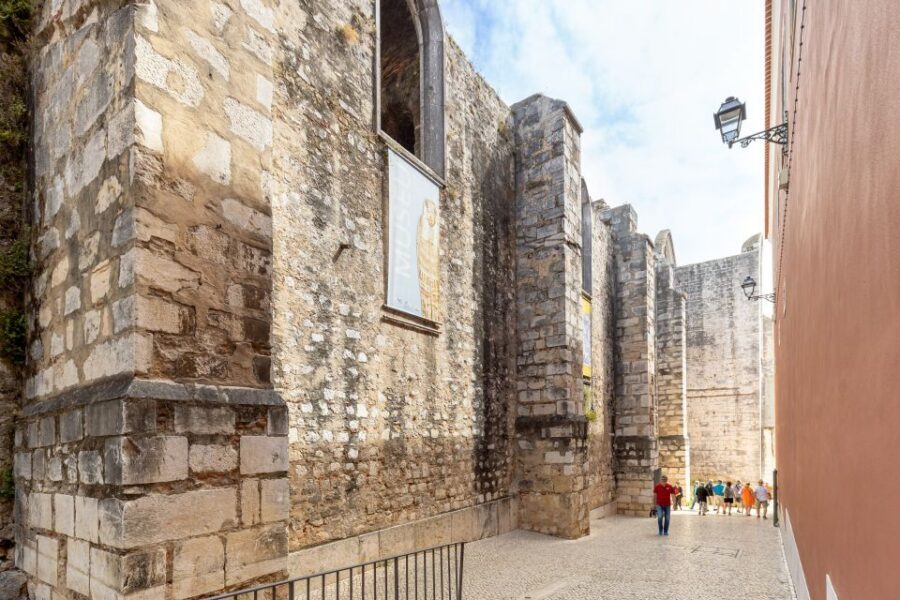
Carmo Convent and Church: Gothic architecture and the 1974 revolution link
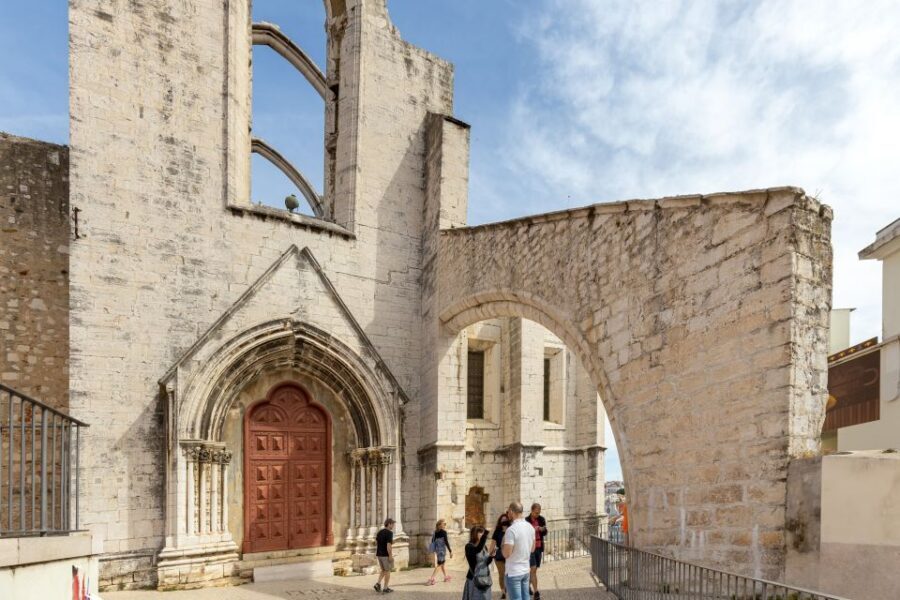
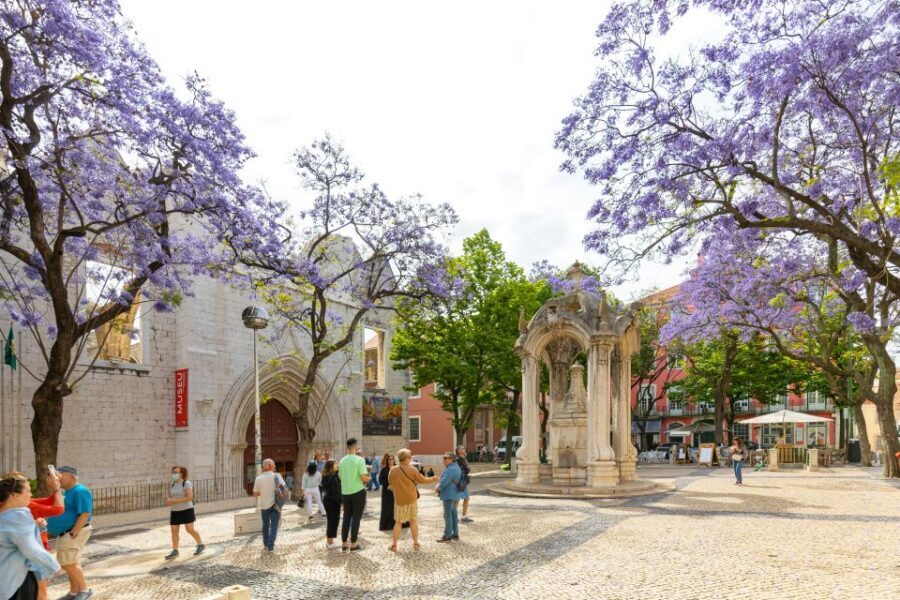
Then you head downhill toward the Carmo convent and church. This is where the tour switches from ornate detail to architecture with a darker, heavier feel—Gothic lines, strong shapes, and a sense of seriousness.
It’s also tied to a modern historical moment. This is the place where the Carnation Revolution began in 1974, ending nearly five decades of dictatorship. That contrast is powerful. You’re looking at Gothic structures, then hearing about a political turning point that happened in your lifetime-level recent history.
Practical consideration: the walk down can feel steeper than it looks. Take it slow here, because you’ll likely want to stop for photos and for what the guide is pointing out.
You can also read our reviews of more historical tours in Lisbon





Santa Justa elevator area: the viewpoint reset for Baixa
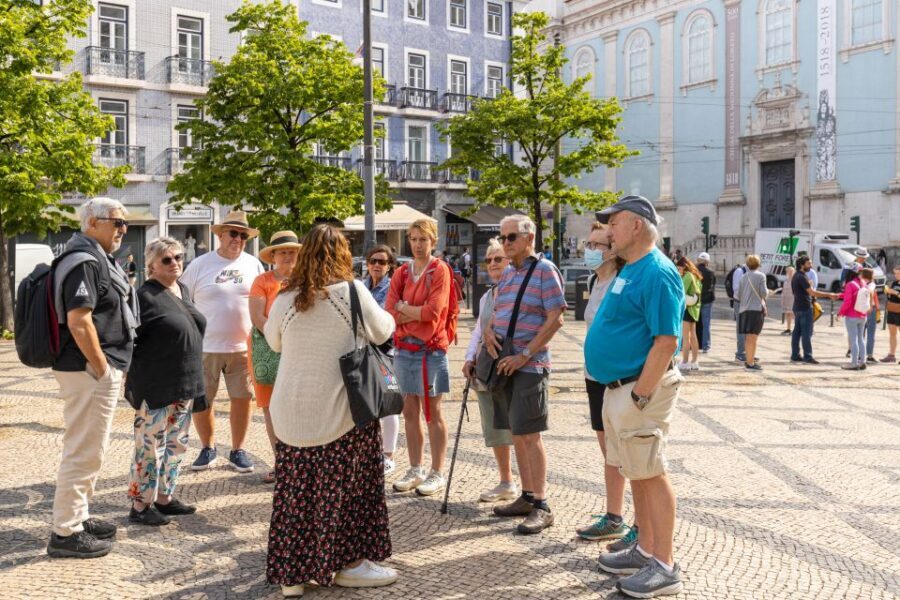
After that, the tour brings you to the Santa Justa elevator, an imposing monument in the Gothic Revival style. Even if you don’t go up, the structure is a strong visual anchor for the rest of Baixa.
This stop is essentially a city-orientation moment. Baixa is the heart of Lisbon, and it can be confusing at street level because everything is close together and the terrain changes things fast. Santa Justa gives you a different angle—both literally and in terms of perspective.
If you’re worried you won’t understand Lisbon geography, this is one of the places that fixes that fast.
Baixa street life: a practical break in the middle
The tour includes time to see a number of attractions in Baixa. This is the segment where the route helps you “map” the city while still keeping the pace manageable.
And then comes a short break. That matters. Lisbon walking tours can turn into marathon photo sessions. Here, you get a moment to reset with coffee and cake. Multiple guides on this kind of route often steer the group toward local classics, and it commonly lines up with pastel de nata and espresso-style coffee during that pause.
Value check: for $29, you’re getting a guided route plus this small food stop. That’s not just a snack. It’s time regained, and it helps you keep your legs working for Alfama afterward.
Tram ride: why Lisbon’s famous streetcar belongs on a history tour
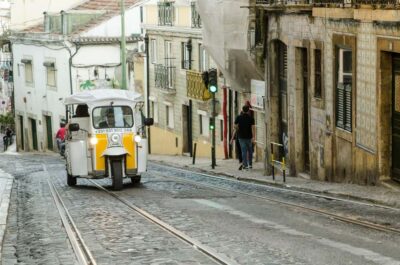
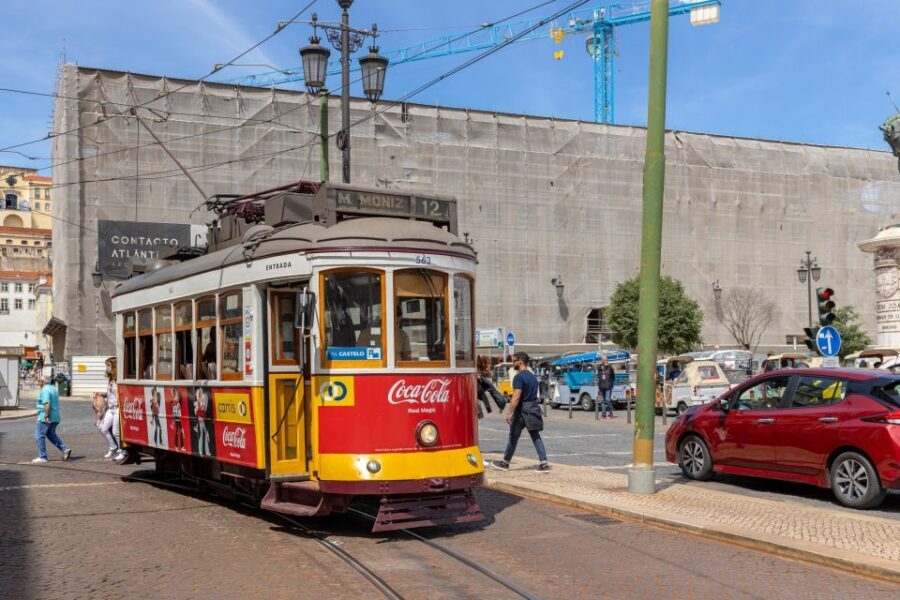
After the break, you take a tram ride, moving up from the castle to Portas do Sol. This is one of those “it’s iconic for a reason” moments.
A tram changes the experience. Walking gives you Lisbon at human scale. The tram gives you speed, curves, and a moving perspective. You’ll also feel the city’s vertical layout in a way that’s hard to understand just from viewing photos.
If you’ve only seen trams from across the street, this adds the missing piece: you ride through the same geometry the city is built on.
Portas do Sol and the edge of Alfama
Portas do Sol is a key transitional viewpoint. From here, you can see the Monastery of São Vicente de Fora and the National Pantheon, and you get your first proper look into Alfama’s maze.
The guide then points out Alfama as an area spanning several narrow streets down toward the River Tagus. This is Lisbon at its oldest-and-most-traditional scale. It’s also where fado fits naturally, because the streets and old stone feel like the right stage for that music.
A fun detail the tour emphasizes is the saint festival tradition, especially St. Anthony. Even if you’re not traveling during peak festival dates, the guide helps you understand why this matters culturally—this isn’t random street decoration. It’s part of community rhythm.
Practical tip: in Alfama, you’ll want to slow down. The streets aren’t just narrow; they’re narrow and turning. Rushing makes it harder to hear stories and harder to spot what the guide is pointing at.
Alfama walk: fado culture and the feel of everyday Lisbon
Exploring Alfama is the “lived-in” portion of the tour. Here, history isn’t locked behind a door. It’s in the street layout, the small turns, and the way people move through the neighborhood.
The guide’s storytelling keeps it from turning into a simple photo walk. You’ll learn how Alfama became known for fado houses and why the neighborhood’s identity ties into tradition and celebration.
And because you’re moving on foot, you get a sense of scale. The hills that felt like obstacles earlier start to feel like the point. Alfama’s design makes you work a little, but it’s also why the neighborhood feels so unmistakably Lisbon.
Ending at Lisbon Cathedral: 1150 and a timeline in stone
The tour ends at Lisbon Cathedral, built in 1150, just three years after the city was taken back from the Moors. That specific timeline gives you a clear anchor for what you’ve been hearing all along.
Over time, the cathedral changed in architectural style. That blend of eras is what makes ending here feel right. The tour started with Lisbon reshaped by a disaster and by neighborhood renewal. It ends with a religious and civic center that has been reshaped by centuries of change too.
If you want a good last stop that feels both historical and readable, this is a strong choice.
Price, pacing, and who this tour suits best
At $29 for about 3 hours, this tour is good value if you’re trying to do two things at once: learn the story and get your bearings.
Here’s what you’re paying for, beyond the obvious route:
- A live guide who turns landmarks into context (people like Paulo and Ricardo show up as favorites in this tour’s guide roster)
- A tram ride, which would cost you time and planning even if you ride trams on your own
- Coffee and cake, which keeps the pacing realistic
- A structured loop that links Bairro Alto, Baixa, and Alfama without you having to connect everything map-first
Pacing note: the walk includes hills and steps. It’s not a fitness boot camp, but it’s not a stroller route either. If you’re okay with moderate walking and you take short pauses, you’ll likely enjoy it a lot.
Weather note: Lisbon weather can shift fast. One reason this tour earns high satisfaction is that guides tend to adapt when conditions change, keeping the tour moving and the vibe friendly.
Should you book it?
I think you should book this tour if you want a first-trip shortcut into Lisbon’s “how it works.” In three hours you get the big story arcs, key viewpoints, a tram ride, and neighborhood texture in Bairro Alto and Alfama.
If you hate stairs or you know you’ll need long rests, you might want to rethink. But if you can handle a hilly walk and you like understanding where the city’s character comes from, this is one of the best ways to get your bearings fast and still leave with real stories, not just random landmarks.
FAQ
How long is the Lisbon: History, Stories and Lifestyle Walking Tour?
The tour lasts 3 hours.
What’s included in the price?
It includes a live guide, a walking tour, a tram trip, coffee, and cake.
Is hotel pickup and drop-off included?
No, hotel pickup and drop-off are not included.
What areas and landmarks do we visit?
You’ll visit Bairro Alto, Miradouro São Pedro de Alcântara, San Roque Church, Carmo convent and church, Santa Justa elevator, Baixa, Portas do Sol, the Alfama district, and you end at Lisbon Cathedral. The tour also includes views around the Monastery of São Vicente de Fora and the National Pantheon.
What languages are available for the guide?
Guides are available in Portuguese, Spanish, Italian, German, French, and English.
Do private or small group options exist?
Yes, private or small groups are available.
Is there free cancellation?
Yes. You can cancel up to 24 hours in advance for a full refund.