REVIEW · LISBON
Lisbon: Walking Tour in the Center (Max 12 Participants)
Book on GetYourGuide →Operated by WALK 'N' ROLL Tours · Bookable on GetYourGuide
If Lisbon feels like a lot, this walk makes it click fast. I like the small group size (max 12) and the way you hit iconic spots like Elevador de Santa Justa and Carmo Convent ruins without getting stuck on transport. One thing to consider: it’s a steady route with 3 hills and lots of up-and-down, so it’s not great if your legs are having a rough day.
You start in the plan-friendly heart of town at Rossio Square, then work your way through Baixa, Chiado, Bairro Alto, and up into Alfama. The guiding is in German, and you’ll also get a liquor tasting plus a short food moment along Rua Augusta, so it’s not only about looking—it’s about tasting your way through the old-center vibe.
Expect to move rain or shine. The weather doesn’t stop the route, and the walking pace stays active for about 3.5 hours, so bring comfortable shoes, water, and sunscreen.
In This Review
- Key highlights at a glance
- Where this Lisbon walking route shines (and what to watch for)
- Rossio Square start: getting oriented in Baixa de Lisboa
- Santa Justa Lift and Carmo Convent ruins: Lisbon’s vertical story
- Chiado and Praça Luís de Camões: poets, everyday shops, and street scale
- Bairro Alto and the 30-minute reset: nightlife streets without the chaos
- Alfama viewpoint over the Tagus: the moment Lisbon opens up
- Finishing at Praça do Comércio: tiles, Rua Augusta, and Arco de Rua Augusta
- Price and value: why $47 feels fair for 3.5 hours
- Who should book this walk (and who should skip it)
- Should you book this Lisbon walking tour?
- FAQ
- Where does the tour start?
- How long is the Lisbon walking tour?
- What is the group size?
- What language are the guides?
- What tastings are included?
- Is this tour wheelchair-friendly?
- What should I bring?
Key highlights at a glance
- Rossio Square start: easy to find, with clear meeting instructions at the north fountain
- Santa Justa to Carmo: one of Lisbon’s best “vertical + ruins” storylines in walking form
- Chiado and Praça Luís de Camões: former poets’ quarter energy mixed with everyday city life
- Bairro Alto evening-street feel: residential lanes that shift into nightlife-adjacent streets
- Alfama viewpoint over the Tagus: one of those stops where the city suddenly feels huge
- Finish by the river at Praça do Comércio: end at the Arco de Rua Augusta with the Tagus right there
Where this Lisbon walking route shines (and what to watch for)
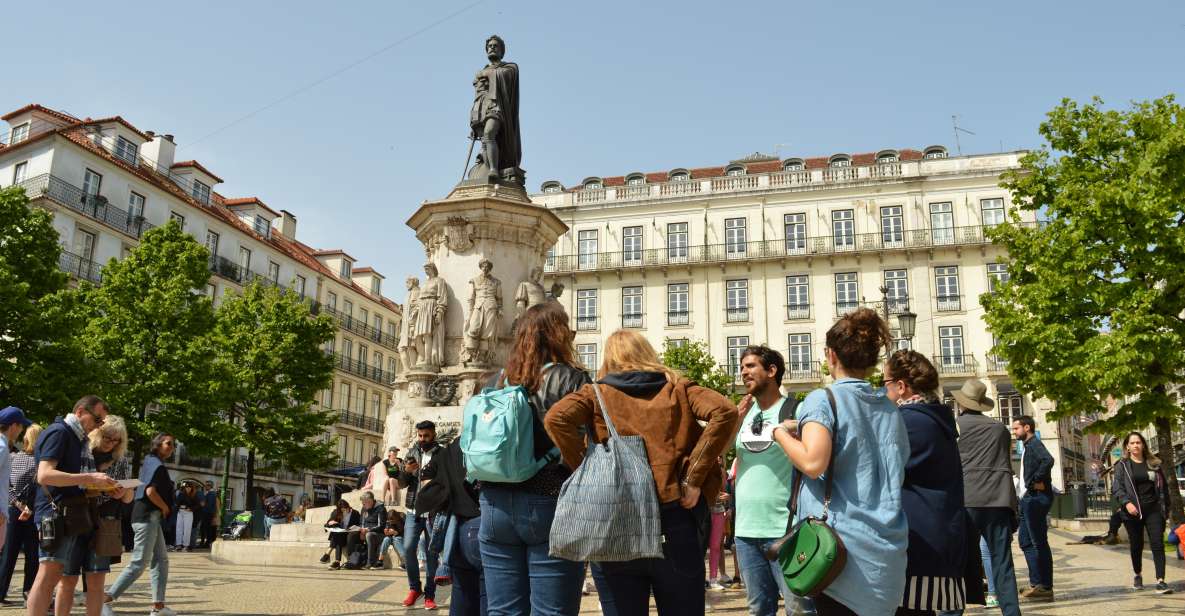
This tour is built for people who want Lisbon’s center to make sense in a short time. You get the big geography lessons fast: different neighborhoods sit on different levels, the streets twist to deal with the hills, and the city’s identity shows up again and again—especially in tiles, viewpoints, and historic landmarks.
I especially like two things about this format. First, the route ties together Baixa’s grid with the older, more winding streets of Alfama, so you’re not just checking boxes. Second, the guide keeps the story moving with Portuguese history and culture, which matters because Lisbon is easy to look at and hard to fully read if you’re on your own.
The main drawback is physical. You’ll be walking up and down three hills, and the tour isn’t suitable for people with mobility impairments or wheelchair users. Also, no baby strollers and no luggage or large bags are allowed, so pack light and keep your day comfortable.
You can also read our reviews of more walking tours in Lisbon



Rossio Square start: getting oriented in Baixa de Lisboa
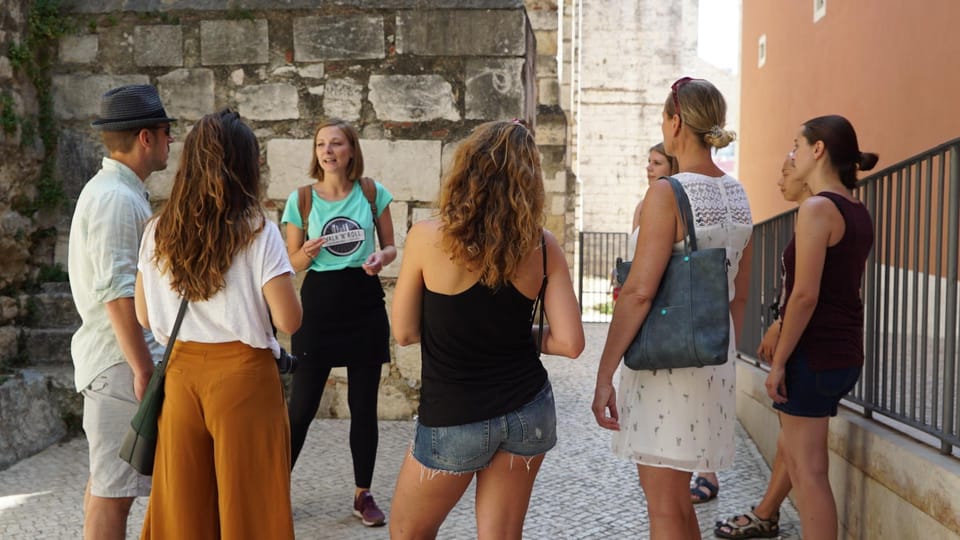
You meet at Rossio Square, at the north fountain, between the National Theater and the Royal Statue. Your guide is easy to spot, wearing a mint-colored WALK ’N’ ROLL t-shirt or carrying a mint burlap bag—small detail, but it saves time when you’re trying to find the group fast.
From there, you head into Baixa de Lisboa, the lower town. This is where you’ll feel the structure of the city. Baixa is more regular than the medieval lanes you’ll see later, so it’s a great place to start because it helps you get your bearings quickly. Expect guided stops and narration as you move through the area rather than a “follow the leader” stroll.
Why this part is valuable: Baixa is the foundation for how Lisbon rebuilt itself and how the center functions. Even if you think you already know Lisbon from photos, this section helps you understand what’s behind the scenery: streets, public spaces, and how people traditionally moved through the city.
A practical note: in the early part, you’ll likely get the easiest walking feel of the tour. That means it’s a good moment to get your water out, adjust your pace, and get your shoes settled before the hills start stacking up.
Santa Justa Lift and Carmo Convent ruins: Lisbon’s vertical story
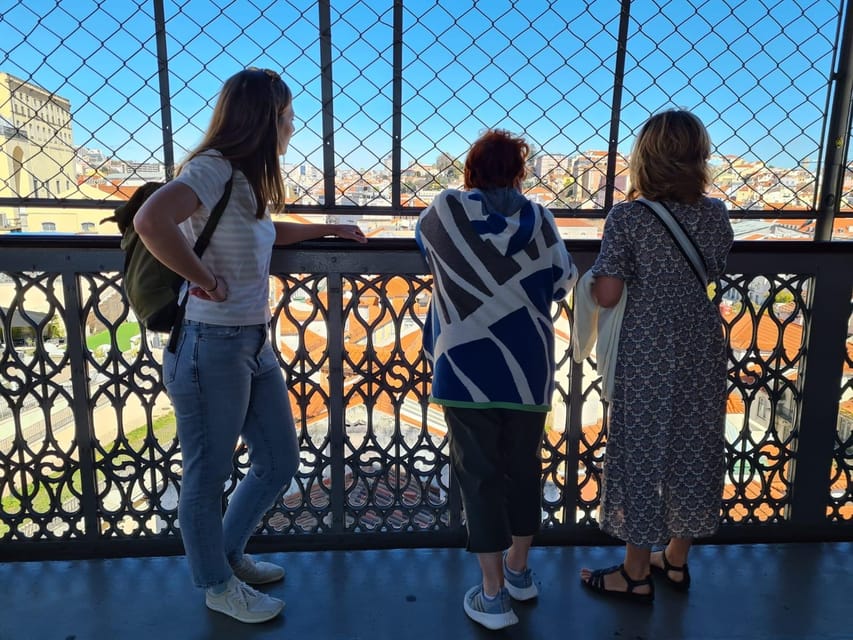
One of the tour’s strongest segments is the pairing of the Elevador de Santa Justa area with the Carmo Monastery ruins. You’re not just seeing landmarks—you’re watching how Lisbon climbs and how history left its marks.
Santa Justa is a perfect “photo + context” stop. The lift connects two levels of the city, and walking here gives you a ground-level sense of how the hills shape everyday life. After that, you move toward the impressive downtown ruins at Carmo Convent. Even without going inside anywhere, the ruins give you that instantly Lisbon feeling: stone, age, and the sense that something historic sits right in the middle of modern streets.
Why this works for visitors: Lisbon’s beauty can look effortless from a postcard, but the city is physical. When you connect a steel-and-stone landmark like Santa Justa with the dramatic remains of Carmo, you understand how the city developed—and why you keep seeing stairways, elevations, and viewpoints.
Possible drawback: if you’re sensitive to steps or steep patches, this is where you should slow down a bit. The tour description makes it clear that there’s hill climbing involved, and this stretch is part of that.
Chiado and Praça Luís de Camões: poets, everyday shops, and street scale
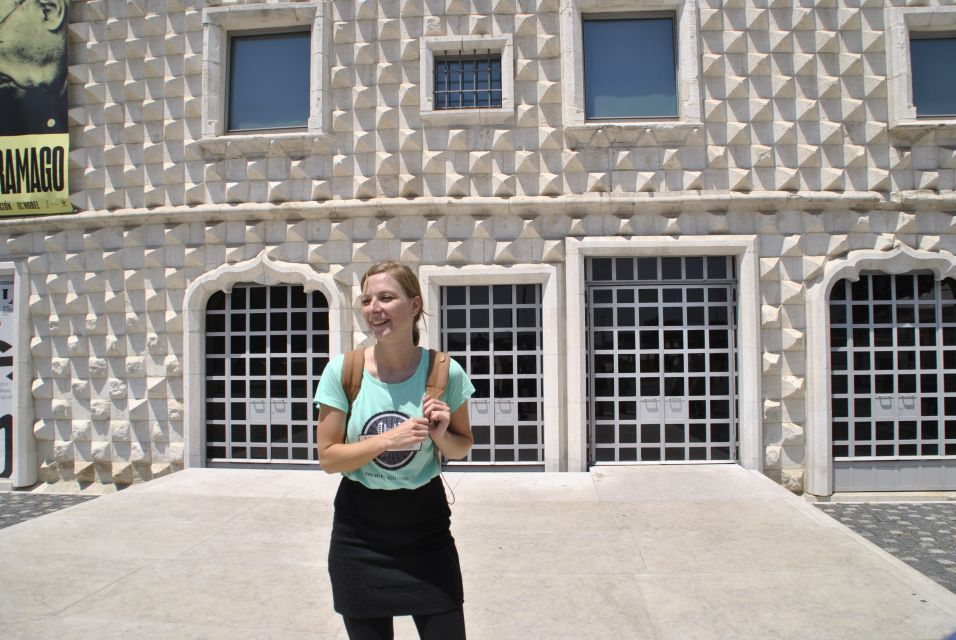
Next you shift into Chiado, often described as the former poets’ quarter. That label matters. Chiado has a way of feeling intellectual and artistic, but you’ll still experience it as a neighborhood with real foot traffic, shops, and daily movement.
Around Praça Luís de Camões, the guide’s storytelling is especially useful because the square isn’t only a view stop—it’s a place where Lisbon’s public-life rhythm comes through. It’s also a nice contrast after the more dramatic ruins area. You’re back to human-scale streets, open spaces, and the feeling of a city that never fully stops.
What I like here: this section helps you avoid the common mistake of treating Lisbon like a series of monuments. Chiado shows you that the historic center is still lived-in, and you’ll likely pick up practical tips for where to spend a little extra time after the tour ends.
Consideration: Chiado can be busy in general. You’ll be moving through it with a group, so keep close when the sidewalk narrows and expect slower walking in busier pockets.
Bairro Alto and the 30-minute reset: nightlife streets without the chaos
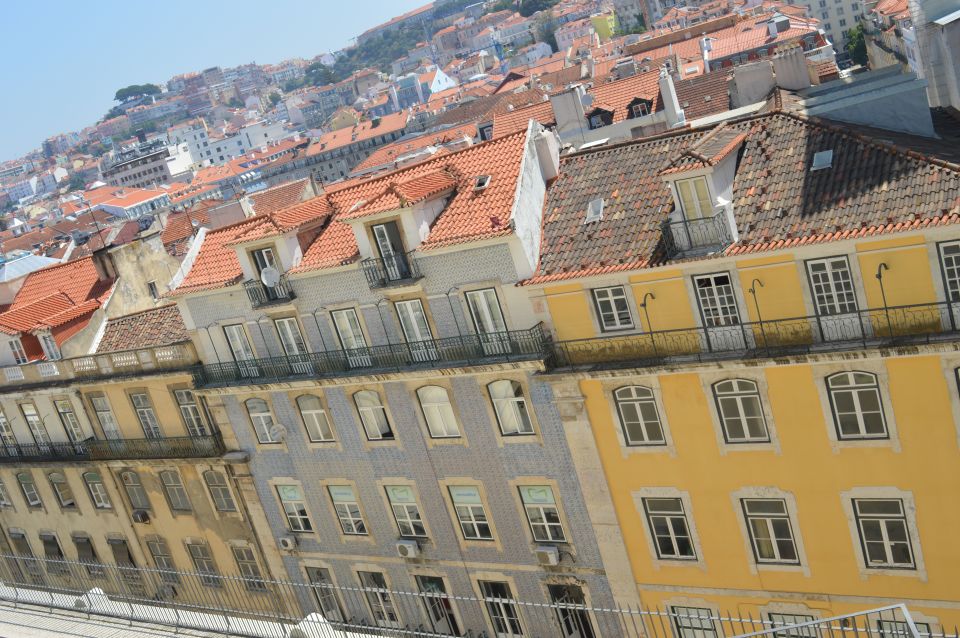
Then comes Bairro Alto, described as a residential and nightlife district. You won’t be stuck in a party atmosphere, though. Instead, you get a guided look at how the neighborhood’s layout feels—streets that slope, lanes that connect to viewpoints, and the way people gather in this area at different times.
The tour includes a short break partway through, specifically a 30-minute pause after reaching the Miradouro area for a breath. That matters more than you might think. After hills and tight streets, you need a moment to regroup, use the facilities if available nearby, and refill water before continuing upward again.
Why Bairro Alto is a good “middle step” on this route: it transitions you from the more structured center zones into the older, higher-feeling streets that lead into Alfama. It also gives you a sense of Lisbon’s social geography—where people go, how neighborhoods differ, and why the city’s viewpoints are so central to daily life.




Alfama viewpoint over the Tagus: the moment Lisbon opens up
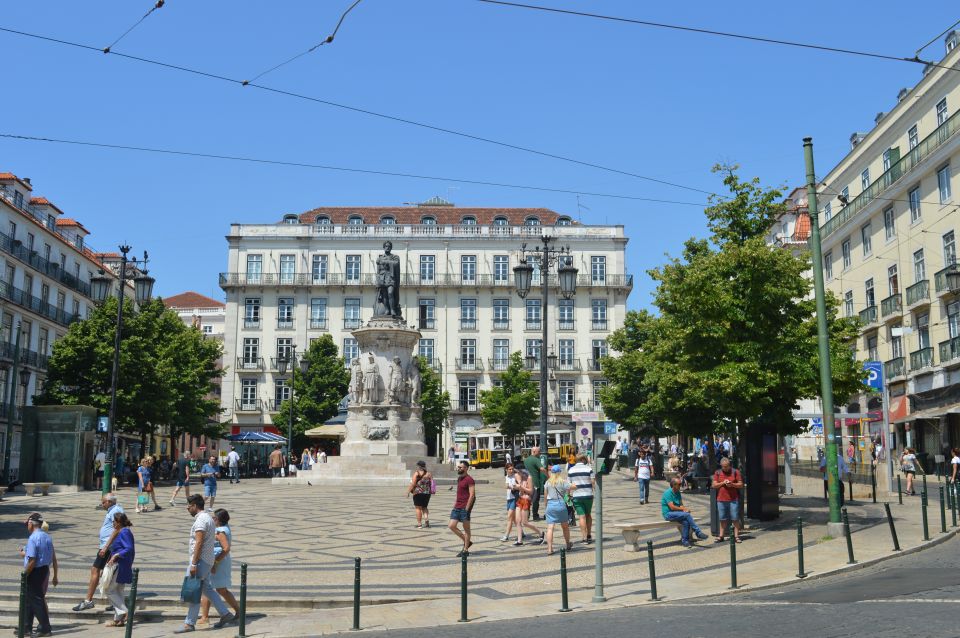
Now you reach Alfama, and this is the big payoff part of the tour. You’ll explore the romantic, twisting lanes and end up at a viewpoint over the Tagus River. That river view isn’t a generic “look at water” moment. It’s where Lisbon’s scale becomes obvious: the buildings, the hills, and the water all stack together.
Alfama is where Lisbon stops feeling like architecture and starts feeling like a living neighborhood. Even with a guided group, the lanes make you slow down because they’re not built for speed. The guide’s Portuguese culture and history storytelling helps you connect why the neighborhood developed the way it did and what traditions still show up in street life.
What you’ll likely enjoy most: the viewpoint feels like a mental reset. It’s the kind of stop that makes your earlier walking make sense. Baixa taught you structure. Santa Justa and Carmo showed you vertical history. Chiado and Bairro Alto showed you daily Lisbon. Alfama brings it all together with a clear line-of-sight view.
Practical drawback: since you’re still dealing with hills, bring comfortable shoes and don’t underestimate the climb. If you pace yourself and take the breaks when offered, it’s manageable, but it’s not a leisurely stroll.
Finishing at Praça do Comércio: tiles, Rua Augusta, and Arco de Rua Augusta
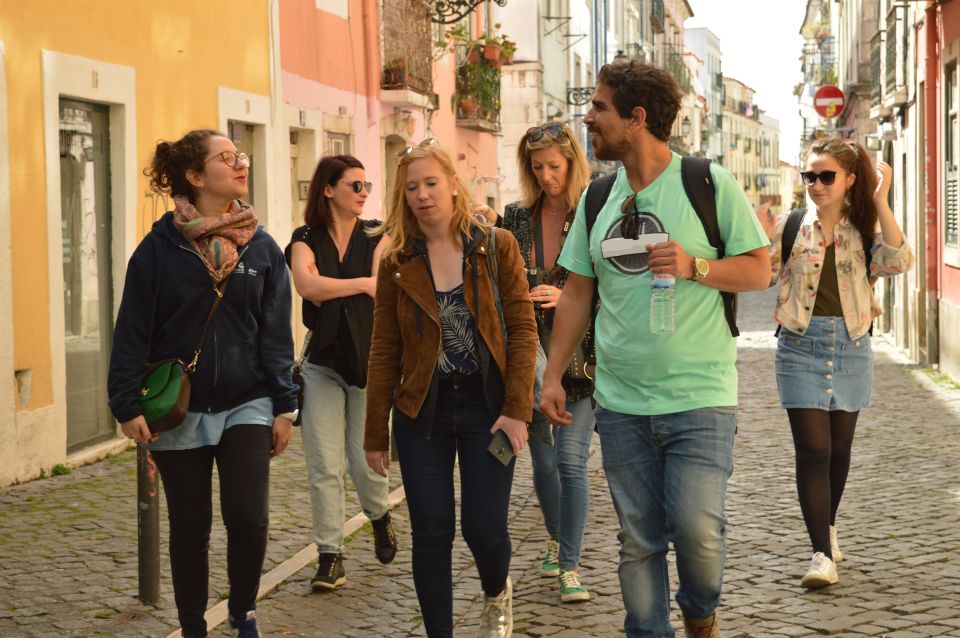
You wrap up near the river at Praça do Comércio, by the Arco de Rua Augusta. This is a great ending because it gives you a full-circle feel. You started in Rossio in the center of town, and you end at the edge where the Tagus frames the city.
Along the way, you’ll pass Rua Augusta and see the famous arc area that anchors the riverside promenade. The tour also includes a short food-tasting moment here—just a taste, not a full meal—so it’s a nice little reward without turning the day into a long break for eating.
One of the most Lisbon-like details you’ll notice during the walk is the world-famous Lisbon tiles. These tiles aren’t only decoration. They show up as a visual guide to history, neighborhood identity, and everyday aesthetics, and seeing them during actual street walking helps you remember them later.
Why this ending is good for planning: after you finish by the river, you’re positioned near where many people want to go next—either further along the promenade or back toward transport. It’s an easy “I did the hard part” finish.
Price and value: why $47 feels fair for 3.5 hours
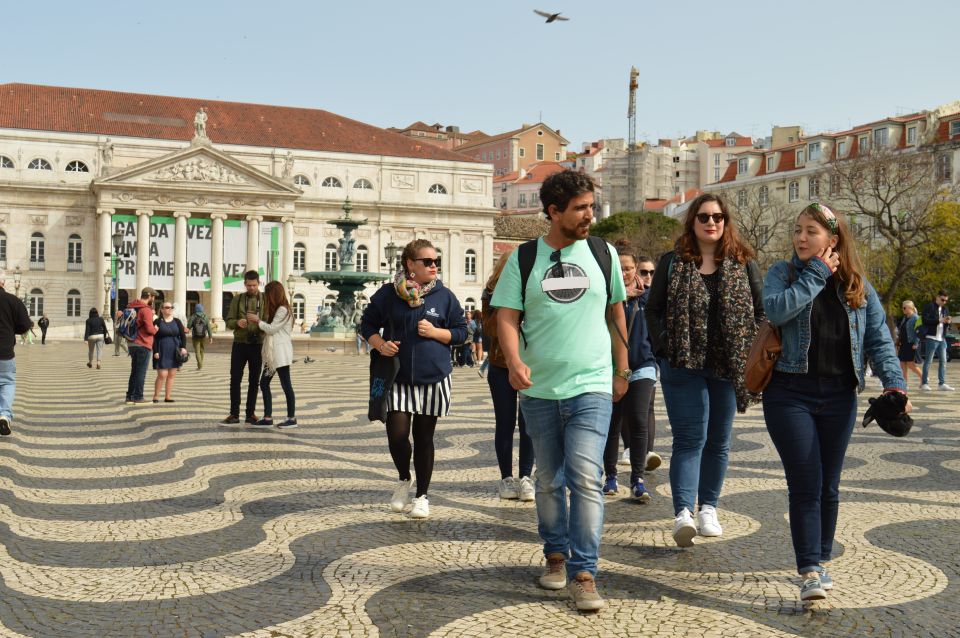
At $47 per person for about 3.5 hours, this is priced like a focused city experience rather than a casual stroll. The value comes from a mix of things that cost money separately: a live guide (German), time-saving navigation through multiple neighborhoods, and included liquor tasting.
You also get access to viewpoints and historic landmarks that would take time to connect on your own. Lisbon’s hills mean walking is the main effort, so having a guide reduces decision fatigue: you don’t have to figure out which streets to choose or how to sequence them for the best payoff.
Is it expensive? For a small group tour, it’s fairly reasonable, especially since the route covers several major areas in a short time. The biggest “cost” isn’t money—it’s energy. If you’re physically fit and comfortable with hills, the price feels like it buys you a smart, guided route. If you’re not, the route may feel like more work than reward.
Who should book this walk (and who should skip it)

This tour fits best if you:
- want a first-time-friendly way to understand Lisbon’s center neighborhoods in a few hours
- like guided storytelling and cultural context, not just landmark photos
- enjoy viewpoints and street details like tiles as much as major sights
- prefer smaller groups (max 12) so you can actually hear and keep pace
Skip or consider something else if:
- walking up and down hills is difficult for you (the tour is not suitable for wheelchair users and people with mobility impairments)
- you travel with strollers or need to bring luggage/large bags (those aren’t allowed)
- you’re looking for a very relaxed pace with minimal steep sections
Also note the guide language is German. If you don’t read or understand German, check alternatives before booking, because the tour is designed for that language.
Should you book this Lisbon walking tour?
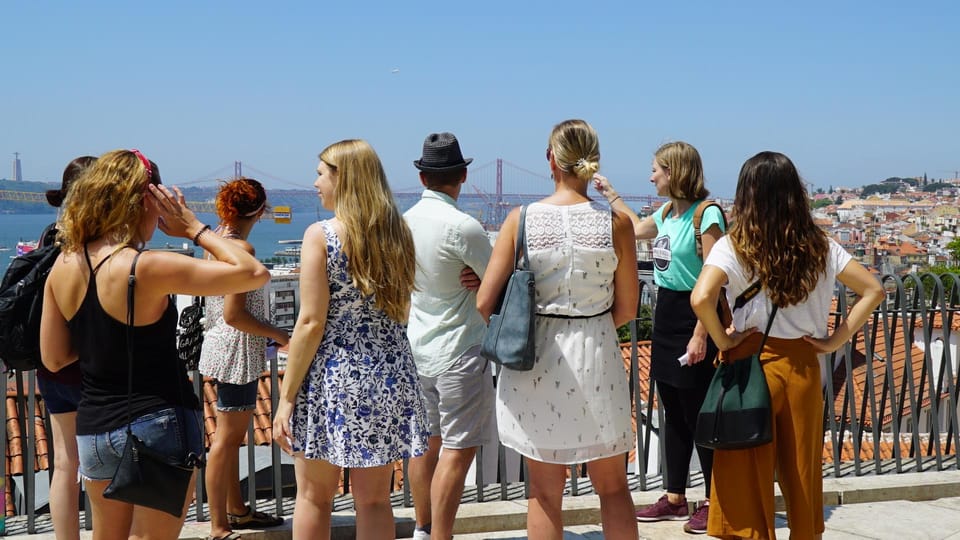
If you want a practical way to connect Baixa, Chiado, Bairro Alto, and Alfama into one coherent Lisbon story, I think this is a smart booking. The route hits major highlights like Santa Justa, Carmo Monastery ruins, and an Alfama Tagus viewpoint, and the ending by Praça do Comércio helps you finish with your bearings in place.
Book it if you’re comfortable with steady walking and hill climbs, and you’ll appreciate a guide-led pace with tastings included. Don’t book it if mobility is an issue or if you’d rather do a flatter, more flexible route on your own.
FAQ
Where does the tour start?
The meeting point is Rossio Square, at the north fountain between the National Theater and the Royal Statue.
How long is the Lisbon walking tour?
It lasts 3.5 hours.
What is the group size?
The maximum group size is 12 participants. A private tour option is also available.
What language are the guides?
The live tour guide speaks German.
What tastings are included?
The tour includes a liquor tasting, and there is also a short food tasting moment along Rua Augusta.
Is this tour wheelchair-friendly?
No. It is not suitable for people with mobility impairments or wheelchair users.
What should I bring?
Bring comfortable shoes, sunscreen, and water.