REVIEW · LISBON
Lisbon Tram No. 28 Ride & Walking Tour
Book on GetYourGuide →Operated by Lisbon Spirit · Bookable on GetYourGuide
Tram 28 hits you fast, then climbs. This 3-hour mix of historic Tram 28 and a walk through Alfama is one of the quickest ways to feel Lisbon in motion—especially with the big hilltop views over the river and rooftops. I love how the ride turns ordinary streets into lookout moments, and I love the way the walk connects those sights to real everyday life in Alfama and fado culture. One thing to watch: you’re using Tram 28 as public transport, so traffic and timing can shift, and the walking includes steep, uneven ground.
You’ll meet at Praça Luís de Camões near the statue, and your guide wears a black backpack with the Lisbon Spirit logo. With a small group capped at 10, you get more guide time and fewer long lines than you’d expect from doing it solo. Bring comfy shoes—this is a “walk a lot, look a lot” kind of outing.
In This Review
- Key reasons Tram 28 + Alfama works so well
- Tram 28: why this ride still feels like Lisbon, not a museum
- Praça Luís de Camões start: small group energy and a clear meeting point
- On board Tram 28: hills, street scenes, and timing realities
- Sé de Lisboa, the cathedral walls, and 1,000 years of what survived
- São Vicente de Fora and the Pantheon: two big skyline makers
- Alfama on foot: steep lanes, small squares, and fado in real life
- Feira da Ladra timing: adding flavor when the flea market runs
- Price and value: what $23 buys you in a city that charges for views
- Who should book this Tram 28 + Alfama tour
- Practical tips so you enjoy it more
- Should you book this tour?
- FAQ
- What’s the duration of the Lisbon Tram No. 28 Ride & Walking Tour?
- Where do I meet the guide?
- Is pickup or drop-off included?
- How much does the tour cost?
- What’s included in the tour?
- What language is the tour guide?
- What should I bring for the walking part?
- Will Tram 28 always run on time?
- Does the tour include Feira da Ladra?
- FAQ
- What day is Feira da Ladra included?
- How big is the group?
- Is fado part of the tour?
- Can I cancel for a refund?
- Is English support available during the tour?
- Are any tickets to specific museums listed as included?
- Does the tour include visiting Sé de Lisboa, São Vicente de Fora, and the National Pantheon?
- What if I want to pay later?
- Do I need to plan my own way back?
Key reasons Tram 28 + Alfama works so well
- Tram 28 as the star ride: it climbs Lisbon’s hills through tight Old Town streets, so the route itself becomes part of the sightseeing
- Big panoramic viewpoints: you’ll catch sweeping views as the tram heads uphill and slows for turns
- Feira da Ladra on Tue/Sat: on Tuesdays and Saturdays, the tour can include the famous flea market vibe
- Landmarks with stories: you’ll see Sé de Lisboa plus the Mosteiro de São Vicente de Fora
- The Pantheon’s dome moment: you’ll learn the legend tied to the Panteão Nacional as it shapes the skyline
- Alfama + fado culture: you’ll walk the maze of lanes and hear how Portuguese fado connects to place and people
Tram 28: why this ride still feels like Lisbon, not a museum
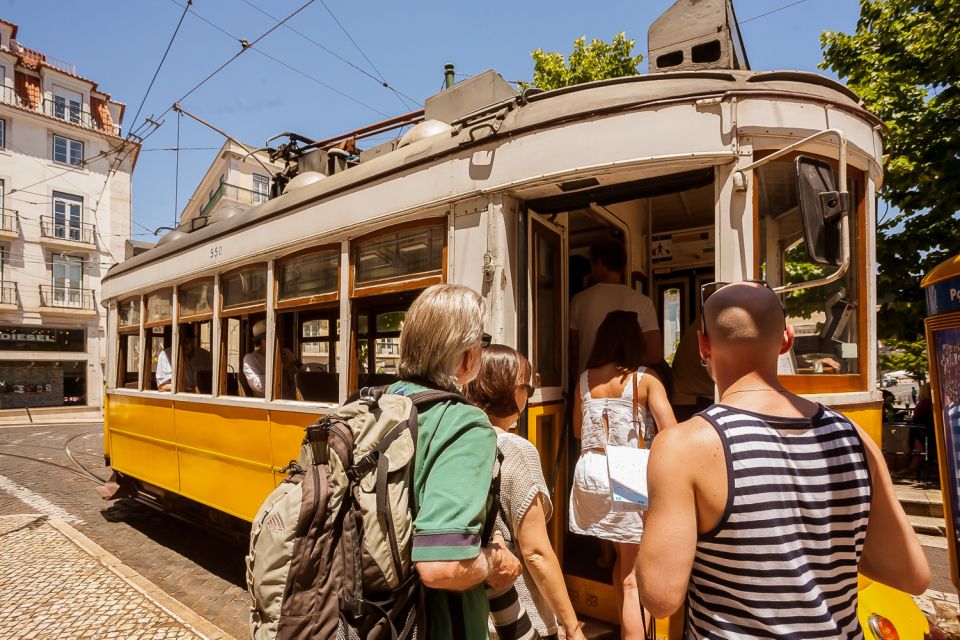
Lisbon has plenty of pretty streets. Tram 28 is different because it still behaves like a living local route. You board a historic tram car and immediately feel the rhythm: the slow grinds, the sharp turns, and the way the city reveals itself in slices—first street-level, then hill-level.
What makes Tram 28 so worth it is the climb. As the tram works its way uphill, your views jump from building facades to wider angles: rooftops, church shapes, and the river’s presence in the distance. It’s the kind of “wait for the next curve” sightseeing that feels more fun than standing in front of a single monument.
This tour also avoids the common trap of doing Tram 28 as a quick photo stop. The walking portion turns the ride into context. You don’t just get a cool ride—you learn how the city’s oldest quarters grew around hills, faith, and neighborhood traditions.
You can also read our reviews of more walking tours in Lisbon



Praça Luís de Camões start: small group energy and a clear meeting point
Meeting at Praça Luís de Camões is practical. It’s a straightforward place to find, and the tour’s signpost is simple: a guide with a black backpack showing the Lisbon Spirit logo. If you’re the type who hates hunting for the right group, this helps.
The group size matters more than you might think. When you keep it to about 10 people, it’s easier for the guide to manage crossings, keep everyone together on steep lanes, and answer questions without rushing you out the door. You also get more flexibility if the tram situation changes.
If you’re hoping for door-to-door pickup, note that there’s no pickup or drop-off. I’d plan to arrive a few minutes early at the plaza, then let the guide lead.
On board Tram 28: hills, street scenes, and timing realities
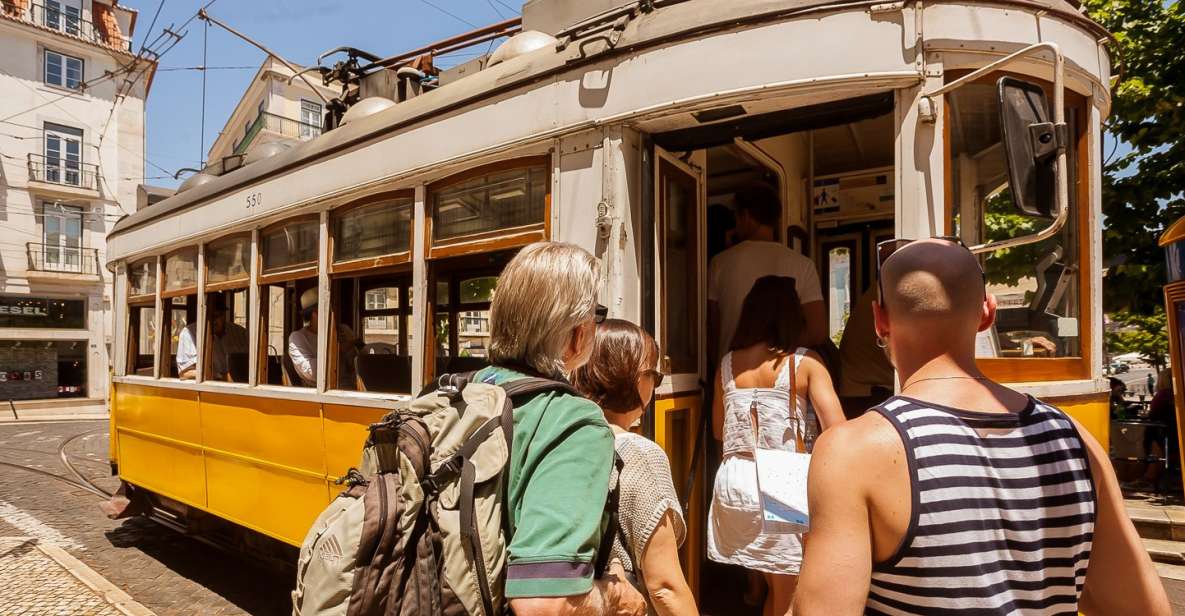
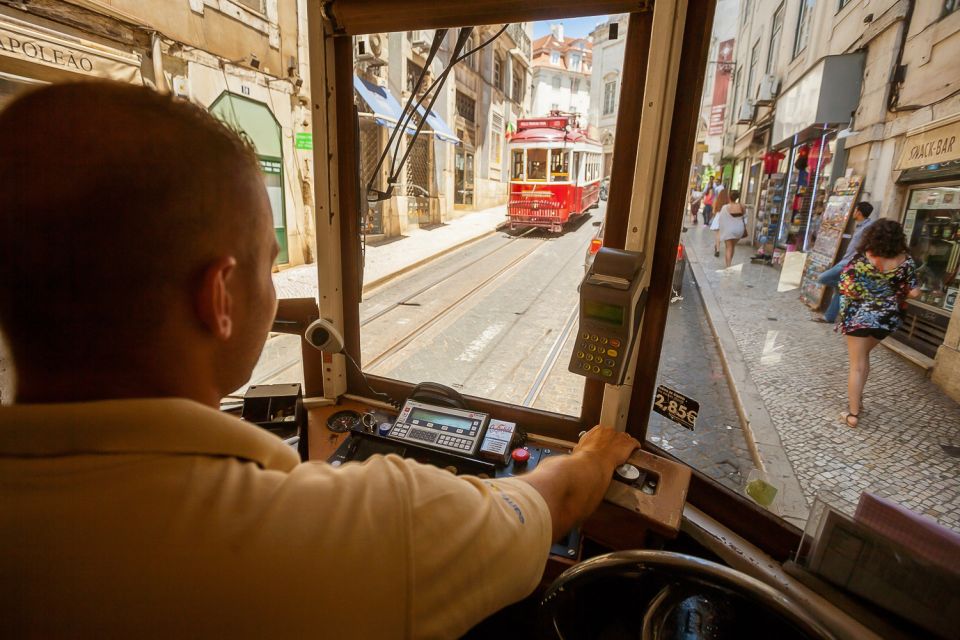
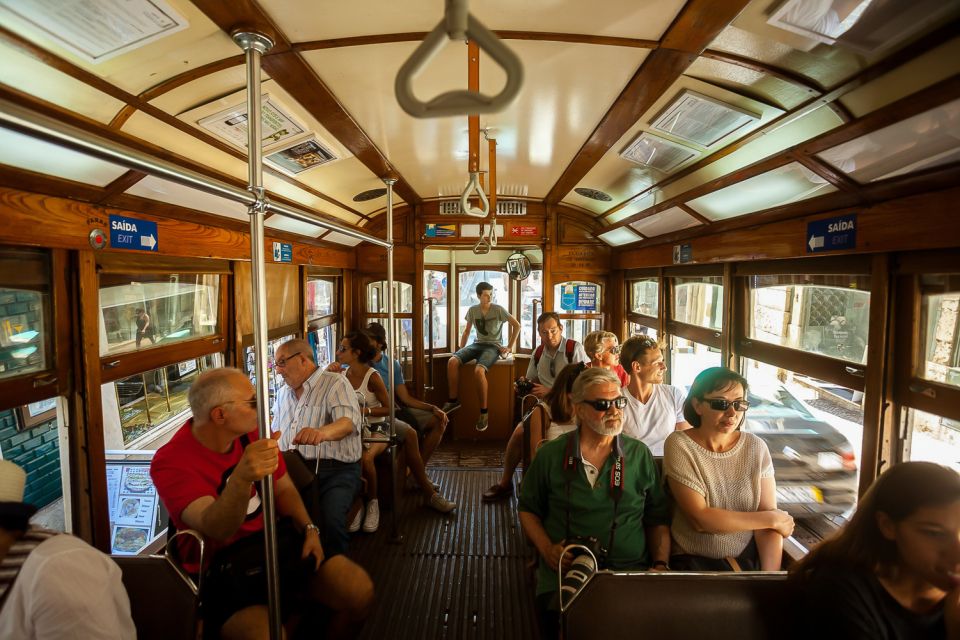
Let’s talk about the part people romanticize: the historic tram itself. On Tram 28, you’ll feel Lisbon’s hill engineering in your bones. The tram climbs through narrow streets, so you get plenty of window views, but you also get real-life public transport conditions.
Here’s the key consideration: since Tram 28 is a public service, it’s subject to traffic and unpredictable delays. That doesn’t mean your tour is a mess—it means you should go in with the right mindset. When things slow down, your guide can adapt the plan so the experience stays rewarding.
I also like that you’re not stuck in “only sitting” mode. The ride sets you up visually, then the walking tour continues the story on foot. That combo is smart. You get the charm of the tram, then you earn the views and insights by exploring the hills where the city grew.
Quick practical move: keep your phone ready for the uphill moments, but also look out for quick landmark glimpses as the tram bends through the Old Town. The best “wow” views often show up right after a turn.
Sé de Lisboa, the cathedral walls, and 1,000 years of what survived
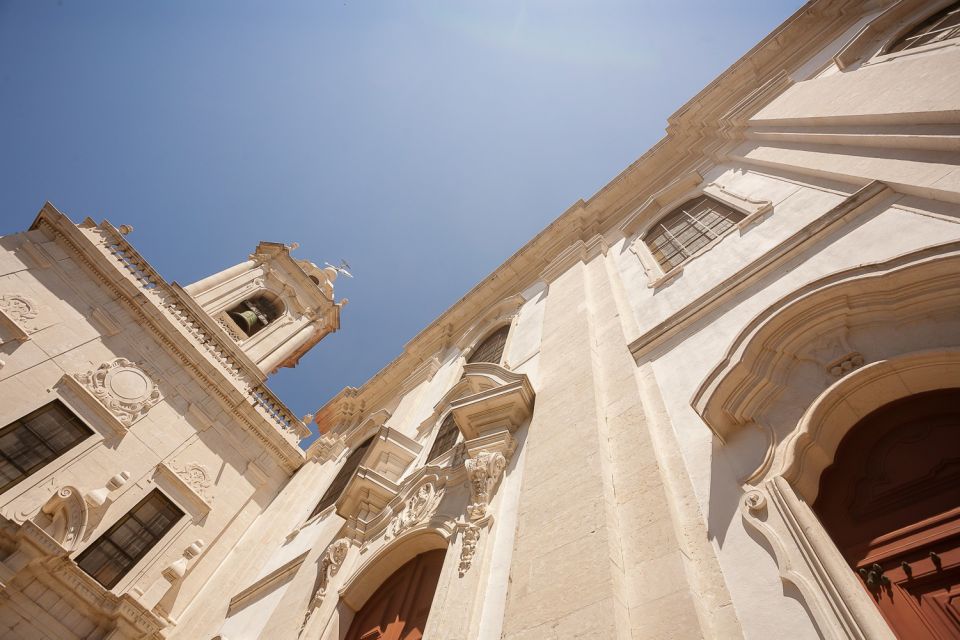
After the tram, the tour shifts from rolling streets to standing and walking through Lisbon’s older layers. One highlight is Sé de Lisboa, the medieval cathedral. The point isn’t just that it’s old. It’s that the site holds nearly 1,000 years of history inside its walls.
When you’re on a hill in Lisbon, the buildings feel like they’ve been shaped by defense, faith, and survival. Sé de Lisboa gives you that sense fast. You’ll see the kind of sturdy stone presence that makes the city’s medieval story tangible.
Even if you’re not a cathedral person, I think you’ll enjoy this stop because the guide connects the landmark to the bigger Lisbon picture—how power and religion shaped neighborhood life over time. It’s history you can point at, not history trapped in a textbook.
São Vicente de Fora and the Pantheon: two big skyline makers

Lisbon’s skyline is full of domes and church silhouettes, but not all of them tell the same story. This tour includes two standout landmarks: Mosteiro de São Vicente de Fora and Panteão Nacional.
At Mosteiro de São Vicente de Fora, you’re looking at one of those monastery complexes that feels built to last. You get a strong sense of how religious architecture helped define the city’s horizons. It’s also a nice change of pace from the cathedral. Different era, different mood, same Lisbon hill setting.
Then comes the National Pantheon (Panteão Nacional), where you’ll hear the legend connected to the famous dome. Even if you already know the dome from photos, the tour’s value is the story behind why that dome matters in Lisbon’s skyline and imagination.
This is a good moment to slow down. If your calves are already working overtime from the tram climb, take a breather here and let the dome and neighboring views sink in. The views aren’t just pretty—they’re part of how you understand Lisbon’s layout.




Alfama on foot: steep lanes, small squares, and fado in real life
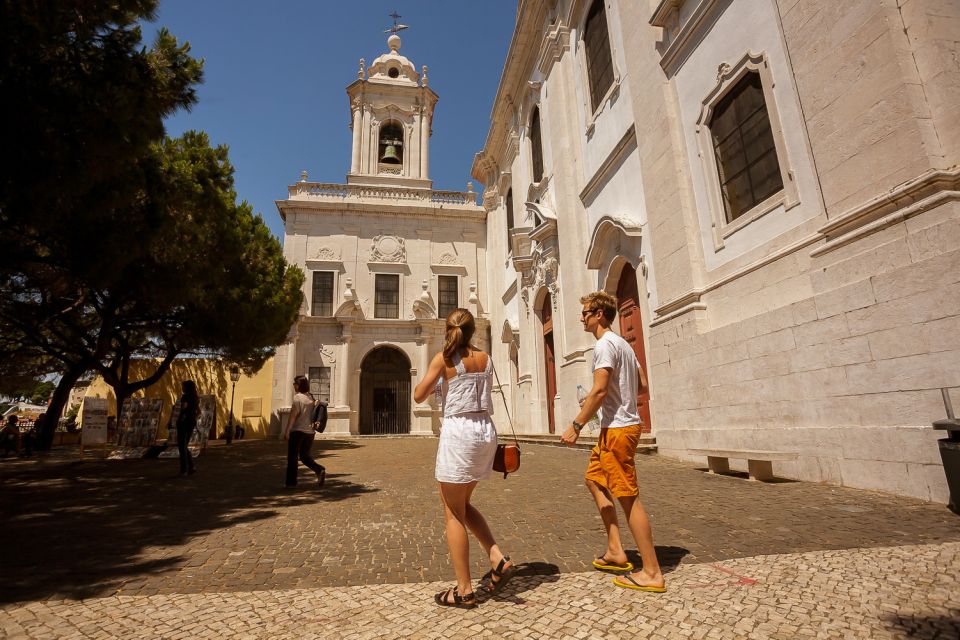
The real payoff for many people is what happens after Tram 28: walking deeper into Alfama, Lisbon’s historic neighborhood of narrow streets and steep hills.
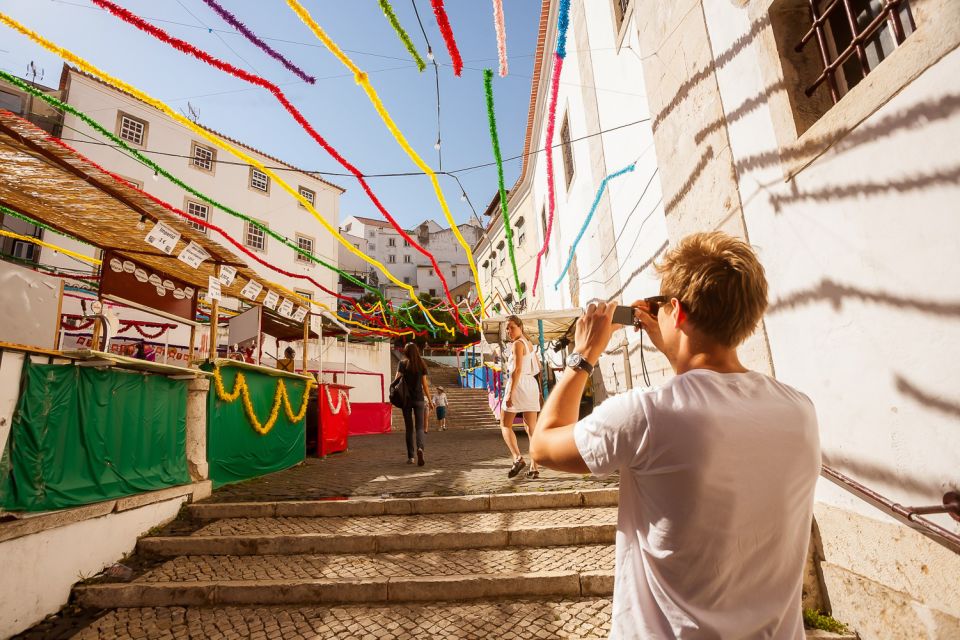
Alfama works like a maze. You’ll move through tight lanes and steep steps, then suddenly arrive at small squares where the street noise softens. Those little open spots are where you’ll feel the neighborhood rhythm: locals passing by, conversations in the air, and the sense that this isn’t a staged Old Town.
And yes, fado is part of it. The tour is designed to teach you about traditional Portuguese fado in the setting where it belongs—tiny bars and cafés in Alfama. I like tours that treat fado as a living culture, not as a performance you just watch once. Here, you get the neighborhood context that makes fado make more sense.
Comfort tip: plan on uneven surfaces. Even if you’re a confident walker, Lisbon’s Old Town has foot-level surprises. Good shoes are not optional for this one.
Feira da Ladra timing: adding flavor when the flea market runs
On Tuesdays and Saturdays, the tour can include Lisbon’s oldest flea market: Feira da Ladra. If your trip lines up with those days, this is a fun way to see the city as more than monuments.
A flea market gives you a different texture: sellers setting up, people browsing with real purpose, and lots of small conversations. It also breaks the day into something more human and less architectural.
If you’re not there on Tue/Sat, you’ll still walk through Alfama and hit the major landmarks. The market is an extra boost, not the backbone.
Price and value: what $23 buys you in a city that charges for views

At about $23 per person for roughly 3 hours, the deal here is the combo. You’re paying for:
- the Tram 28 ride, one of the most iconic (and crowded) Lisbon experiences
- a guided walk in Alfama, with stops and stories tied to specific places
This is a smart value approach compared to doing Tram 28 on your own and then trying to piece together history while you’re lost on steep lanes. With a guide, you’re not just collecting photos. You’re learning why the landmarks are where they are and how Alfama fits into Lisbon’s identity.
Small groups also help the value. With a group capped at 10, you spend less time waiting and more time moving.
One note: you might wish you had more time on Tram 28 itself. Some people want a longer tram segment, but the tour’s structure is built around making the whole experience add up, not just one ride.
Who should book this Tram 28 + Alfama tour
This is a great fit if you:
- want an introduction to Lisbon’s Old Town without planning every step
- like guided stories that connect landmarks to neighborhood life
- want to see fado culture without treating it like a separate ticketed show
- prefer a small group pace over long, crowded bus tours
It may be less ideal if you:
- hate uneven, steep walking
- need a tightly timed route with zero chance of public-transport delays
- want a full day dedicated only to Tram 28
Practical tips so you enjoy it more
- Wear comfortable shoes with good grip. Lisbon’s Old Town can be rough on soles.
- Bring a layer. The tram ride and hilltop views can feel cooler than street level.
- If your schedule is tight, remember Tram 28 is public transport, so delays can happen due to traffic or other issues out of the operator’s control.
- If you’re there on Tuesday or Saturday, show up with an extra bit of curiosity. The flea market adds energy and variety.
Should you book this tour?
I’d book it if you want the best version of Tram 28: not just the famous ride, but a connected walk through the hill neighborhoods that make the ride meaningful. The $23 price feels fair because you’re buying guidance through multiple Lisbon highlights—Sé de Lisboa, Mosteiro de São Vicente de Fora, the Pantheon dome legend, plus an Alfama walk built around fado culture.
I wouldn’t book it if your priority is maximum time on Tram 28 alone, or if you struggle with steep, uneven walking. For everyone else, this is one of the more sensible ways to get your bearings fast and come away with stories that stick.
FAQ
What’s the duration of the Lisbon Tram No. 28 Ride & Walking Tour?
The tour lasts 3 hours.
Where do I meet the guide?
Meet at Praça Luís de Camões, near the statue. Your guide will be wearing a black backpack with the Lisbon Spirit logo.
Is pickup or drop-off included?
No. Pickup or drop-off is not included.
How much does the tour cost?
The price is $23 per person.
What’s included in the tour?
You’ll ride Tram 28 and take part in a walking tour of Alfama.
What language is the tour guide?
The tour guide offers the experience in English.
What should I bring for the walking part?
Wear comfortable shoes since you’ll be walking through steep, uneven streets.
Will Tram 28 always run on time?
Tram 28 is public transport, so it can be affected by traffic and other unpredictable situations outside the provider’s control.
Does the tour include Feira da Ladra?
On Tuesdays and Saturdays, you can enjoy the Feira da Ladra, Lisbon’s oldest flea market.
FAQ
What day is Feira da Ladra included?
Feira da Ladra is included on Tuesdays and Saturdays.
How big is the group?
The tour is a small group limited to up to 10 participants.
Is fado part of the tour?
Yes. You’ll learn about traditional Portuguese fado while exploring Alfama’s small bars and cafés.
Can I cancel for a refund?
Yes. You can cancel up to 24 hours in advance for a full refund.
Is English support available during the tour?
Yes. The guided experience is in English.
Are any tickets to specific museums listed as included?
The provided details focus on Tram 28 and the Alfama walking tour. No separate museum ticket inclusions are stated.
Does the tour include visiting Sé de Lisboa, São Vicente de Fora, and the National Pantheon?
Yes. The tour description includes stops to see Sé de Lisboa, Mosteiro de São Vicente de Fora, and the Panteão Nacional, with a legend connected to its dome.
What if I want to pay later?
The booking option includes Reserve now & pay later, so you can keep plans flexible.
Do I need to plan my own way back?
The information provided does not include drop-off, so you should plan on making your own way afterward.