
REVIEW · LISBON
Lisbon: Oceanário de Lisboa Entrance Ticket
Book on GetYourGuide →Operated by Oceanário de Lisboa · Bookable on GetYourGuide
Big aquarium, serious science, and zero jet lag. The Oceanário de Lisboa is Europe’s largest indoor aquarium, and the entrance ticket lets you roam through both permanent and temporary exhibits at your own pace.
What I liked most was the way the building makes the sea feel connected. You’re not just looking into separate tanks—you get that mind-bending view created by the central aquarium and large acrylic panels, plus four different “ocean worlds” to compare as you walk.
One thing to keep in mind: it can get busy, especially with school groups. Plan extra time, and if you care about photos, go earlier or be ready to shoot from your spot rather than expecting empty galleries.
In This Review
- Key things to know before you go
- Lisbon Oceanário 101: what you’ll actually see for your $29
- The central tank and viewing levels: where the magic happens
- The four ocean bodies of water: North Atlantic to Tropical Indian Ocean
- Sharks, reefs, and the sea otter moment you should plan around
- Temporary exhibitions: how they change the visit without taking over
- Skip-the-line entry: why timing matters more than you think
- Guided tours (extra cost): when a guide is worth it
- How long to plan: a realistic 1-day game plan
- Getting to Oceanário de Lisboa from Oriente: easiest routes
- Who this is best for (and who might want to plan differently)
- Should you book the Oceanário de Lisboa ticket?
- FAQ
- What’s included with the Oceanário de Lisboa entrance ticket?
- How many sea creatures and species can I expect to see?
- How long do I have with the ticket?
- Do I need a guided tour to see the main aquarium?
- What are the opening hours?
- What’s the best way to time my visit for the otters?
- Is the location easy to reach by public transport?
- Which bus routes go to Oriente?
- Is there food and drink on site?
- Is the ticket refundable?
Key things to know before you go

- 8,000+ creatures / 500 species: the scale is real, and you’ll keep noticing new fish as you move around
- Four ocean zones: North Atlantic, Antarctic, Temperate Pacific, and Tropical Indian Ocean share one central space
- The sea otters are a highlight: the only two sea otters in Europe live here
- Central tank is the anchor: multiple levels give you different angles on sharks, rays, and bigger animals
- Guided tours can add serious context: guides like Sophia, Bruno, Katie, and Silvia are cited as especially engaging
- It’s a strong rainy-day plan: it’s indoors, so you don’t lose half your day to Lisbon weather
Lisbon Oceanário 101: what you’ll actually see for your $29

For about $29 per person, you’re buying a full-day entry ticket to one of Lisbon’s top indoor sights. The value comes from scope: your ticket covers all permanent and all temporary exhibitions, and the venue is designed for wandering. You’re not on a tight schedule. You’re free to linger wherever your eyes get stuck.
This is also a place where “aquarium” doesn’t mean a few small rooms with fish bowls. The Oceanário is on the Expo 98 grounds at Parque das Nações, and the main draw is a huge central display that makes the whole building feel like one large underwater story.
Expect to spot sharks, coral reef habitats, and plenty of species you’ve never had a name for. If you’re the type who likes reading little signs slowly, you’ll have fun. If you just want big animals and good views, you’ll still have plenty to enjoy.
You can also read our reviews of more tours and experiences in Lisbon



The central tank and viewing levels: where the magic happens
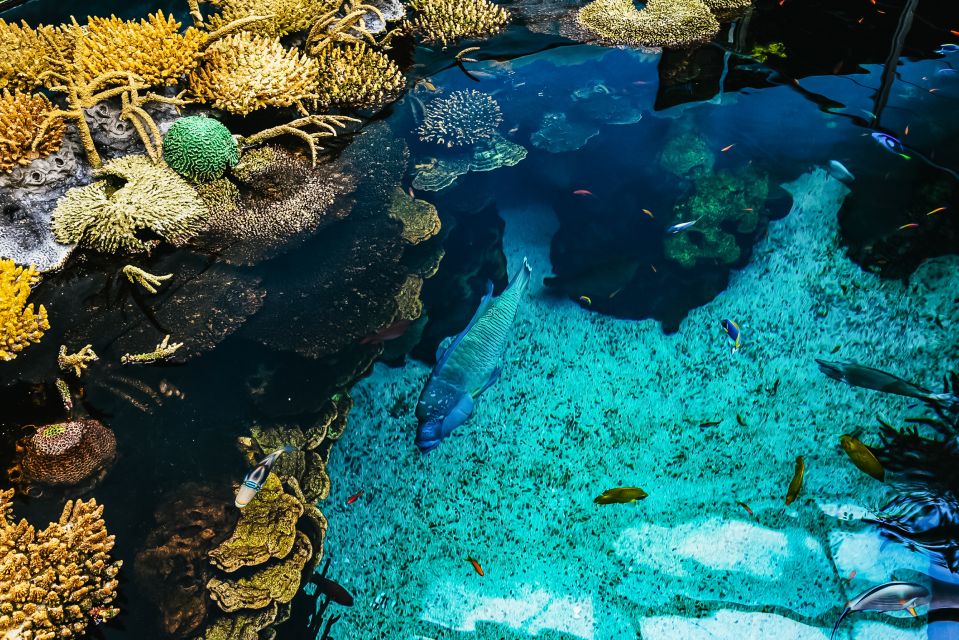
The Oceanário’s layout is built around its centerpiece. The central aquarium is the star, and the walkways around it are what make it feel special rather than just “big.”
As you move through the space, you’ll see the same animals from different heights and distances. That matters. A ray gliding behind acrylic looks different from a higher level than it does from near ground level. You also get more chances to find a good viewing spot if one corridor is crowded.
If you’re short on time, I’d treat the central tank as your priority and then branch out from there. Many people end up spending the majority of their visit here—especially because you’ll keep catching new motion: rays sweeping by, schools of fish shifting, and larger animals cruising through the open water.
The four ocean bodies of water: North Atlantic to Tropical Indian Ocean

Here’s the clever part. The Oceanário divides the experience into four separate bodies of water, each representing a different ocean region: North Atlantic, Antarctic, Temperate Pacific, and Tropical Indian Ocean.
What makes this arrangement worth your time is the comparison. You can feel how different habitats work. Temperate and polar areas tend to show different species and behavior than tropical zones, and your eyes learn to “read” the displays as you go.
The building uses large acrylic panels to separate the zones from a central tank, while still giving the impression of one connected salt-water world. It’s a neat illusion that helps you understand how ocean life isn’t isolated—it’s linked by conditions like temperature, currents, and food webs.
Sharks, reefs, and the sea otter moment you should plan around

If you want the obvious highlights: you’ll find plenty of sharks, plus reef-inspired displays where coral structures and smaller fish make it feel like a real ecosystem, not a backdrop.
But my favorite “wait for it” moment is the sea otters.
The Oceanário is home to the only two existing sea otters in Europe, and that alone turns them into a major emotional anchor for the visit. I’d build your timing around them. There are eating times posted online, and it’s worth checking so you’re near the viewing area when otters are active.
Even if you don’t obsess over schedules, you’ll likely catch their playfulness at some point. The key is to avoid treating the otters like a quick photo stop. Give them a real chunk of time. Otters don’t perform on your timetable, but they often deliver when you’re patient.
Temporary exhibitions: how they change the visit without taking over

Your ticket includes both permanent and temporary exhibits, which is a big part of why this doesn’t feel like a one-and-done aquarium. Temporary displays can shift what you learn or how the building tells its message that week.
That said, don’t try to “finish everything.” Instead, use the temporary sections as variety: hit a couple deeper displays, then go back to the central tank when you want that big, calming view again.
This approach keeps your day from turning into a checklist—and it also gives you flexibility if crowds get heavier than you expected.





Skip-the-line entry: why timing matters more than you think
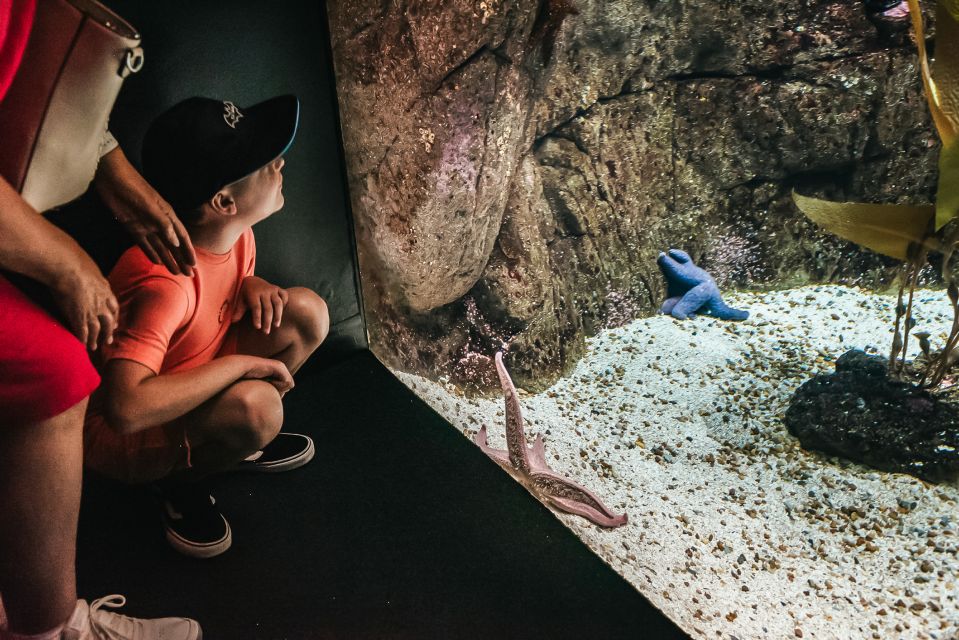
Your ticket includes skip the ticket line, which helps you start your visit faster. But I’d still pay attention to time.
This place can get packed with school groups. In the middle of the day, some corridors can feel crowded enough that photos get harder. If your goal is photos or a slower pace, you’ll be happiest going earlier in the day or planning around the heaviest school-trip hours.
Also note the practical side: the building is open 10:00 AM to 8:00 PM, with last entry at 7:00 PM. That gives you a lot of room if you want an easy afternoon plan after walking around historic Lisbon in the morning.
Guided tours (extra cost): when a guide is worth it
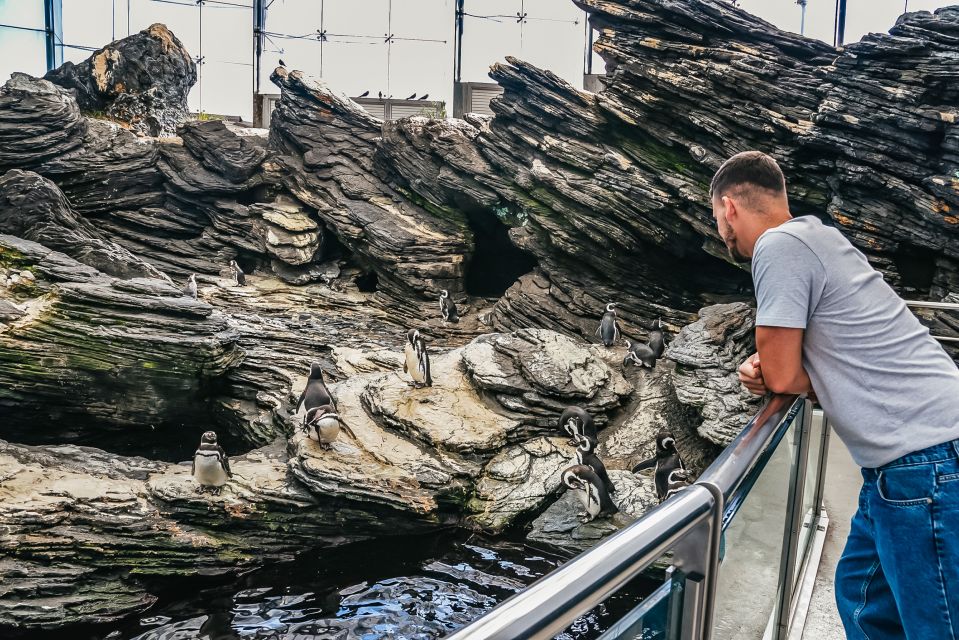
The base entrance ticket is great. Still, if you want your visit to turn into a mini lesson, consider a guided tour. Guided tours are available in Portuguese, Spanish, and English, and they cost extra and must be pre-booked.
What I like about a good Oceanário guide is that it changes the tone from look-and-go to see-and-understand. People with guides like Sophia, Bruno, Katie, and Silvia have been praised for sharing facts, naming species with context, and keeping kids engaged.
You don’t need a guide to enjoy the animals. But if you want the “why” behind the displays—conservation messaging, behavior, habitat logic—this is the moment to pay attention.
My practical rule: if you’re traveling with kids who ask nonstop questions, or if you’re the type who reads every sign, booking a guide can turn 1 day into a much more meaningful one.
How long to plan: a realistic 1-day game plan
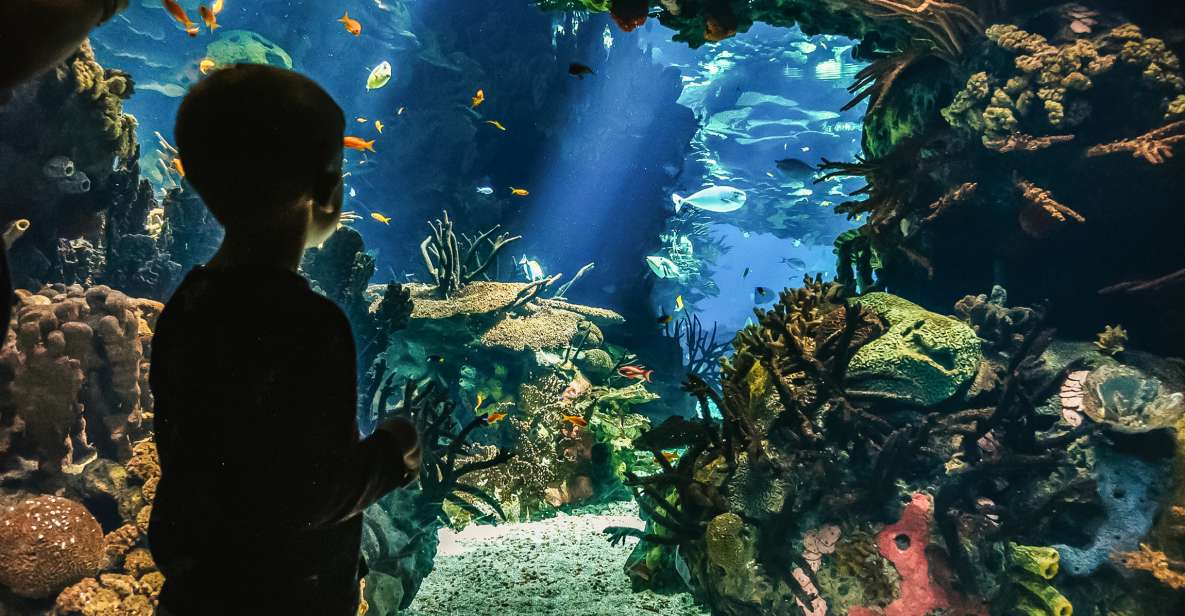
The ticket is valid for 1 day, so you can shape your visit around your schedule and your energy level. Since the Oceanário is indoors and built for wandering, I’d plan the way you would for a museum: flexible time blocks, not rigid steps.
A solid approach:
- Start with the central aquarium so you can orient quickly.
- Spend time on each surrounding viewing level (even if it means doubling back).
- Add one or two smaller habitats/exhibit sections at a comfortable pace.
- If you’re aiming to catch otters active, check eating times online and position yourself accordingly.
If you’re the type who walks slowly and likes reading, you can easily fill several hours without feeling rushed. And if you’re traveling on a tight timeline, you can still have a strong visit—just don’t try to see every single panel.
Getting to Oceanário de Lisboa from Oriente: easiest routes

The Oceanário sits in Parque das Nações along the waterfront. From Lisbon’s historic center, you can reach it by public transit without drama.
Two practical options I’d use:
- Bus: get off at Oriente, served by bus routes 5, 10, 19, 21, 28, 50, 68, 81, 82, 85.
- Subway (metro): follow the red M signs and take the red line to Oriente (it’s the last stop).
It’s also a popular stop for hop-on hop-off buses, which can be handy if you’re already doing sightseeing that way.
For navigation, the GPS is:
N 38º 45′ 48,61” W 9º 5′ 37,62”
Who this is best for (and who might want to plan differently)
This is one of those rare attractions that works for multiple travel styles.
- Families: the number of species and open sightlines keep kids interested. Otters are a big win.
- Couples: it’s calm compared to outdoor sightseeing, and the central tank views are genuinely relaxing.
- Adults who like details: the signage and conservation themes can satisfy the science-curious without feeling like a lecture.
- Group travelers: a guided tour can help people stay together and make the experience less random.
Who might not love it as much? If you have only a short time and you’re not particularly into aquariums or marine life, you may feel it’s a lot of indoor walking for one day. In that case, prioritize the central tank and the key highlights, and don’t try to do everything.
Should you book the Oceanário de Lisboa ticket?
Yes—if you want a top Lisbon indoor experience with real variety. The ticket gives you access to everything (permanent and temporary), and the central tank is the kind of attraction that rewards repeat glances while you’re there.
Book it if:
- you’re traveling in hot weather or during rain
- you want to see sharks/rays up close without special equipment
- you’re bringing kids or a friend who loves animals and questions
- you like a place you can pace yourself
Skip the “extra” only if:
- you’re short on time and already sure you’ll focus on the central tank and otters
- you’d rather spend money on food, day trips, or another major Lisbon sight
If you’re deciding between nothing and a ticket, I’d choose the Oceanário. It’s the rare attraction that feels educational without feeling heavy—and it’s built for lingering, not rushing.
FAQ
What’s included with the Oceanário de Lisboa entrance ticket?
Your ticket includes entrance access and lets you visit all permanent and temporary exhibitions.
How many sea creatures and species can I expect to see?
You can expect to discover more than 8,000 sea creatures from 500 different species.
How long do I have with the ticket?
The ticket is valid for 1 day. Exact start times depend on availability.
Do I need a guided tour to see the main aquarium?
No. The entrance ticket gives you access to the aquarium areas and exhibitions. Guided tours are optional and cost extra.
What are the opening hours?
The Oceanário is open daily from 10:00 AM to 8:00 PM, with last entry at 7:00 PM.
What’s the best way to time my visit for the otters?
Check eating times online and plan to be at the viewing area when the otters are fed and active.
Is the location easy to reach by public transport?
Yes. The nearest major stop is Oriente. You can reach it by bus, subway, train, boat, or car, and Oriente is the last stop on the red metro line.
Which bus routes go to Oriente?
Bus routes serving Oriente include 5, 10, 19, 21, 28, 50, 68, 81, 82, 85.
Is there food and drink on site?
Food and drink are available for purchase, but they are not included with the ticket.
Is the ticket refundable?
The activity is non-refundable.