REVIEW · LISBON
Lisbon 3-Hour Street Art Tour
Book on GetYourGuide →Operated by Discover Lisbon · Bookable on GetYourGuide
Lisbon looks different when you watch walls. I love how the guide turns each mural into a real story, not just a photo spot, and I love the thrill of spotting tags, posters, and stencils you’d miss on your own. One thing to plan for: this is a hilly walking tour with a fairly brisk pace.
You start in the bright churn of Martim Moniz, then work your way through Mouraria and Graça—two neighborhoods where street art often works like a public diary. The tour wraps at a big finish: a mural by the national superstar Vhils.
This is a live English walking tour led by Véro (and other recent departures have been led by guides like Rigoberto, Diogo, Ninetta, and Diana). It’s a great way to get your bearings fast—just bring comfy shoes and be ready to look up often.
In This Review
- Key things that make this street art tour worth your time
- Start at Martim Moniz: Find the Soldier-Head Monument
- Mouraria’s street art: tags, posters, and stencils with real messages
- Graça climb: murals, memorials, and Lisbon views you earn
- How your guide reads technique: why stencils and posters matter
- The Vhils finish: ending on one mural makes it stick
- Price and what $33 buys you in real value
- Pace, rain, and hill reality during the 3-hour walk
- What to bring (and what to avoid carrying)
- Who this street art tour suits best (and who should skip it)
- Should you book this Lisbon 3-Hour Street Art Tour?
- FAQ
- How long is the Lisbon 3-Hour Street Art Tour?
- Where exactly is the meeting point?
- What language is the tour guide speaking?
- What is included in the price?
- Are food and drinks included?
- What should I bring?
- Is the tour suitable for people with mobility impairments?
- What is the cancellation policy?
- What about reserving without paying right away?
Key things that make this street art tour worth your time
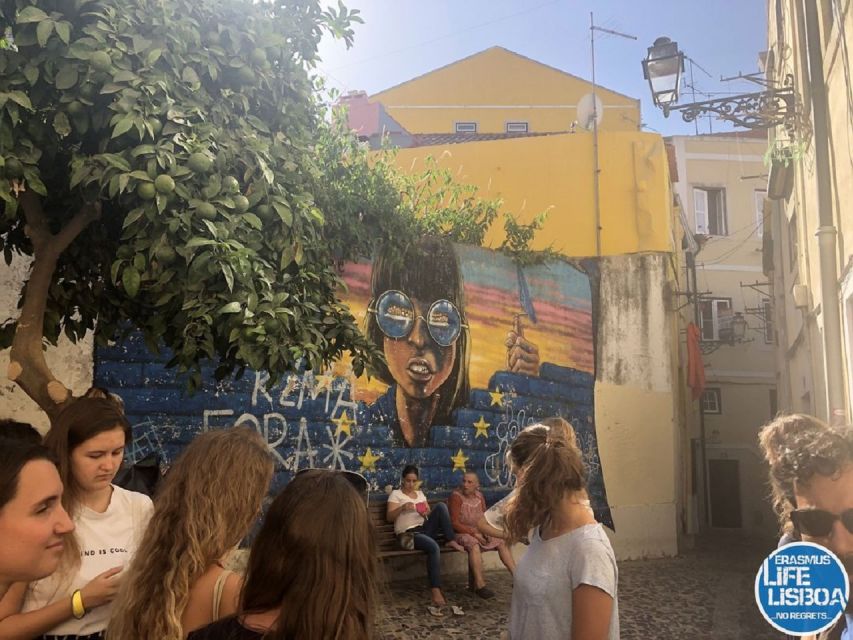
- A real guide narrative: you don’t just see street art, you hear what each piece is saying
- Mouraria + Graça neighborhoods: you’ll hit multiple styles in places tied to neighborhood change
- National and international artists: tags, posters, and stencils show up side by side
- Social and political themes: many works carry messages, not just decoration
- The tour ends at a Vhils mural: you leave with one memorable, high-impact stop
- Small-group feel: examples include groups around 7 people, which helps the pace feel personal
Start at Martim Moniz: Find the Soldier-Head Monument
Your tour begins at Martim Moniz Square, near Hotel Mundial. The meeting point is by the monument/sculpture with soldier heads/bullets/helmets, sitting close to the water, and the team holds a sign for the Street Art Tour.
This is the right kind of starting point. Martim Moniz is lively, easy to reach by metro, and it sets the tone: Lisbon street art isn’t tucked away in a museum. It’s out here in the real city, in the middle of regular life.
Give yourself a couple extra minutes to orient yourself before the group starts walking. One practical tip: take a quick look around the square for the sign board, because the statue details matter for matching the right spot.
You can also read our reviews of more tours and experiences in Lisbon



Mouraria’s street art: tags, posters, and stencils with real messages
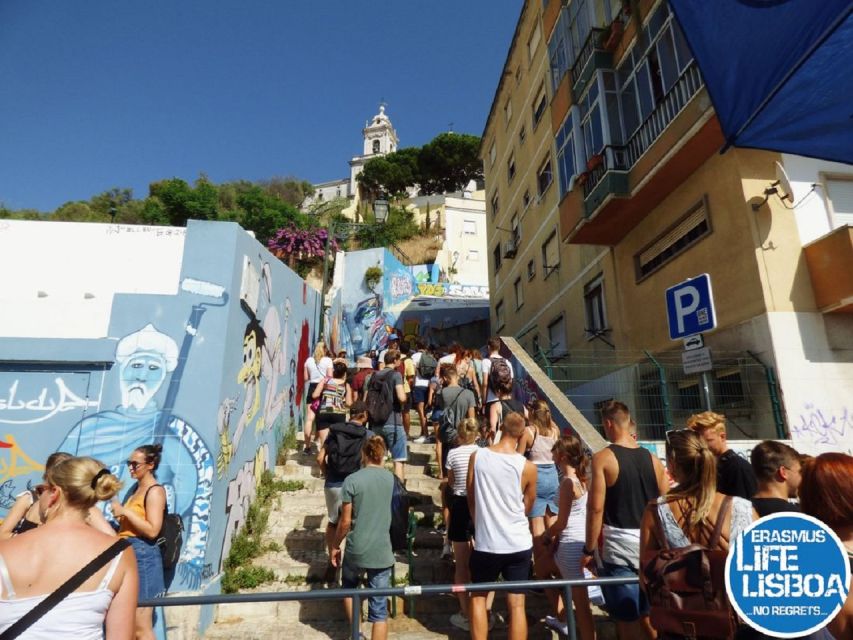
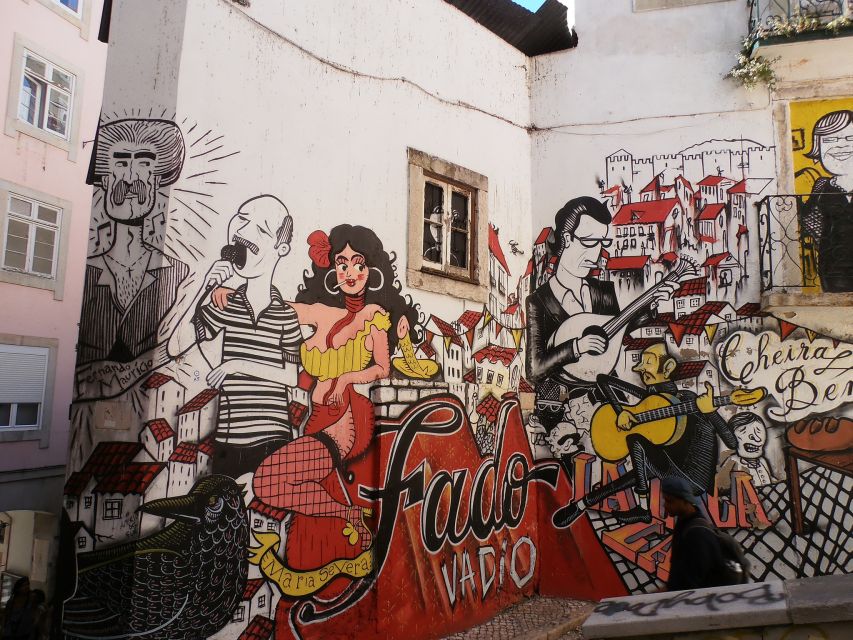
Once you’re moving, you’ll spend time in Mouraria, a neighborhood known for layering—old streets, local life, and walls that keep getting reworked. This is where you’ll spot different street art formats, including tags, posters, and stencils.
What makes Mouraria special on this tour is how the guide frames what you’re seeing. Many pieces come with social or political messages, and you’ll learn to notice the difference between street art as style versus street art as commentary.
Also, some works point to neighborhood change. You’ll head into areas tied to renovation projects, so certain murals feel connected to the present moment—not just the past. That context helps you read the city instead of just collecting cool images.
A couple practical notes from the way these tours run: you’ll be walking through streets where the guide wants you to look closely and often stop to explain. So even if the overall time is 3 hours, the tour feels like a string of mini discoveries.
Graça climb: murals, memorials, and Lisbon views you earn
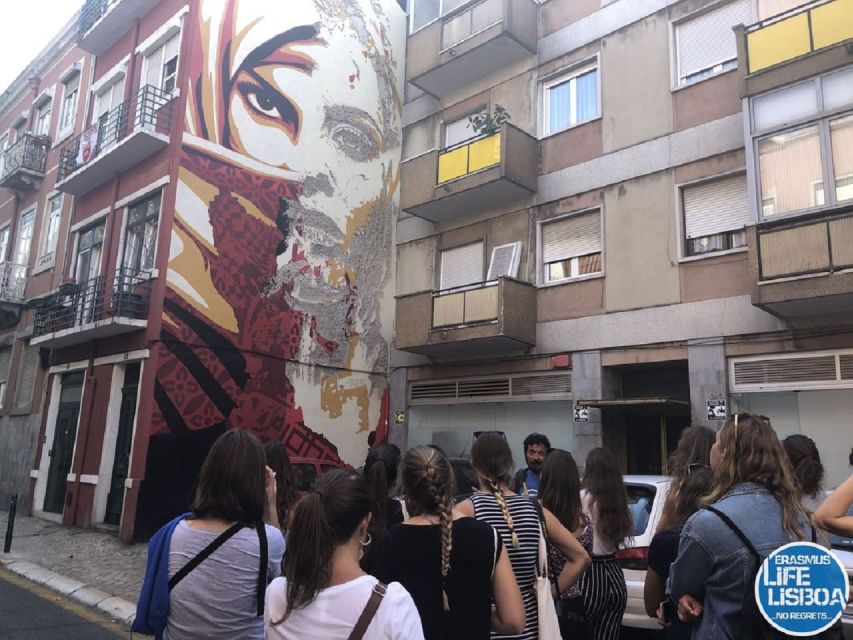
After Mouraria, you’ll move toward Graça, where the terrain changes and the art often looks bigger and more dramatic. Graça is the part of Lisbon where you start to feel the hills in your legs, and where the view reward shows up.
You’ll see murals that range from contemporary work to pieces that feel tied to Portuguese identity. Some artworks memorialize important Portuguese personalities, which adds a different tone from purely street-level commentary.
Graça also tends to be where the tour’s photography moments happen—because the streets open up and you get angles over the city. More than once, guides handle rain or tough weather by slowing down just enough to keep everyone comfortable, while still hitting the key artworks.
Keep in mind that the pace can feel fast. That’s not a problem if you’re happy to walk and soak it in, but it’s something to consider if you prefer long stops and a slow stroll.
How your guide reads technique: why stencils and posters matter
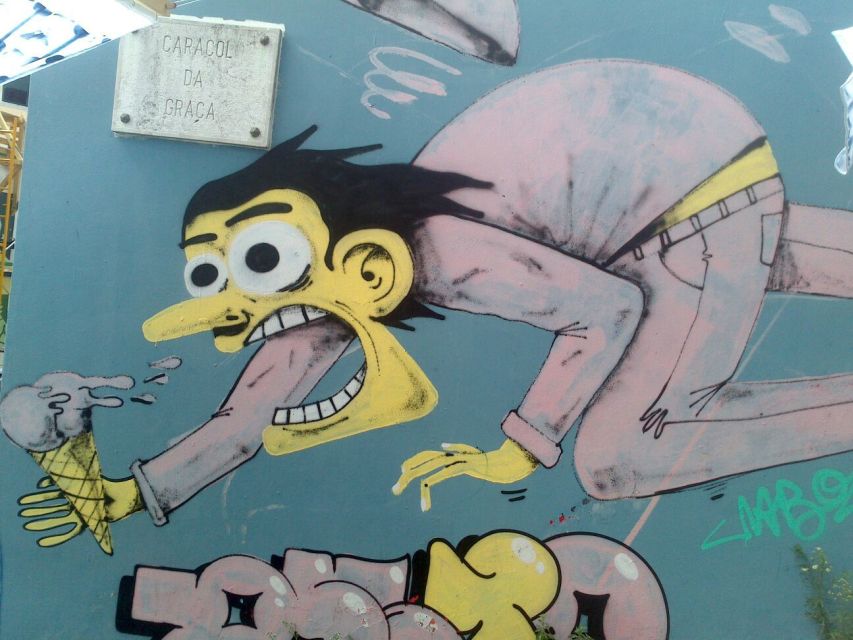
A big reason this tour works is the way the guide explains technique and intention. On this walk, you’ll learn how artists use different formats—like stencils versus posters—to achieve different effects.
You’ll hear the story behind each work of art, and that changes how you look at the wall. Instead of seeing color and shapes, you start noticing symbols, scale, and how the placement affects the message.
This is also where the guide’s style matters. Véro is named as the guide for this experience, and recent departures have included guides such as Rigoberto, Diana, Ninetta, and Margerida. Across those guides, a consistent theme shows up: they take their time with the narrative, and they keep the tour moving at a pace that still feels structured.
In good street art tours, you leave with two things: a sense of the artists, and a sense of how Lisbon’s neighborhoods talk back. That’s the difference between a photo walk and a real art education.
The Vhils finish: ending on one mural makes it stick
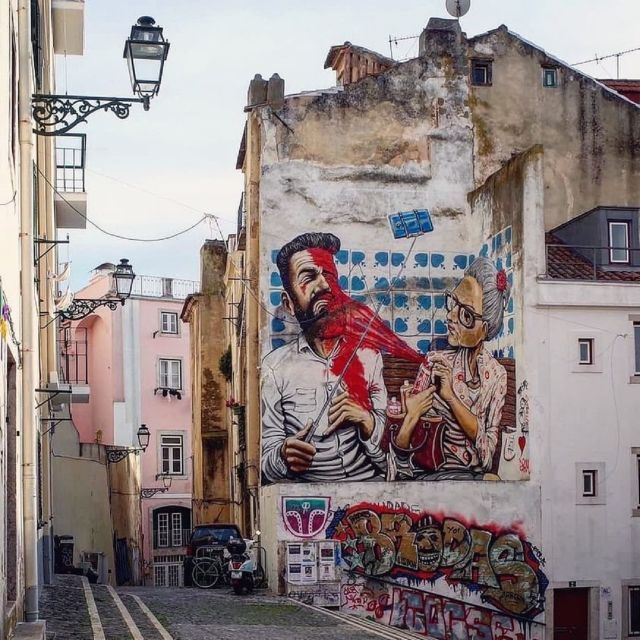
The tour ends at a mural by Vhils, one of Portugal’s best-known street artists. Ending here isn’t random. It’s a strong way to cap the story arc: you go from smaller, street-level messages to a recognizable name with a large visual impact.
By the time you reach the finale, you’ve already learned how to look for context—technique, placement, and meaning. So that final stop lands harder, because you’re not just admiring a famous artist. You’re reading the wall like you’ve been practicing for three hours.
This ending point also gives you something practical. If you want to keep exploring after the tour, you’ll likely be in a part of the city where you can continue by foot or switch to metro with less guesswork.
You can also read our reviews of more tours and experiences in Lisbon






Price and what $33 buys you in real value
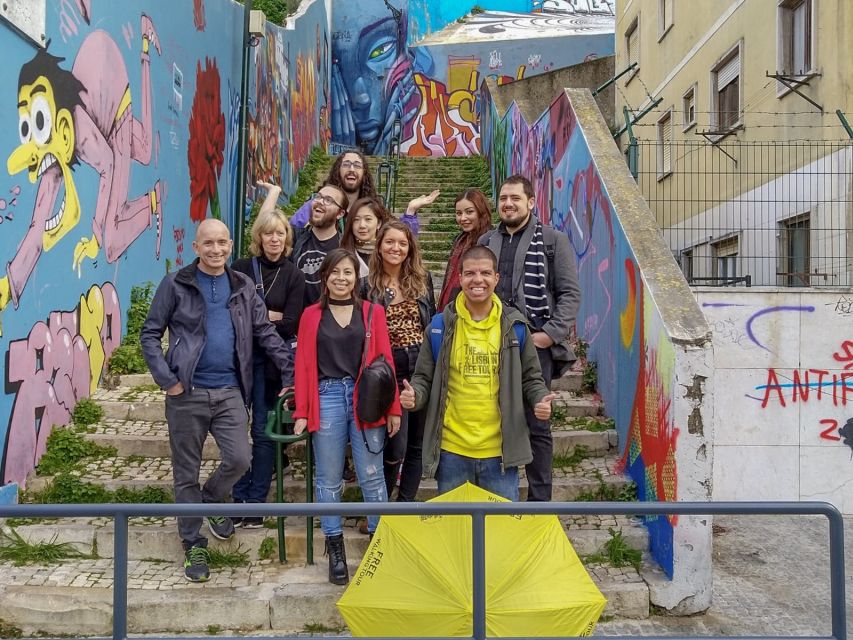
At $33 per person for a 3-hour guided walking tour, this is strong value if you like learning while you explore. You’re paying for three things: a local expert guide, historical references, and direct access to street art in multiple neighborhoods.
What you should know up front: it’s not a food tour. No meals or drinks are included, so you’ll want to plan your schedule accordingly—either grab a snack before you start or make time after.
Where the price feels fair is the combination of guide storytelling plus neighborhood context. Street art can look random if you walk it solo. With a guide, you get the “why” behind the works and the neighborhood reasons behind the murals.
If you’re comparing options, think of this as paying for interpretation. The art is free to look at on your own. The guide is what helps you understand what you’re seeing.
Pace, rain, and hill reality during the 3-hour walk
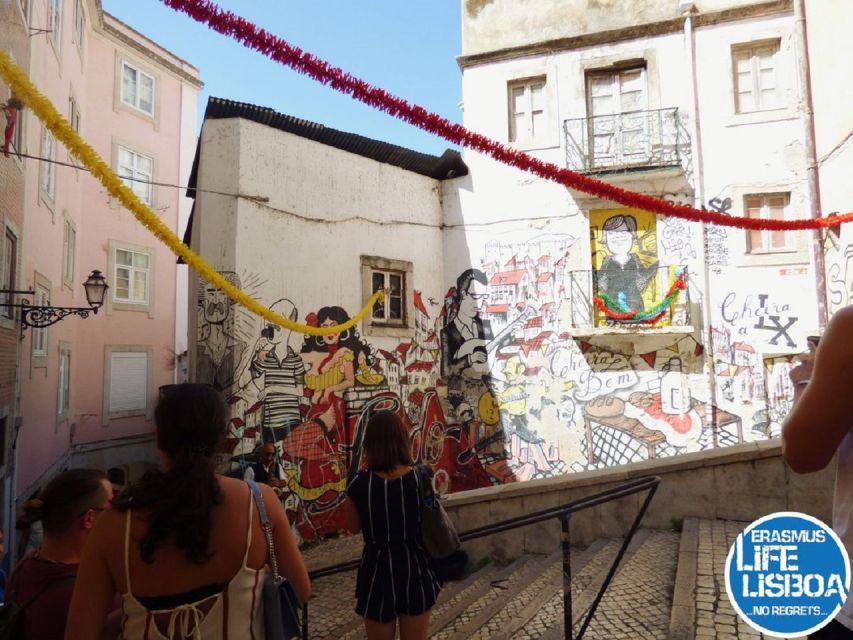
Lisbon has hills. This tour has hills plus stairs, because Mouraria and Graça are not flat. The tour runs for about 3 hours, and the tempo is often described as fairly high—which is usually a plus because it helps you see a lot of street art without dawdling.
Weather can also change the experience quickly. Some tours run through rain, and guides tend to keep things fun and moving without rushing. That said, rain plus hills means you should treat the day like you’re doing a real walk, not just sightseeing.
Here’s what helps most: comfortable shoes with grip, and a water bottle. You’ll be walking enough that you’ll feel the heat or the wet weather, especially in the afternoon.
If you want a slow, sit-down style pace, this might not be your best match. But if you enjoy walking and you’re okay stopping often to look up, this tour hits a very workable rhythm.
What to bring (and what to avoid carrying)

Bring comfortable shoes and water. That’s the practical baseline, because you’ll be on foot for 3 hours and dealing with steep streets.
Leave bulky stuff at your hotel. The tour does not allow luggage or large bags. It also doesn’t allow non-folding wheelchairs or non-folding strollers, and strollers should be avoided if possible because of the hills and stairs.
If you’re traveling with a small day bag, you’ll usually be fine, but the key is keeping things light enough to move quickly. The tour works best when you’re not wrestling with gear on narrow streets.
Also, if you’re the type who likes to carry snacks or a second layer, keep it simple. This walk is about the art, not a picnic plan in the middle of staircases.
Who this street art tour suits best (and who should skip it)

This tour is a strong fit if you:
- want a street art intro that includes meaning, not just pictures
- like neighborhoods with layered culture, not cookie-cutter viewpoints
- want a guide-led mix of national and international artists
- enjoy walking as part of the experience
It may not be ideal if you:
- have mobility limitations, since the route includes hilly paths and stairs
- need a low-intensity pace with lots of sitting
- plan to bring big luggage or bulky items
A note on group feel: the tour can be small, and that tends to make the guide’s storytelling easier to follow. Some departures have included a guide’s small dog (for example Billie/Billy in past groups), which adds a friendly, human touch—though you shouldn’t count on it as a guarantee.
Should you book this Lisbon 3-Hour Street Art Tour?
Book it if you want your Lisbon time to include street art with context. This tour gives you the “read” behind the walls—technique, message, and neighborhood history—without turning into a lecture.
Don’t book it if your priority is easy walking with minimal steps. The hilly streets are part of why the tour connects Mouraria and Graça, and the tour isn’t designed for mobility challenges.
One last practical decision-maker: you’re not paying extra for food, so plan your hunger before or after. If you want a flexible travel day, the experience offers free cancellation up to 24 hours in advance and lets you reserve without paying immediately.
If that sounds like your style—walk, learn, look up a lot—this is a smart way to experience Lisbon’s street art culture in just three hours.
FAQ
How long is the Lisbon 3-Hour Street Art Tour?
The tour lasts 3 hours.
Where exactly is the meeting point?
Meet in Martim Moniz square by the monument/sculpture with soldier heads/bullets/helmets, surrounded by the water close to Hotel Mundial. The team will be holding a sign in the middle of the square.
What language is the tour guide speaking?
The live tour guide speaks English.
What is included in the price?
The tour includes a local expert guide, a walking tour, local art, and historical references.
Are food and drinks included?
No. Food and drinks are not included.
What should I bring?
Wear comfortable shoes and bring water.
Is the tour suitable for people with mobility impairments?
No. It is not suitable for people with mobility impairments.
What is the cancellation policy?
You can cancel up to 24 hours in advance for a full refund.
What about reserving without paying right away?
You can reserve now and pay later, which lets you keep your travel plans flexible.