REVIEW · LISBON
Lisbon: Street Art Tour
Book on GetYourGuide →Operated by City Guru · Bookable on GetYourGuide
Lisbon looks different when you read its walls. This Street Art Tour is a smart way to see big murals and street sculptures plus the smaller marks you’d normally miss, all while moving away from the busiest tourist clumps. Two things I really like: you get a street-artist-led perspective (guides are often actual artists or steeped in the scene), and the route pushes through multiple neighborhoods so the art feels tied to daily life.
The main catch is simple: you’ll be walking on uneven, sometimes rough ground in hilly streets, so comfortable shoes and steady footing matter.
What to Expect is mostly a conversation on the move—about techniques, themes, and why a wall in Bairro Alto can feel totally different from one in Graça. I also like that the guides named in past tours, like Erica and Maria, tend to answer questions with real specificity, not just “art talk” buzzwords. If you like Lisbon beyond postcards, this tour helps you spot the stories built into the city’s concrete and tiles.
In This Review
- Key things that make this Lisbon street art walk worth your time
- Reading Lisbon’s street art without needing an art degree
- Where the tour starts: Interpress meeting point and the R. Luz Soriano area
- Bairro Alto (1 hour): where modern street art energy shows up fast
- Chiado and Baixa de Lisboa (20 minutes each): quick hits in the city’s core
- Mouraria (30 minutes): tighter streets, more human-scale stories
- Graça historic district (1 hour): the finish with Lisbon’s “look at the city” feeling
- The guides: Erica and Maria get praised for turning art into stories
- Is it worth $40? Value isn’t only the price tag
- What you should bring (and what you should not)
- A simple strategy: how to get more out of every stop
- Who this tour suits best
- Should you book this Lisbon Street Art Tour?
- FAQ
- How long is the Lisbon Street Art Tour?
- How much does the tour cost?
- Where do we meet the guide?
- What neighborhoods are included in the walk?
- What language is the tour guide?
- What should I bring?
- Is oversize luggage allowed?
- Is the tour wheelchair accessible?
- What is the cancellation policy?
Key things that make this Lisbon street art walk worth your time
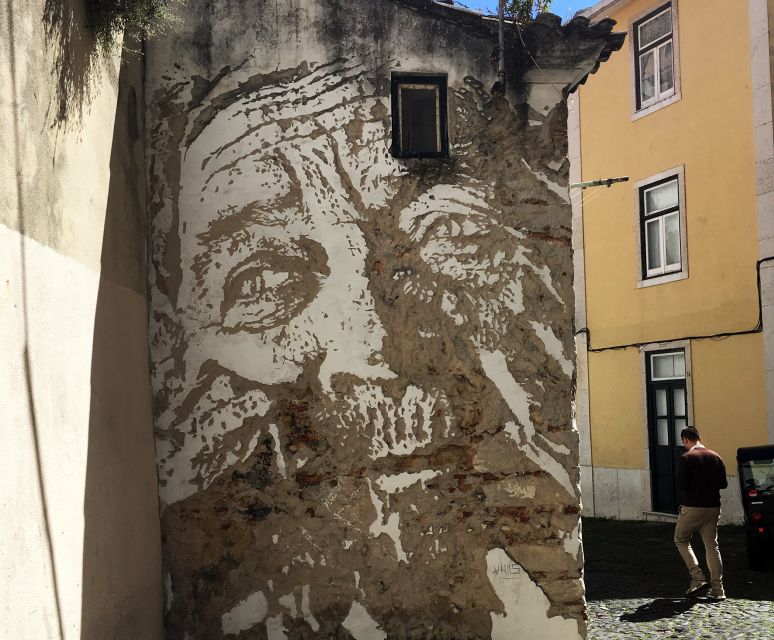
- Street-artist perspective: the guide frames the art as part of Lisbon’s living culture, not just decoration
- Neighborhood variety in 3 hours: Bairro Alto, Chiado, Baixa de Lisboa, Mouraria, and Graça—so you see patterns and changes
- Off the main crowds: the design aims to avoid large groups and the loudest tourist bottlenecks
- Pay attention to details: you’ll learn to “read” small pieces you’d otherwise walk past
- Flexible pacing with questions: guides frequently keep the tone relaxed and responsive
- Views at the end: Graça adds a classic Lisbon hillside feel to cap the walk
Reading Lisbon’s street art without needing an art degree
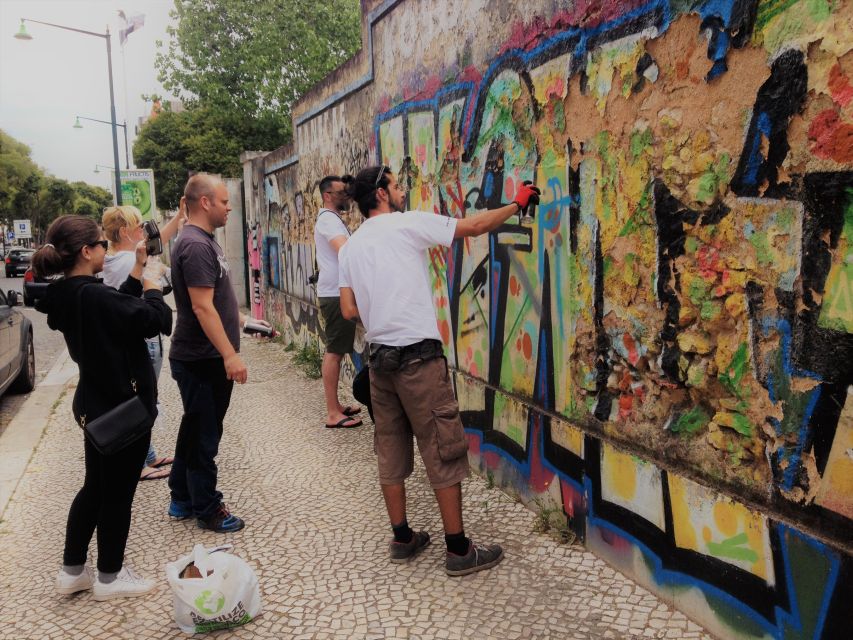
If you’ve ever stared at a wall and thought, Cool. Now what?, this is the tour that gives you a next step. Lisbon has layers: old streets, modern life, politics, personal identity, and the constant remix of local and international styles. A guided walk like this turns those layers into something you can actually follow on foot.
The payoff is not only seeing famous murals. It’s understanding why street art behaves differently from museum art. On a street corner, an image has to “work” in context: it has to fit the building, match the neighborhood mood, and land with the people who see it every day. That’s why the route matters. By hopping between districts, you start noticing how the city’s social mood changes—and how the art reflects it.
You can also read our reviews of more tours and experiences in Lisbon



Where the tour starts: Interpress meeting point and the R. Luz Soriano area
You’ll meet your guide in front of the Interpress building. The starting location is listed as R. Luz Soriano 67, and that area is where your first orientation happens: who your guide is, where you’re headed, and what kind of art you should start looking for.
This matters because street art tours can go two ways: either you spend the first 20 minutes locating murals that nobody bothered to explain, or you’re already in “seeing mode” when you step outside. Here, you’re meant to start with direction and then build momentum district by district.
Bairro Alto (1 hour): where modern street art energy shows up fast
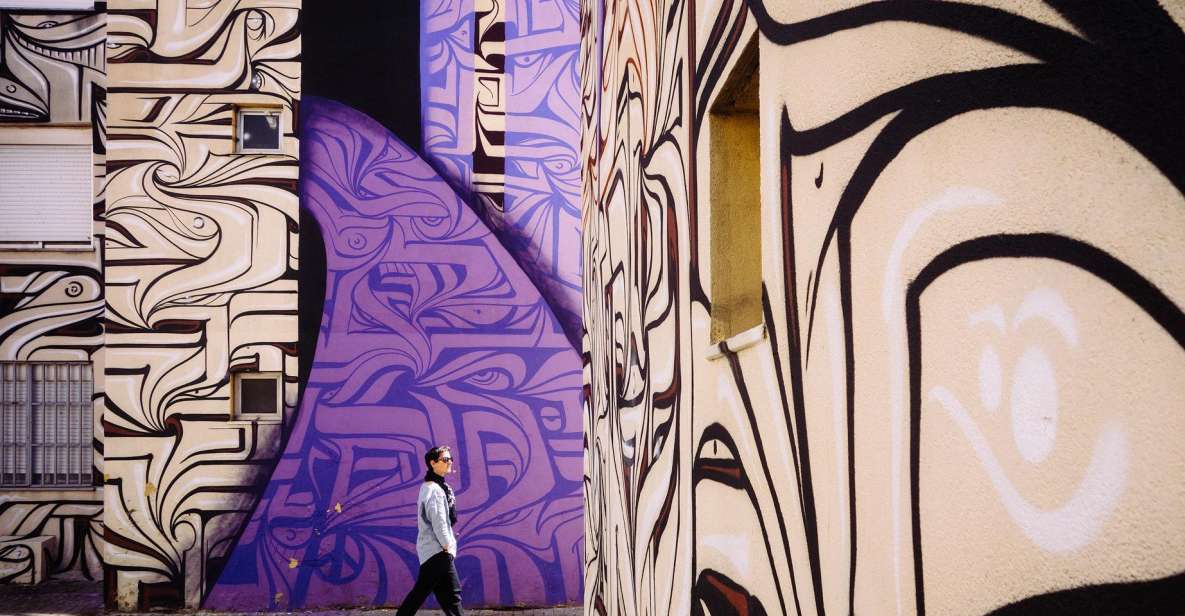
Bairro Alto is the first real anchor in the walk. It’s the kind of Lisbon neighborhood where the walls feel like they’re reacting to the present—music, nightlife energy, youth culture, and the constant flow of people. That’s why it’s a strong opening stop: you get an early hit of the style contrasts Lisbon street art is known for.
What I’d watch for here:
- Large murals and sculptural street elements that grab your attention immediately
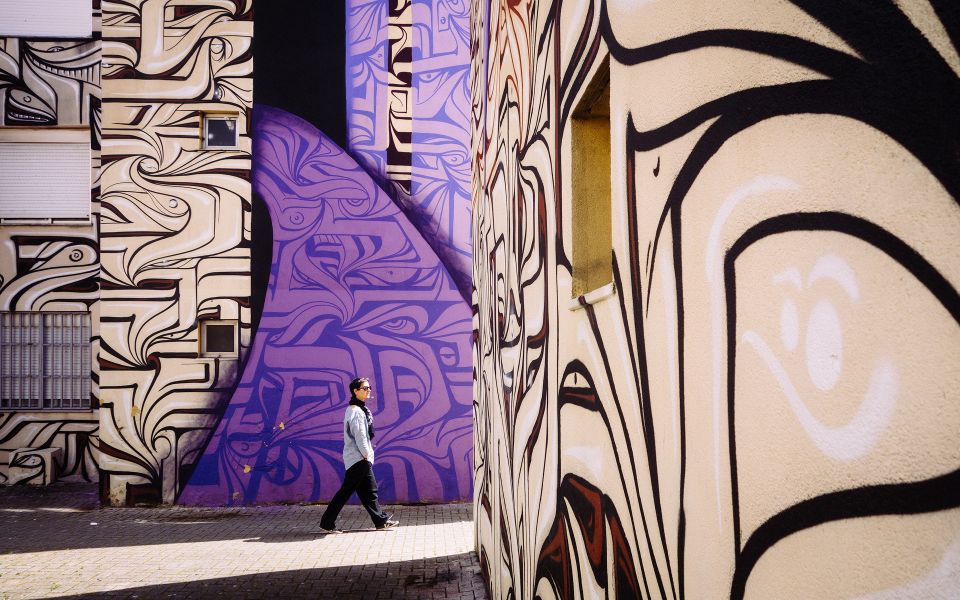
- The ways artists use scale—big images that look different as you approach and then again as you step away
- How the neighborhood feel shifts the tone of what’s painted
A practical note: the opening stop is one hour, so if your legs are already tired from stairs the day you book, this is where you’ll want to feel comfortable early. Good shoes aren’t a suggestion for this part—they’re the difference between enjoying the art and thinking about your feet.
Chiado and Baixa de Lisboa (20 minutes each): quick hits in the city’s core
Chiado and Baixa de Lisboa are short stops, and that’s a good thing. They’re central areas where you might otherwise wander without a plan. With a guide, the time crunch becomes useful: you see key pieces and you learn what to pay attention to, then you move on.
In these districts, the value is how street art interacts with more classic city structure:
- Street art can feel “louder” against older building lines
- Small details can stand out more when you know what to look for
- You start connecting the art to Lisbon’s daily routes, not just its side streets
Drawback of short stops? If you fall in love with one mural, you’ll have less time to linger. I like the pacing here, but you should know you’re here for multiple neighborhoods, not one long masterpiece day.
Mouraria (30 minutes): tighter streets, more human-scale stories
Mouraria is where the vibe shifts again. The route gives you a half-hour there, which is enough time to feel the difference without turning it into a second walking day.
Why Mouraria works on a street art tour:
- Smaller streets can make the art feel more personal, like it’s part of someone’s routine
- You often spot details that don’t read from far away
- The neighborhood character shapes what themes feel relevant
This is also one of the best moments to ask questions. Guides on this tour are often described as storytelling types—connecting artists and techniques to the neighborhood mood—so Mouraria is a great place to slow down and ask why a piece uses certain symbols or styles.






Graça historic district (1 hour): the finish with Lisbon’s “look at the city” feeling
The tour ends in the Graça Historic District, with one full hour on the ground there. Graça is built for viewpoints and long looks, so it’s a smart finale: street art here tends to feel tied to place, because the streets and sightlines keep pulling your attention upward.
If you want to get value out of the last hour, do this:
- Step back and view murals from a distance first, then again close up
- Look for how art changes the way you read the buildings
- Use the time to notice how the earlier neighborhoods prepared you
One practical tidbit from past guests: if you’re planning onward transport after the walk, you may want to consider the options from the Graça area. A reviewer mentioned a tram idea they wouldn’t have known about. Translation: don’t assume the same connections as the flat parts of the city. Plan your pickup mindset, not just your ticket mindset.
The guides: Erica and Maria get praised for turning art into stories

This tour is led by a live guide, and the names that show up again and again in past participants’ notes include Erica and Maria. Another guide, Leith, is also mentioned frequently for blending street art with Lisbon context in an easy, friendly way.
What that usually means for you on the ground:
- The guide explains the art with clarity and context—artist, technique, and neighborhood meaning
- You’ll get answers when you ask questions, instead of the tour racing ahead
- You leave with a way of looking at streets differently
I especially like how guests describe the experience as relaxed and fun—even when it’s raining or when you’re new to street art. In Lisbon, weather happens, and street art is still there, still waiting for you. A good guide keeps the energy up and helps you shift attention from puddles to paint.
Is it worth $40? Value isn’t only the price tag
$40 for a 3-hour walking tour is pretty reasonable—especially when you’re getting:
- Multiple neighborhoods in one route
- A live guide who can connect the dots between art and place
- Stops that include both big murals and smaller street sculptures and details
Here’s how I think about value for this specific tour: the price is really paying for interpretation. Anybody can take photos of murals. Fewer people can explain why one piece hits politically, another hits personally, and another is mostly about visual rhythm in a specific street environment.
Also, the tour is designed to stay away from large crowds and big group chaos. That means you’re more likely to get real conversation and not just a quick point-and-go script. If you want a first-timer street art experience that feels like local insight rather than a checklist, this is the kind of value you can feel in your stride.
What you should bring (and what you should not)
Bring:
- Comfortable shoes. Seriously. Lisbon streets can be rough, and the tour requires you to walk on unpaved or uneven terrain.
- A mindset for uneven ground. If you’re used to smooth sidewalks only, plan for this to be a workout.
Not allowed:
- Oversize luggage. Keep your load light so you’re not fighting bags while navigating narrow streets.
And since wheelchair access is flagged as not suitable for this tour, you’ll want to consider your mobility carefully before booking.
A simple strategy: how to get more out of every stop
Street art can be overwhelming because there’s a lot of it. Your guide helps, but you can help yourself too. Here are a few moves I recommend:
- Start by looking at the wall layout before the image. What’s around it? What’s the building doing?
- Notice how styles change from district to district. This tour is built for pattern-spotting.
- Ask one good question early (about technique or meaning). After that, your brain starts catching details faster.
- If weather gets a little messy, don’t treat it like a downgrade. Even in rain, you’ll still get the same stories and viewpoints.
Who this tour suits best
This is a great match if you:
- Like street art but want context, not just photos
- Want to see Lisbon across neighborhoods in a short window
- Prefer smaller, less crowded experiences
- Enjoy walking with a guide who can answer questions and keep the tone friendly
It’s less ideal if you:
- Struggle with uneven terrain or hilly streets
- Need a fully wheelchair-accessible route
If you’re the type who already enjoys reading cities—signs, textures, neighborhood personality—this tour will feel like you’re turning on a new lens.
Should you book this Lisbon Street Art Tour?
I’d book it if your goal is to understand Lisbon through its street walls, not just to collect pictures. The route hits several districts that show how street art changes with neighborhood character, and the guides named like Erica and Maria are repeatedly praised for turning murals into stories you can follow.
One final thought: commit to the walking part. Wear shoes you trust, keep your pace steady, and treat the uneven streets like part of the experience—not a problem. If you do that, the 3 hours fly by, and you’ll leave with a habit: looking up, and looking closer, wherever you go in Lisbon.
FAQ
How long is the Lisbon Street Art Tour?
The tour lasts 3 hours on foot.
How much does the tour cost?
It costs $40 per person.
Where do we meet the guide?
Meet your guide in front of the Interpress building. The listed starting location is R. Luz Soriano 67.
What neighborhoods are included in the walk?
The tour moves through Bairro Alto, Chiado, Baixa de Lisboa, Mouraria, and the Graça Historic District.
What language is the tour guide?
The live guide speaks English.
What should I bring?
Wear comfortable shoes. The tour requires walking on unpaved or uneven terrain.
Is oversize luggage allowed?
No, oversize luggage is not allowed.
Is the tour wheelchair accessible?
No, it is not suitable for wheelchair users.
What is the cancellation policy?
You can cancel up to 24 hours in advance for a full refund.