REVIEW · LISBON
Lisbon: Sesimbra/Arrábida Natural Park Coasteering Adventure
Book on GetYourGuide →Operated by Vertente Natural · Bookable on GetYourGuide
You get cliffs, water, and a little controlled chaos. This coasteering adventure along the rugged Arrábida Natural Park turns the coast into an action course, with pro guides who keep things fun and safe, whether you’re traveling with Francisco or Diogo.
What I love most is the mix of physical challenge and real coaching: you climb, rappel, traverse, and jump with step-by-step guidance, not guesswork.
I also really like the payoff. You’re not just standing there taking photos. You’re moving through wild coves and wind-on-your-face sea air, then easing back with a boat ride to Sesimbra that feels like a deep breath after all that effort.
That combination of adrenaline and coastline views is why this feels more like a full experience than another tour.
One drawback to know up front: this is not a sit-and-snack activity. You’ll be in swim segments and on rocky climbing routes, and you’ll need the mindset for heights and ocean water, even though guides can adjust with easier options and gentler jump choices.
In This Review
- Key takeaways before you go
- Why coasteering in Arrábida feels different from other “Lisbon day trips”
- Getting to Sesimbra: pickup vs meeting at Porto de Abrigo
- Gear up: what you wear and why it makes the difference
- The actual route: climb, rappel, swim, and jump along the Arrábida coast
- How it starts on rock
- Rappels and rope work
- Swimming segments you’ll feel in your legs
- The jumps: 4 to 8 meters, with alternatives
- Bonus moments: wildlife and little pauses
- The boat ride back to Sesimbra: the wind-on-your-face cooldown
- Who this suits best (and who should think twice)
- Safety and guide quality: why so many people sound genuinely impressed
- Price and value: what $76 actually buys you
- What to bring (so you don’t waste energy)
- Simple planning advice for your best day
- Should you book this coasteering adventure with Vertente Natural?
- FAQ
- Where do I meet for the tour?
- How long is the coasteering adventure?
- What’s included in the price?
- Is food included?
- Do I need to bring shorts and running shoes?
- Can I wear open-toed shoes?
- What should I pack for the day?
- What languages are available for the guide?
- Do I need to be a strong swimmer?
- What’s the cancellation policy?
- Is the tour group guided the whole time?
Key takeaways before you go
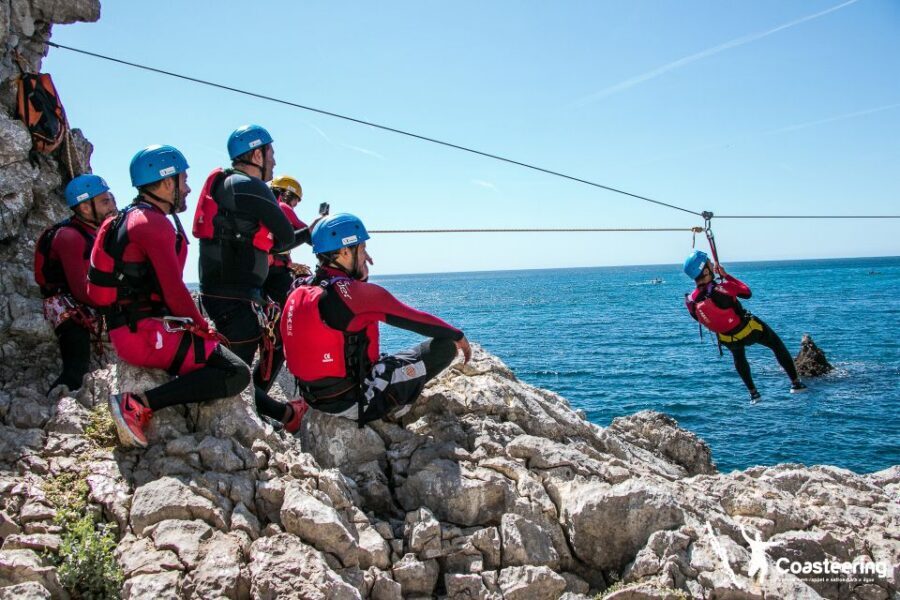
- A real coasteering route: climbing, rappelling, swimming, walking, and jumping along the Arrábida coast
- Safety-first guidance from guides such as Francisco, Diogo, Henrique, and Fabio
- Jumps with options: many jumps fall around 4 to 8 meters, with lower alternatives if needed
- Full gear provided: helmet, buoyancy aid, wetsuit, harness, and rappel setup
- Return boat ride from the coast back to Sesimbra for that wind-in-your-face finish
Why coasteering in Arrábida feels different from other “Lisbon day trips”
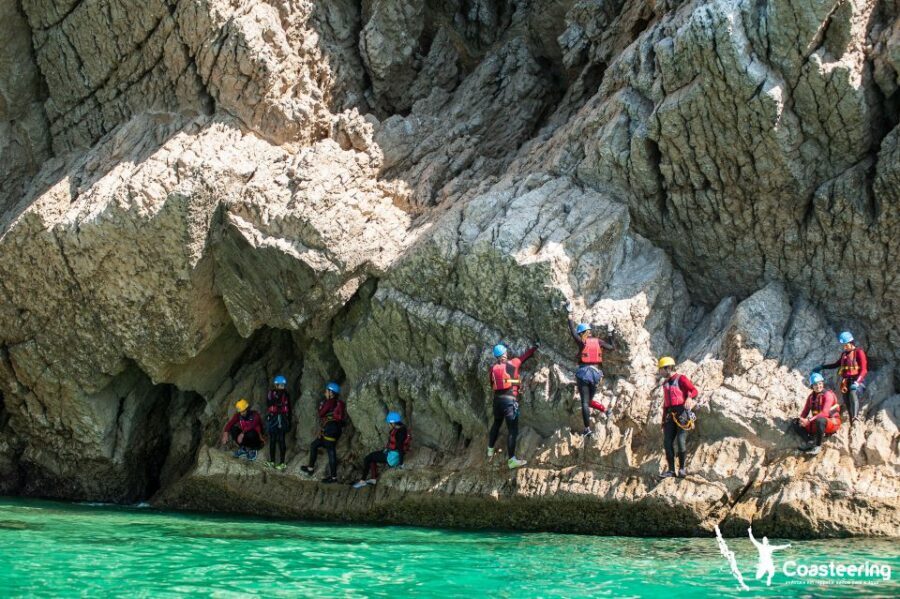
Lisbon has plenty of viewpoints. This one gives you something better: a route that forces you to see the coastline the hard way. Instead of looking down at cliffs, you’re scrambling along them, moving around corners that open into bright coves, then dropping into the sea with proper safety systems in place.
The Arrábida coast has a dramatic, jagged look. You feel it in your body. Coasteering is part climbing, part swimming, part adrenaline. Your guide turns that into a sequence you can handle, so you’re not stuck doing one hard thing for hours.
And yes, the jumps are the headline. But what keeps it memorable is how often you get mini “wins” between the big moments: reaching the next ledge, nailing a downclimb, finding footing on wet rock, or realizing you can actually swim to the next landing without panicking.
You can also read our reviews of more tours and experiences in Lisbon.



Getting to Sesimbra: pickup vs meeting at Porto de Abrigo
You’ll start either with pickup from Lisbon or by meeting your guides at Porto de Abrigo in Sesimbra. This matters because it affects how much of your day is spent in a vehicle versus on the coast.
If you’re doing pickup from Lisbon, plan for a drive that can run about 45 minutes one way. If you’re starting in Sesimbra, your time is more tightly spent on the activity itself.
Either way, you’ll meet the team, get checked in, and head into the gear-and-instructions phase before you move along the coast.
Gear up: what you wear and why it makes the difference
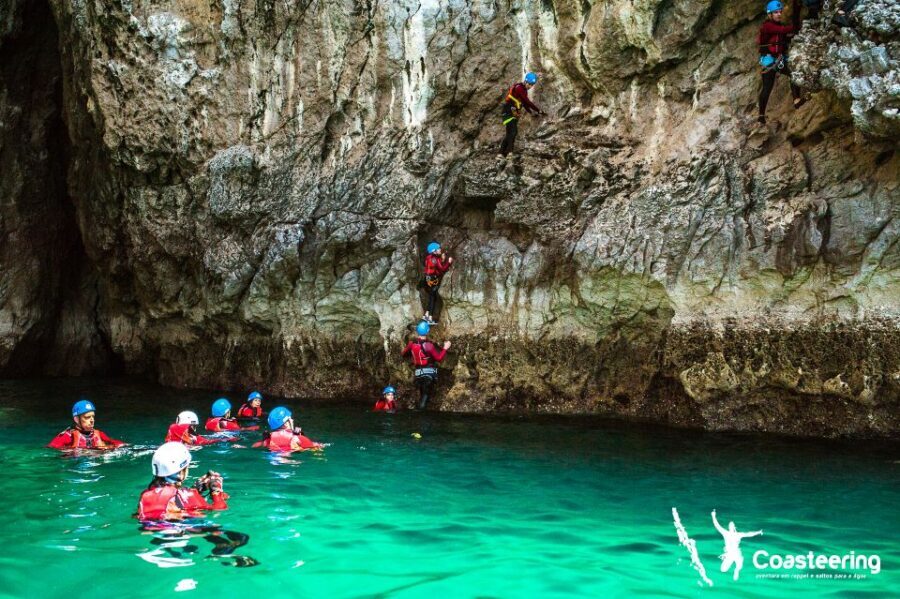
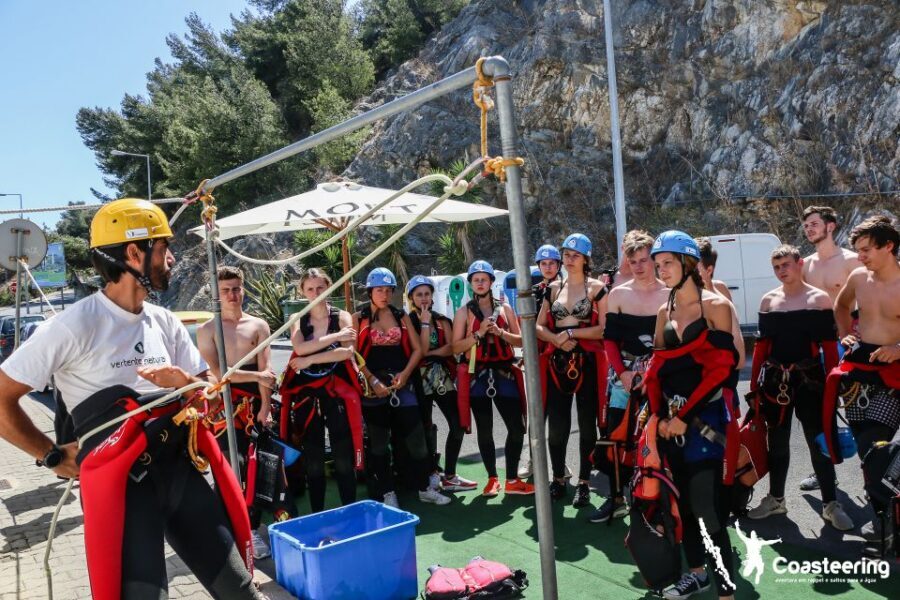
This experience provides the key coasteering gear. That’s part of the value, and it also makes your day smoother. You’ll get a helmet, a buoyancy aid, and a wetsuit setup along with the harness and rappel equipment.
Here’s what to plan for as you get dressed:
- You’ll wear swimwear under the wetsuit, so bring something you’re comfortable staying in all day.
- You’ll need shorts and sports shoes/footwear that work on rock and can get soaked and dirty.
- Open-toed shoes are not allowed, so skip sandals and flip-flops.
One practical tip that shows up again and again: rent or use the required shoes on site if that option is available to you. A lot of people don’t want their own running shoes turned into salt-and-sand souvenirs.
Also note the eyewear situation: you might not be able to wear glasses or sunglasses during the action. If that matters to you, plan accordingly (contact lenses if you use them, or ask the team what’s possible).
The actual route: climb, rappel, swim, and jump along the Arrábida coast
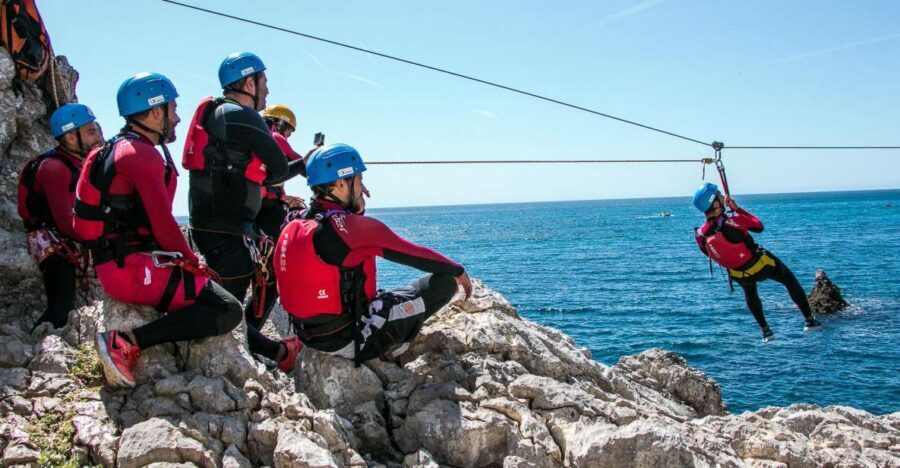
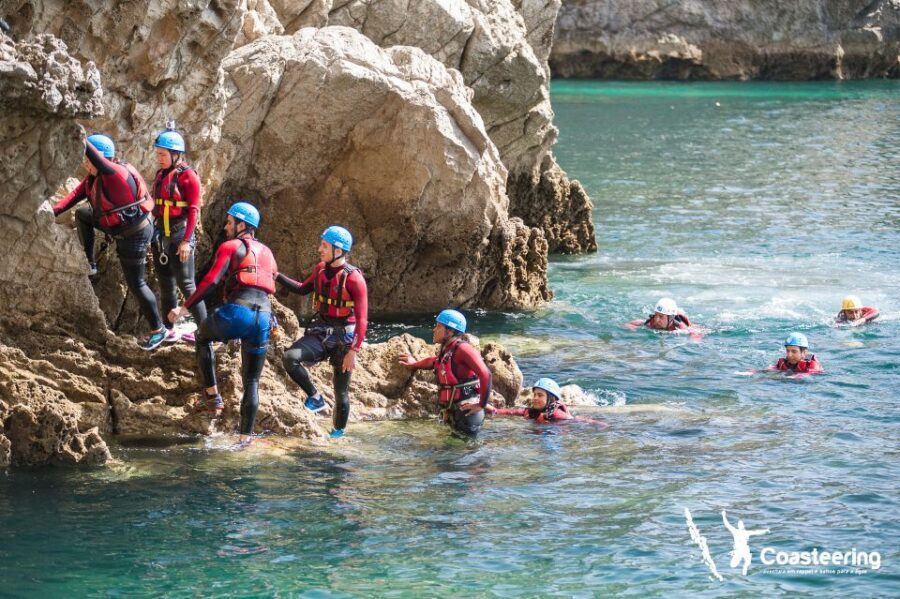
Your coasteering adventure runs about 4 to 5 hours, and it’s paced as a sequence. The day usually feels like it’s built around short sections that change the challenge: scramble, step down, rappel, swim to the next area, then repeat.
How it starts on rock
Expect rocky scrambling and climbing moves early on. Your guide will manage the rope work and where you go. Even if you’re nervous at first, the best guides do two things: they keep you moving and they keep your mind calm with clear instructions.
In particular, guides like Francisco and Diogo are known for staying patient and encouraging, even when someone is sorting out fear-of-heights thoughts in real time.

Rappels and rope work
You’ll rappel as part of the route. That’s the moment where the “adventure sport” part becomes real, because it’s controlled and technical at the same time.
This is where having the right harness setup and a steady guide matters. You’re not doing random self-learned rappels. You’re following a system run by people who do this regularly.
Swimming segments you’ll feel in your legs
You’ll swim in the ocean. The buoyancy aid helps, but you’ll still use your body. That’s why the tour rewards steady swimmers more than complete beginners.
If you’re a decent swimmer, you’ll probably find it easier than you feared. If you’re not comfortable in open water, this is the part you should take seriously when deciding.
The jumps: 4 to 8 meters, with alternatives
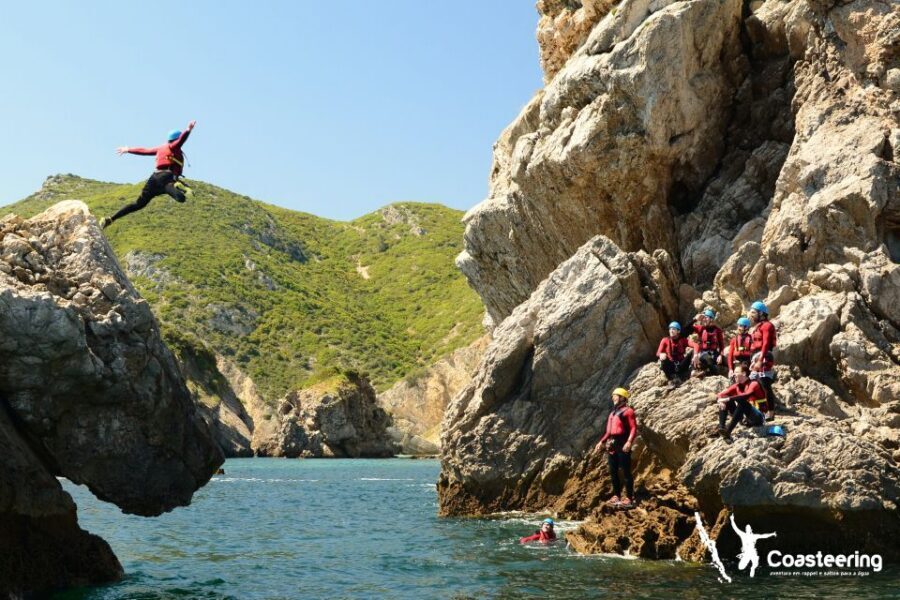
The jumps are a big part of the fun. Many outings include jumps around 4 to 8 meters, and the guides can offer lower options if needed. That’s how you get the adrenaline without forcing everyone into the same fear level.
What makes jumps easier is the guide’s presence. Guides will talk you through body position and timing, then watch you right up close. That’s why people mention feeling safe while still having a thrill.
Bonus moments: wildlife and little pauses
You might also get small nature breaks along the way. Some guides point out marine life and plants as you move, turning the coastline into something you’re learning as you’re doing.
Even if you don’t care about “nature facts,” these small stops help your brain reset between intense sections.
The boat ride back to Sesimbra: the wind-on-your-face cooldown
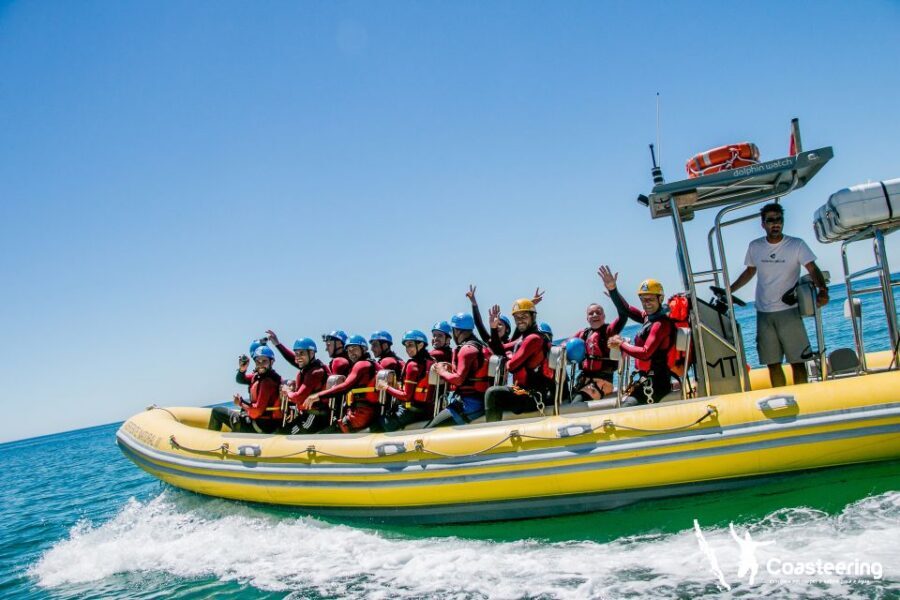
When you finish your last stretch, you’ll relax during the return boat journey back to Sesimbra. This is more than a ride. It’s how your body comes down from adrenaline mode.
It’s also where the coast looks different. From the water, cliffs and coves show you scale fast. You get a final set of views without the effort of climbing to the next ledge.
If you’re lucky, you might even see wildlife from the boat. Some people have spotted dolphins during the return, though you should treat that as a bonus rather than a promise.
Who this suits best (and who should think twice)
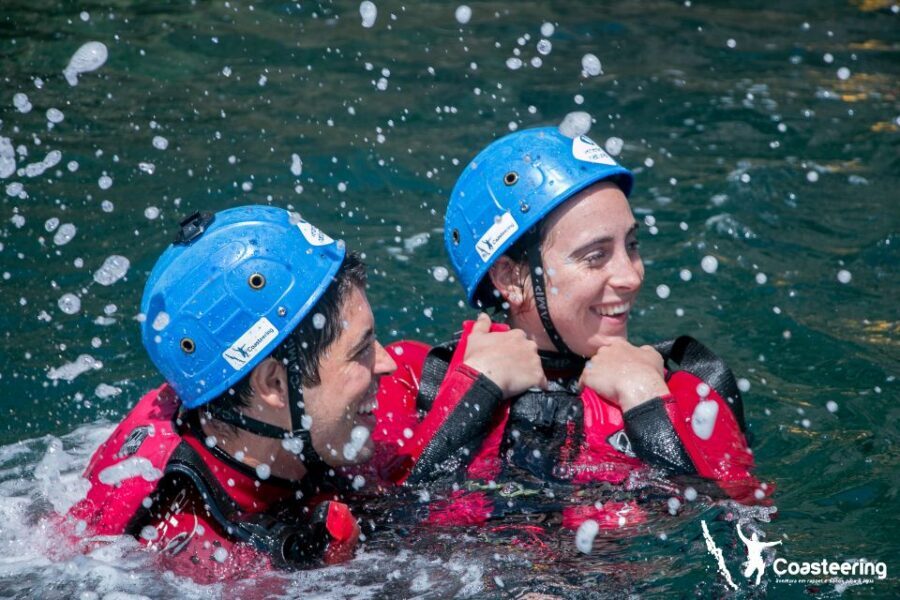
This tour is best for people who want an active day with a clear structure. You get guidance, gear, and defined routes, but you still earn the experience with your own effort.
You’ll enjoy it if you:
- like climbing, scrambling, or any “hands-on” outdoor challenge
- don’t mind ocean water and swimming segments
- want to face heights with proper safety systems
You should think twice if you:
- hate the idea of jumping or you freeze with heights
- struggle with swimming or open-water confidence
- are expecting an easy walk tour
Age can come up in people’s expectations too. Some people feel it’s not suited for kids, and the physical nature of the activity backs that up. If you’re bringing a younger teen or smaller person, the deciding factor is real comfort on rock and water—not just age.
Safety and guide quality: why so many people sound genuinely impressed
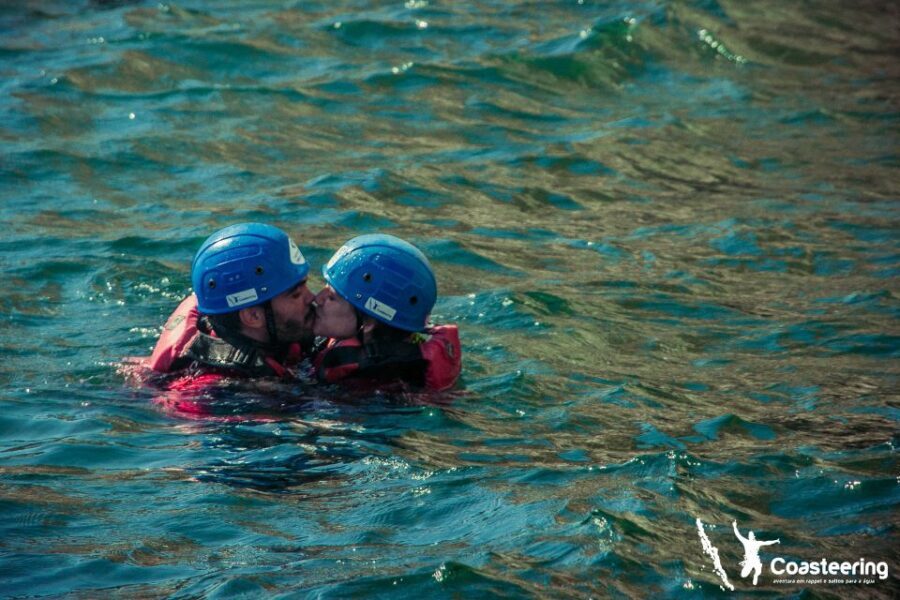
The most praised part across many experiences isn’t only the scenery. It’s the way the guides run the day.
Guides like Henrique, Francisco, Diogo, Fabio, and others are often described as patient, attentive, and serious about safety while still keeping the mood upbeat. That matters because coasteering has a split personality: it looks playful in photos, but it’s serious work when you’re on wet rock with ropes involved.
What I’d look for in how you’re treated:
- clear step-by-step instructions before each key move
- a paced route that fits the group’s comfort level
- confidence in rope setup and how the harness system is used
- a willingness to guide you without rushing
When those boxes get checked, the day feels like a challenge you can trust, not a gamble.
Price and value: what $76 actually buys you
At around $76 per person for a 4 to 5 hour guided adventure, the value is in three buckets.
First, you’re paying for more than “a guide.” You’re paying for specialized equipment: helmet, buoyancy aid, wetsuit, harness, and rappel gear. That removes a huge hassle. You’re also getting personal accident insurance included, which is a small line item that makes a big difference in peace of mind.
Second, you’re paying for a route you can’t easily DIY. The Arrábida coastline is stunning, but coasteering needs local know-how to do it safely and smoothly.
Third, you’re paying for a complete storyline: action on the coast, then that boat ride cooldown. Many activities give you one highlight. Coasteering gives you several, stacked.
Food and drinks are not included, so you’ll want to plan something nearby if you’re hungry afterward. Some people also mention waiting time on the return and finding a local lunch spot while they wait, so if your schedule is flexible, that’s a good way to handle the downtime.
What to bring (so you don’t waste energy)
You should come prepared, because you’ll be changing clothes and staying in wet gear for a while.
Bring:
- swimwear
- a towel
- sports shoes and shorts (and make sure they’re appropriate for rocky movement)
A few shoe reality checks:
- you need footwear that feels secure on rock
- laces can matter for fit
- you’ll likely want shoes you don’t mind getting ruined slightly by sand and salt
And bring a plan for photos. A water-friendly phone bag or waterproof camera helps, because you’ll get splashes and you’ll be moving fast. People recommend taking waterproof gear if you want more than shaky phone memories.
Simple planning advice for your best day
- Wear shorts you don’t mind getting wet and dirty. You may end up wearing them under or with wetsuit gear.
- Don’t overpack. You’ll want a towel and dry clothing for after, plus essentials for the water.
- If you’re nervous about heights, tell your guide early. Good guides adjust jump options and pacing when they understand your comfort level.
- Expect a full-body workout. Coasteering uses legs for scrambling, arms for balance, core for stability, and cardio for swimming and continuous movement.
Should you book this coasteering adventure with Vertente Natural?
If you want a high-energy day in the Sesimbra–Arrábida area, this is a strong choice. The combination of professional guidance, provided safety gear, and coastline views you earn with actual movement is hard to beat.
I’d book it if you’re comfortable with the idea of ocean water, you’re willing to climb and rappel as part of the route, and you want your Lisbon-area day trip to feel like a real outdoor sport.
I’d skip or choose a gentler option if heights and open water make you instantly anxious. You can still enjoy Portugal from the coast in lots of ways. But if your goal is adrenaline plus scenery plus a guided sport day, this one checks those boxes.
FAQ
Where do I meet for the tour?
The meeting point can vary by option. You can either be picked up in Lisbon or meet your guides at Porto de Abrigo in Sesimbra.
How long is the coasteering adventure?
It runs about 4 to 5 hours.
What’s included in the price?
The tour includes coasteering equipment, a guided tour, and personal accident insurance.
Is food included?
No. Food and drinks are not included.
Do I need to bring shorts and running shoes?
Shorts and running shoes are mandatory, and they’re rented on site. You should also bring shorts as part of what to bring, in case you’re directed to use your own.
Can I wear open-toed shoes?
No. Open-toed shoes are not allowed.
What should I pack for the day?
Bring swimwear, a towel, sports shoes, and shorts.
What languages are available for the guide?
The tour offers live guiding in English, French, Portuguese, and Spanish.
Do I need to be a strong swimmer?
The experience includes swimming segments in the ocean, so you should be comfortable with that type of water time.
What’s the cancellation policy?
You can cancel up to 24 hours in advance for a full refund.
Is the tour group guided the whole time?
Yes. You’re escorted by professional and experienced guides at all times.