REVIEW · LISBON
Multicultural Lisbon: Stories, Art, Music, Flavor & Secrets
Book on GetYourGuide →Operated by Soul Dreamers · Bookable on GetYourGuide
Lisbon hides its real soul in alleys. This 5-hour evening walk leads you through Mouraria, Graça, and toward Castelo with street art stories and food, then finishes with live music that feels like part of Lisbon’s daily life, not a performance for tourists. You’ll start in Martim Moniz, follow the cultural threads uphill, and get a different kind of Lisbon that’s more lived-in than postcard.
I like that the experience has a clear arc: neighborhood context first, then art and flavor, then the payoff of a sunset viewpoint and music. I also like the small-group feel and the guide energy; in multiple experiences, the host named Teddy comes through as calm, enthusiastic, and genuinely proud of what he shows. One consideration: you climb a lot of steps—about 200 to reach the miradouro—and the tour runs rain or shine, so plan for an uphill evening and pack a proper umbrella.
If you want checkboxes like a museum route, this isn’t that. This works best when you’re open to side streets, family-run dining at your own cost, and music nights that vary by day. Also note it’s not suitable for children under 14, and it isn’t built for people with mobility impairments or seniors over 80.
In This Review
- Key moments that make this tour worth your time
- Where Martim Moniz Sets the Tone Before You Even Walk
- Mouraria: Older Streets, Multicultural Cafés, and Stories With Teeth
- Graça’s Murals and the Art That Talks Back
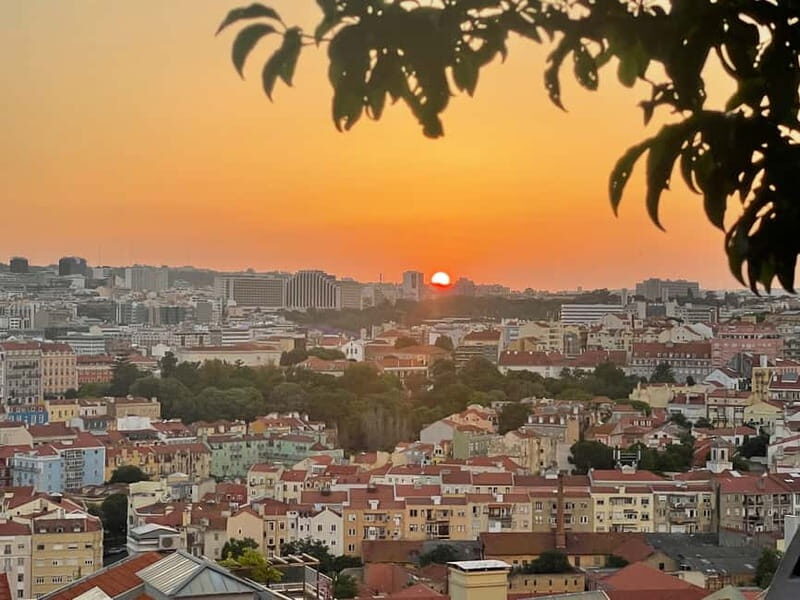
- The Miradouro Climb: Sunset Views With About 200 Steps
- The Secret Wine Stop and How to Pace Your Evening
- Castelo’s Family-Run Restaurant Stop: Warm Food, Your Own Bill
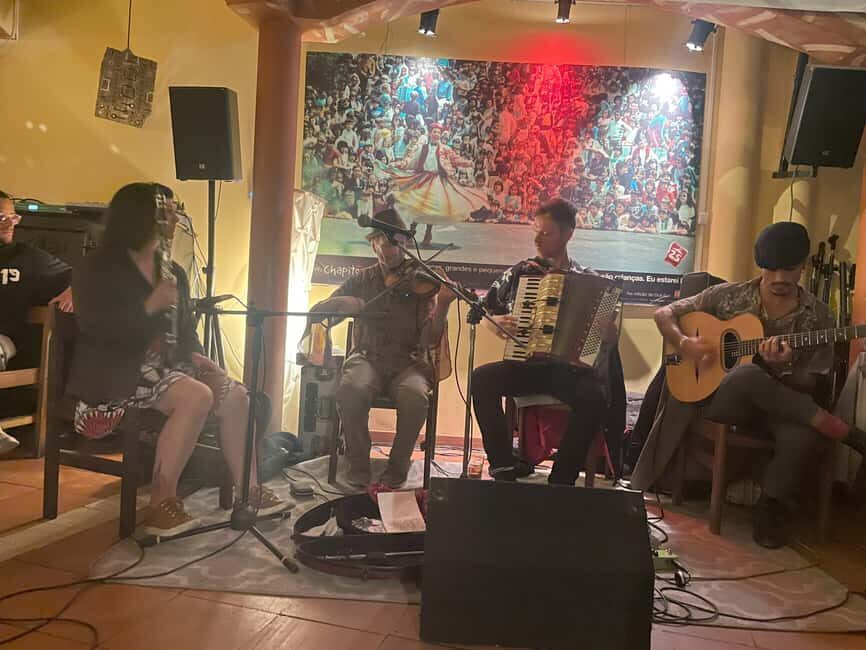
- Ending at Chapitô and Chasing the Music That Changes Night to Night
- Price, timing, and walking realities (so the value makes sense)
- Who should book this Lisbon multicultural evening?
- Should you book this tour or choose something else?
- FAQ
- Where do I meet for the tour?
- How long is the experience, and when does it run?
- Is there a lot of walking or stairs?
- What’s included in the price?
- What kind of live music might I hear?
- Is the tour offered in multiple languages, and is it child-friendly?
Key moments that make this tour worth your time
- Martim Moniz starts the story at Hotel Mundial, the cultural crossroads where the evening sets its tone.
- Mouraria’s cafés and street-level art give you context for why this neighborhood feels different from the rest.
- Graça’s murals explain the mood—political and poetic voices show up in the walls.
- Sunset from a miradouro with real climbing (about 200 steps, no elevator).
- A live music finale that changes by night: samba roda, Afro-Lusophone guitar, Cumbia or Forró, or jazz.
Where Martim Moniz Sets the Tone Before You Even Walk
The tour begins about two hours before sunset, with the meeting point outside the main entrance of Hotel Mundial in Martim Moniz square. From the start, you’re placed at a crossroads of cultures, not the usual main-tourist corridor.
There’s a short early stop around Praça do Martim Moniz where the guide helps you get your bearings fast. It’s not just orientation. It’s the setup for what you’ll keep noticing later: how Lisbon absorbs different influences, and how those influences show up in street life, music, and food choices.
Practical tip: plan to arrive a few minutes early and come prepared to walk immediately. This is one of those evenings where the vibe builds as you go, so you don’t want to spend the first minutes stuck figuring out where to stand.
You can also read our reviews of more tours and experiences in Lisbon.

Mouraria: Older Streets, Multicultural Cafés, and Stories With Teeth
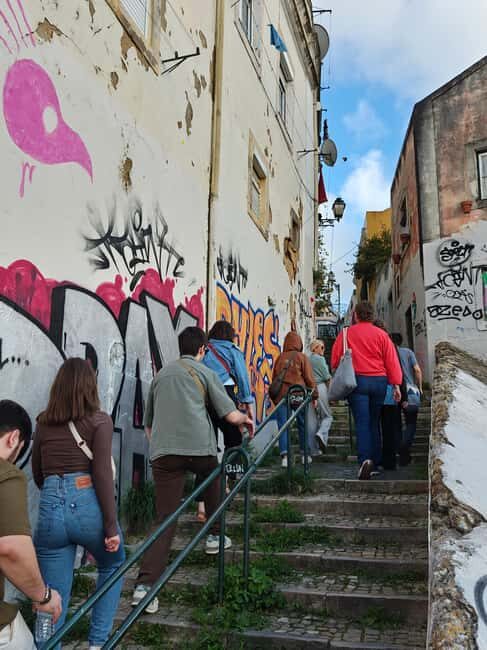
Next comes Mouraria, guided for about an hour. This is one of Lisbon’s oldest neighborhoods, and the tour treats it like a living place with layers—migration, resilience, change, and creativity.
You’ll wander with local context that helps explain what you’re seeing rather than treating it like scenery. Expect hidden cafés that feature local art, plus storytelling that connects the district’s multicultural identity to what people have lived through over time. This part matters because Mouraria can look like “just another old neighborhood” if you’re moving fast. With a guide, you start noticing patterns: who uses the streets, what kind of music shows up, how art sits next to everyday life.
I particularly like that Mouraria isn’t presented as a history lecture. It’s presented as the reason the rest of the route feels so natural. By the time you leave, you’re not only looking at corners—you’re understanding why those corners matter.
Graça’s Murals and the Art That Talks Back
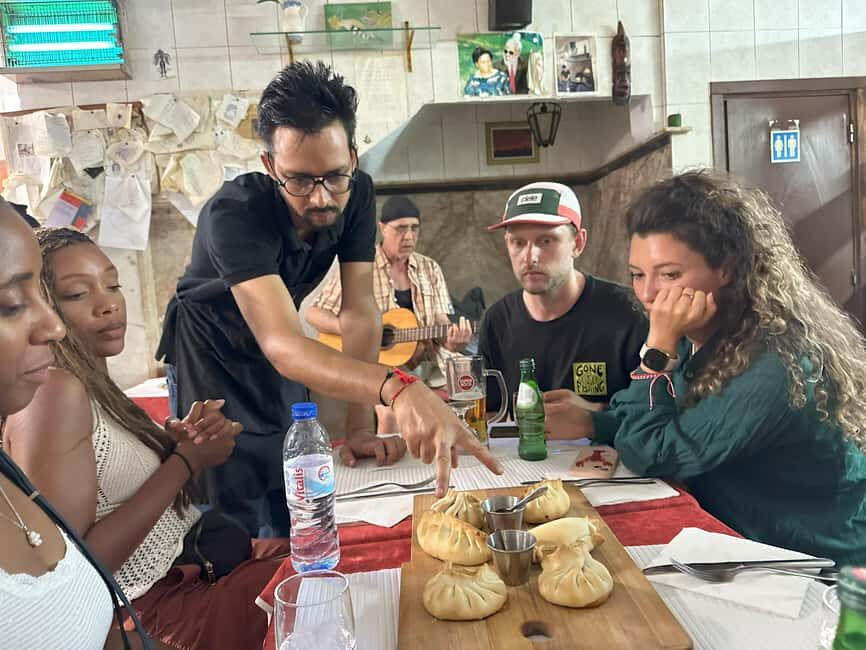
After Mouraria, you head uphill into Graça. You’ll get about 30 minutes of sightseeing in the Graça historic district, with time devoted to bold street art and urban murals.
Here’s the thing: Graça’s walls don’t just decorate the street. They make opinions visible. The tour frames this street art as political and poetic—so you’ll likely find yourself slowing down, reading what you can, and asking why certain messages show up where they do.
Then there’s the practical side: you’ll also take in local snacks around this area (about 10 minutes). This is one of those moments that keeps the tour from becoming all walking and no payoff. You’ll get small tastes meant for the route, which also sets you up for the longer uphill stretch and the later wine stop.
Wear shoes you can handle on uneven sidewalks. Lisbon sidewalks are rarely the flat, friendly kind.
The Miradouro Climb: Sunset Views With About 200 Steps
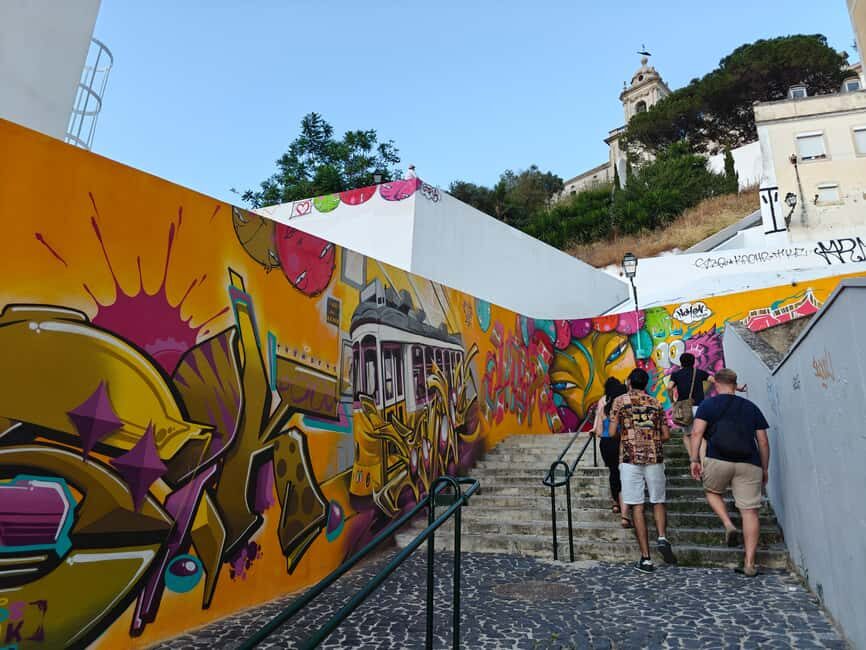
One of the itinerary beats is a hidden section of walking that lasts about 20 minutes, followed by sunset time (around 10 minutes). You’ll also climb roughly 200 steps to reach the miradouro, and there’s no elevator.
That climb is the main “real world” constraint of the evening, so treat it like part of the experience rather than a surprise. If you’re comfortable with stairs and you bring layers, the reward is worth it. The route is timed so you’re at the viewpoint when the light starts to turn Lisbon into something softer and warmer.
This is also why the tour starts around two hours before sunset. You’re not racing the clock. You’re building toward that golden-hour moment with the city moving around you—music nearby, murals overhead, and street life in the background.
Weather note: the tour runs rain or shine. Bring an umbrella, and don’t assume you’ll be able to dry off quickly.
The Secret Wine Stop and How to Pace Your Evening
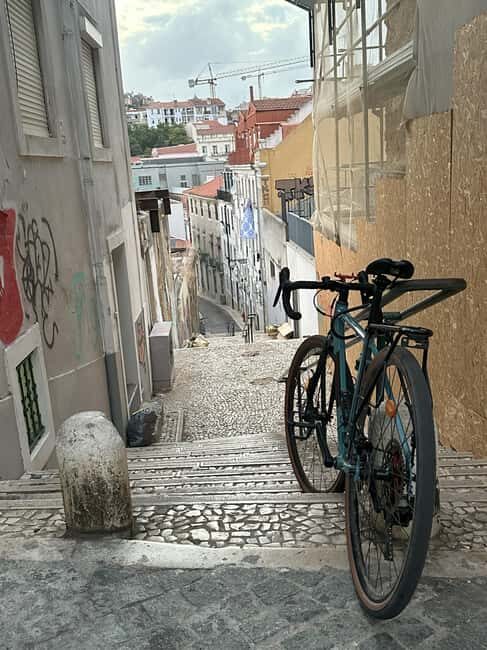
There’s a secret stop on the route that includes wine for about 30 minutes. This is a nice break point built into the walk, when the evening shifts from “see and taste” to “sit and absorb.”
Think of it as a reset. You’ll have already walked through neighborhoods and art, and now you get a quieter pause before the dinner stop and the music. Even if you don’t drink much wine, the social pacing helps. It’s the moment when you’ll notice how small-group tours can feel personal—less like a bus ride, more like a guided night with new friends.
One practical point: the tour instructions specifically mention bringing cash. That’s a good clue that you might want some on hand for extra spending later in the evening.


Castelo’s Family-Run Restaurant Stop: Warm Food, Your Own Bill
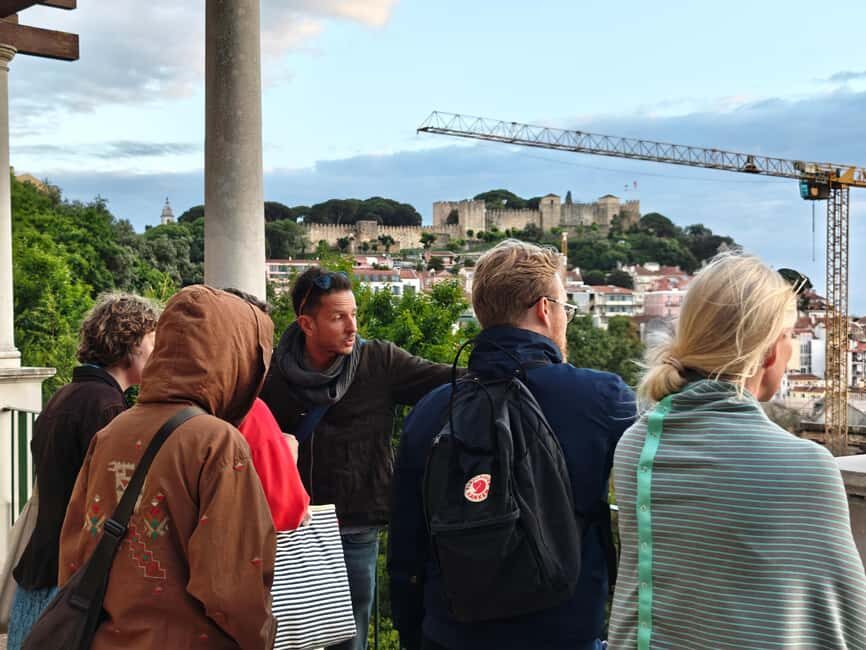
As the route continues, you reach Castelo district. The experience includes an authentic immigrant-run or family-run restaurant stop, with about an hour set aside for the meal/dinner window. There’s also a snack moment around the Graça/Castelo area (about 20 minutes of local snacks in the schedule).
Important for your budget: main meals and drinks are not included at the restaurant. So this is not a free dinner. What you’re paying for is the guided cultural context, access to the place chosen for its authenticity, and the route that leads you there.
How to use this moment well:
- Look at it as a chance to order something you might not pick on your own.
- Stay open to simple, comforting choices rather than expecting a fancy “tourist menu.”
- If you like to taste slowly, ask what pairs well with what you ordered; the hosts are usually the people who know.
And based on what I’ve seen from guide-led evenings like this, the restaurant choice tends to be about atmosphere as much as food. The whole reason the tour route lands here is to make the neighborhood feel human, not staged.
Ending at Chapitô and Chasing the Music That Changes Night to Night
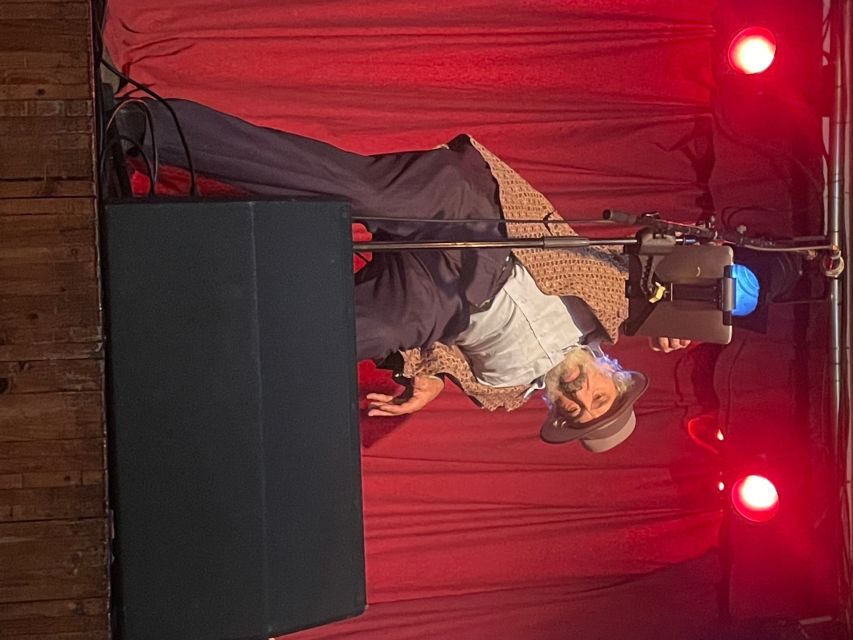
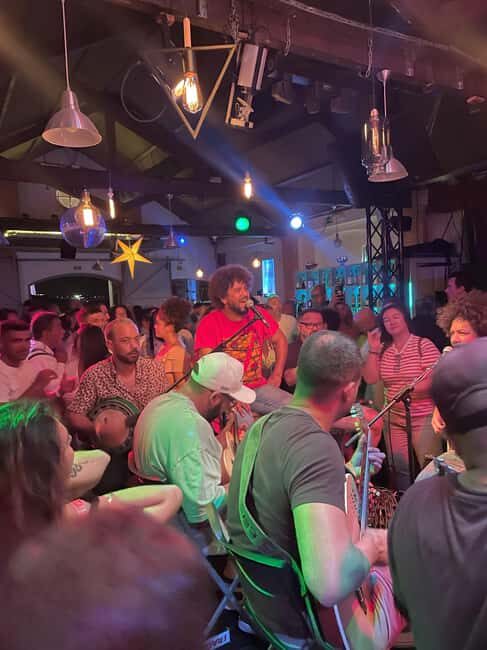
The final phase is Lisbon live music. The tour ends at a carefully selected live music venue based on what’s happening that night. Depending on the day, the music could include spontaneous jam sessions, an Afro-Lusophone guitar session, a Brazilian samba roda, Cumbia or Forró rhythms, or even a jazz vibe at a tucked-away venue locals know.
This is the kind of ending I appreciate because it refuses to be predictable. Lisbon is not one big soundtrack; it’s many overlapping styles carried by different communities and neighborhoods. When the tour leans into that, it gives you a Lisbon that feels current.
You’ll also notice a difference between music that’s built for a crowd and music that’s part of the room. A good sign here is that the venue is described as carefully selected for that specific evening, rather than a fixed “ticketed concert.” That flexibility can lead to a more relaxed, participatory feeling.
At the very end, the schedule lists Chapitô as the finish area, and the activity description also notes it ends back at the meeting point. In practice, plan for the night to wrap up around the central area near your starting point rather than far across town.
Price, timing, and walking realities (so the value makes sense)
The price is $66 per person for a total duration of about 5 hours. On paper, it’s not the cheapest thing you can do in Lisbon. In practice, you’re paying for several connected experiences that are hard to stitch together alone: guided storytelling through Mouraria and Graça, snacks during the walk, a sunset viewpoint moment, a wine stop, and a live music session chosen for that evening.
The value angle here is the structure. Instead of you guessing which streets make sense for multicultural context, a guide walks you through the logic of the neighborhood. Instead of you waiting until night to hunt for the right kind of music, the tour lines up a good option for that day.
Timing also matters. Starting before sunset means you get the miradouro payoff without losing your whole evening to travel. You’re not just seeing Lisbon at night—you’re seeing Lisbon shifting from day to evening while you’re still in motion.
The trade-offs are real:
- You climb about 200 steps to reach the viewpoint with no elevator.
- Dinner and additional drinks at the restaurant are not included.
- It runs rain or shine, so you should expect weather to play a role in comfort.
Who should book this Lisbon multicultural evening?
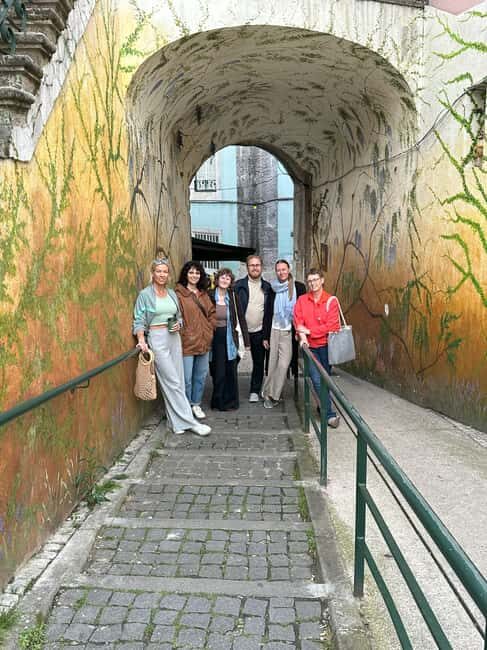
Book it if you want:
- Street art with meaning, not just photos
- A serious focus on neighborhoods like Mouraria and Graça
- Live music as the final chapter, not an optional add-on
- A small group experience (limited to 10 participants)
You’ll especially enjoy it if you like your travel stories human-sized. In the experiences connected to this tour, the guide Teddy is repeatedly mentioned for leading comfortably and knowledgeably, showing pride in the city, and taking people to places they wouldn’t stumble on alone. That’s the sweet spot: you want guidance without being trapped in a rigid script.
Skip it if:
- You can’t manage stairs and uphill walking
- You need an accessible route (this tour is not suitable for people with mobility impairments)
- You’re traveling with kids under 14, or you’re over 80
Should you book this tour or choose something else?
I’d book it if your Lisbon goal is to understand how the city works at street level—through art, music, and food that reflects multiple communities. The evening format makes it easy to feel like you’re getting beneath the usual tourist layer in one go.
I’d think twice if you’re tired of walking, hate stair climbs, or you’re trying to keep the whole night strict-budget tight. Even though snacks are included, dinner and drinks at the restaurant aren’t.
If you’re the type who likes to show up, follow a local rhythm, and let the night shape itself around what’s happening, this is a strong fit.
FAQ
Where do I meet for the tour?
You meet outside the main entrance of Hotel Mundial in Martim Moniz square. The tour finishes back near the meeting point, and Chapitô is listed as the finish area.
How long is the experience, and when does it run?
It lasts about 5 hours and starts roughly 2 hours before sunset. Starting times vary, so you’ll want to check availability for the exact slot.
Is there a lot of walking or stairs?
Yes. You’ll climb about 200 steps to reach the miradouro, and there is no elevator. Wear comfortable walking shoes.
What’s included in the price?
Included is a guided walk through Mouraria and Graça, a sunset viewpoint, street art and graffiti context, local snacks during the walk, a visit to an authentic local/immigrant-run restaurant, and live music at the end of the evening. Main meals and drinks are not included.
What kind of live music might I hear?
The live music varies by night and can include jam session performances, an Afro-Lusophone guitar session, Brazilian samba roda, Cumbia or Forró rhythms, or jazz at a local venue.
Is the tour offered in multiple languages, and is it child-friendly?
The guide speaks English, French, Romanian, and Spanish. It is not suitable for children under 14, and it is not suitable for people with mobility impairments.