REVIEW · LISBON
Belem, Cristo Rei & Historical Part of Lisbon.
Book on GetYourGuide →Operated by Tour Map portugal · Bookable on GetYourGuide
Lisbon is a city of viewpoints, and this tour is built for them. I love the mix of Cristo Rei over the Tagus and the Belém classics like Belém Tower and Jerónimos Monastery. You’ll also get a smart “see it, understand it” day with stories that put Lisbon’s layers into context. One thing to plan for: the day moves fast, and long lines can steal time, especially around Jerónimos Monastery.
The route also gives you both sides of Lisbon. You’ll ride through broad modern avenues and neighborhoods, then hop onto hill viewpoints where you can spot landmarks like Castelo de São Jorge and the Sé from above. That variety is a big part of the value of this trip. The main consideration is that it’s not suitable for wheelchair users, and the scenery requires plenty of walking and stairs.
In This Review
- Key moments that make this Lisbon day tour work
- A 5-hour hit of Belém, Lisbon viewpoints, and Cristo Rei
- Starting from Parque Eduardo VII: modern Lisbon to the hilltop panoramas
- Christ the King (Cristo Rei): the WWII gratitude monument across the Tagus
- Belém Tower and the Monument to the Discoveries: UNESCO by the water
- Jerónimos Monastery: the highlight that can steal time
- Miradouro stops: Portas do Sol and Miradouro da Graça views you can read
- Lisbon Cathedral (Sé), Saint Anthony Church, and Castelo de São Jorge
- Eduardo VII Park, the Pink Street, and the city’s modern pulse
- Price and value: what $142 per person really buys
- Quick logistics that affect your day (and how to stay sane)
- Who this tour is perfect for
- Should you book Belem, Cristo Rei & Historical Lisbon?
- FAQ
- FAQ
- How long is the tour?
- Where does pickup happen?
- Is it a private group?
- What languages are offered?
- What attractions are included?
- Is food or drinks included?
- What should I bring?
- Will I need to go through security?
- Does the tour run in bad weather?
- Is the tour wheelchair accessible?
Key moments that make this Lisbon day tour work
- Cristo Rei’s sweep across the Tagus: WWII-era gratitude turned into one of Lisbon’s best sightlines
- Belém’s UNESCO sights: Belém Tower plus Jerónimos Monastery, with time for photos and guided context
- Multiple hilltop panoramas: Miradouro Sao Pedro de Alcântara, Portas do Sol, and Miradouro da Graça
- Landmarks you can actually point out: the Sé area, São Vicente de Fora, Igreja da Graça, and more
- A private guide adds meaning: history comes with names, locations, and why they matter
- You can grab local bites on your own: like pasteis de queijo at the castle area or pastries in Belém
A 5-hour hit of Belém, Lisbon viewpoints, and Cristo Rei
This is the kind of Lisbon tour that helps you stop guessing. In about five hours, you get a chain of highlights spread across the city: a major viewpoint monument across the river, Belém’s heritage stops by the water, and several miradouros that let you see Lisbon’s hills in one glance.
The private setup matters more than you might think. A shared-bus tour often turns into a traffic-jammed rush to the same photo spots. Here, the plan is tightly stitched together so your guide can explain what you’re looking at as you look at it. That makes the day feel like orientation, not just sightseeing.
The big promise is views. From Cristo Rei, you get a sweeping look toward Lisbon. From the hill miradouros, you see how neighborhoods stack up, how churches line the slopes, and how Castelo de São Jorge anchors the skyline. If you like photos, you’ll have plenty of photo stops. If you like understanding what you’re seeing, you’ll also like the guide-driven story time.
You can also read our reviews of more historical tours in Lisbon


Starting from Parque Eduardo VII: modern Lisbon to the hilltop panoramas
Most days in Lisbon start with hills, but it’s nice when you ease into them with the right “first perspective.” This tour begins at Parque Eduardo VII, where you can admire the monument there before the drive fans out toward central streets.
Along the way, you pass through the city’s more recognizable, grand-street Lisbon: Avenida da Liberdade, plus areas like Príncipe Real and the Marquês de Pombal square area. This helps you connect the dots between modern Lisbon and the older districts that sit above it.
Then the tour starts working the viewpoints. At Miradouro de São Pedro de Alcântara, the panorama is detailed and specific. From there, your guide points out a wide stretch that reaches toward Castelo de São Jorge’s walls and toward the Lisbon Cathedral area (the Sé). You can also see Iglesia da Penha de França to the northwest, plus the large church complex of Igreja da Graça. On clear sightlines, São Vicente de Fora becomes recognizable by its symmetrical towers around the façade.
That’s the real value of the miradouro stops: they turn Lisbon’s geography into something you can read. Hills, sightlines, and the way major churches cluster are not abstract once you see them from above.
Christ the King (Cristo Rei): the WWII gratitude monument across the Tagus
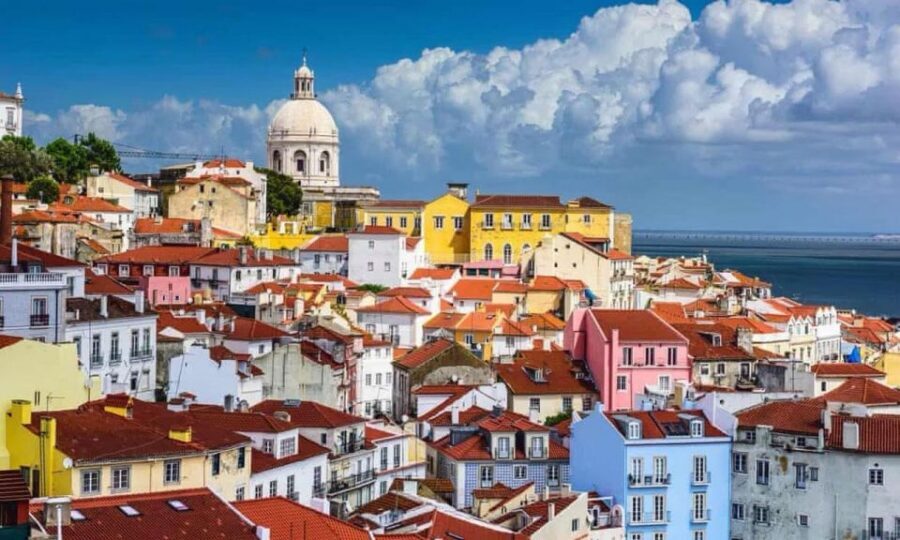
Cristo Rei is one of those places that feels instantly meaningful once you know why it exists. The monument dates from the 1950s and was built as Portugal’s religious gratitude after World War II. It was consecrated in 1959, and since then it has been an important Portuguese pilgrim destination. Today it’s also a major religious center connected with the diocese of Setúbal.
But the reason people love it is the view. On top, you get a strong sense of Lisbon’s layout and the river’s role in the city’s life. You’re not just looking at buildings. You’re seeing a relationship: Lisbon to the Tagus, and the way the city spreads out around water and hills.
This stop usually includes guided time plus photo breaks and free time. The break is important. Sometimes the line or the flow of visitors shifts, and having a little breathing room helps you take photos without feeling panicked.
Practical note: this isn’t a “sit and watch” stop. If you want good angles, plan for walking on-site and taking your time moving to the best vantage points.
Belém Tower and the Monument to the Discoveries: UNESCO by the water
Then comes Belém, and suddenly you’re in Portugal’s big maritime chapter. Belém’s main hits are built for both photos and context, and this tour gives you both.
You’ll visit Belém Tower (Torre de Belém), a UNESCO World Heritage Site since 1983 and named one of the Seven Wonders of Portugal in 2007. Your guide also frames a key detail: the tower originally stood in water, because the beach of Belém used to exist around it. That water-surrounded setting helps explain the tower’s defensive and maritime vibe.
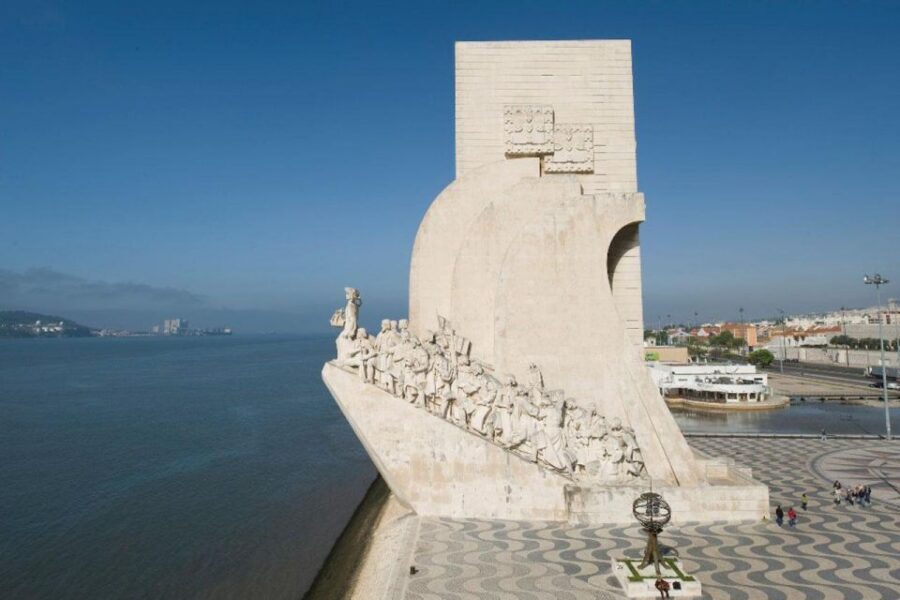
Right nearby, you’ll also stop at the Monument to the Discoveries. Even if you only have a short window here, your guide can connect it to Portugal’s historical story so it doesn’t feel like a random statue in a parking-lot landscape.
This portion of the day is designed around breaks too. Photo stops and free time give you a chance to refresh, grab a snack on your own if you want, and reset before the monastery stop.
Jerónimos Monastery: the highlight that can steal time
If you’re choosing one stop on this tour to treat as a priority, it’s Jerónimos Monastery. You’ll head there for guided visits of the grand monastery area and the main chapel.
The architecture has a reputation for a reason, but the practical reason to care is that this is also where time can get away from you. The Jerónimos complex can have long lines—sometimes around two hours—so you might need to decide how much you want to wait versus how much of the rest of the route you want to protect.
Here’s my honest advice: even with a guide, plan for the possibility that you’ll spend extra time at Jerónimos. If the line is brutal, it can help to pick what you want most (main chapel area, general interior, photos) and focus there. Trying to do everything in a line-crunch can turn the most beautiful stop into the most frustrating one.
On the food side, Belém is a natural place to grab pastries on your own. If you want to try local sweets, pasteis de Belém are a common choice in this area, and this tour puts you in the right neighborhood for it. Food and drinks are not included, so budget a little for snacks.



Miradouro stops: Portas do Sol and Miradouro da Graça views you can read
After Belém, the day climbs back into Lisbon’s hill country. This is where the tour earns its keep. You’ll make time for several miradouros and terrace viewpoints that give different “takes” on the same city.
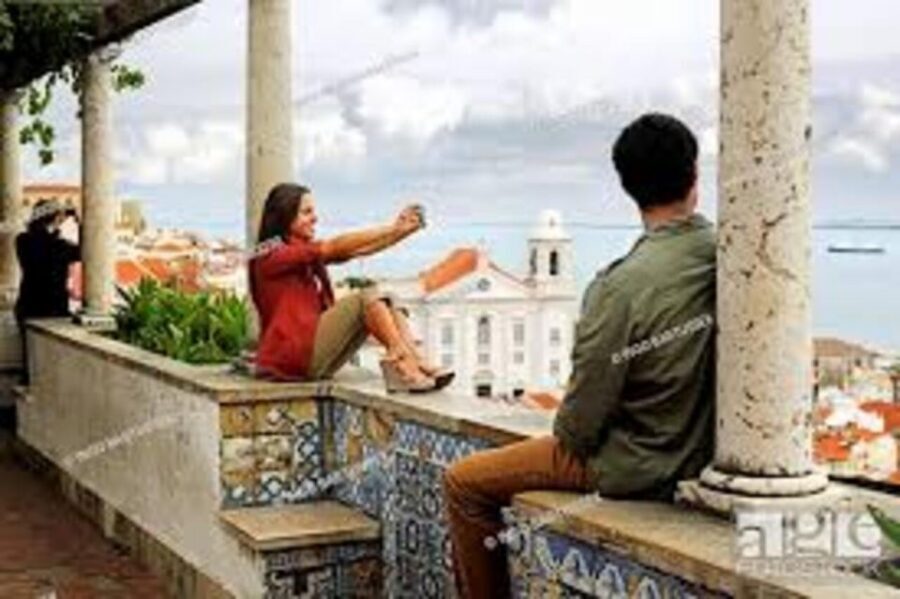
At Portas do Sol Terrace, the goal is simple: a wide city view with a strong sense of neighborhood shape. It’s one of those spots where you can see why Lisbon is so famous for layered streets and church towers.
Then you’ll reach Miradouro da Graça, another viewpoint where the guide can connect the dots you already saw from São Pedro de Alcântara. From these spots, landmarks start acting like anchors. Once you’ve located Igreja da Graça, and once you’ve identified São Vicente de Fora’s symmetry from earlier panoramas, the view becomes easier to interpret from point to point.
Also pay attention to how the tour keeps shifting perspective. You’re not just repeating the same shot. Each terrace tends to frame a different angle, and that’s what helps the city feel coherent instead of random.
Lisbon Cathedral (Sé), Saint Anthony Church, and Castelo de São Jorge
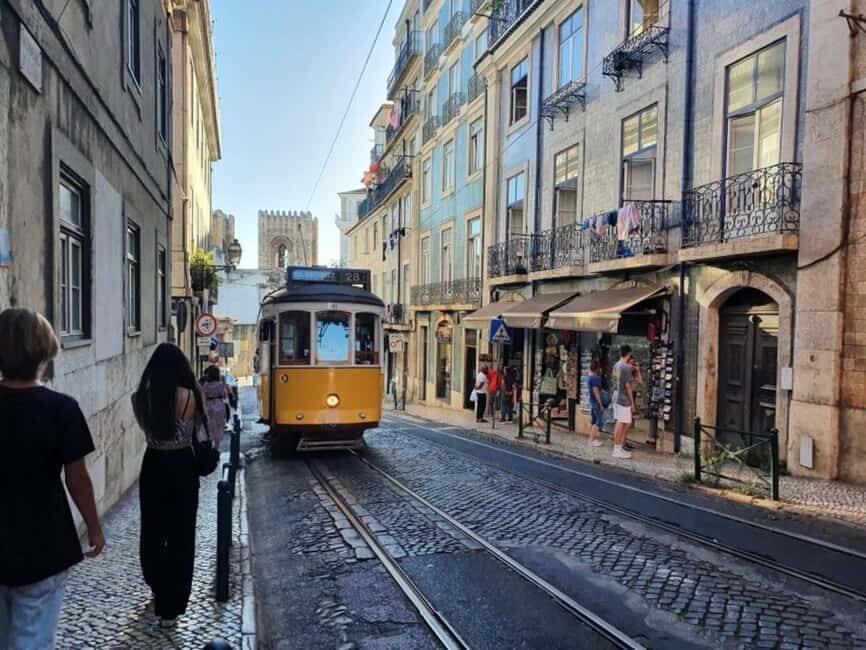
Now for the older heart of Lisbon—the part you can feel in the stone and the hill setting.
You’ll visit Lisbon Cathedral, often called the Sé (Sé de Lisboa). It’s the oldest church in the city and the seat of the Patriarchate of Lisbon. Your guide can also connect it to the broader story of Lisbon’s religious and civic life.
Nearby, you’ll also see the Church of Saint Anthony in Lisbon, dedicated to Saint Anthony of Lisbon. This stop is close enough to pair well with the Sé, and having a guide here helps you notice details you might otherwise skim over.
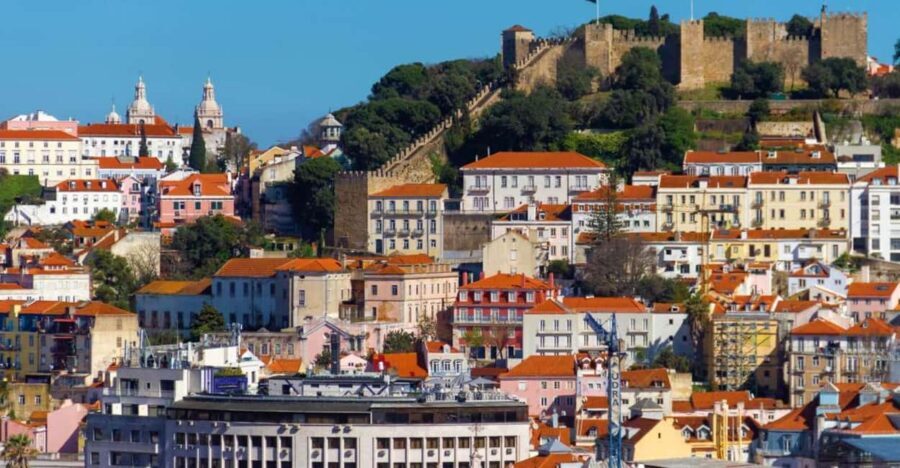
Then you’ll head to Castelo de São Jorge, which sits in the center of Lisbon on a hill. The walls and citadel extend into civil parishes around the east and south sides, so it’s not a tiny hill castle with one view. It’s a whole elevated area where walking makes sense.
The best part is the combination: castle time plus panoramic views. And if you want a local food moment, you’ll have a chance to eat pasteis de queijo with a cod fish and cheese filling. That’s the kind of snack that tastes like you’re actually in Portugal, not just in a photo loop.
One more practical note: since this area involves walking and hillside movement, wear comfortable shoes. If you’re hoping for a relaxed pace, this portion may feel “active,” even though the overall tour is only five hours.
Eduardo VII Park, the Pink Street, and the city’s modern pulse
Not every Lisbon tour balances viewpoint stops with city structure. This one does, which is why it feels smoother.
You’ll spend time back at Eduardo VII Park, then move toward some of the more colorful, city-life areas such as the Pink Street. The point here isn’t just a photo. It’s that Lisbon isn’t only churches and tiles. You also see the city’s modern energy and everyday streetscapes.
Your guide’s storytelling usually ties these stops back to what you learned earlier: how Portuguese history shows up in religious monuments, how Belém reflects maritime Portugal, and how the hills shape both daily life and major landmarks.
If you like a day that mixes “big famous sights” with a few streets that feel like where people actually live, this pacing works.
Price and value: what $142 per person really buys
At $142 per person, the price is less about a bargain and more about convenience and time efficiency. You’re paying for a private group format, hotel or apartments pickup and drop-off, and a professional local guide who explains the story as you go.
That combination matters because Lisbon is spread out vertically. Hills add time. Viewpoints add walking. Belém adds distance. A guided private route helps you avoid wasting your short time on transit decisions or trying to match landmarks from map pins.
Also, think about the “hidden costs” this tour removes:
- you don’t need to figure out the order of major sights
- you don’t need to guess what each viewpoint is showing
- you get photo stops built into the flow
What you should watch: food and drinks are not included. If you plan to try pastries at multiple stops, bring cash so you can buy what you want without hunting around at the last second. The tour also lists that you need passport or an ID card, and cash, which is a hint that some quick purchases may be card-less.
Finally, note the tour takes place rain or shine. That’s normal in Lisbon, but it means comfortable outer layers are smart. If the weather shifts, your photo plans might change, but the itinerary still runs.
Quick logistics that affect your day (and how to stay sane)
This tour includes pickup and drop-off, with three pickup options: Cascais, Almada, and Lisbon. If you’re being collected, you’ll wait in the hotel lobby about ten minutes before pickup time. The driver holds a sign with your last name, and they wait no longer than 30 minutes after the scheduled pickup time.
One other big factor: all visitors must pass through airport-style security. That can add friction, especially if you’re carrying bags you don’t usually travel with. Pack lightly if you can.
And it’s not suitable for wheelchair users. If accessibility is a must, you’ll want a different plan.
On the plus side, the tour is described as rain or shine, and that consistency matters when you’re only in Lisbon for a short window.
Who this tour is perfect for
This experience fits best if you want:
- a short Lisbon overview that connects monuments with story
- big views without the stress of doing everything by yourself
- a route that includes Belém Tower, Jerónimos Monastery, multiple miradouros, the Sé, and Castelo de São Jorge
- a private guide who can name what you’re seeing and place it in Lisbon’s timeline
It also suits couples and small groups who want flexibility with photo stops and free time. If you’re the type who reads signs once but wants the guide to explain what’s behind them, you’ll get a lot from the guide-led pacing.
If you hate lines, have mobility limits, or want a slower day with long meal breaks, you might find the schedule tight.
Should you book Belem, Cristo Rei & Historical Lisbon?
I’d book this tour if you’re going to Lisbon once and you want the highlights connected in one plan—Cristo Rei for the river-and-city view, Belém’s UNESCO-era sights, and the hilltop miradouros that make Lisbon feel like a living viewpoint.
I’d think twice if Jerónimos Monastery is your absolute top priority and you’re line-averse, because the complex can sometimes mean serious waiting. I’d also be careful if you need wheelchair access, since the tour is not suitable.
If you’re coming with ID and you’re comfortable with hills and photos-on-the-move, this is a strong value way to get your bearings fast and leave with Lisbon still making sense in your head.
FAQ
FAQ
How long is the tour?
The tour duration is 5 hours.
Where does pickup happen?
Pickup options are Cascais, Almada, and Lisbon.
Is it a private group?
Yes, it’s a private group.
What languages are offered?
The driver is listed as English and Portuguese.
What attractions are included?
The tour includes Cristo Rei, Belém Tower, the Monument to the Discoveries, Jerónimos Monastery, Lisbon Cathedal (Sé), and Castelo de S. Jorge, plus several viewpoints like Miradouro de São Pedro de Alcântara, Portas do Sol Terrace, and Miradouro da Graça.
Is food or drinks included?
No. Food and drinks are not included.
What should I bring?
Bring a passport or ID card and cash.
Will I need to go through security?
Yes. All visitors must pass through airport-style security.
Does the tour run in bad weather?
It runs rain or shine.
Is the tour wheelchair accessible?
No, it’s not suitable for wheelchair users.