
REVIEW · CASCAIS
Cascais: Flexible Walking Tour in Historic Center
Book on GetYourGuide →Operated by Travelbox, Lda. · Bookable on GetYourGuide
Your phone becomes your guide in Cascais, without forcing a group pace. I like that you can walk at your own pace and do the route in pieces over five days, and I like the street-art trail tied to real places in the historic center. The catch: there’s no live guide, so the app may not flag every landmark you’re hoping for, like particular churches.
It starts and finishes at Cascais train station and then threads through Cascais Bay, the Citadel museum zone (around 10 museums nearby), and ends near Rainha Beach. You’ll get offline audio in English, Portuguese, French, and Spanish, plus remote support from the curator by WhatsApp or SMS.
In This Review
- Key highlights you’ll feel on the walk
- How the Walkbox app makes this a flexible Cascais walk
- Price and value: why $7 can work (if you like self-guided travel)
- Starting at Cascais train station: quick orientation, then straight into town
- Cascais Bay and the Citadel approach: when viewpoints meet museum density
- Marina stroll: a breather between sights
- Santa Marta Beach and the Lighthouse Museum stop
- Condes de Castro Guimarães Museum and the Museum Quarter
- Paula Rego’s Casa das Histórias: a standout cultural anchor
- The historic lanes, Yellow Streets, and 5 de Outubro Square
- Street art across the center: why some people love it, and others don’t
- Ending at Rainha Beach: the calm finish near your start
- Who should book this Walkbox Cascais tour
- Should you book? My take for decision time
- FAQ
- Where does the Walkbox tour start and end?
- How long is the route, and how far do you walk?
- Is there a live guide with this experience?
- What languages are available, and does it work offline?
- Can I do the tour in parts?
- Are museum or other attraction tickets included?
- What should I know about devices and accessibility?
Key highlights you’ll feel on the walk

- Walk at your own rhythm: the route is designed so you can do all or parts of it within 5 days.
- 14 street-art works: street art is not random decoration here, it’s built into the storytelling stops.
- Citadel museum zone: you get the big picture of the area, with options around about 10 museums nearby.
- Sea-and-town mix: Cascais Bay, Marina, Santa Marta Beach, and Rainha Beach all come up in one loop.
- Museum stops you can choose to enter: Lighthouse Museum and Casa das Histórias are included as named points (tickets aren’t).
How the Walkbox app makes this a flexible Cascais walk
This tour is all about self-guided wandering, guided by the Walkbox app. Instead of meeting a guide and following a group, you press play when you’re ready. Audio plays automatically as you explore, and it’s designed to sound natural (not like a robotic lecture).
One reason I like this format for Cascais is control. You can slow down for a viewpoint, skip a museum if you’re not in the mood, then jump back in later. The tour content is also available in multiple languages—English, Portuguese, French, and Spanish—so you’re not stuck if your accent or listening preference is different than the group tour norm.
You’ll want a charged smartphone. No surprise there, but it matters because you’re relying on the app for directions and stories. The app also works offline, which is a big deal in a town with lots of streets and corners where signal can be spotty.
There’s also support if something goes sideways. After booking, the curator sends clear instructions, and you can reach them by WhatsApp or SMS between 8:00 AM and 8:00 PM. If there’s an emergency, there’s phone help too.
You can also read our reviews of more walking tours in Cascais

Price and value: why $7 can work (if you like self-guided travel)

At $7 per person, this is priced like an entry-level experience. But you’re not just paying for directions. You’re paying for the voice-guided route with over 60 points of interest, plus practical info like opening hours and attraction details where applicable.
What you’re not getting is a live guide. That’s the trade-off. If you love talking with someone on the ground—asking questions, customizing the route on the fly—this won’t feel like that.
If, however, you’re happy following a well-marked path through town while listening to stories at your pace, $7 is strong value. You also avoid the cost of paid attractions because tickets aren’t included. That’s not a drawback if you plan to pick and choose what you enter. It’s simply worth knowing up front so you don’t get surprised at check-in desks.
Starting at Cascais train station: quick orientation, then straight into town

The route begins and ends at Cascais train station, which is a smart base for two reasons. First, you’re not relying on complex meeting points or a car. Second, you can time your walk around your day plan—arrive, start, and finish back near transit.
From there, you’ll move through bustling streets and squares to reach Cascais Bay. This early section is useful because it sets the tempo of the day. You’re going from transit energy into sea air, without needing a complicated warm-up.
Practical tip: when a tour starts in a station area, it’s easy to rush. Don’t. Give yourself a few minutes to get oriented with the app before you hit the main lanes.
Cascais Bay and the Citadel approach: when viewpoints meet museum density

After heading toward the bay, the walk includes an ascent to the Citadel area. The highlights note an extraordinary collection of 10 museums surrounding the citadel zone. Even if you don’t enter all of them, the value is understanding the place as a whole—how the citadel sits in the town’s story and why so many museums cluster here.
What makes this part of the experience practical is that it’s not just sightseeing for sightseeing’s sake. The app content is built to explain local legends, historical anecdotes, and little-known facts connected to the places you pass. When you look at the walls and approach points, the stories give your eyes something to do.
One consideration: “ascend” usually means you’ll be walking uphill at least some of the way. Wear shoes with good grip and don’t treat this as a barefoot museum stroll.
Marina stroll: a breather between sights

From the Citadel, you’ll stroll toward the Marina. This is a good pacing moment. After museum-heavy thinking, the marina area tends to feel more open and breezy. You get a change of scenery while still staying on theme: sea life, coastal town energy, and maritime views.
If you’re doing the tour in parts, this kind of segment is where it’s easy to pause. You’re still near key landmarks, so picking up later doesn’t feel like starting from scratch.






Santa Marta Beach and the Lighthouse Museum stop
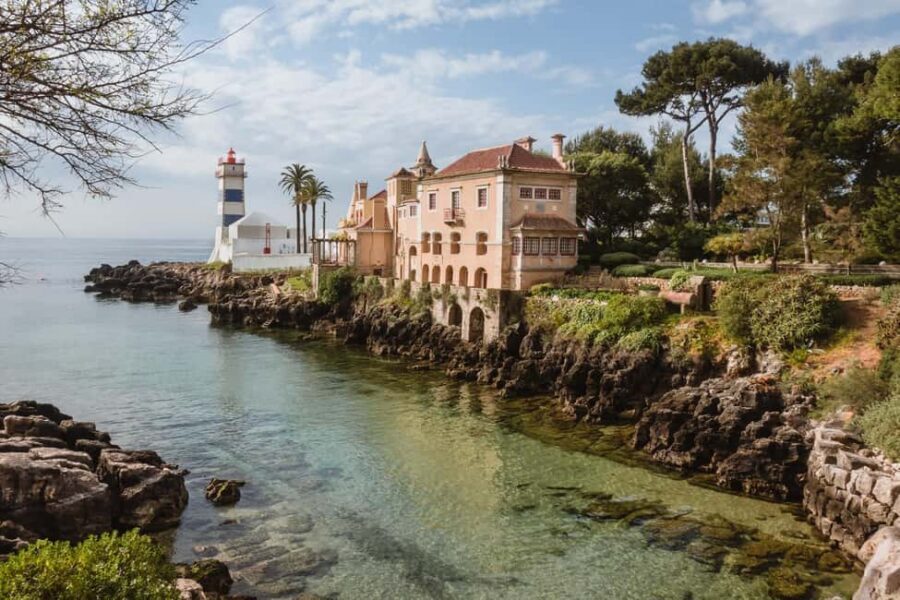
Next up is Santa Marta Beach, followed by the Lighthouse Museum. Even if you’re not a “museum person,” this combination makes sense. Beach first, then a landmark museum-style stop. It breaks your walking day into emotional beats: sun-and-sand time, then a shift into place-based learning.
The Lighthouse Museum is also one of those named stops that gives structure. The app helps you connect the landmark to what you’re looking at, not just where to stand.
If you’re planning your day carefully, build in time for the obvious thing most people do here: pause for views. This is the sort of stop where you’ll want a few minutes to just watch light move over water.
Condes de Castro Guimarães Museum and the Museum Quarter
After the beach and lighthouse stop, the route includes the Condes de Castro Guimarães Museum and then moves into the Museum Quarter. This area is where the tour shifts from “tourist landmarks” into a more focused cultural neighborhood feel.
The tour is designed for easy following over a 5.5 km route, usually taking about 3 to 4 hours depending on your pace and how many stops you decide to linger on. That range matters. If you tend to walk quickly and only peek in at a couple places, you can finish sooner. If you stop often—especially for museums—you’ll naturally drift closer to the 4-hour side.
Also, since tickets to paid attractions aren’t included, treat museum entrances like optional add-ons. The app still helps you appreciate the area even if you don’t buy every ticket.
Paula Rego’s Casa das Histórias: a standout cultural anchor
One of the major named stops is Paula Rego’s Casa das Histórias. This is the kind of place that turns a route into something with personality. Instead of ticking boxes, you get a clear destination tied to a specific artist and storytelling concept.
Even if you don’t enter (if hours or tickets don’t line up with your plan), the stop matters because it anchors the museum theme of the day. The app’s audio content is meant to connect the surrounding area to the bigger story.
The historic lanes, Yellow Streets, and 5 de Outubro Square
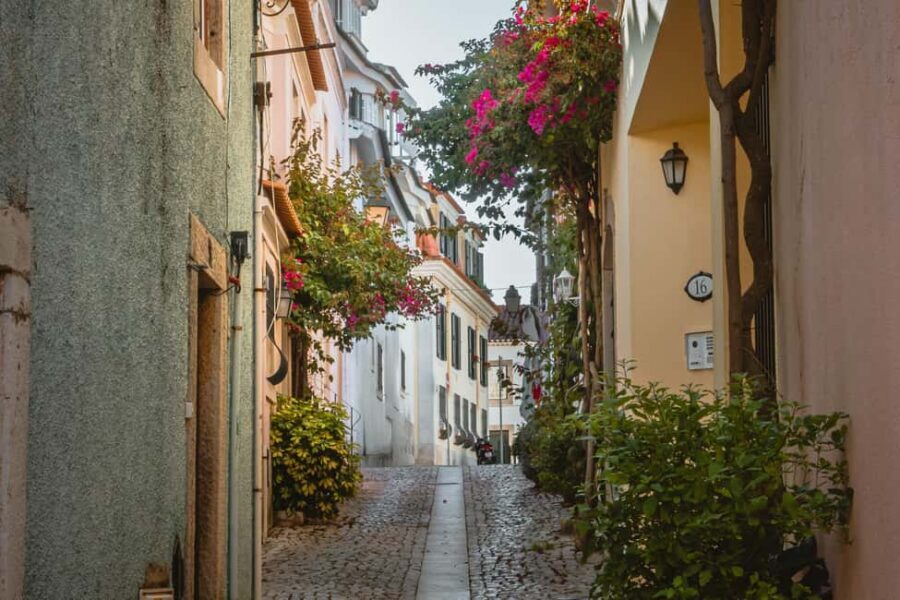
Now you’re back in the oldest parts of town. The walk includes narrow alleys and charming corners, then the popular Yellow Streets area—filled with restaurants and terraces where people actually linger.
This section is where the “at your own pace” design pays off. If you like food breaks, you can stop, eat, and keep walking without feeling like you’re falling behind a group. If you’d rather keep moving, you can pass through quickly and save your time for beaches or museum entrances.
You’ll also reach 5 de Outubro Square, which is a good “reset point.” Squares make navigation easier. They also give you a moment to check your bearings, look around, and decide if you want another slow stroll through the lanes.
Street art across the center: why some people love it, and others don’t
Here’s the heart of one key review theme: if you like street art, this experience can feel tailored to your taste. The highlights call out 14 street art works spread throughout the historic center.
But because the tour is app-led, the app’s selection matters. If you’re expecting a general sightseeing walk where every big church and every obvious monument gets called out clearly, you might feel let down. One of the lower-score remarks specifically points to how the app didn’t indicate a beautiful church, which suggests you’ll need to be curious and observant on your own too.
My practical advice: treat street art as part of the entertainment of the day. Slow down near artwork. If you spot a piece, pause, check the app for what it’s referring to, and listen while you stand there. That’s where the storytelling-to-location connection makes sense.
If you’re not into street art, you can still enjoy the rest—citadel, beach sections, museums, and old-town lanes—but you may feel like some time is being spent on art you’d rather replace with other sights.
Ending at Rainha Beach: the calm finish near your start
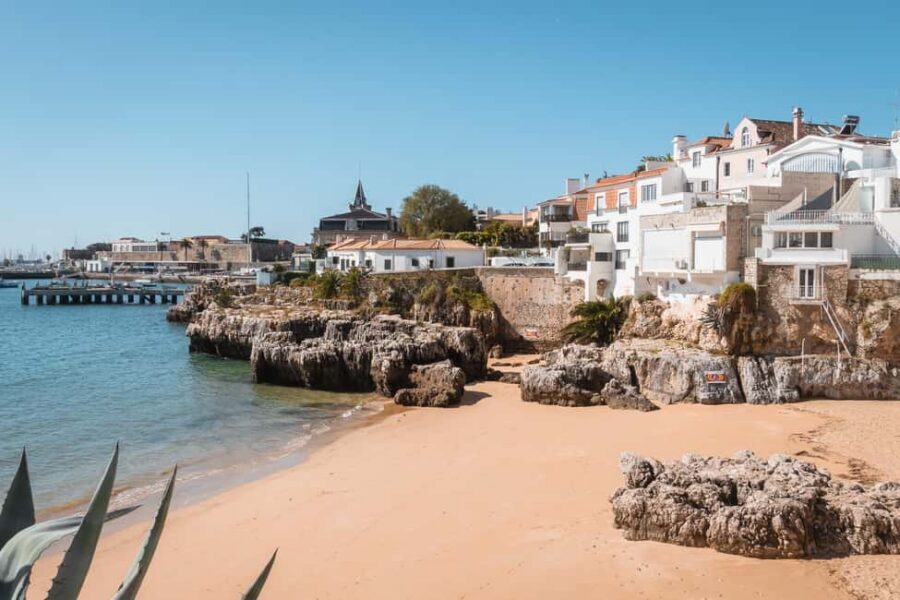
The walk ends along Rainha Beach, described as serene and just steps from the starting area. Ending near the station is convenient. You can finish with a last seaside view, then head straight to your next stop without needing a long transfer.
This final stretch is also useful for recovering from the day’s walking. If you built in museum time earlier, this gives you a low-effort way to close out the route.
Who should book this Walkbox Cascais tour
I’d book this if you:
- want to explore Cascais at your own pace without waiting on a group
- like self-guided audio and appreciate offline maps/audio support
- care about street art enough to make it a feature, not a side quest
- want a single route that mixes the sea, old-town lanes, museums, and a few major landmarks
I’d think twice if you:
- need a live guide to point out every landmark you might otherwise miss
- don’t enjoy street art storytelling built into a walking route
- have mobility limitations, since it’s listed as not suitable for people with mobility impairments
Should you book? My take for decision time
If you want a flexible, phone-guided way to see the historic center and seaside edges of Cascais—especially if street art sounds fun—this tour is a good deal for $7. The audio-first format plus the option to do it in parts makes it easy to fit into a busy trip.
But if your top priority is a traditional guided sightseeing tour where nothing important is left unmentioned, skip this and choose a live-guided option instead. Here, you’re the navigator, and the app gives you the cues and stories—not a person to catch everything for you.
FAQ
Where does the Walkbox tour start and end?
It starts and ends at Cascais train station, so you’re returning to the same meeting point.
How long is the route, and how far do you walk?
The route is about 5.5 km and usually takes around 3 to 4 hours, depending on your pace and which stops you spend time on.
Is there a live guide with this experience?
No. Guidance is provided through the Walkbox app, not by a live tour guide.
What languages are available, and does it work offline?
The tour content is provided in English, Portuguese, French, and Spanish, and it works offline.
Can I do the tour in parts?
Yes. You’re free to do the tour whenever you like, in full or in parts, within 5 days of your booking date.
Are museum or other attraction tickets included?
No. Tickets to paid attractions are not included.
What should I know about devices and accessibility?
You should book based on the number of participant smartphones that will be used. It’s not suitable for people with mobility impairments.
If you’d like, tell me your travel month and what you care about most (museums, beaches, street art, or food breaks), and I’ll suggest a pacing plan for doing the route in the right order.