REVIEW · LISBON
Lisbon Bike Tour: Downhill Downtown Lisbon to Belém
Book on GetYourGuide →Operated by Lisbon Bike Tour & Outdoors · Bookable on GetYourGuide
Lisbon has hills, but this tour keeps things downhill or flat from Parque Eduardo VII to Belém, so the whole city flow feels manageable. I like the way the guide-led stops mix Lisbon landmarks with local flavors like ginjinha and a Pastel de Nata break. Guides such as George and Filipe get singled out for keeping the pace relaxed and the stories clear—though one thing to plan for is the sun, especially along the water, where you’ll want water and sunscreen.
For $45, you’re getting a full 3.5-hour guided ride (about 10 km), plus a helmet, insurance, bike, and the two tastings built into the route. And when the tour ends in Belém (at Altis Belém Hotel & Spa), you don’t lose the afternoon—you can keep exploring the riverside on your own. One small watch-out: the group can be a bit larger on some runs (around the 10–16 range), so if you prefer lots of open space, you’ll want to arrive early and listen well at regrouping points.
In This Review
- Key points worth knowing before you go
- Why this downhill Lisbon-to-Belém route is such smart value
- Meeting at Alameda Cardeal Cerejeira near Parque Eduardo VII
- How the ride feels: all downhill or flat, for real
- Stop-by-stop: downhill Lisbon down to Belém’s monuments
- Stop 1: Alameda Cardeal Cerejeira (your launch point)
- Stop 2: Eduardo VII Park (pass by)
- Stop 3: Marquess of Pombal Square (pass by)
- Stop 4: Avenida da Liberdade (pass by)
- Stop 5: Restauradores Square (pass by)
- Stop 6: Praca Dom Pedro IV (pass by)
- Stop 7: St. Dominic’s Square (pass by)
- Stop 8: Praça da Figueira (pass by)
- Stop 9: Local café break time (about 20 minutes)
- Stop 10: Commerce Square, Lisbon (pass by)
- Stop 11: Cais do Sodré, Lisbon (pass by)
- Stop 12: Doca de Santo Amaro (pass by)
- Stop 13: Museum of Art, Architecture and Technology, Lisbon (pass by)
- Stop 14: Monument to the Discoveries (pass by)
- Stop 15: Belem Tower (pass by)
- Finish: Altis Belém Hotel & Spa (Belém)
- Ginjinha and Pastel de Nata: how to plan your eating
- What makes the guides worth your money
- Small-group feel and pacing: what to expect on the ground
- What to bring so the easy ride stays stress-free
- Where you end in Beém, and how to extend the day
- Price and value: is $45 a fair deal?
- Who this bike tour is best for
- Should you book this Lisbon downhill bike tour?
- FAQ
- How long is the Lisbon Bike Tour down to Belém?
- How much does it cost?
- Is the ride hard because of Lisbon hills?
- What’s included in the price?
- Where do I meet the guide?
- What language is the guide?
- Is this tour suitable for children?
Key points worth knowing before you go
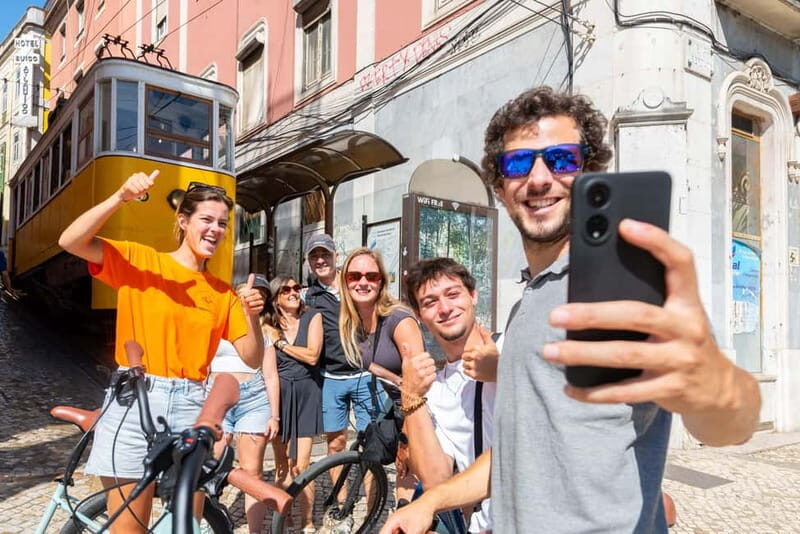
- Downhill-or-flat route: your legs get a break while you still cover a lot of sights.
- Parque Eduardo VII to Belém finish: you end in a great area for monument-hopping and waterfront walks.
- Ginjinha + Pastel de Nata included: two classic tastes at natural pause points.
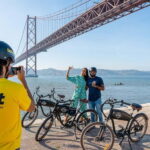
- Photo stops built into the ride: river views and major squares are timed for picture moments.
- Guide quality matters here: people consistently praise guides like George, Filipe, Beatrice, Maia, and Ines for pacing and stories.
Why this downhill Lisbon-to-Belém route is such smart value
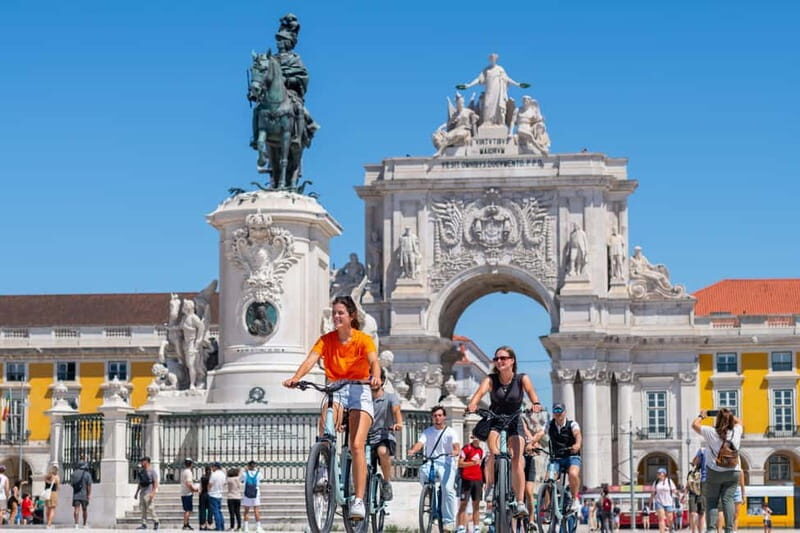
A lot of Lisbon “sightseeing” means buses, slow lines, and lots of uphill walking. This bike tour takes a different approach: it uses Lisbon’s natural slope. You start high at Parque Eduardo VII, then ride into the center and down toward the Tagus waterfront.
That design is the whole payoff. You get a long stretch of the city in just 3.5 hours without feeling like you’ve done a workout. It’s also a great way to orient yourself. After you’ve rolled past big squares and major avenues, you can later navigate on foot or by tram with way more confidence.
The price also looks reasonable for what’s included. At $45 per person, you’re not paying extra for the bike, helmet, insurance, a guide, and the two food moments. The ginjinha stop and the Pastel de Nata break are part of the flow, not a random add-on.
You can also read our reviews of more cycling tours in Lisbon
Meeting at Alameda Cardeal Cerejeira near Parque Eduardo VII
The meeting point is Alameda Cardeal Cerejeira, right at the top of Parque Eduardo VII. If you’re using public transit, the nearest subway station is Parque (blue line).
Why this start spot matters: Parque Eduardo VII is one of the easiest places to begin a downhill run. You’re starting where Lisbon naturally gives you momentum, so the ride feels smoother almost immediately. It’s also a nice “orientation moment,” because you’re already in a park area that sets the tone for panoramic views.
Arrive a bit early. Not because you need to rush, but because getting set up calmly helps the first minutes go smoothly when the group starts moving.
How the ride feels: all downhill or flat, for real
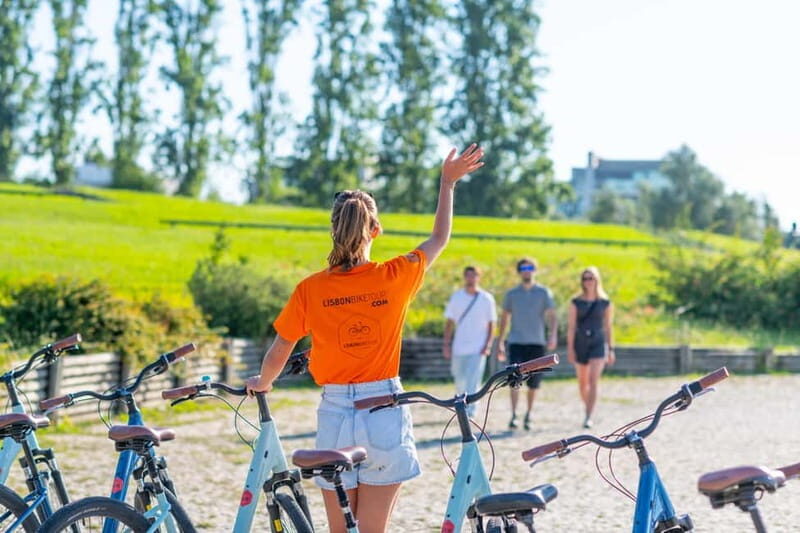
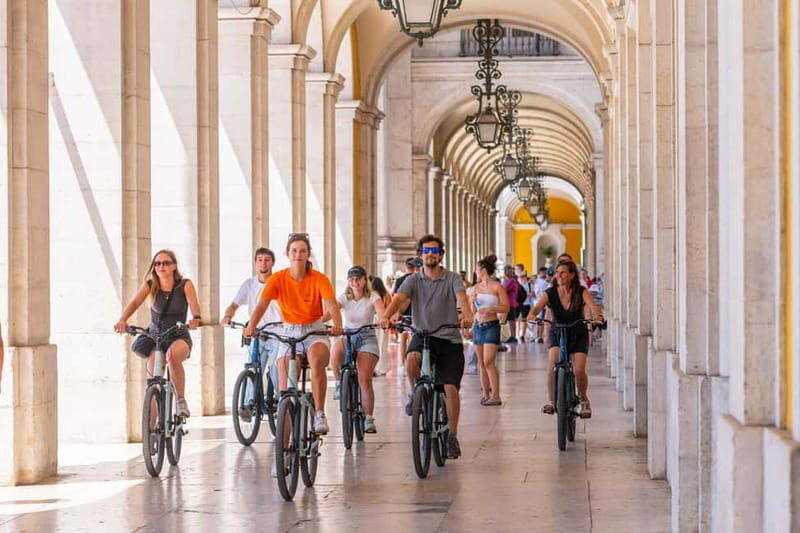
The tour is built around one promise: the route is always descending or flat, with no climbs. That’s what makes it work for a wide range of travelers—people who are nervous about Lisbon hills, families with kids, and anyone who just wants to see a lot without suffering.
You’ll still pedal, of course. But instead of fighting steep gradients, your effort becomes optional. It’s the kind of bike tour that lets you focus on the city—architecture, squares, river views—while keeping the ride from turning into a cardio event.
One practical tip: if you’re going on a very sunny day, treat this like a waterfront outing. Reviews mention sunshine and recommend water. The ride is easy, but the weather can still be strong.
Stop-by-stop: downhill Lisbon down to Belém’s monuments
This tour moves through a classic Lisbon sequence: start with viewpoints, glide through downtown squares and major streets, then angle into the river zone where the monuments start taking over the skyline.
Stop 1: Alameda Cardeal Cerejeira (your launch point)
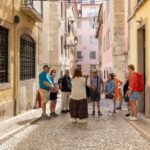
You begin at Alameda Cardeal Cerejeira at the top of Parque Eduardo VII. This is where you’ll meet your guide and get your bearings for what “downhill” means on this route.
If you’re on a time crunch, this first moment is also where you’ll feel the efficiency. You’re not wasting time walking uphill to reach a “viewpoint”—you start there.



Stop 2: Eduardo VII Park (pass by)
From here you move through or past Parque Eduardo VII area. Even if you don’t do a long park walk, you’ll get the benefit: the terrain lets the ride open up quickly and sets you up for the sweeping city view energy Lisbon is known for.
Stop 3: Marquess of Pombal Square (pass by)
Marquess of Pombal Square is the kind of central transition space that makes bike routes feel logical. You’re moving from “big view start” into “downtown streets,” and the guide will use that shift to connect the dots about where you are in Lisbon.
Stop 4: Avenida da Liberdade (pass by)
Avenida da Liberdade is a main-stage avenue. Rolling through it by bike is a different perspective than walking past it from the sidewalk—wider spacing, easier pacing, and more chances to photograph street-life and architecture without stopping every few minutes.
Stop 5: Restauradores Square (pass by)
Restauradores Square is one of those downtown junctions where history and movement overlap. Since the route is flat enough to keep rolling, this becomes more of a “glide-and-look” stop than a long stop. That’s good: you stay in tour rhythm.
Stop 6: Praca Dom Pedro IV (pass by)
This is another key square that anchors the downtown portion. The guide’s job here is to help you understand why the city is laid out the way it is, so when you later return to these areas, you’ll feel like you know what you’re seeing.
Stop 7: St. Dominic’s Square (pass by)
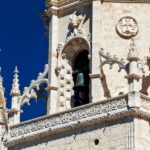
St. Dominic’s Square is where Lisbon’s religious architecture becomes a highlight. One review notes a love for the church stop, and that tracks with this area’s strong visual presence. Even as a pass-by, it’s an easy place to slow your attention down and take in details.
Stop 8: Praça da Figueira (pass by)
Praça da Figueira keeps you in central Lisbon, with streets and pedestrian energy around it. It’s a useful moment to reset your eyes: you’re shifting from squares-with-monuments toward the stretch that leads you to the riverfront.
Stop 9: Local café break time (about 20 minutes)
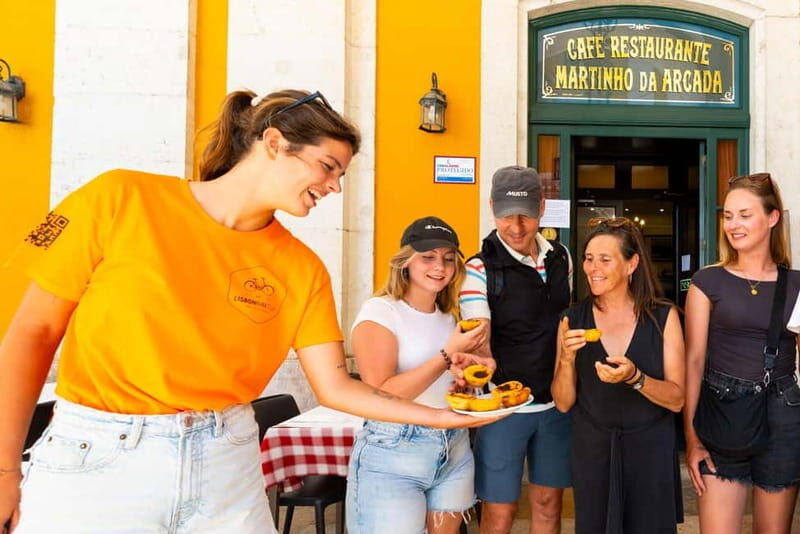
This is the built-in break: a local café stop with a Pastel de Nata included. You’ll also have time for restroom use and the option to grab a drink (not included).
A small timing note: 20 minutes is enough to eat and breathe, but it’s not enough for a long sit-down meal. Think of it as “fuel + reset,” not dinner.
Stop 10: Commerce Square, Lisbon (pass by)
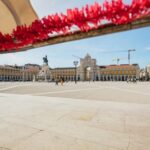
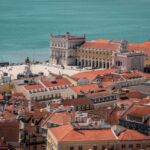
Commerce Square is classic Lisbon. This is where the city opens up visually and the waterfront vibe starts creeping closer. It’s also one of the better “pause and frame” zones if you want river and plaza photos without the stress of finding a parking spot.
Stop 11: Cais do Sodré, Lisbon (pass by)
Cais do Sodré is a major transport and waterfront gateway. On a bike, it’s a good place to understand the city’s flow toward the Tagus. You’re not just cycling for movement—you’re linking neighborhoods.
Stop 12: Doca de Santo Amaro (pass by)
Doca de Santo Amaro is where the route feels more “riverside.” Expect more open sight lines and more photo opportunities. And yes, the sun can hit hard here—so the earlier advice about water becomes extra smart.
Stop 13: Museum of Art, Architecture and Technology, Lisbon (pass by)
You’ll pass the Museum of Art, Architecture and Technology (MAAT) area. This stop helps the tour feel modern too, not just historic streets and squares. It’s a nice contrast point before the monuments get more dramatic.
Stop 14: Monument to the Discoveries (pass by)
The Monument to the Discoveries is one of those Lisbon icons where the shape and setting explain a lot. It’s a strong “turning point” in your ride: you can feel the theme of the day moving from downtown life toward Portugal’s seafaring story.
Stop 15: Belem Tower (pass by)
Belem Tower is the final big visual anchor. By the time you reach it, you’ve already ridden past enough squares and avenues that the Tower doesn’t feel like a random stop—it feels like a payoff.
Finish: Altis Belém Hotel & Spa (Belém)
The tour ends at Altis Belém Hotel & Spa. From there, the tour information says you can return downtown easily by bus, tram, train, or cab. Practically, ending in Belém is a win: you can keep going with a Belém stroll instead of turning the day into a separate transit chore.
Ginjinha and Pastel de Nata: how to plan your eating
Two included tastes make this tour feel like a real Lisbon outing instead of just a driving-around slideshow.
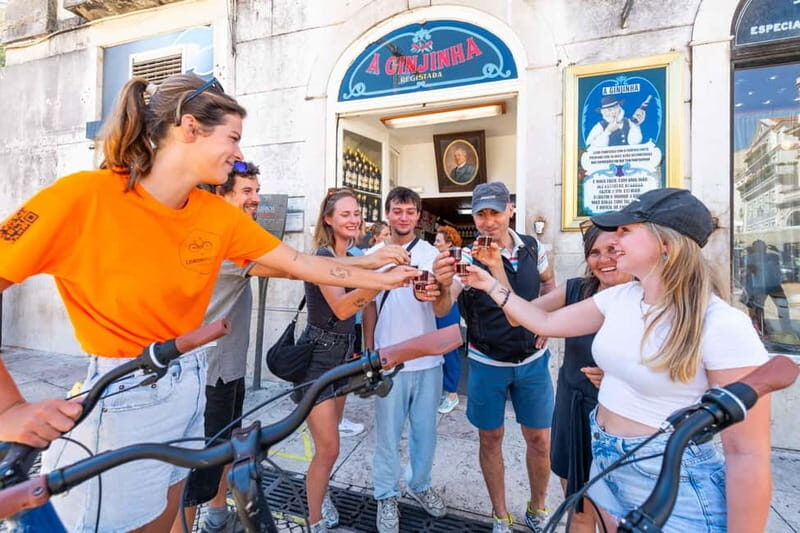
- Ginjinha stop (local liquor): it’s offered during the downtown portion on the way down. If you’re sensitive to alcohol, you can take a small portion and keep it social rather than powering through.
- Pastel de Nata (local pastry): this is served at the café break around the middle/end section. It’s timed well because it gives you energy when you’re approaching the most visually intense part of the ride toward Belém.
One practical note: additional drinks are not included. If you want more than water, plan to pay at the café.
What makes the guides worth your money
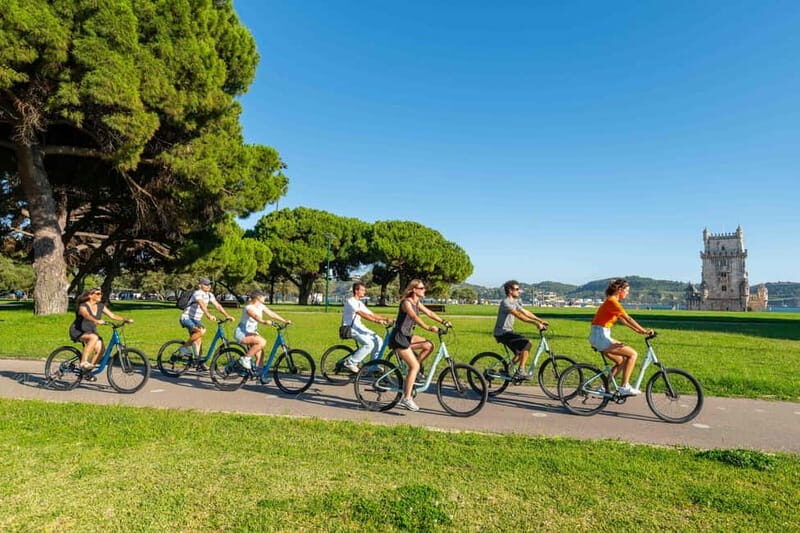
A downhill tour lives or dies on guide handling. The best guides keep the group together, explain what you’re seeing without turning it into a lecture, and time stops so you’re not wasting daylight.
In this tour, guides are often praised for exactly that. People mention standout hosts like George, Filipe, Philippe, Beatrice, Maia, Ines, Vincent/Vin, and Salo. Across those names, the common thread is the same: the bike ride stays relaxed, and the city stories connect to landmarks you’re actually passing.
Also, guides are described as giving local tips—where to eat, what bars to try, and which viewpoints to target after the tour. That kind of advice can save you time later, especially if you only have a day or two in town.
Small-group feel and pacing: what to expect on the ground
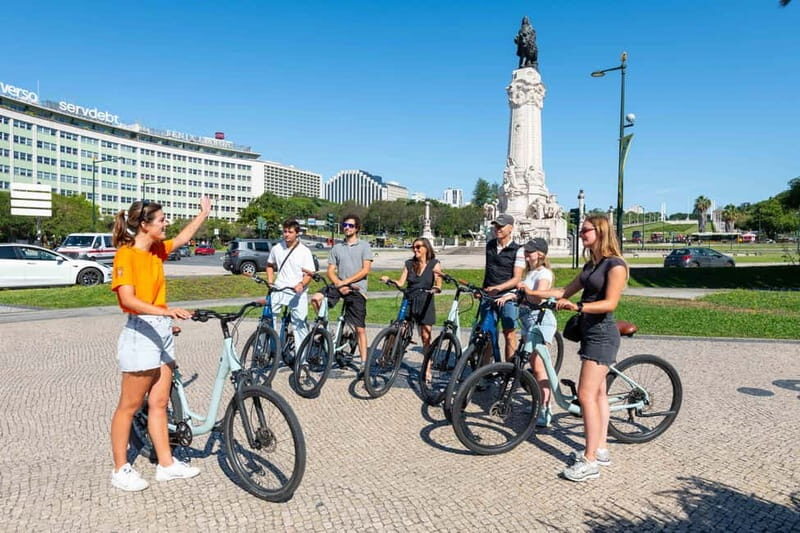
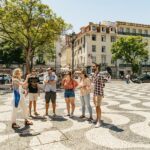
Most people describe the tour as relaxed, with a good balance between riding and stopping to talk. One review even calls out a group size around 16, which gives you a reality check: it’s not a tiny private tour, so you’ll want patience at regrouping times.
The good part is that the route is easy, so you’re not constantly stopping because people are exhausted. You’ll likely feel like you’re cruising through Lisbon while the city explanation keeps up.
What to bring so the easy ride stays stress-free
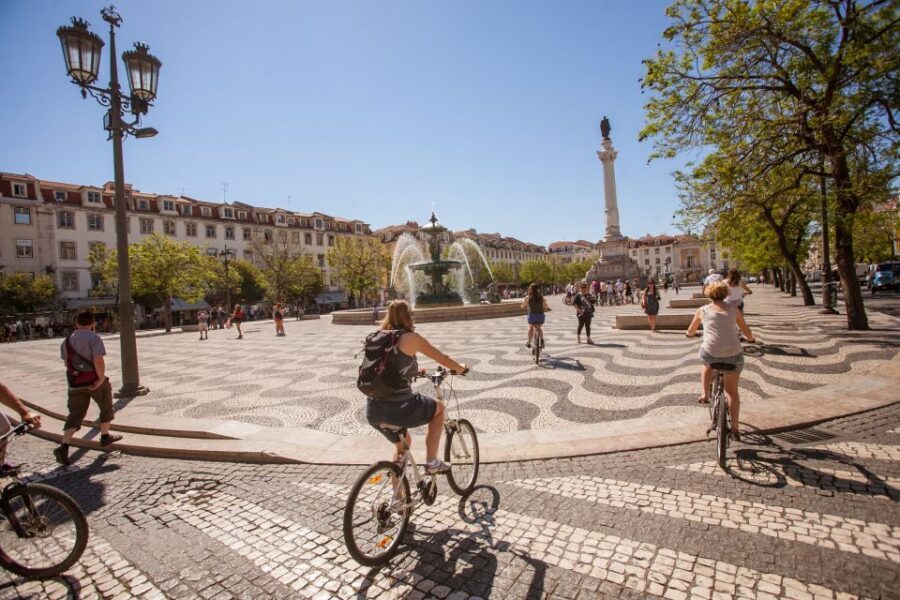
You’re on a bike, in the sun, moving between big squares and waterfront zones. Bring the basics that make the day smoother.
- Water and sun protection: mentioned in feedback tied to sunny waterfront sections.
- Comfortable shoes: you’ll be on and off the bike during stops.
- Light layers: mornings and late afternoons can feel different near the river.
You’ll get a helmet included, and the bike is provided, so you’re not showing up to figure out equipment logistics.
Where you end in Beém, and how to extend the day
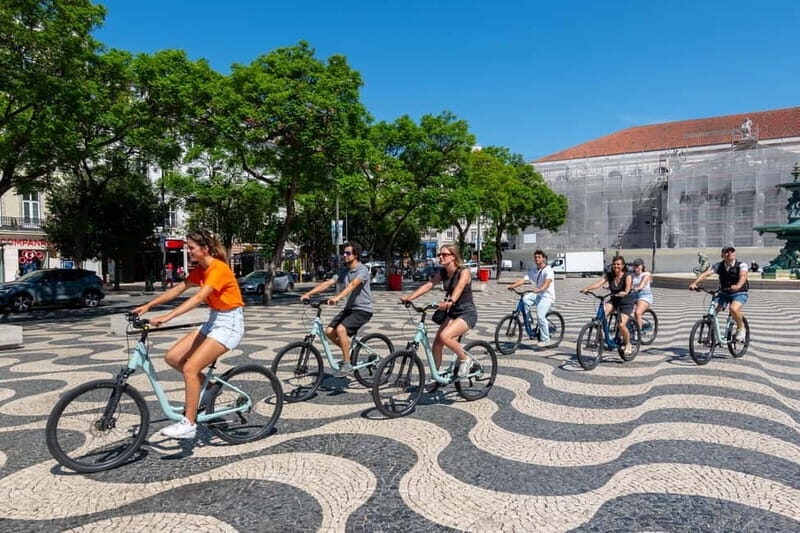
Finishing in Belém is a smart ending strategy. Belem is where you want your camera and your time anyway, because that’s the zone with Belem Tower and strong riverside walking.
If you want to head back to Lisbon afterward, the tour information says you can return by bus, tram, train, or cab. That flexibility matters. It means you’re not forced into one mode, especially if your afternoon plans change.
If you’re hungry later, your guide can also recommend where to go for lunch or what to do in the afternoon. That advice is most useful when you plan to explore further rather than immediately rushing back downtown.
Price and value: is $45 a fair deal?
For many Lisbon travelers, $45 for 3.5 hours sounds good—then you check what’s included, and it gets better.
You’re paying for:
- Regular bike
- Helmet
- Insurance
- A guide
- Ginjinha (local liquor)
- Pastel de Nata
And you’re getting a route that covers about 10 km with a built-in sight sequence from downtown to Belém. If you tried to recreate this with taxis alone, or bike rental plus guided stops, the total would usually balloon.
The best value is if you want orientation plus landmark time. If you’re the kind of traveler who already knows Lisbon well and only wants one or two spots, you might feel the tour is more than you need. But if you’re still building your mental map of Lisbon, this tour is the fast track.
Who this bike tour is best for
This one fits a wide range of people because the route is designed for ease.
It’s a great match for:
- First-timers who want a guided overview without Lisbon hill punishment
- Families who want an easy ride (child seats and tag-a-longs are offered upon request)
- People who like history explained in small chunks, tied directly to places you can see
It’s also a good option if you like photos. River views and major squares offer natural framing points along the way.
If you strongly prefer total control and no regrouping, you might prefer exploring by yourself. But for most visitors, the structure is the point: you get direction and story without losing your day.
Should you book this Lisbon downhill bike tour?
I’d book it if your goal is to see a lot of Lisbon in one morning or early afternoon without turning it into a strenuous hike. The all-downhill/flat setup is the big reason, and the included tastings (ginjinha and Pastel de Nata) make it feel like Lisbon, not just motion.
I’d think twice if:
- You’re extremely weather-sensitive, since the supplier mentions that if conditions aren’t suitable, they’ll try an alternative date or trigger a full refund.
- You hate any group logistics at all. Some runs can be around a dozen-plus riders, so you need to be comfortable syncing up at stops.
If you’re trying to decide between a slow walking day and a structured ride with local flavor, this tour lands closer to the second one—and it ends in Belém, which is exactly where you want to be when the monuments start calling.
FAQ
How long is the Lisbon Bike Tour down to Belém?
The tour lasts about 3.5 hours.
How much does it cost?
It costs $45 per person.
Is the ride hard because of Lisbon hills?
The route is always descending or flat, with no climbs, so it’s described as fun and easy for all skill levels.
What’s included in the price?
A regular bike, insurance, a guide, a helmet, local liquor (ginjinha), and a local pastry (Pastel de Nata) are included.
Where do I meet the guide?
Meet at Alameda Cardeal Cerejeira at the top of Parque Eduardo VII. The nearest subway station is Parque on the blue line.
What language is the guide?
The live tour guide is Dutch and English.
Is this tour suitable for children?
Yes. Child seats are available for ages 1 to 3 (up to 22 kgs). Tag-a-longs with 20” wheel bikes are available for ages 4 to 6, and 24” wheel bikes are available for ages 7 to 9, upon request when booking.