REVIEW · LISBON
LISBON : Explore Old Town Alfama by Electric Tuk Tuk .
Book on GetYourGuide →Operated by Johnny's Tuk Tuk Delight · Bookable on GetYourGuide
Lisbon climbs, but you won’t feel it. An electric tuk tuk circuit turns the hills into a sightseeing advantage, with frequent stops so you can hop out and look around at places like Sé Cathedral and the top miradouros. I especially like the stop-and-look format, which means you get real views instead of just passing by. The one thing to consider: you’ll still do a bit of walking, including narrow, hilly streets in Alfama.
This is a great “get your bearings fast” kind of tour: the pace is designed so you don’t end up tired on the cobblestones. You also get history explained by the driver-guide in English, which helps the sights click into place instead of looking like random postcards.
In This Review
- Key things you’ll notice right away
- Why An Electric Tuk Tuk Makes Lisbon’s Old Town Easier
- Starting Near Time Out Market: Your Launchpad for Old Lisbon
- Sé Cathedral to Santa Luzia: Where History Starts Showing Up
- Portas do Sol and Senhora do Monte: The Best “Panorama Work” in One Ride
- São Vicente de Fora and the National Pantheon: Royal Ties and Portuguese Pride
- Alfama: Narrow Streets, Quick Walking Time, and Fado Neighborhood Energy
- Feira da Ladra and Mercado Santa Clara: Market History and Small-Scale Local Flavor
- Finishing Back at Commerce Square: Lisbon’s Big-Space Contrast
- Price and Value: Is $40 Worth 1.5 Hours of Hills and Landmarks?
- Who This Tour Suits Best (and Who Might Want Another Option)
- Should You Book Johnny’s Tuk Tuk Delight’s Alfama Electric Tuk Tuk?
- FAQ
- FAQ
- How long is the Old Town Alfama electric tuk tuk tour?
- How much does the tour cost?
- Where does the tour start and end?
- Is a guide included, and what language is offered?
- Will we stop at viewpoints and be able to get out of the tuk tuk?
- Are entrance fees included in the price?
- Is hotel pickup included?
- Is free cancellation available?
- Is it suitable for pregnant travelers or pets?
Key things you’ll notice right away
- Electric tuk tuk, low effort: built for Lisbon’s hill-hopping without burning your legs out
- Frequent photo stops: multiple viewpoints with short but useful time to look and take pictures
- Alfama on foot for the real feel: narrow streets, small squares, and quick wandering time
- Miradouros with classic panorama views: Santa Luzia, Portas do Sol, and Senhora do Monte
- Fado area nearby: the Fado Museum is close, and many spots around Alfama play live fado
- Historic layers in compact time: cathedral, royal-linked church sites, pantheon, and national landmarks
Why An Electric Tuk Tuk Makes Lisbon’s Old Town Easier

Lisbon is a city of hills. Lots of them. If you try to do the famous viewpoint loop purely on foot, you’ll spend more time climbing than sightseeing. This is where an electric tuk tuk changes the game. You glide between high points, then stop where the views and landmarks actually are.
What I like about this setup is that you’re not trapped at window level. You get to get down at the stops and take in what matters—cathedrals, terraces, church fronts, and lookout points—at a human pace. The guide is there to point out what you’re looking at and why it matters, in simple English.
The other practical win: your time stays focused. At 1.5 hours, you’re not trying to conquer all of Lisbon. Instead, you’re getting a smart old-town circuit that hits the places that define the neighborhood character.
You can also read our reviews of more tours and experiences in Lisbon.



Starting Near Time Out Market: Your Launchpad for Old Lisbon
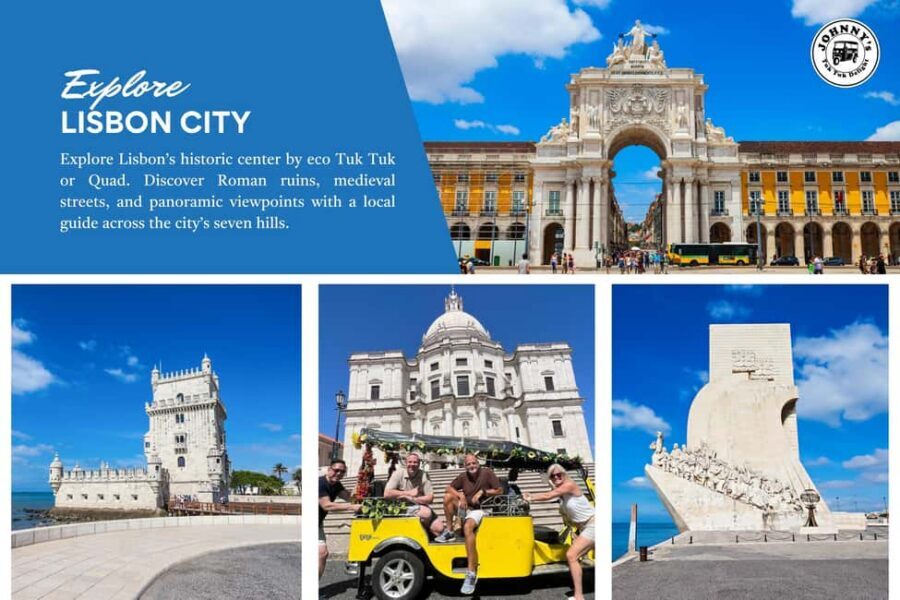
You begin near Time Out Market Lisboa, with the meeting point stated as in front of Restaurant Sophia. Either way, it’s a convenient starting hub because you’re already in a lively part of the city and close to major old-town routes.
From the start, the tour steers you toward Lisbon’s classic public spaces. One early target is Praca do Comercio, the big plaza by the river. This is one of those “you’ll recognize it from photos” spots, and it’s also useful because it gives you a sense of Lisbon’s layout—wide open space before the streets tighten up.
This first stretch sets you up for the rest of the experience. You’ll see how Lisbon shifts from broad squares into steep alleys, and that contrast is a big part of why the city feels so distinctive.
Sé Cathedral to Santa Luzia: Where History Starts Showing Up

A short stop at Lisbon Cathedral (Sé de Lisboa) gives you a strong historical anchor. This is one of the oldest cathedral sites in the city, and the guide’s explanations help you connect the architecture to Lisbon’s longer timeline rather than treating it like a random stop.
From there, you move to Santa Luzia, where the tour focuses on the viewpoint experience. Expect a short stretch of time for photos and a guided orientation, plus the chance to soak in the scene—especially valuable because Santa Luzia’s charm is visual. You’re looking down and outward over older neighborhoods, and the terraced look gives Lisbon that layered feel that’s hard to get from street level.
Quick tip for enjoying Santa Luzia and other terraces: keep your camera ready, but also take a few seconds to just watch. Lisbon viewpoints are one of those places where a short pause makes the view feel bigger than a photo.
Portas do Sol and Senhora do Monte: The Best “Panorama Work” in One Ride
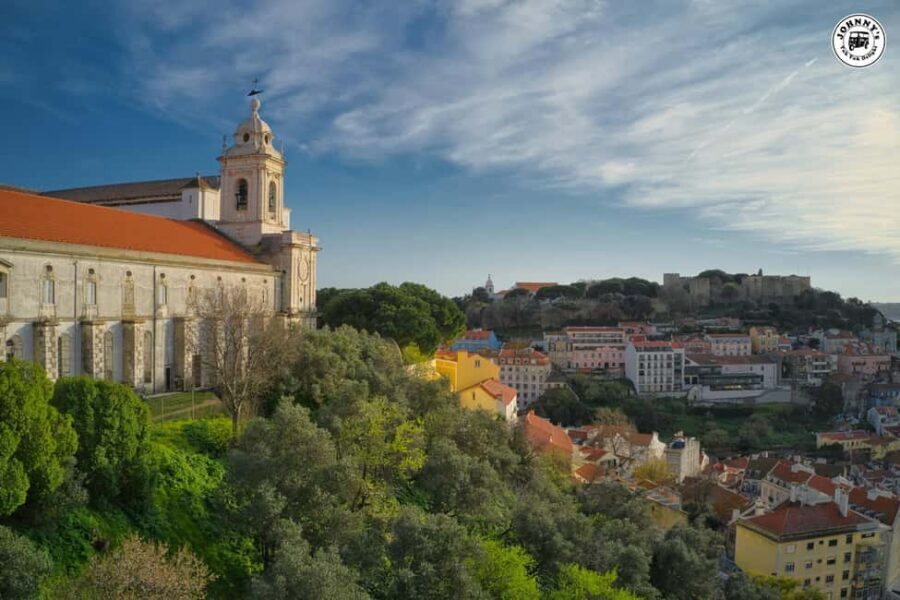
After Santa Luzia, you’ll continue to Portas do Sol. This is another classic terrace viewpoint—one you’ll likely have heard about if you’ve been researching Lisbon. Here, the goal is straightforward: photo stop, quick guided context, and a chance to take in the panorama without spending the whole day hunting for the perfect angle.
Then the tour climbs to the highest point it covers: Miradouro da Senhora do Monte. This is the stop that really feels like the payoff. You’re looking at a wide, almost sweeping spread—often described as a nearly 180-degree view, where you can see old and new town in the same glance. The tour allows around 10 minutes here, which is just long enough to adjust to the view, not just snap one shot and move on.
Why this matters for your trip: Lisbon’s beauty is shaped by perspective. If you only walk at street level, you miss how the city stacks up across hills. Miradouros give you the “map in your head” feeling fast—so later, when you wander on your own, you’ll understand what you’re looking at.
São Vicente de Fora and the National Pantheon: Royal Ties and Portuguese Pride

Next up is São Vicente de Fora. The tour frames it as one of the oldest church sites in Lisbon, and it adds an especially interesting layer: this is where royal family members had weddings. Even if you’re not the type to study royal history, it’s a useful detail because it adds context to the building’s importance beyond aesthetics.
Right by these church-and-view zones, you also get another viewpoint angle that attracts tourists—so you’re not only seeing religion and architecture; you’re also getting the visual reason those sites became famous.
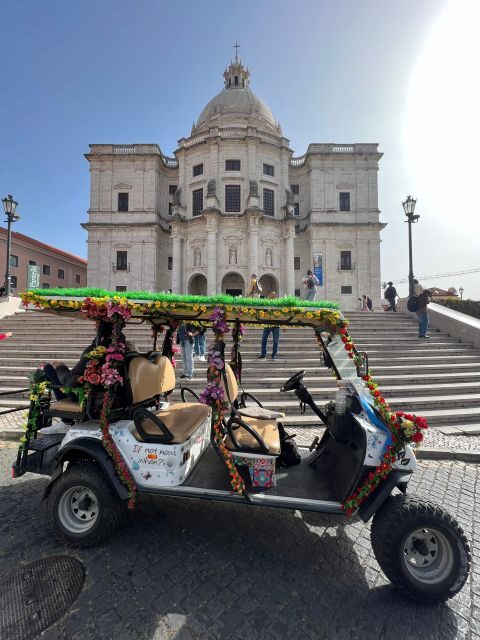
After that, the tour moves to National Pantheon of Santa Engracia. This stop is all about national memory. The pantheon is presented as the final resting place for many Portuguese national heroes. Again, the guided explanation matters here. Without context, a historic church-and-pantheon stop can feel like “okay, another building.” With the explanation, it becomes about who Lisbon honors and why.
If you like meaning in your sightseeing, these two stops are strong. They’re short, but they carry weight.


Alfama: Narrow Streets, Quick Walking Time, and Fado Neighborhood Energy
Eventually, the tour shifts into Alfama, which the description calls the second oldest part of Europe. That’s a big claim, but the feeling you get here is simple: it’s old. It’s tight. Streets feel smaller and more intimate than the wider plazas, and you can see why this is where people come for atmosphere.
You’ll get a photo stop, a guided tour, and then a short walk (about 5 minutes). The key is that this isn’t meant to replace a full day in Alfama—it’s a taste. Still, the streets are narrow enough that you can feel like you’re inside a maze, which is exactly why the neighborhood works for independent wandering afterward.
Important note: because the streets are narrow and the area has steep pockets, it’s not a place to rush. If you’re sensitive to uneven ground or you don’t like walking uphill, plan your day with that in mind. Comfortable shoes matter.
Also, the Fado Museum is described as being right next to Alfama, and the area around it includes restaurants and gift shops. The tour description points out that you’ll find plenty of spots where live fado music happens, so even if you don’t plan a formal performance that day, you may catch some of the neighborhood rhythm.
Feira da Ladra and Mercado Santa Clara: Market History and Small-Scale Local Flavor
Some tours rush past markets. This one at least gives you a chance to understand the market layer of Lisbon.
You’ll pass by Feira da Ladra, described as a flea market. The history angle is part of the appeal here: it was known as a stolen market, and today it’s associated with selling older items—stuff you’d be hard-pressed to find in modern stores. Even if you don’t plan to buy anything, passing through the area (with guided context) helps you see Lisbon as more than monuments.
Then you connect with the Mercado de Santa Clara area as a guided stop and pass-by scenic views. Markets like this give you a different kind of Lisbon education—daily life, not just landmark storytelling. Short stops work here because you’re not trying to turn a half-hour into a shopping mission. You’re getting the sense of the neighborhood’s texture.
Finishing Back at Commerce Square: Lisbon’s Big-Space Contrast
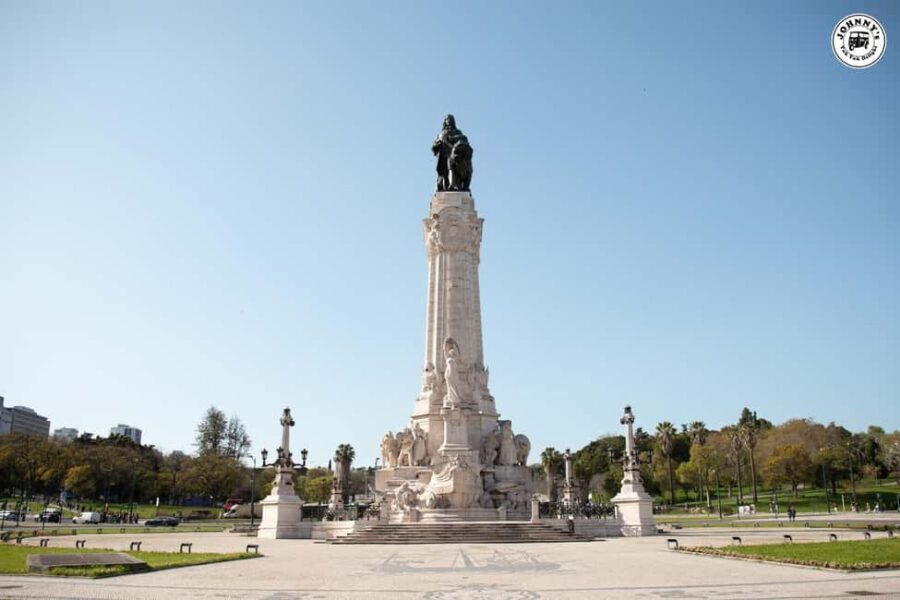
The tour loops back toward the river-side area and includes Commerce Square (Praca do Comercio) again at the end as a guided sightseeing stop and pass-by.
This is a satisfying contrast after the tight lanes of Alfama. One of the best ways to understand a city is to see how quickly it changes in just a few stops—from narrow, winding streets to a wide, open plaza. When you return to that large square, you get a clean mental reset, like you’re stepping back onto the city’s wider stage.
If you plan to keep exploring after the tour, this ending spot is useful. You’ll have a clearer sense of where the old town sits relative to the river and how the hills shape the paths in between.
Price and Value: Is $40 Worth 1.5 Hours of Hills and Landmarks?

At $40 per person for about 1.5 hours, the value comes less from “hours of sightseeing” and more from what you avoid.
Walking Lisbon’s hill viewpoints all day can drain energy fast. This tour compresses a lot of landmark and viewpoint time into a ride that’s designed to keep you moving without exhausting you. You also get a driver/guide in English, and the plan includes multiple stops where you can hop out for photos and short guided moments.
What’s not included matters for budgeting. Entrance fees aren’t included, and food and drinks aren’t included. But most of the stops listed are viewpoint-focused or exterior-friendly, so you’re not necessarily forced into paying extra just to appreciate the sights. If you do want to enter ticketed sites, you’ll plan those separately.
To me, the biggest value is pacing. The experience is built to cover a lot without that panicked feeling of being rushed between stops.
Who This Tour Suits Best (and Who Might Want Another Option)
This is ideal if:
- You want a quick orientation to Lisbon’s hill neighborhoods.
- You like viewpoints and want short, high-impact stops.
- You prefer guided context so landmarks make sense right away.
- You’d rather ride between sites than fight the hills for every photo.
It’s not the best fit if:
- You need a fully low-walking experience. There’s a walk in Alfama, and narrow streets can feel tricky.
- You’re pregnant, since the experience isn’t suitable for that.
- You’re traveling with pets, since pets aren’t allowed.
Should You Book Johnny’s Tuk Tuk Delight’s Alfama Electric Tuk Tuk?
I’d book this if your goal is a classic Old Town hits-and-views tour where the guide helps you connect the dots. For $40 and 1.5 hours, you’re buying convenience plus explanation: hills handled by an electric tuk tuk, key viewpoint stops, and a guided introduction to Alfama’s old-street feel.
If you want the deep-dive version of Alfama (longer wandering time, longer museum stops, or full meals), pair this with extra time on your own. But as a smart starting move for a Lisbon trip, this one is hard to beat.
FAQ
FAQ
How long is the Old Town Alfama electric tuk tuk tour?
It lasts about 1.5 hours.
How much does the tour cost?
The price is listed as $40 per person.
Where does the tour start and end?
The starting point is listed as Time Out Market Lisboa, and the stated meeting point is in front of Restaurant Sophia. The tour ends back at the meeting point.
Is a guide included, and what language is offered?
Yes. A driver/guide is included, and the live tour guide is in English.
Will we stop at viewpoints and be able to get out of the tuk tuk?
Yes. The tour stops at highlighted points, and you may get down to enjoy the views and historical spots.
Are entrance fees included in the price?
No. Entrance fees are not included.
Is hotel pickup included?
No. Hotel pick-up is not included.
Is free cancellation available?
Yes. You can cancel up to 24 hours in advance for a full refund.
Is it suitable for pregnant travelers or pets?
Pets are not allowed, and the tour is not suitable for pregnant women.