REVIEW · LISBON
Lisbon: Guided Sightseeing Tour by Tuk Tuk
Book on GetYourGuide →Operated by Lost in Portugal · Bookable on GetYourGuide
Lisbon’s hills don’t stand a chance. This electric tuk-tuk tour is built for getting you to top sights fast, without the heavy uphill slog, while still giving you real photo time at the best miradouros. You’ll ride narrow, twisting streets and pop out where bigger vehicles can’t.
What I really like is how the ride does the work for you: panoramic views from an open-air vehicle plus close access to Lisbon’s old-town streets. I also like that the guides keep things smooth and flexible—Karim was praised for being flexible and helpful with photo stops, and Asif stood out for clear communication and an informative approach.
One drawback to plan around: some stops are brief photo breaks, so if you want slow wandering inside every place, you’ll need extra time before or after the tour.
In This Review
- Key things to know before you go
- Riding from Praça Dom Luís I: how the tuk-tuk makes Lisbon easier
- Pink Street and Saint Anthony: quick orientation through tiled Lisbon
- Lisbon Cathedral and the Miradouros: where the best views are actually reachable
- What to focus on at each viewpoint
- Graça district, the flea market pass-by, and the National Pantheon stop
- Santa Apolónia to Alfama: the route that ties Lisbon together
- Commerce Square and Rua Augusta Arch: the classic Lisbon finish
- Mercado da Ribeira and heading back to the start point
- Skip-the-line and the “right amount” of time at sights
- Price and value: what $37 buys in Lisbon time and effort
- Who should book this tuk-tuk tour (and who shouldn’t)
- Should you book the Lisbon tuk-tuk sightseeing tour?
- FAQ
- How long is the Lisbon guided tuk-tuk tour?
- Where does the tour start?
- What language is the guide?
- Is the tuk-tuk electric?
- Which viewpoints are included?
- Does the tour include time for photos?
- Is it suitable for children?
- Is it wheelchair accessible?
- Are smoking, alcohol, or drugs allowed in the vehicle?
- What about cancellation and flexible booking?
Key things to know before you go
- Electric tuk-tuk convenience for narrow streets and quicker positioning
- Big viewpoint payoff with stops at Santa Luzia, Portas do Sol, and Senhora do Monte
- Photo stops are timed (a few minutes at several miradouros)
- English live guide with helpful, flexible guidance—Karim and Asif were both singled out for service
- Built-in old-town rhythm from Cathedral to Alfama to the center squares
Riding from Praça Dom Luís I: how the tuk-tuk makes Lisbon easier
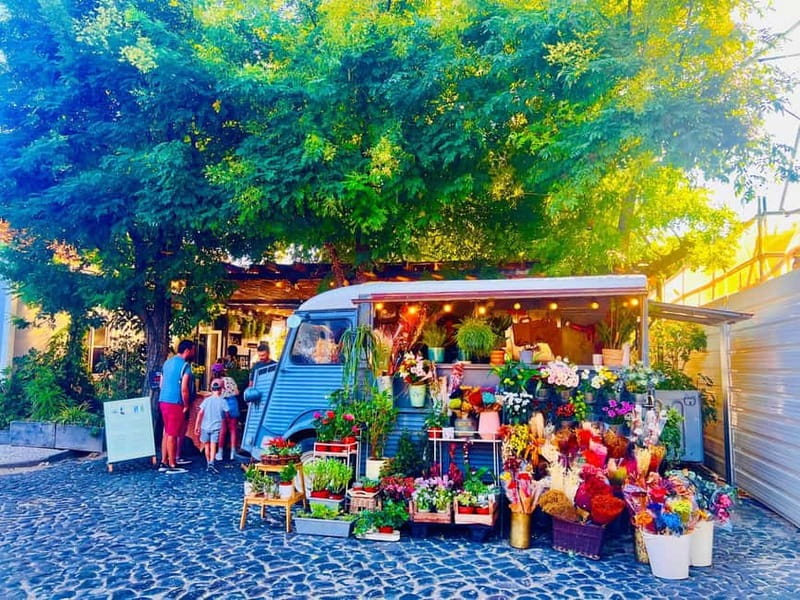
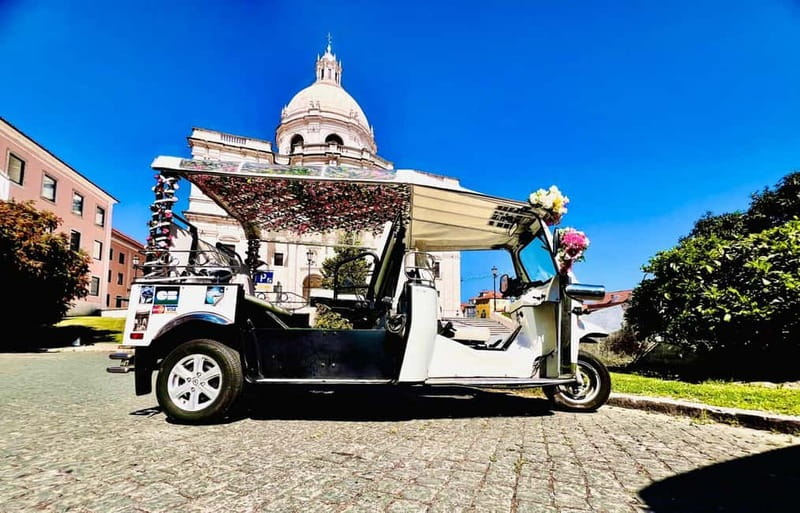
Your tour starts at Praça Dom Luís I 34, and the guide picks you up about five minutes before the departure time. The meeting instructions point you to the Sophia Restaurant, behind the Time Out Market, which is a useful anchor if you’re already exploring around there.
This is an electric tuk-tuk experience, and that matters more than it sounds. Lisbon’s neighborhoods are a patchwork of hills, stairs, and tight lanes. A tuk-tuk can handle the narrow streets more easily than larger cars and buses, so you spend less time stuck at the edges of areas you actually want to see. Since it’s open-air, you also get a better sense of the city as you move—sound, streets, and changing views—without the strain of walking every hill.
Also keep expectations realistic: this tour is paced for sightseeing and viewpoint access. You’re not signing up for long indoor sessions everywhere. The good news is the structure is designed to keep you moving efficiently while still giving you a chance to stop, frame photos, and take in the view.
You can also read our reviews of more guided tours in Lisbon

Pink Street and Saint Anthony: quick orientation through tiled Lisbon
Early in the route you pass by the Pink Street. It’s the kind of Lisbon detail you might not notice if you’re only moving on foot from one major attraction to the next. Even when you’re just riding by, it helps set the tone: the city’s look is shaped by color, tilework, and street-level character, not only monuments.
Next, you pass the Church of Saint Anthony of Lisbon. This stop is also a pass-by rather than a long break, so think of it as visual orientation—confirming where the church sits in the broader neighborhood grid and giving you an easy reference point for later exploration if you want to return.
If you’re short on time and trying to figure out where Lisbon “clicks,” these early passes do a lot of work. You get landmarks placed on the map in your head before the viewpoints begin to steal the show.
Lisbon Cathedral and the Miradouros: where the best views are actually reachable
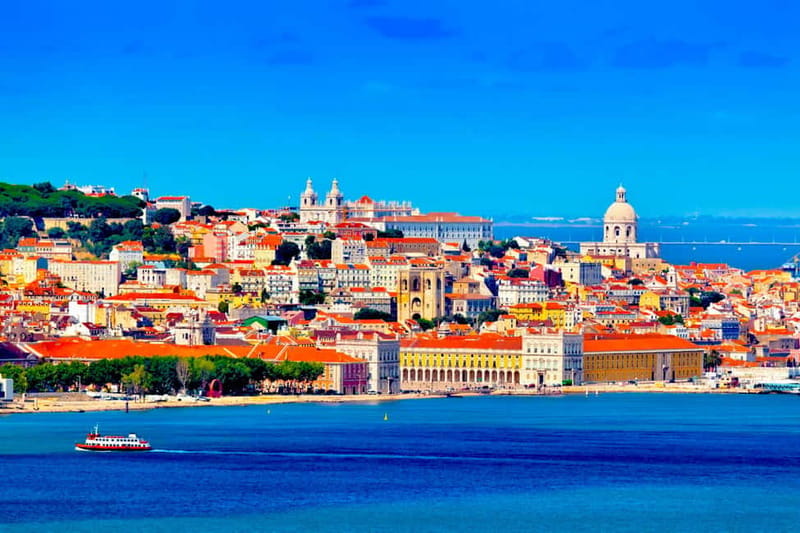
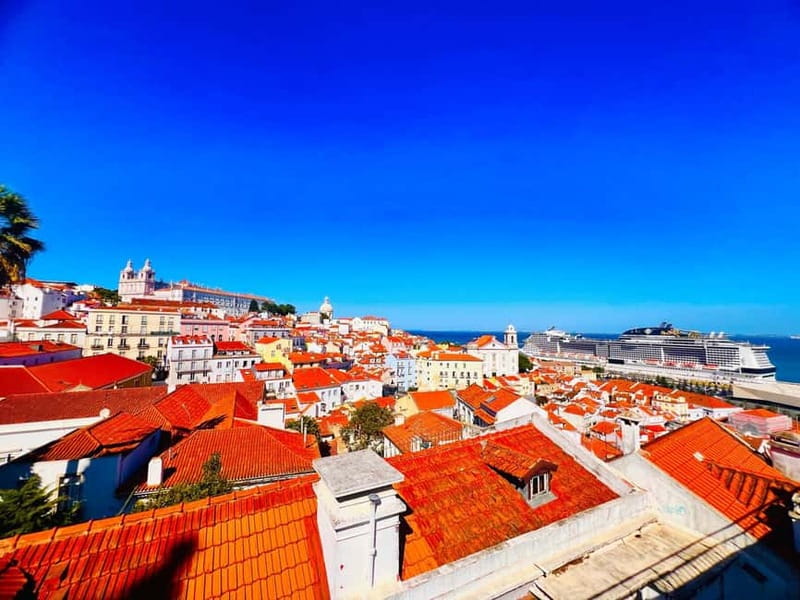
One of the biggest reasons to do a tuk-tuk tour in Lisbon is the payoff at miradouros—viewpoints where the city’s layout makes sense from above. You’ll hit the highlights with photo stops and short viewing windows that are enough to get your bearings and capture the classic angles.
You’ll start with Lisbon Cathedral for a quick photo stop and sightseeing time (listed at about four minutes). Then comes the string of viewpoints:
- Miradouro de Santa Luzia (about five minutes)
- Miradouro das Portas do Sol (about five minutes)
- Miradouro da Senhora do Monte (about eight minutes)
These short breaks are intentional. Lisbon’s best views often come with crowds and constantly changing light. With a guided route, you’re less likely to miss the key vantage points just because you got stuck navigating hills or looking for parking.
What to focus on at each viewpoint
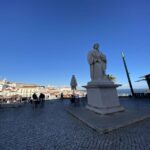
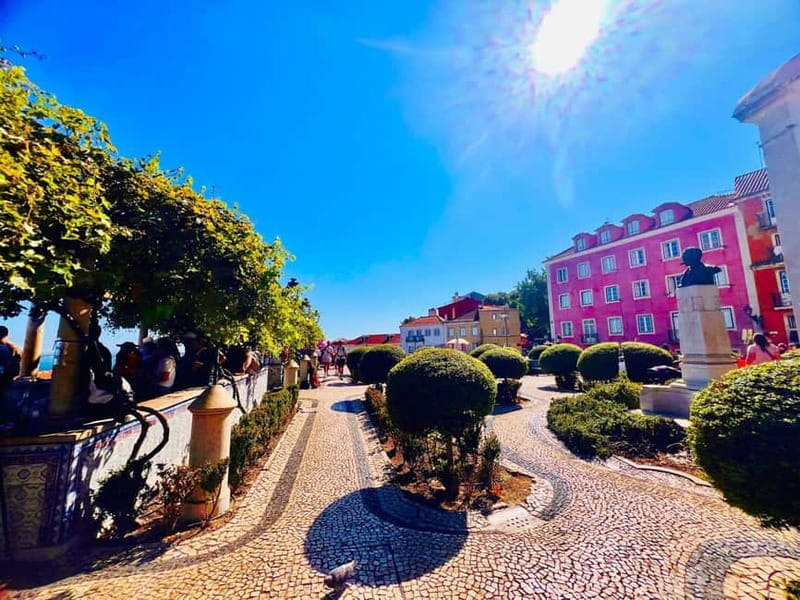
At Santa Luzia and Portas do Sol, pay attention to the tile-lined facades and the way buildings stack across slopes. Lisbon looks different from above than at street level, especially in older districts where streets feel like they climb forever. At Senhora do Monte, you typically get more space to appreciate the city spread out—this is the longer photo stop, so it’s your best chance to slow down for a minute.
Practical tip: if you’re bringing a camera, take a “wide first” shot early, then switch to details. That way, even if you only have a few minutes, you’ll leave with both the postcard view and the close-up Lisbon texture.
Graça district, the flea market pass-by, and the National Pantheon stop
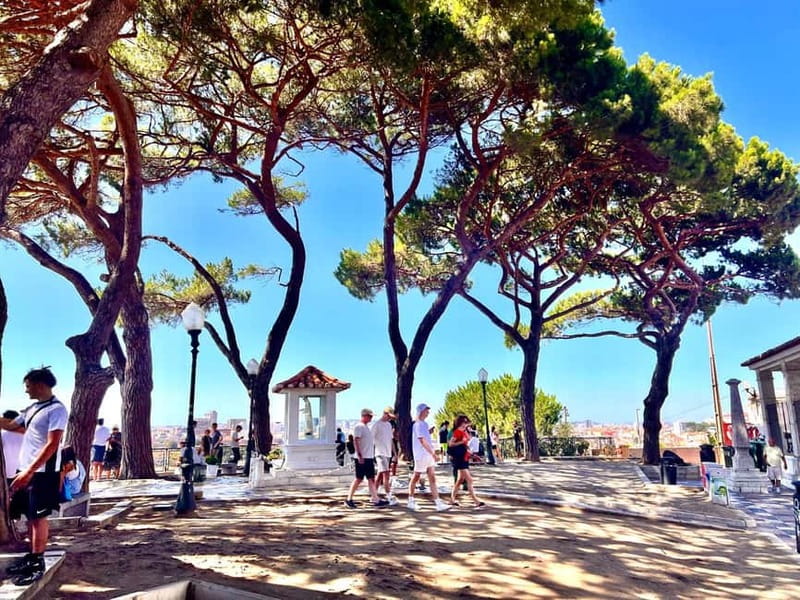
After the main miradouros, the route continues through the Graça Historic District (a pass-by). This is where the city starts feeling more local and layered, and you’ll usually notice a shift in the mood from monument area to residential slopes. Since it’s pass-by, you won’t have time to roam, but the guide route helps you connect what you saw from the viewpoints to what you’re passing at street level.
Then you’ll pass by the Lisbon Flea Market. If you like browsing, this pass-by can be a good “map reminder.” Even with limited time, it tells you where to look later if you want to return for slower shopping or people-watching.
Next comes a photo stop and sightseeing at the National Pantheon of Santa Engracia (about three minutes). This is a stop designed for recognition and photos, not an extended visit. If you’re the type who wants to read every sign and linger inside, you’ll likely want to add extra time on your own after the tour. Still, the quick stop works well as part of a day plan—especially if you’re also visiting other big sights.



Santa Apolónia to Alfama: the route that ties Lisbon together
From the National Pantheon, you head toward Santa Apolónia, with sightseeing time listed (this is another pass-by/sightseeing moment rather than a long linger). Then you enter Alfama, one of Lisbon’s most meaningful neighborhoods.
You’ll also have Fado Museum time as a sightseeing stop. The tour doesn’t position this as a long cultural lesson—it’s more like a guided nudge toward the neighborhood’s identity. Fado is Lisbon in a specific emotional key, and even a short stop here helps you understand why Alfama is considered central to that story.
If you want to get the most out of the Alfama portion, I’d treat it as positioning. Let the guide help you identify what’s around you: which streets feel like they drop toward the river, where the viewlines likely are, and how Alfama’s older streets connect to the rest of the city. Then, after the tour, you’ll know where to walk for a second, slower look.
Commerce Square and Rua Augusta Arch: the classic Lisbon finish
After you move away from the older slopes, the tour brings you back to the postcard-center of Lisbon.
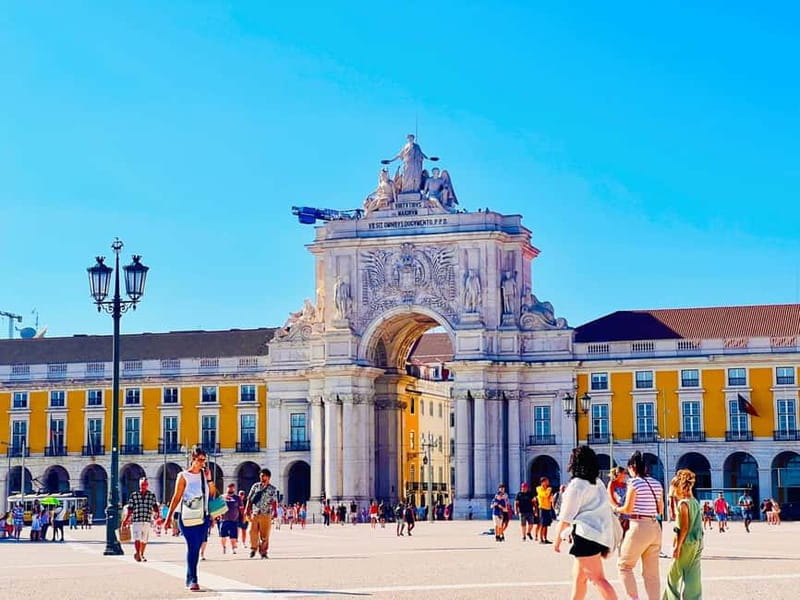
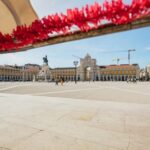
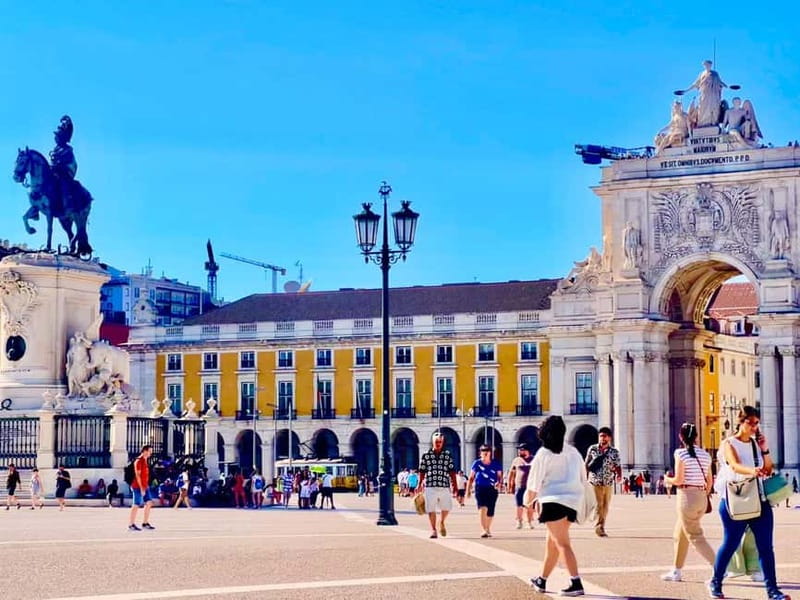
First up is Commerce Square, listed as sightseeing time. This is Lisbon’s wide-open, big-sky counterpoint to the tight streets and steep angles you’ve been riding through. Even if you’re only stopping briefly, it helps rebalance your day mentally—you’re back in the part of the city that feels more planned and monumental.
Then you’ll pass by Rua Augusta Arch for sightseeing. It’s a simple stop, but it’s also a visual shortcut: the arch marks the city’s “spine” and ties the square area to the main walking zone nearby.
If your feet are already tired, this is a good point to notice how the tuk-tuk has paid off. You’re getting the big hits without the constant climbing and without turning the day into a marathon of uphill wandering.
Mercado da Ribeira and heading back to the start point
The tour continues to Mercado da Ribeira, listed as a pass-by. This is an easy place to grab food later if you want something quick and central after the tour ends. Since it’s a pass-by, you won’t be spending lots of time inside during the ride, but you’ll finish the tour with a clear option for dinner or a snack.
You arrive back at the meeting point: Praça Dom Luís I 34. Ending where you started makes it easier to keep your plans simple—especially if you’re heading to another neighborhood afterward.
Skip-the-line and the “right amount” of time at sights
You’ll have skip-the-line access through a separate entrance included. The exact site tied to that benefit isn’t spelled out in the tour info you provided, so I’d treat it as a general time-saver for at least one of the listed stops. In a city like Lisbon, saving minutes can matter, especially when crowds build around popular viewpoints and major landmarks.
The longer viewpoint stop—Senhora do Monte at about eight minutes—also tells you what the tour thinks is most important: the views that help you understand Lisbon from above. Most other stops are shorter, which keeps the route moving and gives you a full day’s highlights without turning every stop into a half-day commitment.
Price and value: what $37 buys in Lisbon time and effort
The price is $37 per person, with duration listed as 1 to 3.5 hours depending on availability and starting time. That range is worth noticing: shorter options are likely best if you mainly want the viewpoints and classic stops without extra buffer time. Longer options make more sense if you want the guide’s storytelling to land and you’d like slightly more breathing room.
For value, I look at three things:
- Transport through hard-to-walk terrain (steep hills are the enemy here).
- Guided sequencing so you don’t waste time backtracking.
- Photo stops at the miradouros—a big part of Lisbon’s appeal.
For $37, the best value is when your time is tight and you want the highlights without paying with sore legs. If you already plan to spend a full day only walking Alfama and deeper old streets, you might not need this kind of route. But if you want a smart “Lisbon sampler” that still includes the best viewpoints, it’s a fair trade.
Who should book this tuk-tuk tour (and who shouldn’t)
This tour isn’t for everyone. It’s listed as not suitable for children under 7, not suitable for wheelchair users, not suitable for pregnant women, and not suitable for people with back problems. If any of those apply, skip it and plan a more accessible self-guided day.
Who it fits well:
- You want to see a lot of Lisbon without spending the day climbing hills.
- You want guided context and photo timing, not just wandering.
- You like viewpoints and want a route that takes you to multiple miradouros in one go.
- You appreciate a guide who can handle small adjustments—Karim’s flexibility and Asif’s prior communication were both specifically praised.
You’ll also like this if you’re traveling with mixed energy levels in your group: the tuk-tuk makes it easier for everyone to keep up with the pace of the day.
Should you book the Lisbon tuk-tuk sightseeing tour?
If your goal is to get your bearings fast, hit major landmarks, and leave with photos from several of Lisbon’s top viewpoints, I think it’s a solid booking. The structure is practical: timed photo stops, an English live guide, and a route that reduces hill stress while still showing you the city’s character.
Skip it if you need long indoor visits at each stop or if you fall into the listed physical-compatibility limits. And if you’re the type who wants to roam slowly for hours in one neighborhood, treat this as your opener, then plan a longer walk afterward.
FAQ
How long is the Lisbon guided tuk-tuk tour?
The duration is listed as 1 to 3.5 hours, depending on availability and starting time.
Where does the tour start?
You meet at Praça Dom Luís I 34. The guide picks you up about 5 minutes before the start in front of Sophia Restaurant behind the Time Out Market.
What language is the guide?
The live tour guide speaks English.
Is the tuk-tuk electric?
Yes, the tour uses an electric tuk-tuk.
Which viewpoints are included?
The tour includes photo stops at Miradouro de Santa Luzia, Miradouro das Portas do Sol, and Miradouro da Senhora do Monte, along with other sightseeing/pass-by stops.
Does the tour include time for photos?
Yes. Several stops are listed as photo stops, including Lisbon Cathedral and multiple miradouros.
Is it suitable for children?
It is not suitable for children under 7 years old.
Is it wheelchair accessible?
No, the tour is not suitable for wheelchair users.
Are smoking, alcohol, or drugs allowed in the vehicle?
No. Smoking in the vehicle is not allowed, and alcohol and drugs are not allowed.
What about cancellation and flexible booking?
It offers free cancellation up to 24 hours in advance for a full refund, and it also offers reserve now & pay later options.
If you want, tell me your travel dates and whether you’re more focused on viewpoints, churches, or food. I can suggest the best duration choice based on that.