REVIEW · LISBON
Lisbon: Guided Tuk-Tuk Tour Alfama and history
Book on GetYourGuide →Operated by Lost in Lisboa · Bookable on GetYourGuide
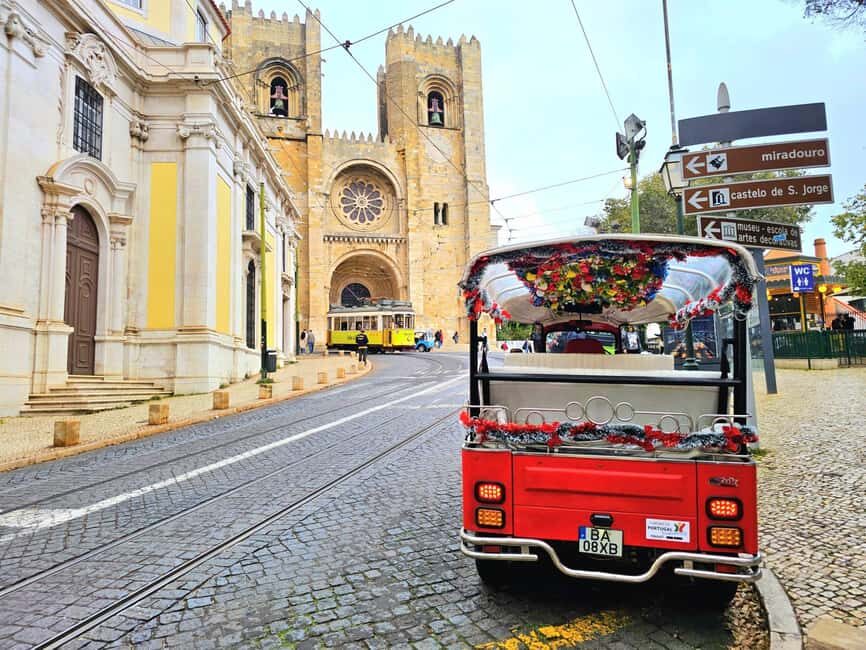
A tuk-tuk saves your legs for Lisbon. I like the mix of photo stops and guided moments across Alfama and Graça, plus the easy, no-drama flow that follows the old Tram 28 area. I also love that the experience is built around viewpoints, so you get height without a hill workout. The main drawback to plan around is that it is not suitable for wheelchair users, and it’s not a sit-still tour if you want great angles at each miradouro.
Expect an English-speaking guide leading you through some of Lisbon’s best-known landmarks, starting around the Time Out Market area and ending back there. You’ll pass key streets, then step out for guided sightseeing at churches, terraces, viewpoints, and historic monuments. One more thing to consider: meeting points can vary depending on where you start, so double-check the exact location before you go.
In This Review
- Key Points to Know Before You Go
- Why This Tuk-Tuk Tour Works in Lisbon
- Price and Duration: Is $44 Good Value?
- Starting at Time Out Market and Following the Old Tram 28 Vibe
- The Best Part: Viewpoints Without the Hill Grind
- Itinerary, Stop by Stop: What You’ll See and Why It Matters
- Pink Street (Pass by)
- Commerce Square, Lisbon (Pass by)
- Church of Saint Anthony (Guided tour, sightseeing)
- Lisbon Cathedral (Guided tour, sightseeing)
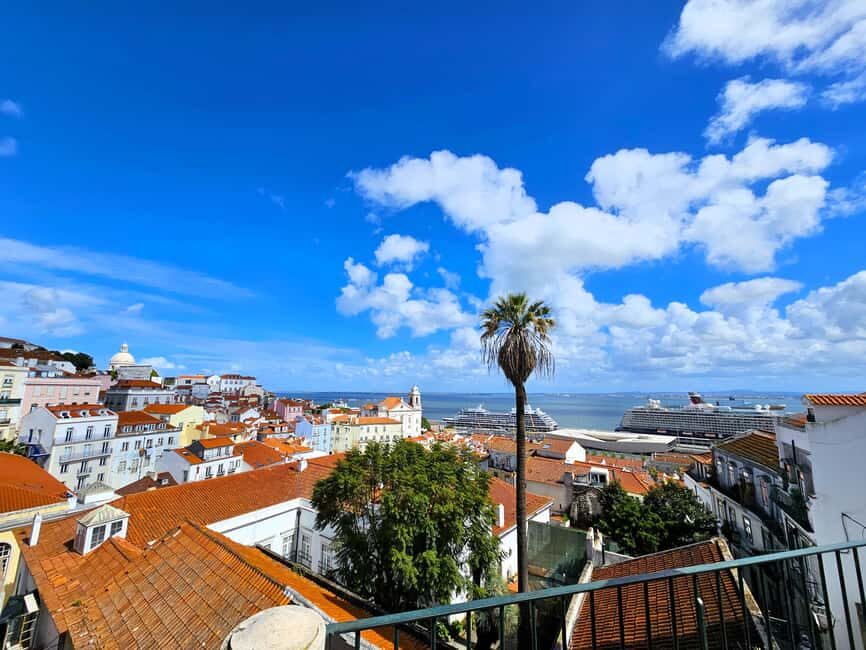
- Miradouro de Santa Luzia (Sightseeing)
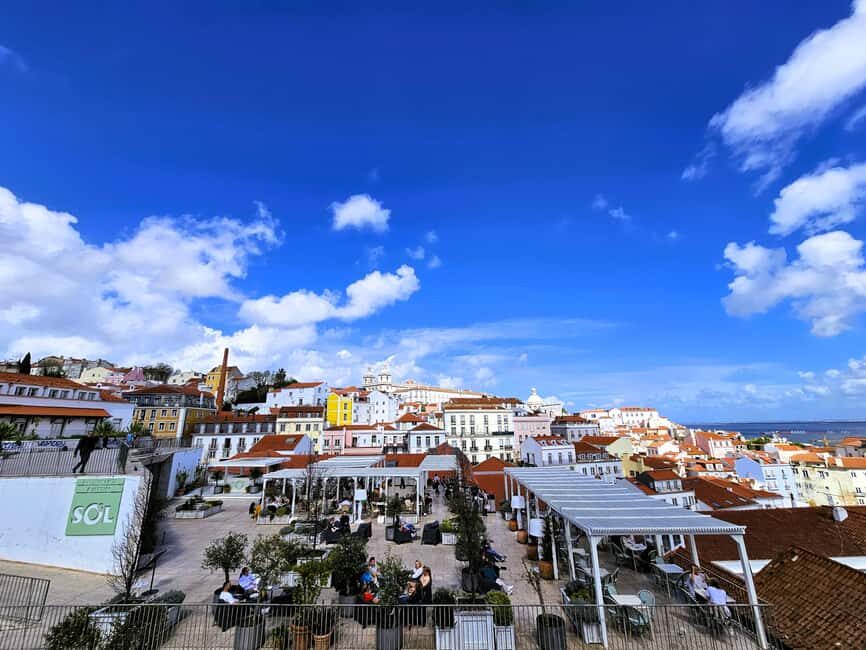
- Portas do Sol Terrace (Guided tour, sightseeing)
- Graça Historic District (Guided tour, sightseeing)
- Miradouro da Senhora do Monte (Visit, guided tour, sightseeing)
- Monastery of São Vicente de Fora (Visit, guided tour, sightseeing)
- National Pantheon of Santa Engracia (Guided tour, sightseeing)
- Alfama (Visit, guided tour, sightseeing)
- About the Guides: Jabel and Hassan Set the Tone
- What You Might Still Want to Plan Around
- Who This Tour Is Best For
- Should You Book This Lisbon Tuk-Tuk Tour?
- FAQ
- Where does the tour start?
- How long is the tour?
- Is the guide available in English?
- What neighborhoods and areas do you visit or pass through?
- Which landmarks are included for guided sightseeing?
- Is this tour good for people who don’t want to climb hills?
- What is the price?
- Is it wheelchair accessible?
- What’s the cancellation policy and payment option?
Key Points to Know Before You Go
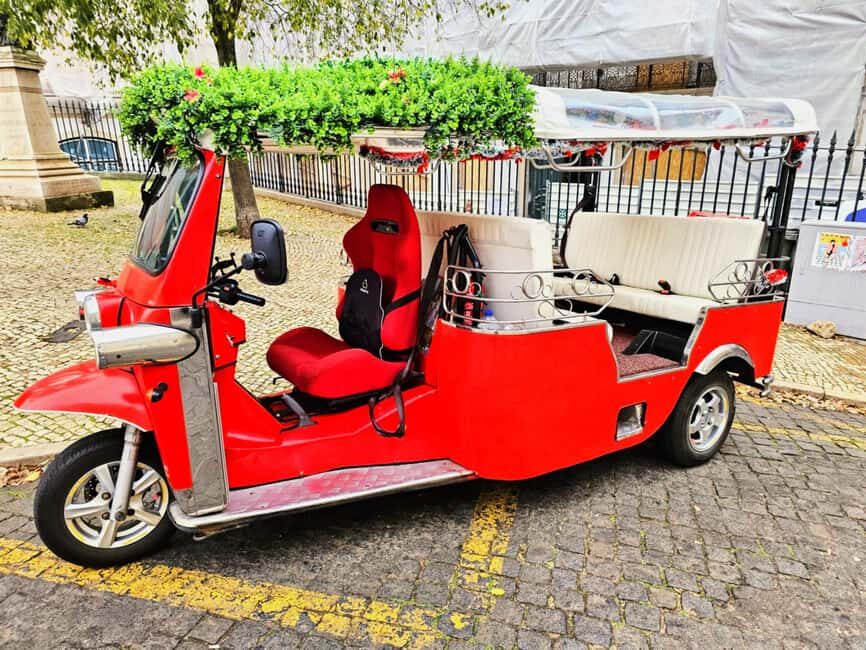
- Tuk-tuk transport for Lisbon’s hills: You get sweeping views without climbing like you’re training for a marathon.
- Tram 28-style route, but by road: You’ll cover the same general historic corridor with a faster, more comfortable pace.
- Guided stops at major sights: Churches, terraces, monasteries, and the national pantheon each get a real explanation.
- Time Out Market start and end: Easy launch point, simple return to where you can grab food afterward.
- English live guide: Guides like Jabel and Hassan are highlighted for friendly, detailed explanations and great photo help.
Why This Tuk-Tuk Tour Works in Lisbon

Lisbon is gorgeous, and it’s also steep. This tour solves both problems. Instead of spending your day fighting uphill stairs, you ride between stops in a tuk-tuk and aim your walking time where it matters most: at viewpoints and inside a handful of important buildings.
What I like most is the balance. You don’t just get driven past everything. You get short guided visits where history actually makes sense, then time to look around and take photos—especially in the Miradouros (viewpoints) that make Lisbon feel like it’s stacked in layers. Guides also help with photos; that’s a small detail, but it makes a big difference when you’re trying to get the skyline and the right angles in one shot.
A second advantage is the human factor. In the guide descriptions and examples you’ll see from Lost in Lisboa, the guides are friendly and flexible. If you want a quick pause for a closer look, you may be able to ask for it rather than being rushed through every stop on rails.
You can also read our reviews of more guided tours in Lisbon



Price and Duration: Is $44 Good Value?
The price is $44 per person, with a duration that runs from 1.5 to 3 hours depending on the starting time and the flow of the route.
That range matters because the value isn’t just the guide—it’s the combination of:
- a tuk-tuk ride that covers a lot of ground,
- multiple scheduled sightseeing moments,
- and time at viewpoints where you’d otherwise lose energy climbing.
If you’re on a short visit weekend and you want to understand Alfama and the city center quickly, $44 can feel like a bargain. If you’re staying longer and you enjoy walking a lot, you might wonder what you’re giving up. But if your goal is orientation plus landmark highlights without hill fatigue, this is priced in a way that makes sense for that job.
Starting at Time Out Market and Following the Old Tram 28 Vibe

The tour starts at Time Out Market Lisboa, with one of the listed nearby options being Restaurante Sophia – Natural Italian. From there, the route traces the same historic corridor associated with Tram 28, which helps you connect what you see to what Lisbon is famous for.
Why this starting point is smart: Time Out Market is a natural hub. Even if you haven’t fully mapped the city yet, you can arrive, meet, and then enjoy the day without spending your first hour figuring out where to begin. You also finish back in the same area, which makes post-tour plans easy.
The first portion includes passes by major areas rather than a full stop at each one, so you get context fast. You’ll see the Pink Street area and Commerce Square from the route. Then the tour shifts into the more hands-on stops where you step out and learn.
The Best Part: Viewpoints Without the Hill Grind
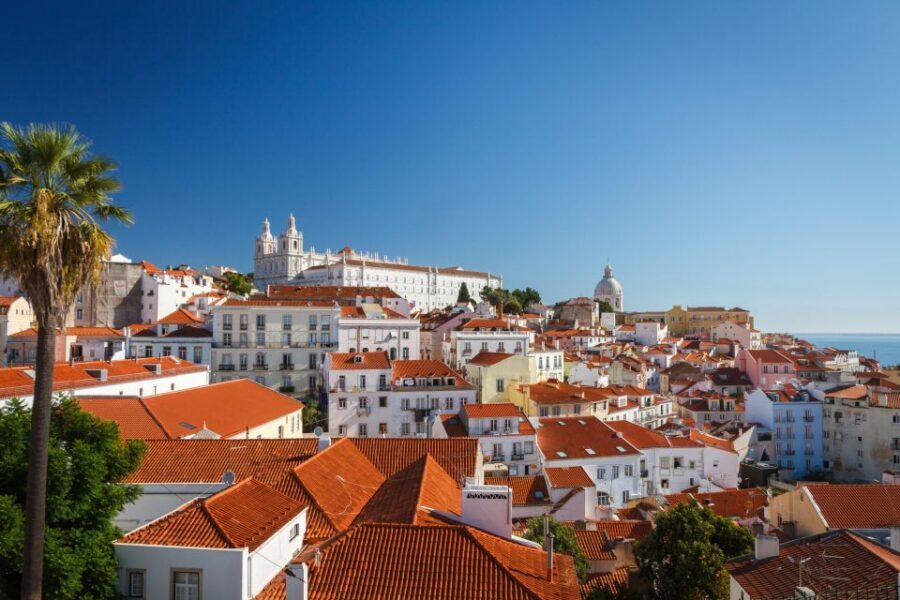
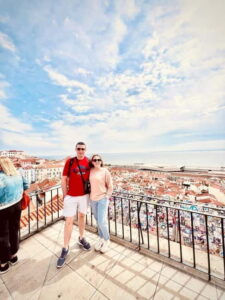
Lisbon viewpoints are the heart of this tour. You’ll go to several, including Miradouro de Santa Luzia, Portas do Sol Terrace, and Miradouro da Senhora do Monte.
Here’s what those stops actually do for you:
- They give you the city’s “layer cake” layout. Lisbon looks different from above than it does at street level.
- They help you place neighborhoods. After you see Alfama and Graça from above, the streets feel less confusing.
- They give you photo time that doesn’t rely on luck. You’re standing in places designed for views, so you aren’t trying to improvise angles on random corners.
The reviews you’ll see attached to this experience also emphasize this strength: guides like Jabel and Hassan help guests find the best viewpoints and sometimes help with photos so you’re not just holding a phone at chest height hoping for the best. If you care about pictures, this is where you’ll feel the difference.
Itinerary, Stop by Stop: What You’ll See and Why It Matters

Below is how the day typically unfolds, in the same order as the route. Think of it as a guided tour through Lisbon’s spine of landmarks and historic neighborhoods.
You can also read our reviews of more historical tours in Lisbon






Pink Street (Pass by)
You’ll pass by Pink Street. This is more of a quick visual introduction than a guided deep stop. Still, it helps you understand Lisbon as a city with layers—historic viewpoints and churches right next to modern nightlife streets.
Commerce Square, Lisbon (Pass by)
Commerce Square is another pass-by. Even without a long stop here, the big open space helps you orient yourself toward the city’s central waterfront-adjacent energy. It’s a useful waypoint early on before you go up into older neighborhoods.
Church of Saint Anthony (Guided tour, sightseeing)
Next comes Church of Saint Anthony. This is a guided stop, so you’re not just walking past a façade. You’ll have a chance to see why this church matters in the local story and to get context for what you’re looking at.
A practical note: churches can mean cooler interiors and changes in lighting. If you’re planning photos, be ready for the contrast between bright streets and dimmer interior spaces.
Lisbon Cathedral (Guided tour, sightseeing)
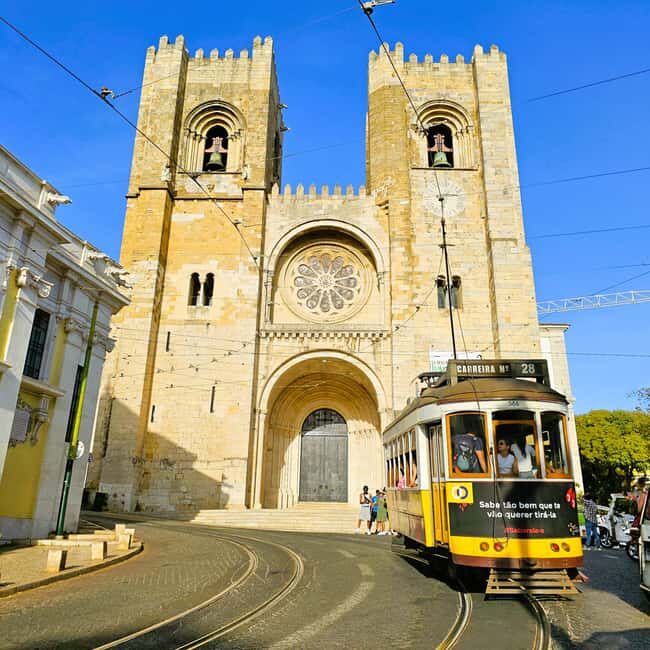
Then you’ll visit Lisbon Cathedral. Another guided moment. This is where the tour starts connecting architecture to historical eras. If you like learning how Lisbon’s old structures shaped what came later—this is the part that pays off.
Miradouro de Santa Luzia (Sightseeing)
At Miradouro de Santa Luzia, you get time to just look. This is the kind of stop where you’ll probably spend longer than you expected, because the views invite wandering your eyes along rooftops and across the city.
Portas do Sol Terrace (Guided tour, sightseeing)
Portas do Sol Terrace follows, also with guided sightseeing. This is a classic photo location. With a guide, you’re more likely to understand which direction you’re looking and what landmarks are worth tracking with your camera.
Graça Historic District (Guided tour, sightseeing)
Next is Graça. You’ll get a guided tour in the historic district, which is important because Graça is easy to admire from afar but harder to “read” at street level. A guide helps you notice patterns in the streets and explain how the neighborhood fits into the city’s wider history.
Miradouro da Senhora do Monte (Visit, guided tour, sightseeing)
Miradouro da Senhora do Monte is a key viewpoint. This is often where the city looks most expansive. The guided aspect is useful here because you can connect what you see to the story you’ve been hearing—rather than just snapping pictures and moving on.
If you want the best photos, timing can matter. You might find it easier to get clear views when the light isn’t too harsh, but you can only work with what the day gives you.
Monastery of São Vicente de Fora (Visit, guided tour, sightseeing)
Now you move into a major historic site: Monastery of São Vicente de Fora. This is a guided visit. Monasteries can feel big and quiet, so having someone point out what to watch for helps you avoid the classic problem of walking through rooms and thinking, I’m impressed, but I don’t know why.
National Pantheon of Santa Engracia (Guided tour, sightseeing)
Then comes the National Pantheon of Santa Engracia. This is another guided stop with a sightseeing focus. It’s the kind of place where context changes your experience: you start noticing details you’d otherwise miss.
Alfama (Visit, guided tour, sightseeing)
Finally, you reach Alfama, Lisbon’s oldest and most historic area on this route. This stop is both a visit and guided sightseeing, which makes sense because Alfama isn’t just a landmark—it’s a whole living neighborhood.
The tour also touches on Alfama’s evening life, including traditional restaurants and Fado houses. Even if you’re not doing Fado that night, you’ll leave with a better feel for why Alfama’s culture is so tied to the rhythm of the streets.
About the Guides: Jabel and Hassan Set the Tone
The standout theme across the guide examples is that they’re friendly and good at making history understandable. Jabel is repeatedly described as welcoming and very helpful with photo opportunities, and he’s also praised for taking guests to top viewpoint spots and making the ride comfortable.
Hassan is highlighted for being friendly and well informed about the history of Lisbon, and for keeping the tour enjoyable. Another recurring point is flexibility: if you want an extra moment to look at a viewpoint or church area, a guide may try to make room for it instead of sticking rigidly to a script.
If you value explanations that feel human (not like you’re reading a museum placard while driving uphill), this is a strong match.
What You Might Still Want to Plan Around
This tour is designed to avoid hill climbing, but you still do some walking. You’ll step out for guided sightseeing and viewpoints. Wear shoes you’re comfortable in for short, uneven terrain.
Also, you should expect that the meeting point can vary depending on the starting option you book, even though Time Out Market is the anchor. If you hate arriving to a vague street corner, double-check the exact pickup point so you’re not searching while the group is already forming.
Finally, you’re on a shared tour. That’s good for value and energy, but it can mean the ride keeps moving. If you want a slow, solitary pace, you might prefer a private tour. If you want momentum with solid context, this fits.
Who This Tour Is Best For
This tuk-tuk tour is ideal if:
- you’re visiting for a short time and want your bearings fast,
- you want landmark highlights plus viewpoints,
- you dislike long hill walks but still want to see Lisbon from above,
- you like guided context at churches and historic monuments.
It’s less ideal if:
- you need wheelchair access (it’s not suitable),
- you’re traveling with very young children under 3,
- you want deep, museum-level detail at every stop (this is a highlights-style route).
Should You Book This Lisbon Tuk-Tuk Tour?

If your Lisbon plan includes Alfama, Graça, and viewpoints, and you want to experience them in a comfortable, guided way, I think booking makes sense. The $44 price is easiest to justify when you factor in transport by tuk-tuk plus several guided sightseeing moments without exhausting yourself climbing.
I’d skip it only if you already plan to spend most of your trip walking uphill for the views and you don’t care much about guided context. Otherwise, this is a practical way to connect the dots in a city that’s beautiful but not always easy on your legs.
FAQ
Where does the tour start?
It starts at Time Out Market Lisboa, with a listed option at Restaurante Sophia – Natural Italian. The exact meeting point may vary depending on which starting option you book.
How long is the tour?
The duration is 1.5 to 3 hours. Starting times vary, so the available length can depend on when you book.
Is the guide available in English?
Yes. The tour includes a live guide in English.
What neighborhoods and areas do you visit or pass through?
You’ll pass by Pink Street and Commerce Square, and you’ll visit or tour Alfama, Graça, and major viewpoints like Miradouro de Santa Luzia, Portas do Sol Terrace, and Miradouro da Senhora do Monte.
Which landmarks are included for guided sightseeing?
Guided sightseeing is listed for places including Church of Saint Anthony, Lisbon Cathedral, Portas do Sol Terrace, Monastery of São Vicente de Fora, and the National Pantheon of Santa Engracia.
Is this tour good for people who don’t want to climb hills?
That’s one of the main benefits of the tuk-tuk ride. The tour is designed so you can sit back and enjoy the ride rather than doing all the hill climbing on foot.
What is the price?
The price is $44 per person.
Is it wheelchair accessible?
No. It’s listed as not suitable for wheelchair users.
What’s the cancellation policy and payment option?
You get free cancellation up to 24 hours in advance for a full refund, and there’s also a reserve now & pay later option so you can book without paying immediately.