REVIEW · LISBON
Lisbon: Pastel de Natal Pastry Class
Book on GetYourGuide →Operated by The Chefs Company · Bookable on GetYourGuide
Pasteis de nata taste better after you make them. This Lisbon class teaches the basics behind Pastéis de Nata using a real, chef-led workflow: pastry first, then the creamy custard filling, then baking and tasting.
I love that it’s a true hands-on cooking class, not a demo where you just watch. I also like that you finish with a tasting of what you baked, plus a cup of Portuguese coffee or tea.
One thing to consider: it’s not for everyone, since it’s not recommended for vegans or people with food allergies.
In This Review
- Quick takeaways
- Why Pastéis de Nata is a Lisbon must-do
- From Cooks Store to your baking station in 2 hours
- Making the flaky pastry: what you practice and why it matters
- The custard filling: learning the creamy texture
- Baking and tasting: Portuguese coffee or tea with your results
- Choosing your menu options by email (and adapting to preferences)
- The chef-led vibe: fun, practical, and group-friendly
- Who should book this Pastel de Nata class
- Price and value: is $56 worth it?
- Tips to make your 2-hour class go smoothly
- Should you book this Pastel de Nata class?
- FAQ
- What is the price of the Lisbon Pastel de Natal Pastry Class?
- How long is the class?
- Where does the class meet?
- Is transportation included?
- What languages are offered during the class?
- Is tasting included?
- Do I choose what I cook?
- Can I cancel for a full refund?
- Can I book without paying immediately?
- Who should avoid this class?
Quick takeaways
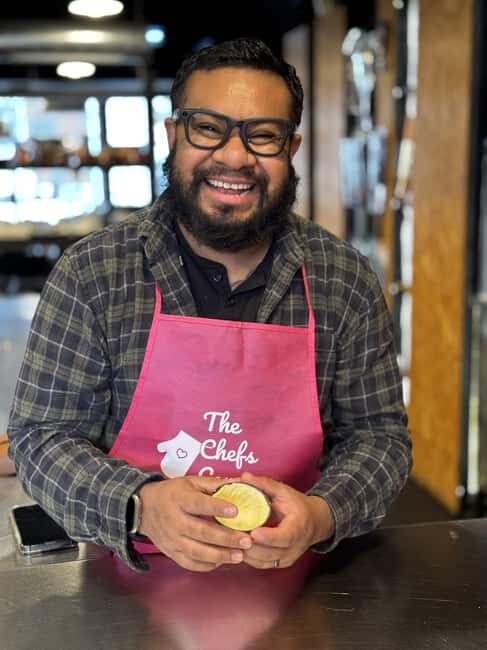
- Full hands-on workflow: you roll, fill, and bake, with step-by-step English or Portuguese instruction.
- Focus on texture: the class zeroes in on flaky pastry and the creamy custard consistency that makes Pastéis de Nata famous.
- Tasting built in: you eat your fresh tarts and get tips on serving them.
- Menu choices: after booking, you receive three menu options by email and can adapt based on your preferences.
- Group-friendly vibe: it’s set up for fun celebrations, including larger groups.
Why Pastéis de Nata is a Lisbon must-do
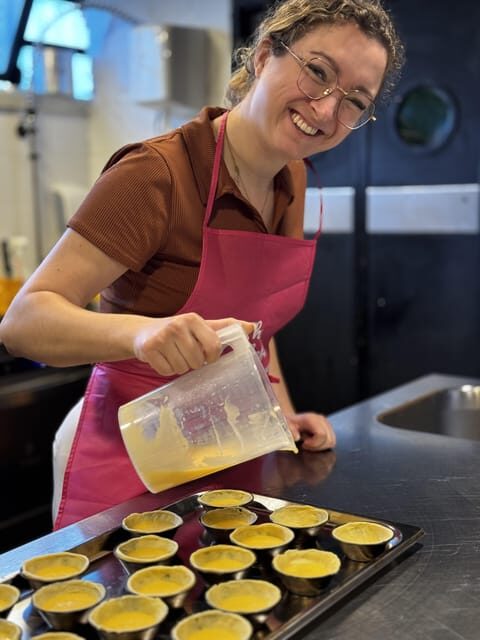
Lisbon has plenty of sweets, but Pastéis de Nata have a special pull. They’re iconic: flaky, tender pastry with a custard center that’s both creamy and set, usually with that lightly browned top you expect when they’re baked well. The best part of a class like this is that you stop treating the dessert like magic and start treating it like a process.
In a two-hour session, you learn the core mechanics—how pastry handles when you work it, how custard behaves when it hits the heat, and how small choices can change the final bite. You’ll also hear cultural context from the chefs, including the dessert’s cultural significance in Portuguese cuisine. Even if you already like eating Pastéis de Nata, this turns it into a deeper, practical experience.
And because you taste what you make, you’re not stuck wondering if you did it right. You get feedback through the actual result and through serving tips shared at the end.
You can also read our reviews of more tours and experiences in Lisbon



From Cooks Store to your baking station in 2 hours
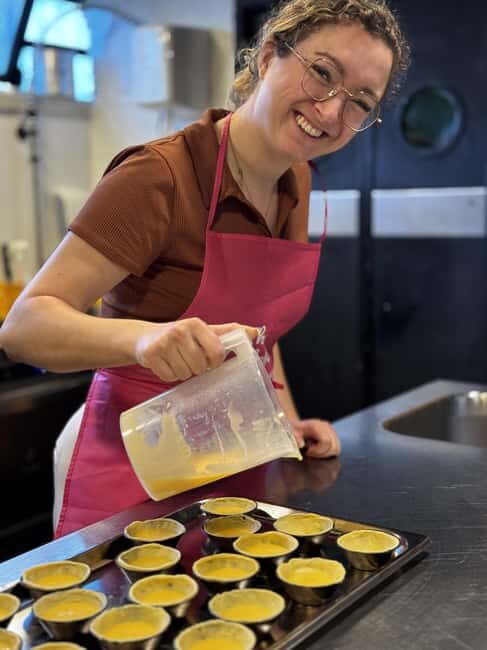
The class meets at Cooks Store in Lisbon, and you return there to end. Expect the session to run about 2 hours, with starting times that depend on availability, so check the schedule before you lock in your day.
This is the kind of activity that works best when you treat it like an appointment. Arrive with time to settle in, because the pace is hands-on from the start. The instructor is available in English and Portuguese, which matters if you want real back-and-forth while you’re learning technique (not just basic instructions).
Also note what’s practical here: transportation isn’t included. If you’re staying far from the meeting point, plan for a tram/ride-share/walk route ahead of time so you don’t lose class time to logistics.
Making the flaky pastry: what you practice and why it matters
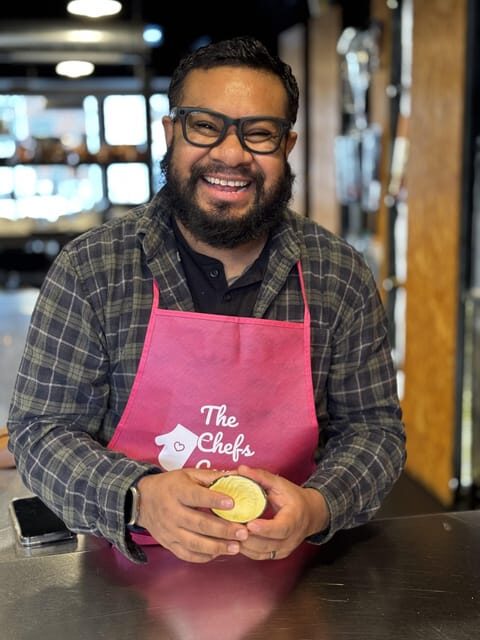
Pastéis de Nata don’t rely on just one secret ingredient. They depend on pastry technique—especially how the dough is handled and layered so you get that flaky result rather than a chewy base. In this class, you work through the process with expert guidance, from preparing the pastry to assembling the tart base correctly.
What you’ll focus on during the pastry portion:
- Getting the dough to the right stage for shaping and filling
- Learning how to handle the pastry without making it tough or misshapen
- Understanding how the pastry acts once it bakes, so your tart doesn’t turn out dry or heavy
The point isn’t that you’ll become a pastry chef in two hours. The point is that you’ll learn enough control to recreate the method at home. And when you bake later, you’ll remember what to look for—because you’ll have seen how the pastry behaves in real time under the chef’s guidance.
The custard filling: learning the creamy texture
Then comes the custard, the part everyone remembers. The class’s emphasis on the “perfect creamy custard filling” is useful, because custard is one of those things that can go wrong in multiple ways. Too thick and it feels heavy; too loose and it doesn’t set properly; wrong technique can also change how it browns.
Here, you’re guided through the steps to prepare the filling, and you’ll assemble the tarts so you can bake them with confidence. You’ll also get practical tips about variations and how to serve them at the end of the class.
What to pay attention to while working:
- Consistency—how it looks and feels before it goes into the pastry
- Portioning—so each tart bakes similarly
- Assembly—so custard distribution supports a good final texture
This portion is where “learning” becomes real. Once you’ve filled tarts yourself, you’ll understand why certain results happen—especially the difference between a custard that sets cleanly versus one that comes out uneven.
Baking and tasting: Portuguese coffee or tea with your results
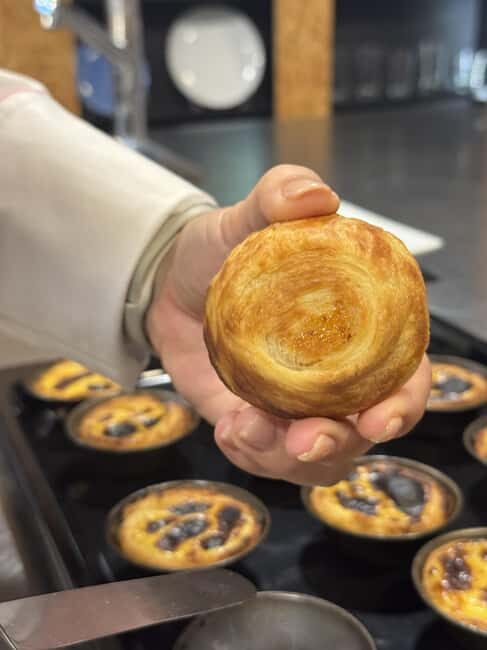
After the pastry and custard work, you taste what you baked. This tasting session is included and paired with a cup of traditional Portuguese coffee or tea, which is a great match for the dessert’s sweetness and creamy center.
I like this setup because it closes the loop. You can immediately connect what you did to what you tasted. If something is off, you’ll remember where in the process it started: pastry too thick, custard texture a bit off, or serving choices that affect flavor and mouthfeel.
You’ll also learn tips on serving—small details that matter with Pastéis de Nata. For instance, how you pair them and how you handle timing (fresh-baked versus reheated) can change the experience more than people expect.
If you’re the type who likes food experiences that teach you something you can repeat, this tasting moment is the payoff.






Choosing your menu options by email (and adapting to preferences)
One smart feature here is the menu choice system. After you book, you receive three different menus by email, and you choose what you want to cook. That gives you a little control over the experience, especially if you’re booking for a group with different comfort levels or preferences.
Even better, the class allows adjustments: you can adapt the menu with your preferences in mind. That’s helpful in real life—because “one standard menu” is fine for a quick snack, but it can be awkward in a cooking class where you want everyone engaged.
This is also why I think the experience works well as a shared activity. You can tailor the experience to the group rather than forcing everyone into a single default approach.
The chef-led vibe: fun, practical, and group-friendly
Cooking classes can feel either stiff or surprisingly fun. This one is set up to be lively. Based on the strongest signals from past participants, the chefs bring a friendly, upbeat energy that works for celebrations—like groups coming in for events such as a bachelorette party.
You don’t need advanced skills to enjoy it. The class is framed for beginners, including people who’ve never made pastry or custard from scratch. At the same time, it’s not insulting to experienced home cooks. The technique focus—especially around pastry and custard—gives you enough to feel you learned real things.
If you’re traveling with friends, this is also a good way to avoid the “everyone does their own thing” problem. You share steps, you share the tasting moment, and you leave with the satisfaction of knowing you did it yourself.
Who should book this Pastel de Nata class
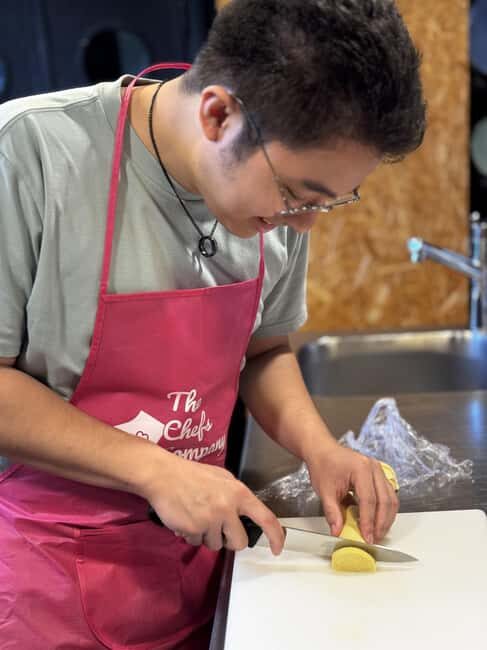
I’d book it if you want a hands-on food activity that’s tied directly to Lisbon’s most famous pastry. It’s especially good if:
- You like learning cooking technique, not just eating food
- You want a fun group activity with structure and clear steps
- You’re visiting Lisbon and want something more memorable than a standard pastry stop
A few groups should think twice:
- It’s not recommended for vegans and it’s also not suggested for people with food allergies.
- It’s not suitable for children under 6 years.
- If you have mobility limits or visual impairment, double-check fit before booking, since it’s listed as not suitable for wheelchair users and visually impaired people.
If you fit the main audience, you’ll probably love the pace. Two hours is long enough to feel productive and short enough to stay flexible in a packed Lisbon schedule.
Price and value: is $56 worth it?
At $56 per person, you’re paying for more than the pastry itself. You’re paying for instruction, ingredients, and the full hands-on process—from pastry prep to custard filling, baking, and tasting with Portuguese coffee or tea.
Here’s the value logic I use:
- If you only bought Pastéis de Nata in a bakery, you’d get taste, not technique.
- If you want a skill you can repeat, a guided 2-hour class can be worth it, even at a higher per-person price.
- The class also includes a tasting and teaching on variations and serving, which is part of the “why” behind the dessert, not just the “what.”
So for me, the question isn’t whether $56 is cheap. It’s whether you’ll get your money’s worth through real learning plus a satisfying finished result. With the hands-on format and included tasting, it looks like a solid value for food-focused travelers.
Tips to make your 2-hour class go smoothly
To get the most out of it, treat the experience like a short workshop:
- Go in hungry. The tasting is included, and you’ll want room for it.
- Ask questions as you work, not after. Technique sticks better when you connect it to the exact step in front of you.
- Watch the pastry and custard stages closely. The class teaches what “right” looks like, and that’s what you’ll reuse later.
- Plan around the meeting point at Cooks Store so you don’t show up rushed.
Also, if you’re traveling with a group, coordinate menu preferences early once the email menus arrive. It’s a small step that can prevent last-minute friction.
Should you book this Pastel de Nata class?
I’d recommend booking if you want a hands-on Lisbon food experience with clear instruction and an iconic result: Pastéis de Nata made by you. The combination of flaky pastry work, creamy custard technique, and a built-in tasting with Portuguese coffee or tea makes it more rewarding than a standard stop at a pastry counter.
Skip it if you don’t eat pastries with dairy/egg-style ingredients, if you have allergies, or if accessibility needs make it a poor fit. Also, if you want a longer deep-learning experience, know this is a tight 2-hour format—great for learning the basics, not for mastering professional pastry at scale.
If your goal is a memorable, practical way to understand Lisbon through its most famous tart, this class is a strong choice.
FAQ
What is the price of the Lisbon Pastel de Natal Pastry Class?
It costs $56 per person.
How long is the class?
The duration is 2 hours. Starting times depend on availability.
Where does the class meet?
The meeting point is Cooks Store in Lisbon, and the activity ends back at the meeting point.
Is transportation included?
No. Transportation to and from your accommodation is not included.
What languages are offered during the class?
The instructor speaks English and Portuguese.
Is tasting included?
Yes. After baking, you get to enjoy the freshly baked Pastéis de Nata with traditional Portuguese coffee or tea, plus you can taste variations.
Do I choose what I cook?
Yes. After booking, you receive 3 different menus by email to choose what you want to cook, and you can adapt based on your preferences.
Can I cancel for a full refund?
Yes, you can cancel up to 24 hours in advance for a full refund.
Can I book without paying immediately?
Yes. The option is reserve now & pay later, meaning you can reserve your spot and pay nothing today.
Who should avoid this class?
It’s not recommended for vegans and it’s not suitable for people with food allergies. It’s also not suitable for children under 6 years and not suitable for wheelchair users or visually impaired people, based on the activity rules.