REVIEW · LISBON
Lisbon: Guided Riverside Segway Tour
Book on GetYourGuide →Operated by Euro Segway Lisbon · Bookable on GetYourGuide
Your first roll on a Segway changes everything. This guided riverside spin takes you past Lisbon’s maritime landmarks and into the trendier Tagus-side streets, with a big photo payoff under the 25 de Abril Bridge. I especially like that you get real hands-on instruction at the start, not just a quick shove and go, and that the route hits key city snapshots like Terreiro do Paço and Cais do Sodré. One consideration: even though options run 1–2 hours, the ride time can run a bit shorter depending on the group and traffic, so don’t plan anything too tight right after.
You also get a smart mix of big-set-piece views and smaller “walk-by details.” You’ll glide near the National Museum of Ancient Art area and City Hall Square, and the ocean breeze along the coast makes the whole thing feel lighter than it sounds. The other practical sweet spot is the included gear—helmet, hairnet, and water—so you’re not scrambling at the last minute. The possible drawback is that while guides can tailor routes, you’re still sharing public paths, so there are times when the pace feels cautious rather than turbo-fast.
In This Review
- Key Highlights Worth Your Time
- Getting Up to Speed on a Segway Without Feeling Like a Beginner
- Terreiro do Comércio and Terreiro do Paço: Portugal’s Seafaring Squares
- Cais do Sodré: Vintage Cafés, Modern Nightlife Energy
- A Luxury Marina Stop Mid-Ride for a Breather
- Under the 25 de Abril Bridge: The Big Photo Payoff
- Passing the National Museum of Ancient Art and City Hall Square
- Price and Value: Is $34 for 1–2 Hours a Good Deal?
- Who This Tour Fits Best (and Who Should Skip It)
- What to Bring, What’s Included, and How to Show Up Ready
- Languages, Group Style, and Why the Guide Makes the Difference
- Should You Book This Lisbon Riverside Segway Tour?
Key Highlights Worth Your Time

- Segway practice that builds confidence fast so you’re comfortable before the scenic parts
- Discovery-era port stories around Terreiro do Paço and the ship-departure theme
- Cais do Sodré stop for the modern cafés and bars vibe
- 25 de Abril Bridge photo moment from river level, with a dramatic underside view
- Small-group energy and route flexibility, including room for personal preferences
- Architectural passes near the National Museum of Ancient Art and City Hall Square
Getting Up to Speed on a Segway Without Feeling Like a Beginner
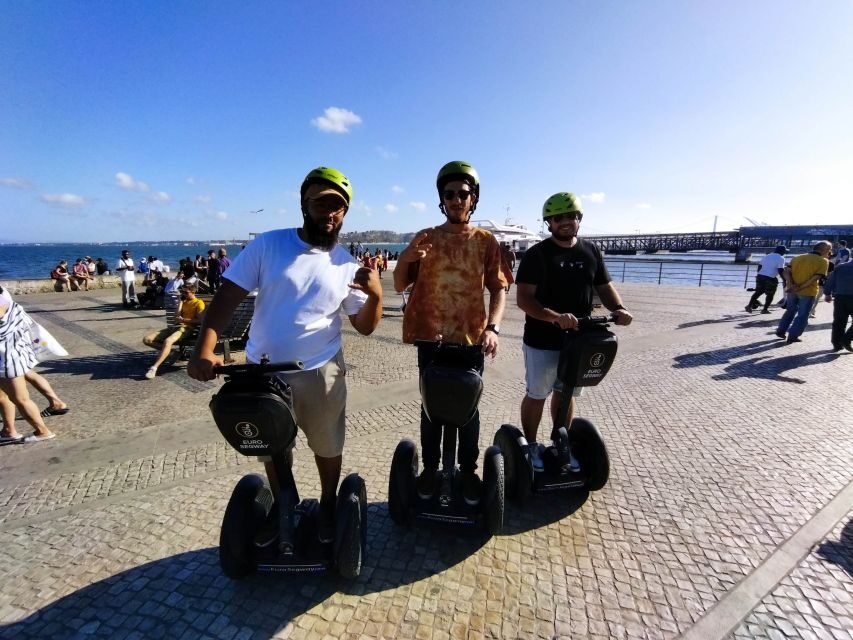
A Segway tour can sound intimidating. It doesn’t have to be. The starting point here is built around simple confidence: you meet your guide, strap on your helmet, and get a quick practice session before you fully join the ride.
That practice matters because Lisbon has hills, turns, and busy junctions. A good guide doesn’t just teach you the controls; they teach you how to move like a predictable rider. In past sessions led by guides such as David, Roy, Ian, Rui, Peter, and Kimani, the common thread is patience—checking that people feel steady before rolling into real streets. That’s exactly what you want if you’re riding solo, bringing teenagers, or just not great with balance.
You’ll also get a water bottle as part of the setup, which sounds minor until you’re gliding with sea air and suddenly realize you’re thirsty.
You can also read our reviews of more guided tours in Lisbon



Terreiro do Comércio and Terreiro do Paço: Portugal’s Seafaring Squares

The first big geography hit is the area around Terreiro do Comércio, one of Lisbon’s most famous river-facing squares. This is where you see the city’s “stage set” quality: open space, historic buildings, and the Tagus pulling everything toward the horizon. Riding it on a Segway changes the feel. You’re not searching for angles on foot; you’re floating past them, with the river always in your peripheral vision.
From there, you move into Terreiro do Paço and the story focus shifts to Portugal’s maritime heritage. This is tied to the time of the discoveries—when many ships departed from this stretch. Lisbon can be a lot of things at once (tiles, tramlines, steep alleys). This stop helps you connect those modern streets to the ocean ambitions that shaped the city.
What I like here for value: you’re getting context while you’re still fresh and energized. Instead of arriving at a viewpoint already tired from walking, you’re learning why the river matters as you roll right alongside it.
A practical note: squares are open, but you still need to stay alert for pedestrians crossing paths. Your guide should handle the pacing, but you’ll get the best experience when you ride smoothly and keep your eyes up.
Cais do Sodré: Vintage Cafés, Modern Nightlife Energy

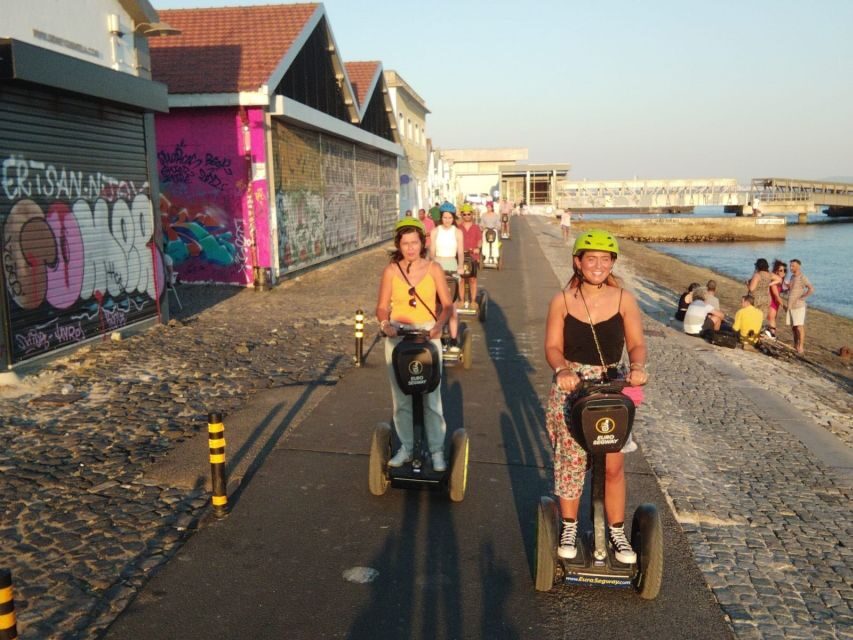
Next up is Cais do Sodré, and it’s a classic Lisbon contrast. This area has that “been here forever” feel, but it’s also been transformed into something trend-forward. You’ll glide through the zone where you can practically picture the café terrace chatter and the pre-night-out energy—without committing to a full night plan.
Your guide typically brings the explanation to life by pointing out what you’re seeing in practical terms: where to notice architectural details, why certain streets feel different at street level, and how the area’s character has shifted. This is where guides like Cris, Christiano, and Christiano/Cristo-style instructors have scored high in the reviews: they don’t treat Cais do Sodré like a random stop. They use it as a living example of Lisbon’s layers.
Here’s the benefit for you: if you only have a short time in Lisbon, Cais do Sodré gives you a clear picture of how the city actually feels after daytime. You come away with places you can return to later—especially for drinks, people-watching, and simple snacks.
The mild drawback: if you expect a constant stream of photo opportunities, Cais do Sodré can be visually active in the way of real neighborhoods. You’ll get great moments, but you’ll also need to pick your angles and let your guide manage the flow.
A Luxury Marina Stop Mid-Ride for a Breather
Halfway through, you’ll reach a luxury marina along the river. This is a smart pacing choice. After squares and city streets, the marina creates breathing room—open waterfront, lots of visual “space,” and an easy reset so everyone can regroup before the main bridge moment.
Marina areas also tend to make Segway riding feel smooth. You’re on calmer ground compared to tighter streets, and your confidence typically improves as you spend more time in motion. That’s good for first-timers, and it’s a relief if someone in your group was a little nervous at the start.
If you’re the type who likes practical logistics: this is the part of the tour where you’ll likely notice how much smoother the experience feels once your body stops thinking about the Segway and starts enjoying the city.
Under the 25 de Abril Bridge: The Big Photo Payoff
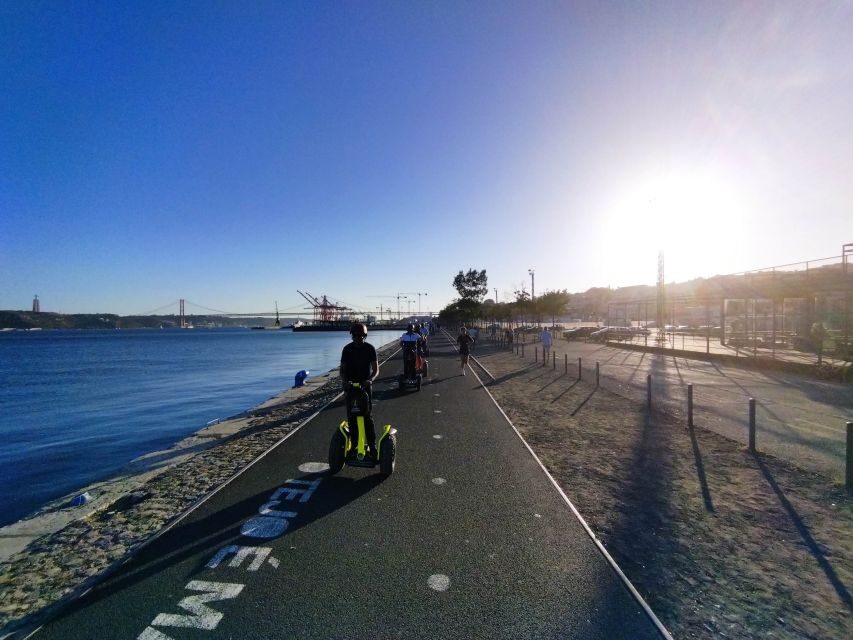
Then comes the showstopper: the ride and photo time underneath the 25 de Abril Bridge (the red bridge over the Tagus). This is one of those Lisbon moments that feels cinematic because it’s all geometry—steel spans, river lines, and the scale of the bridge pressing overhead.
I love this kind of viewpoint because it isn’t just about seeing Lisbon. It’s about seeing Lisbon in relation to its infrastructure—how the city stretches, crosses, and reconnects. From beneath, you’re not looking at postcards; you’re in the working system of the city.
This is also the point where your guide’s timing really matters. If you want good photos, you need a moment where people are slowed down and spaced out. The tour is built for that: you’re encouraged to take some scenic photos while you’re under the bridge.
If the weather turns, don’t panic. Sea breeze can be cooling even in good seasons, and the tour’s outdoors. Bring comfortable clothes so you’re not stuck feeling cold or overheated during the bridge section.






Passing the National Museum of Ancient Art and City Hall Square
After the river bridge moment, you’ll move back through the urban areas, including passes near the National Museum of Ancient Art and City Hall Square. These are the stops that make the tour feel like more than a “ride-by the water” experience.
Why this matters: museums and civic squares are part of how Lisbon shows its identity beyond waterfront life. Architecture here helps you connect the dots between what you saw earlier (maritime departures and Lisbon’s coastal role) and what you see now (the city’s formal presence and public spaces).
For many people, this is also the most mentally satisfying part, because you can study details while you’re still moving at a relaxed pace. And because your guide is right there, you can follow the explanation without stopping your day to hunt for an information board.
Price and Value: Is $34 for 1–2 Hours a Good Deal?
At about $34 per person for a 1–2 hour window, this tour is priced for people who want Lisbon “high impact, low fuss.” You’re paying for a few things you’d otherwise spend time on: Segway instruction, gear (helmet, hairnet), and a guided route that strings together several key areas efficiently.
Here’s my value take:
- If this is your first day in Lisbon, it’s a solid way to get your bearings fast. You learn how parts of the city relate to each other along the Tagus.
- If you’re not confident riding bikes or you’d rather avoid too much uphill walking, the Segway format can save energy without feeling like you’re stuck on a bus.
- If you’re traveling with teens or family members, the Segway piece adds an activity layer that keeps attention.
One thing to keep in mind: a few people noted that it can feel slower than expected, and in at least one case the tour time didn’t fully match the paid-for length. That doesn’t mean it’s bad value. It just means you should treat the time range as a guide, not a stopwatch promise.
Who This Tour Fits Best (and Who Should Skip It)
This tour is built for mobile people who are ready to stand, balance, and ride. It’s not suitable for pregnant women and it’s not for people with mobility impairments, based on the activity requirements.
It also helps if you’re comfortable with a helmet and some time outdoors. You don’t need special athletic training, but you do need coordination and good shoe choices.
Who tends to love it:
- First-timers who want a Segway introduction and city context
- Solo travelers who want an easy way to see highlights without a car
- Families with teenagers who benefit from a fun, structured outing
- Groups that like small-group feel and route flexibility
Also, a detail that matters: the guides can be attentive to different comfort levels. In multiple experiences, guides such as David and Roy took time to teach people slowly at the start and then adjusted the ride so everyone felt confident. That’s a big reason people leave happy.
What to Bring, What’s Included, and How to Show Up Ready

The included items make your prep simpler: Segway, helmet, hairnets, and a water bottle. That’s the core equipment you need, and it’s one less thing for you to track down.
Bring:
- Comfortable shoes (you’ll be standing and riding, so think grip)
- Comfortable clothes (Lisbon weather can shift and you’ll be outdoors)
- Passport or ID card (a copy is accepted)
Not allowed:
- Alcohol and drugs
This matters for two reasons. First, it keeps the ride safer. Second, it keeps the vibe focused on the city and the guide’s instructions, not on side distractions.
Languages, Group Style, and Why the Guide Makes the Difference
The tour runs with a live guide in Spanish, English, and Portuguese. That’s helpful if you want real back-and-forth instead of reading from a phone.
You can also book a private group, which changes the feel a lot. In smaller groups, guides have more room to tailor the route and pace. Some rides are effectively 1-on-1, and that’s where you’ll often get extra attention on comfort and learning the Segway.
Names that came up in strong feedback include G., David, Roy, Ian, Kimani, Rui, Peter, Cristaino, and Cris. Across these different guides, the most consistent praise is the same: clear training, patience, and a friendly approach. Many also offered extra help like taking a video of you riding, and some even followed up with local food ideas after the tour.
One practical note: if audio is important to you, know that moving outdoors can limit how clearly you hear explanations at every moment. If you prefer a tour where you can hear every word over the wind and road sounds, go in expecting that you’ll catch most of the story points while you’re paused or slowed down.
Should You Book This Lisbon Riverside Segway Tour?
I think you should book if you want a fun, efficient way to see the Tagus-side highlights without spending the day on steep hills. This is especially worth it when you’re in Lisbon for a short time, when you want that 25 de Abril Bridge photo moment, and when you value a guide who helps you get steady quickly.
Skip it if you have mobility constraints, are pregnant, or you’re looking for a silent, purely contemplative walk. This is an activity. It’s built for movement, instruction, and short stops that add up to a big sense of place.
If you’re on the fence, my advice is simple: treat it as an opening act for your Lisbon trip. You’ll leave with better orientation, more city context tied to the river, and a handful of spots to revisit on foot later.