Lisbon has a way of stacking centuries. This walking tour strings together Roman and Moorish-era leftovers with the shockwaves of the 1755 earthquake, then punctuates it all with street art and a couple of very Lisbon tastes.
I especially like the focus on small places you’d normally walk past. You’ll get real context in the Graça area, then wind up through the castle zone with its medieval walls and historic stops. I also like that the tour is built around story, not just sightseeing, so you leave with a better sense of why Lisbon looks the way it does.
One consideration: this is a proper walk (about 2.5 hours) over uneven streets, and it’s not suitable for wheelchair users or people with mobility impairments.
In This Review
- Key takeaways before you go
- Turning 3,000 years into a walkable story
- Graça start: churches, old workers’ housing, and how Lisbon really lived
- São Vicente Monastery: royal burials with an international twist
- Street art in the mix: Amália Rodrigues and the city’s modern voice
- Castle area walls: Roman theatre, cathedral stables, and medieval scale
- A dictatorship prison and the 1755 earthquake marks still visible
- Praça do Comércio finish: the royal palace site and what the statues mean
- What you get for about $40 and whether it’s good value
- Timing, pace, and what to wear
- Who should book this walk
- Should you book this Lisbon highlights tour?
- FAQ
- How long is the walking tour?
- What is the price per person?
- What does the tour include to eat or drink?
- Where does the tour start and end?
- What language is the live guide available in?
- How large is the group?
- Is the tour suitable for wheelchair users or mobility impairments?
- Is it suitable for children?
- When can I join if I have specific timing?
- What’s the cancellation rule?
Key takeaways before you go
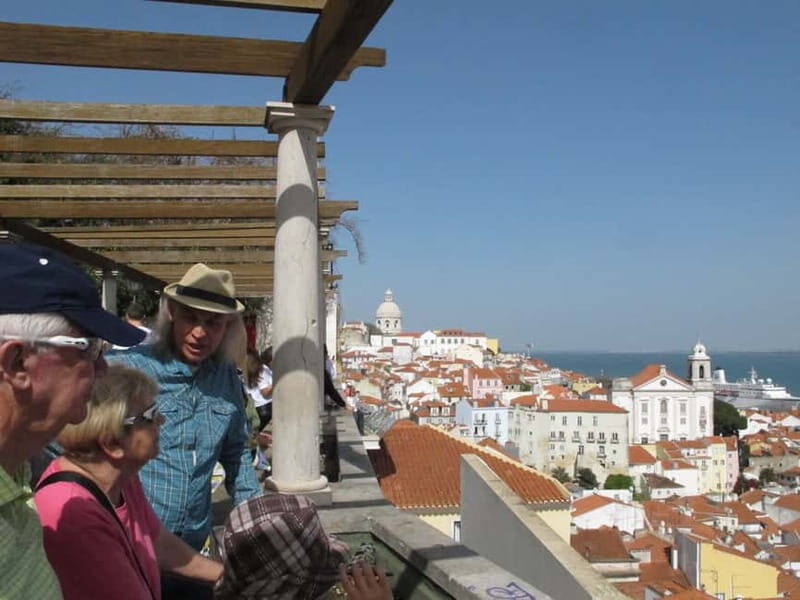
- Up to 8 people means you can actually hear your guide in tight spaces and ask questions
- Graça + São Vicente Monastery adds depth on royal burial links that reach beyond Portugal
- Street art stop includes a portrait of Amália Rodrigues, one of Lisbon’s most iconic voices
- 1755 earthquake damage is shown in real-world remnants, including a buried street
- You finish at Praça do Comércio, the grand square tied to the old royal palace site
Turning 3,000 years into a walkable story
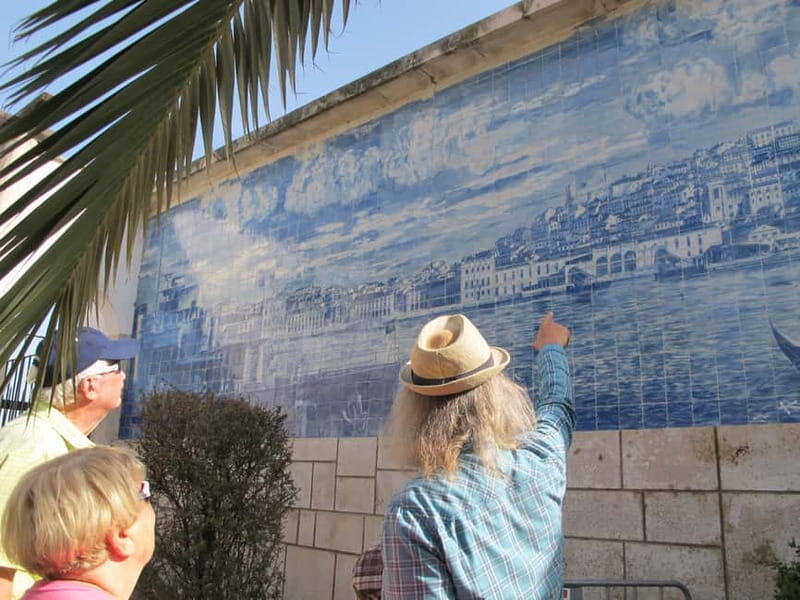
Lisbon’s big selling point is layers. In a short walk like this, you don’t just see monuments—you learn how different eras left physical marks and how Lisbon adapted after disasters.
The guide weaves together Portugal’s timeline from Celts and Romans to Visigoths, Arabs, and later Portuguese history. You’ll hear about explorers and earthquakes too, because Lisbon’s map and mindset were shaped by both outward movement and major shocks at home. The result feels like a living timeline: each stop explains the next one, instead of acting like a disconnected photo stop.
You can also read our reviews of more tours and experiences in Lisbon.



Graça start: churches, old workers’ housing, and how Lisbon really lived
The tour begins in and around Graça, which is where Lisbon starts to feel less like a postcard and more like a lived-in city.
First you’ll visit a church and nearby old workers’ housing. This matters because it gives you a baseline. When a city has centuries of survival and rebuilding, the story isn’t only about kings and wars—it’s also about where ordinary people lived and worked. From there, the walk moves you forward with purpose rather than just pointing you uphill and saying good luck.
Expect narrow streets and frequent turns. The payoff is that the guide can show you Lisbon’s bones while you’re still at street level, where the history is actually present.
São Vicente Monastery: royal burials with an international twist
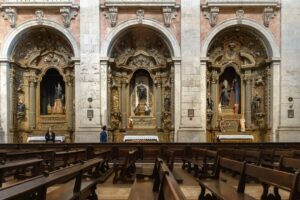
Next comes the São Vicente monastery, a stop that adds weight to Lisbon’s story. Here, the Portuguese royal family is buried, and you’ll also see that the Queen of England is buried there as well.
That single detail is a great example of what this tour does well: it connects Lisbon to wider European history. You’re not just learning facts; you’re learning why Lisbon ended up as a destination for important people and events across borders.
If you like places that blend architecture with human stories—rather than just rooms full of artifacts—you’ll appreciate how the monastery fits the tour’s overall theme: history that still has a pulse.
Street art in the mix: Amália Rodrigues and the city’s modern voice
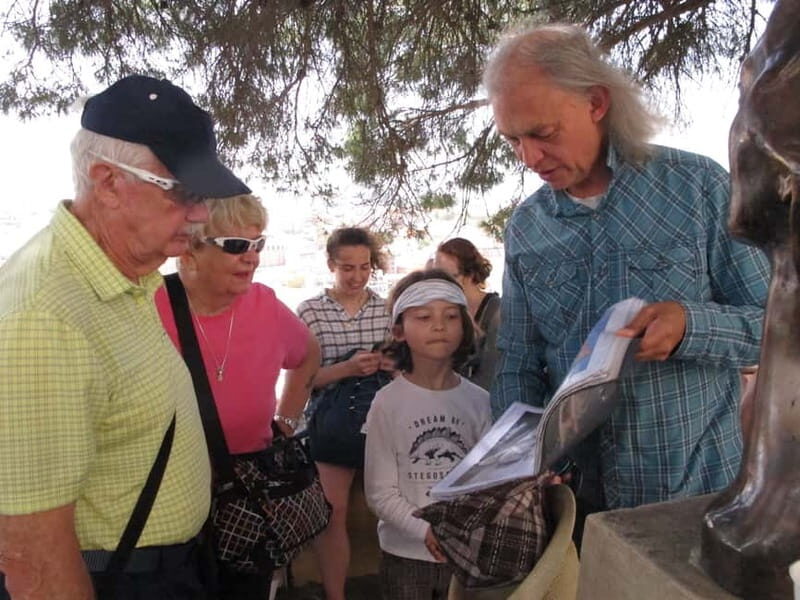
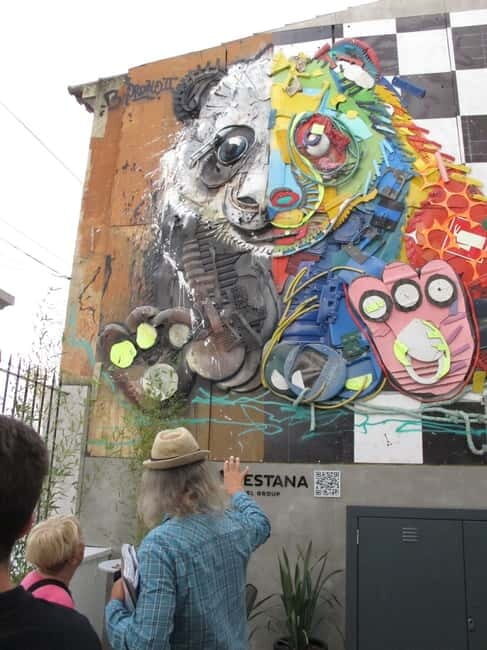
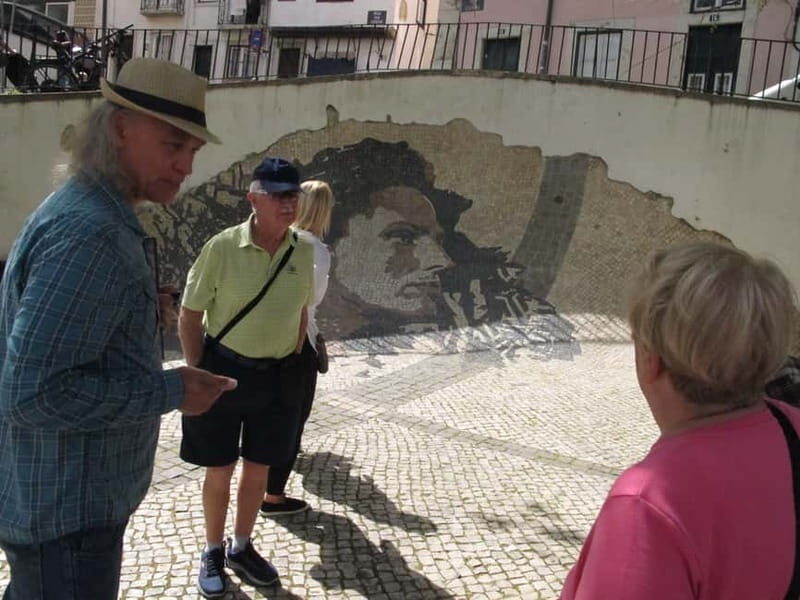
Between the older religious and medieval sites, the tour turns to something current: street art, including a portrait of Amália Rodrigues.
This isn’t random. It gives you a bridge between eras. Lisbon doesn’t treat its past like a museum piece; it keeps speaking through the present. When you see Amália Rodrigues represented in public art, you get a sense of how Fado culture and Lisbon identity travel through time.
Also, this kind of stop makes the walking more fun. You get a break from stone-and-stair monotony, and you end up noticing details in the streets afterward.
Castle area walls: Roman theatre, cathedral stables, and medieval scale
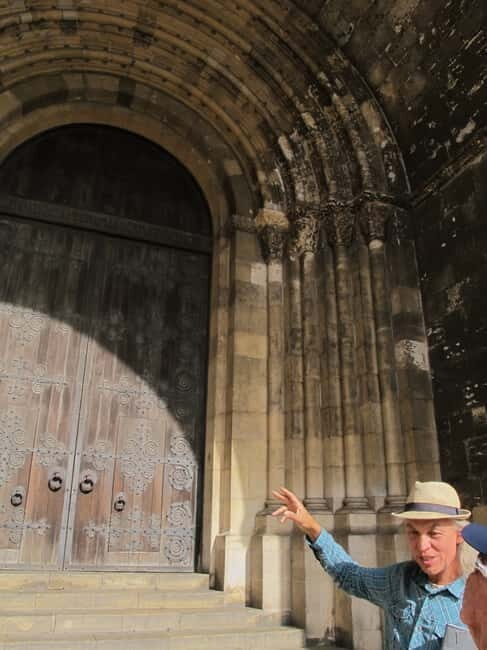
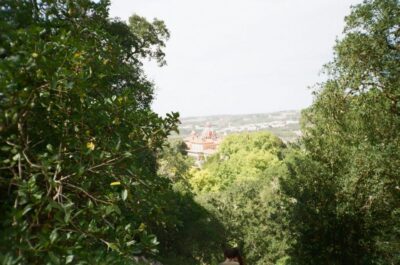
As you move toward the Castle area, the city changes mood. You’ll notice it in the climb, the viewpoints, and the way the stonework holds space.
You’ll wander through the medieval walls, which is where the city’s defensive past becomes tangible. Then the tour brings in major landmarks tied to older foundations, including a Roman theatre and the cathedral, plus its stables.
What I like about including these sites together is how they show continuity. The castle zone is not a single-era theme park. It’s a place where newer structures took shape alongside older layers, and the guide’s stories help you see those relationships rather than treating each stop as a standalone “look here” moment.


A dictatorship prison and the 1755 earthquake marks still visible
Here’s the part that makes the tour feel uniquely Lisbon.
In the Castle area, you’ll see a prison from the dictatorship. It’s a reminder that modern Portugal also has heavy chapters, not only ancient ones. Even if you don’t know much about the period beforehand, the tour frames it so the history connects to how Lisbon evolved socially and politically.
Then the focus shifts to the damage from the 1755 Lisbon earthquake, including a buried street. This is one of those experiences where you’ll likely stop mid-walk and just look around, because the street-level evidence of catastrophe is hard to imagine until you see it.
The tour also points out earthquake-resistant building approaches in the Baixa district. That’s valuable because it turns tragedy into something practical: you learn how a city rebuilt itself with future survival in mind.
Praça do Comércio finish: the royal palace site and what the statues mean
You end at Praça do Comércio, one of Europe’s most impressive open squares. This stop is the reward after hours of walking because the space is so big that your brain gets to reset.
The square was the former site of the Royal Palace, and the guide explains what happened there across centuries. That historical grounding makes the statues feel less like background decoration and more like coded messages. You’ll learn what different elements in the square represent, which helps when you revisit later on your own.
It also works well as a trip-ending anchor. Once you’re done, Praça do Comércio is a practical place to reorient, take photos, and decide where to go next without feeling rushed.
What you get for about $40 and whether it’s good value
The price is $40 per person for roughly 2.5 hours of guided walking, in a group capped at 8. That small-group size is a real part of the value. In Lisbon, where streets can narrow and viewpoints can get crowded, small groups make the guide’s storytelling actually usable instead of getting lost in the noise.
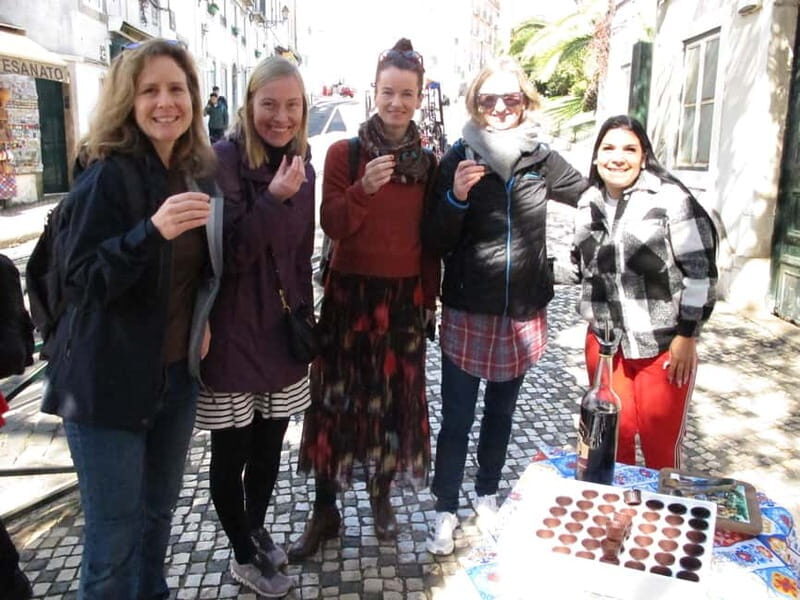
You also get a included taste: pastel de nata (cream tart) OR ginginha (cherry liqueur). That matters more than it seems. A lot of “cheap tour” deals skimp on food or leave you guessing where to find it. Here, you get one classic bite or sip built into the experience, so you don’t have to plan it during your limited time.
Compared to many city tours that feel like a long line of photo stops, this one leans into explanation: what you’re seeing, why it happened, and how Lisbon responded. If you like historical context and visual cues you can still spot later, you’ll feel the value quickly.
Timing, pace, and what to wear
Expect about 2.5 hours walking. The streets around Graça and the castle zone aren’t flat, and cobblestones and uneven pavement are part of the deal. Wear comfortable shoes that you trust.
Since the tour is marked as not suitable for wheelchair users and people with mobility impairments, take that as a strong hint that this is an active route. If you’re short on leg stamina, it’s worth choosing a different style of tour or planning extra rest time around the edges.
Group size stays small, and the tour is led by a live guide in English or French. A small group also tends to mean better flow inside tighter areas, with less waiting and more time for questions.
Who should book this walk
This tour is a great fit if you want:
- Historical storytelling you can walk alongside, not just read later
- Real Lisbon variety: ruins, walls, religious sites, earthquake reminders, and street art
- A route that teaches you how neighborhoods connect, especially around Graça and toward Baixa themes
- A tour that finishes in a location you’ll recognize easily and can use as a navigation hub afterward
It’s probably not your best match if you’re looking for a modern-only Lisbon hit, or if your idea of sightseeing is mostly indoor, elevator-friendly stops. This one is built for the streets.
Should you book this Lisbon highlights tour?
Yes, if you like Lisbon with context. This walking format works because it connects big events—the earthquake, political history, royal burial links—with everyday places you’d otherwise skim past. Ending at Praça do Comércio also makes it easy to transition to the rest of your day.
Skip it only if you need a low-movement experience or you can’t handle uneven ground. Otherwise, for a little over two hours, you’ll leave with a clearer map of Lisbon’s layers—and a few spots that will make you look twice on your own.
FAQ
How long is the walking tour?
It lasts about 2.5 hours.
What is the price per person?
The price is $40 per person.
What does the tour include to eat or drink?
You get either pastel de nata (cream tart) or ginginha (cherry liqueur), included in the price.
Where does the tour start and end?
Meeting points can vary depending on the option booked, and the activity ends back at the meeting point. The walk itself concludes at Praça do Comércio.
What language is the live guide available in?
The live guide offers French and English.
How large is the group?
It’s a small group with a maximum of 8 participants.
Is the tour suitable for wheelchair users or mobility impairments?
No. It is not suitable for wheelchair users or people with mobility impairments.
Is it suitable for children?
It’s not suitable for children under 5 years old.
When can I join if I have specific timing?
Starting times can vary, so you’ll need to check availability to see options.
What’s the cancellation rule?
Free cancellation is available up to 24 hours in advance for a full refund.