REVIEW · LISBON
Lisbon: Morning of Equestrian Art with Lusitano Horses
Book on GetYourGuide →Operated by Book N Tour · Bookable on GetYourGuide
A Lusitano training session has a quiet power. You’ll see Pure Blood Lusitano horses work through warm-up and resourcefulness exercises, guided by riders in period costume, while the sound of period music sets the mood at Lisbon’s Portuguese School of Equestrian Art. I especially like the backstage feel—watching handlers care for horses—and the fact that the audio guide helps you understand what you’re seeing rather than just standing there guessing. One possible drawback: if you expect lots of personal attention or nonstop variety, this is more of a focused training-and-rehearsal morning than a chatty show.
This experience runs 11am to 1pm, and it’s at its best between 11:00 and 12:30. You’re there for the craft: rhythm, health, and the careful training that feeds into the School’s higher-level gala presentations later on.
In This Review
- Key highlights worth planning for
- A Lisbon Morning Built Around Lusitano Training
- Where It Happens: Nora Patio and Henrique Calado Riding Ring
- What the Period-Costume Rehearsal Really Looks Like
- Warm-up as the main event, not a pre-show
- Resourcefulness exercises that show training logic
- Handlers and care: the behind-the-scenes value
- Period atmosphere that helps you “read” the choreography
- Audio Guide, Photography Rules, and Timing That Works
- When to go: aim for 11:00–12:30
- Phone strategy: what you can record
- Headphones: audio guide included, but the audio device setup is on you
- Price and Value: Is $17 Worth a Two-Hour Lisbon Morning?
- Practical Tips for Your Best Experience
- Wear what lets you move
- Dress for a morning watch
- Come with the right tech mindset
- Use the correct ticket at the desk
- Who Should Book This Lusitano Morning (and Who Might Skip)
- Should You Book This Lisbon Lusitano Training Morning?
- FAQ
- How long is Lisbon Morning of Equestrian Art with Lusitano Horses?
- Where does the equestrian training take place?
- What is included in the price?
- Are headphones included?
- What languages are available for the audio guide?
- Is flash photography allowed?
- Can I use my GetYourGuide voucher to enter?
- What do I need to bring?
- Is the experience wheelchair accessible?
- How will I access my ticket and audio guide?
Key highlights worth planning for
- Two matching venues in one morning: Nora Patio and Henrique Calado Riding Ring, with different photography rules
- You’re watching daily training, including warm-ups linked to the Alter Real Stud Farm
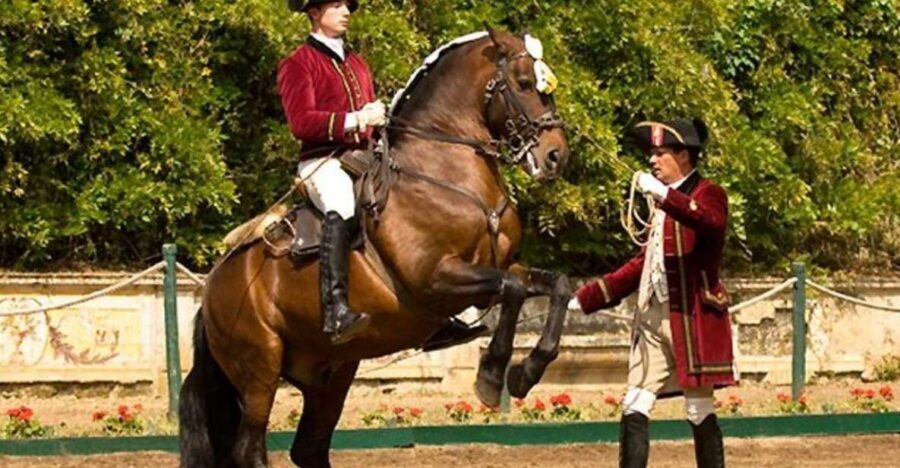
- Period costume + period music helps the exercises feel like 18th-century court choreography
- Behind-the-scenes horse handling gives you a human, practical view of care—not just performance
- Audio guide in English, French, and Portuguese keeps the session understandable and calmer to follow
A Lisbon Morning Built Around Lusitano Training
If you like horses, this is one of the most purposeful ways to spend a morning in Lisbon. Instead of only seeing the final “spectacle” style performance, you watch the work—warm-up, control, and the step-by-step habits that make advanced equestrian art possible.
Lusitano horses are a big part of why this stands apart. They’re a Portuguese breed known for skill and responsiveness, and here you’re not just admiring them in a paddock-like setting. You’re observing a structured training session that emphasizes the horse’s needs and the rider’s technique at the same time. The tone is respectful, almost methodical, and that matters. When a program cares about rhythm and health, the training looks better and the horses look more settled.
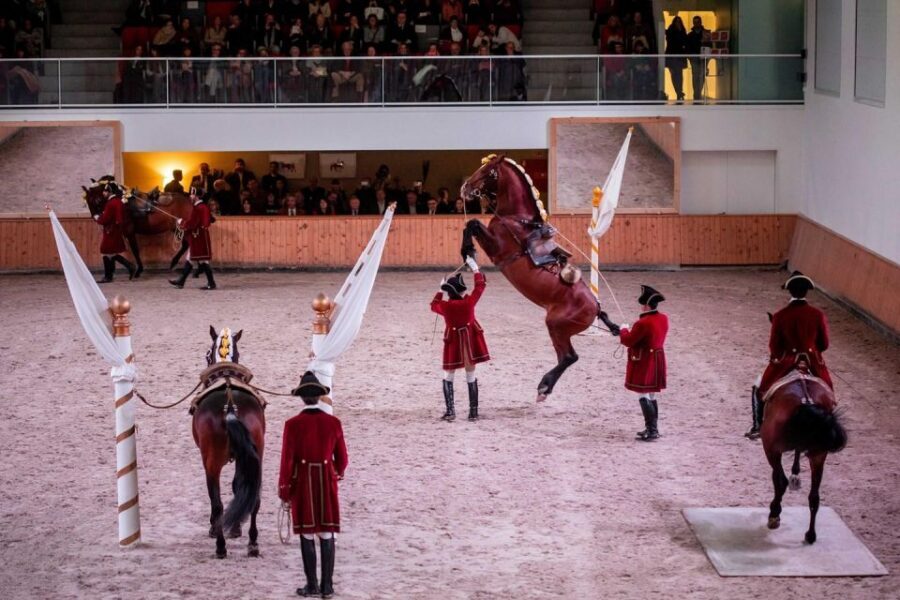
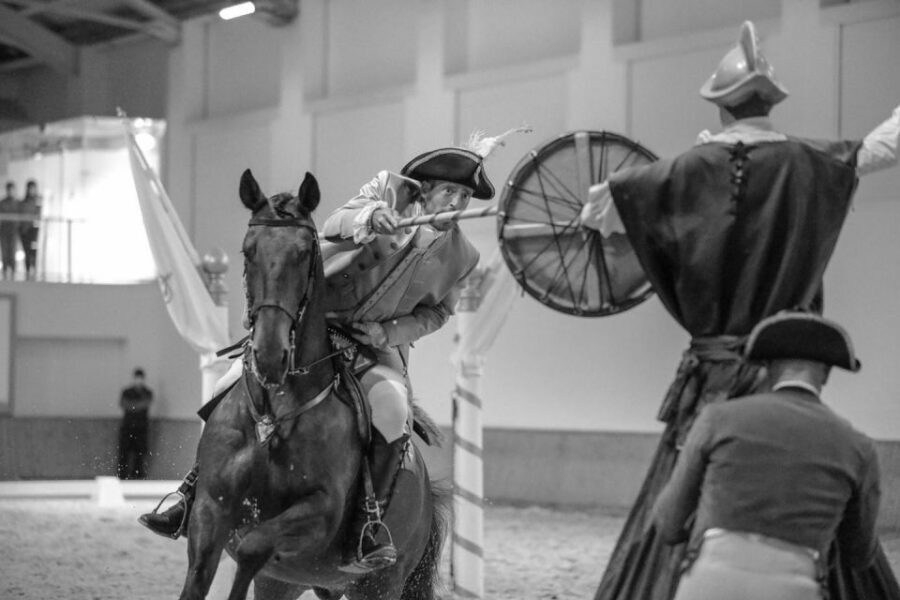
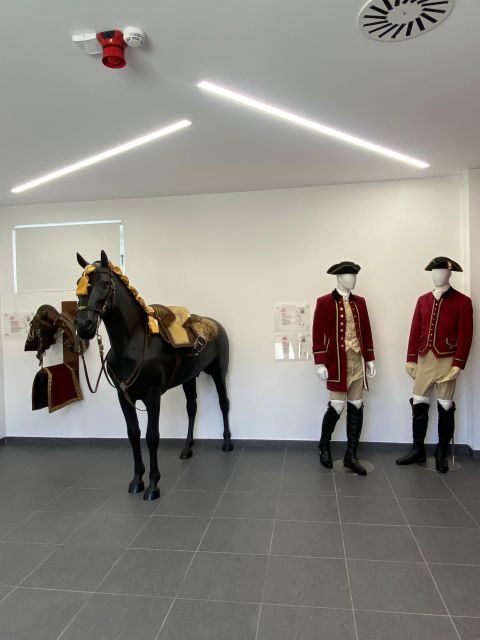
The morning also has an “in the room” atmosphere. Riders wear period costumes, so the experience doesn’t feel like a modern arena lesson. Add period music and you get a sense of how the School’s repertoire recreates older court traditions—without turning it into pure theater.
One more thing I appreciate as a planning tip: the session length stays manageable. You’re looking at roughly two hours. That’s long enough to watch several exercises and see how horses are prepared, but short enough that you won’t feel stuck for the whole day.
You can also read our reviews of more tours and experiences in Lisbon

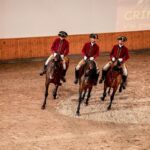
Where It Happens: Nora Patio and Henrique Calado Riding Ring
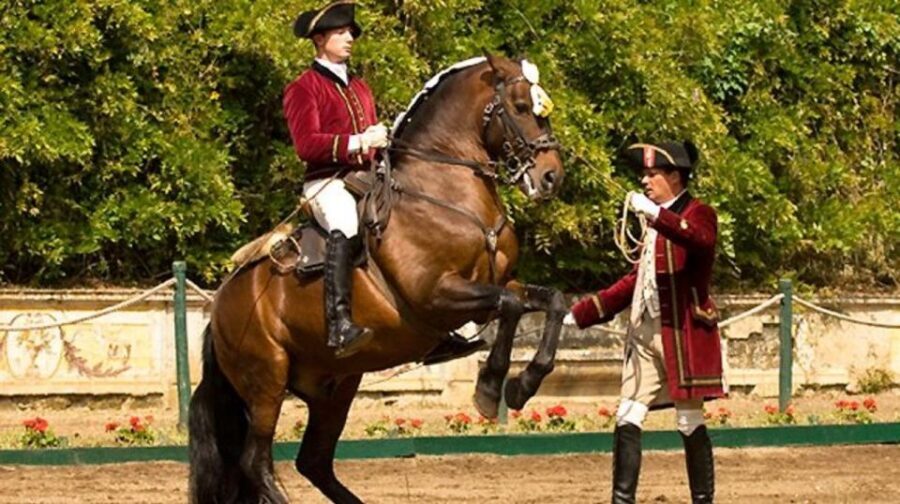
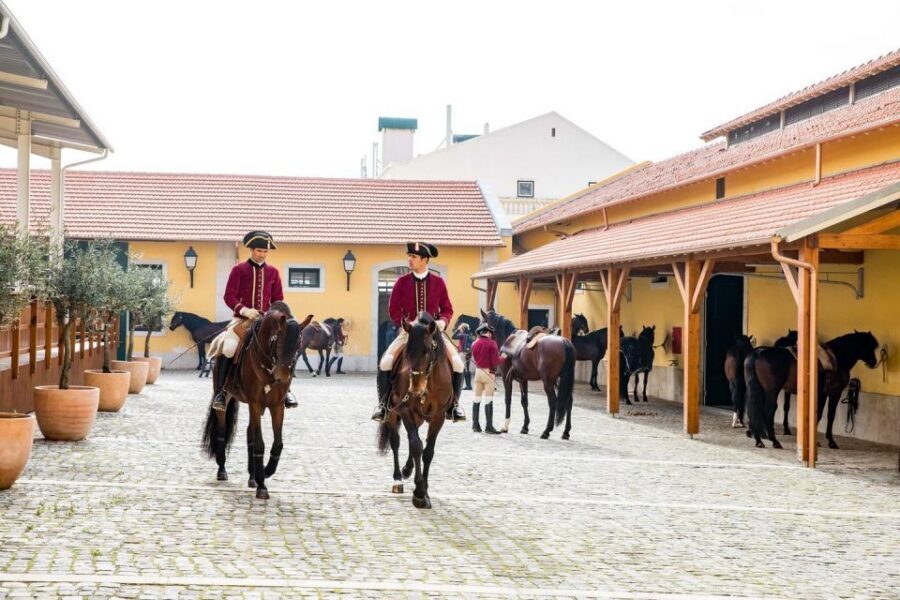
This morning experience takes place across two key spaces: the Nora Patio and Henrique Calado Riding Ring. The split is more than location trivia—it changes what you’ll do and what rules apply.
- Nora Patio is where you’ll likely spend time watching rehearsals and exercises with a courtyard feel. It’s also where photographs and videos are allowed without flash. That’s a rare and welcome detail if you love documenting what you see.
- Henrique Calado Riding Ring is a more formal arena setting. Here, photography is not allowed. So if you want photos, aim to get them earlier and focus your video/phone use in the Nora Patio, where permitted.
You’ll also notice a difference in energy. The Nora Patio part feels like you’re watching preparation and transitions. The Henrique Calado Riding Ring portion feels more like the training becomes “performance-ready.” For planning, I suggest you treat your phone like it’s on a mission: take what you can in Nora Patio, then put it away in the ring so you’re actually watching.
What the Period-Costume Rehearsal Really Looks Like
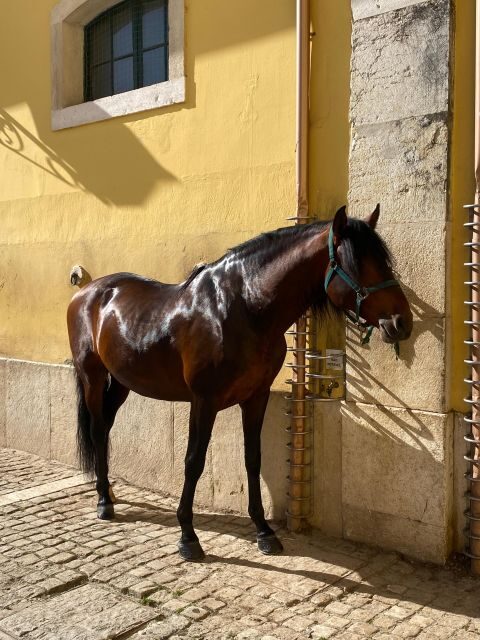
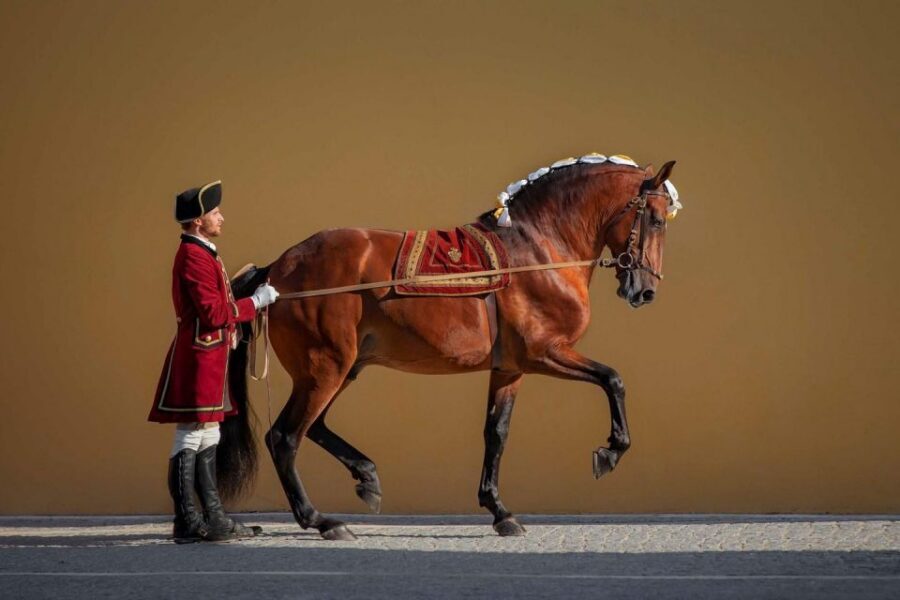
The core of your morning is the training and rehearsal flow. You’ll see warm-up and resourcefulness exercises, with riders dressed in period costume. The emphasis isn’t on random tricks; it’s on communication—how rider and horse move as one unit.
Here’s what the session is built around:
Warm-up as the main event, not a pre-show
A lot of “horse shows” use warm-up as a throwaway moment. This isn’t that. The warm-up is part of the show. You’ll watch how horses are prepared and guided so they can work comfortably. The training aims to respect each horse’s rhythm and physical needs, which you can usually spot in how calm or tense the animal looks during transitions.
Resourcefulness exercises that show training logic
Resourcefulness exercises are not just about speed or strength. They show how a horse solves movement tasks with the rider’s guidance. In an advanced equestrian context, this is where you start to understand why the later choreography works so cleanly.
You can also read our reviews of more tours and experiences in Lisbon


Handlers and care: the behind-the-scenes value
One of the most meaningful parts is watching how handlers care for the horses. You’re not only watching the riders; you’re also seeing the human side that keeps the horses comfortable and healthy. If you’ve ever wondered how these horses stay ready day after day, this portion gives you real-world answers.
Period atmosphere that helps you “read” the choreography
The session recreates an 18th-century court vibe. Period costumes and period music aren’t just decoration—they help you interpret the exercises as choreography, not just stable work. In practical terms, that makes the experience easier to follow, especially with the audio guide running.
Audio Guide, Photography Rules, and Timing That Works
This experience includes an audio guide, and that’s a big quality-of-life factor. Without it, the exercises can feel impressive but mysterious. With it, you can attach names and explanations to what you’re seeing—so you’re not just watching movement, you’re watching a method.
When to go: aim for 11:00–12:30
The activity runs 11am to 1pm, but 11am to 12:30 is the best window. Why? You’ll have a smoother flow of training and rehearsal segments, and you’re less likely to arrive right as things are switching venues. If you want the best odds of catching the most coherent sequence, show up closer to the start time rather than at the very end.
Phone strategy: what you can record
Know the photography split before you arrive:
- Nora Patio: photos and videos allowed without flash
- Henrique Calado Riding Ring: photography not allowed
This matters because phone use can be distracting. If your priority is photos, plan to focus your capturing earlier. If your priority is understanding, put the phone away and treat the ring section like a live lesson.
Headphones: audio guide included, but the audio device setup is on you
The audio guide is included, but headphones are not included. Your checklist should include headphones you can plug in or use with your phone/audio guide setup. Since the tour data also lists a charged smartphone and internet access, expect you’ll need your device ready for the audio guide experience.
Price and Value: Is $17 Worth a Two-Hour Lisbon Morning?
At $17 per person, this is priced like an entry ticket plus commentary—rather than like a full-day attraction. And that’s the right way to judge it.
Here’s what you actually get:
- Entry ticket to The Portuguese School of Equestrian Art
- Watching the daily training of Lusitano horses
- An audio guide
Not included:
- Transport
- Headphone
- Food and drinks
If you compare that to the cost of many “show-only” experiences, the value here is that you’re paying to understand the craft. You’re not just walking into a performance and leaving. You’re watching warm-ups, rehearsals, and horse care, which tends to feel more educational for the same time slot.
That said, this is still a training morning. The session is structured, so the rhythm can feel repetitive if you’re hoping for variety or frequent surprises. Some people arrive wanting something more like an attention-heavy guided talk. If that’s you, set expectations: the main attraction is the training itself, with audio support—not a constant Q&A.
Practical Tips for Your Best Experience
A few small choices can make a big difference here.
Wear what lets you move
Bring comfortable shoes. You’ll be standing and walking enough that blister-prone footwear will ruin the mood fast.
Dress for a morning watch
Even if the program is indoors/outdoors mixed, you’ll likely spend stretches waiting for exercises. Dress in layers so you’re not baking or freezing while you watch.
Come with the right tech mindset
Bring a charged smartphone and internet access. After booking, you’ll receive a separate email with instructions to access and download your ticket and the audio guide, so you want your device ready and your email accessible. Check your spam folder too.
Use the correct ticket at the desk
This is important: your GetYourGuide voucher is not your ticket. To enter, show your Book N Tour Ticket (not a GYG QR code/voucher) at the reception desk, where staff will help you.
This is where people sometimes get tripped up. If you organize this the night before, the morning stays smooth.
Who Should Book This Lusitano Morning (and Who Might Skip)
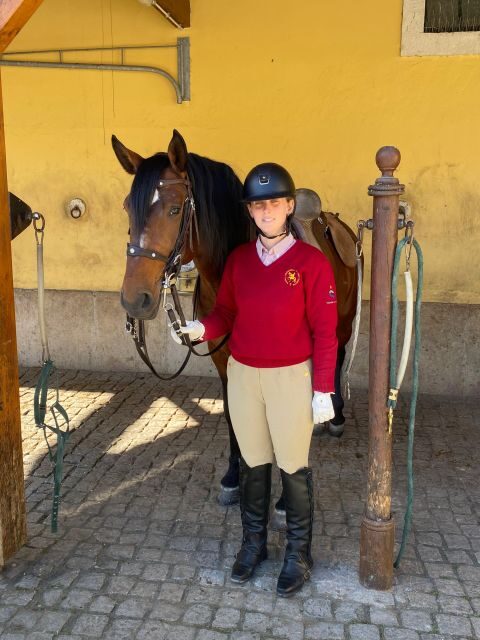
This is ideal if you:
- Love horses and want to see how training actually works
- Enjoy structured, calm learning experiences with audio guidance
- Like traditional performance styles with period costumes and music
- Want a Lisbon activity that’s short, focused, and not overstuffed
You might consider skipping or choosing something else if you:
- Want a highly interactive experience with lots of speaking and personal attention
- Expect a constant parade of different moments and props
- Get impatient with training pace and prefer shows with bigger breaks and more spectacle
One more angle: if you’re there to take photos, Nora Patio is your friend, but you’ll still have to respect the no-photo rules in the Henrique Calado Riding Ring. For a photography-first plan, aim for earlier arrival to get your shots where permitted.
Should You Book This Lisbon Lusitano Training Morning?
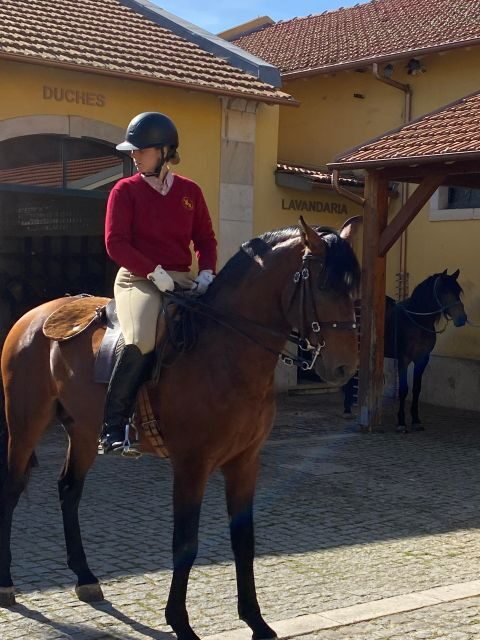
I think you should book this if your idea of a great morning is watching skilled training up close and learning what you’re seeing through the audio guide. The combination of daily Lusitano training, period atmosphere, and included entry ticket feels like good value for the time.
I’d only hesitate if you’re the type who needs nonstop novelty or lots of staff-led conversation. Here, the horses and riders are the show, and the audio guide helps you follow along rather than turning the session into a talk-heavy tour.
If you go, do it smart: arrive in the 11:00–12:30 window, bring comfortable shoes and headphones, and keep your phone rules straight between Nora Patio and Henrique Calado Riding Ring. That way, you get the best version of the experience.
FAQ
How long is Lisbon Morning of Equestrian Art with Lusitano Horses?
The activity takes place from 11am to 1pm. The best time to visit is 11am to 12:30pm.
Where does the equestrian training take place?
It happens at the Portuguese School of Equestrian Art in Lisbon, across Nora Patio and Henrique Calado Riding Ring.
What is included in the price?
Your ticket includes entry to The Portuguese School of Equestrian Art, watching the daily training of Lusitano horses, and an audio guide.
Are headphones included?
No. Headphones are not included, so bring your own if you want audio support.
What languages are available for the audio guide?
The audio guide is available in English, French, and Portuguese.
Is flash photography allowed?
No flash photography is allowed. In Nora Patio, photos and videos are allowed without flash, while in Henrique Calado Riding Ring, photography is not allowed.
Can I use my GetYourGuide voucher to enter?
No. The GetYourGuide voucher is not your ticket. You must show your Book N Tour Ticket (not a GYG QR code/voucher) at the reception desk.
What do I need to bring?
Bring comfortable shoes, headphones, and a charged smartphone with internet access.
Is the experience wheelchair accessible?
Yes, it’s listed as wheelchair accessible.
How will I access my ticket and audio guide?
After booking, you’ll receive a separate email with instructions to access and download your ticket and audio guide. Be sure to check your spam folder too.