REVIEW · LISBON
Lisbon: Pastel de Nata Masterclass at a Real Bakery
Book on GetYourGuide →Operated by Nat'elier · Bookable on GetYourGuide
Your oven-time starts in a real bakery. This Lisbon Pastel de Nata masterclass lets you learn Portuguese custard tarts the hands-on way, inside Nat’elier’s professional kitchen, not a demo corner. I especially love the only-in-a-real-bakery setup and the fact that you’re working alongside pastry pros, with real tools and real technique.
I also like the focus on doing, not watching. You’ll practice puff pastry from scratch (including lamination) and then assemble the custard tarts using the specific Pastel de Nata approach, in a small group capped at 12.
One thing to consider: it’s not suitable for people with mobility impairments, since you’re moving through a working bakery kitchen. If mobility is an issue, you’ll want to choose another activity.
In This Review
- Key things I’d watch for
- Finding Nat’elier by Baixa-Chiado: the start of the real-thing experience
- First taste of the plan: Pastel de Nata basics before the flour flies
- Inside the pro kitchen: puff pastry and lamination, step by step
- Assembling your tarts: the Pastel de Nata technique that people talk about
- Professional oven moment: bake, set, and smell like Lisbon
- The barista finish: warm tarts with your drink of choice
- Price and value: why $74 makes sense if you want real skill
- Who this masterclass suits (and who should pick something else)
- My decision guide: should you book this Pastel de Nata class?
- FAQ
- How long is the Pastel de Nata masterclass in Lisbon?
- Where do I meet for the masterclass?
- What’s included in the price?
- How many tarts will I make?
- Is it beginner-friendly and are kids allowed?
- What languages are the classes taught in?
Key things I’d watch for

- Real bakery kitchen at Nat’elier near Baixa-Chiado (not a staged classroom)
- Small group size (max 12) so you get hands-on time
- Puff pastry from zero plus the custard method, not just assembly
- You make at least 3 tarts and bake them in a professional oven
- Barista-crafted drink with your warm tasting at the end
- Top chefs rotate (João Batalha, Silvia Sousa, Adriano Cardoso, and others)
Finding Nat’elier by Baixa-Chiado: the start of the real-thing experience
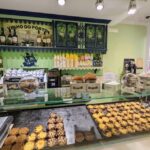
You meet at the pastry store Nat’elier, just outside the Baixa-Chiado metro station on Lisbon’s blue line. That matters because this isn’t one of those experiences where you’re herded into a different room and handed a tray. You’re starting at the bakery itself, so from the first minute you get the right vibe: flour in the air, equipment that looks actually used, and staff who act like a real workplace.
It’s in the Lisbon District, and the address is clearly mapped on Google Maps (Nat’elier at https://maps.app.goo.gl/UUQtJDq3LDD9J5PV7). I’d treat that link like gospel, then give yourself a few extra minutes. Lisbon streets can be lively, and you don’t want to arrive flustered before you put on your apron and hair net.
This is also one of those tours where the location tells you what you’re buying. You’re paying for access to a working bakery kitchen, not just a sweet souvenir.
You can also read our reviews of more tours and experiences in Lisbon.


First taste of the plan: Pastel de Nata basics before the flour flies
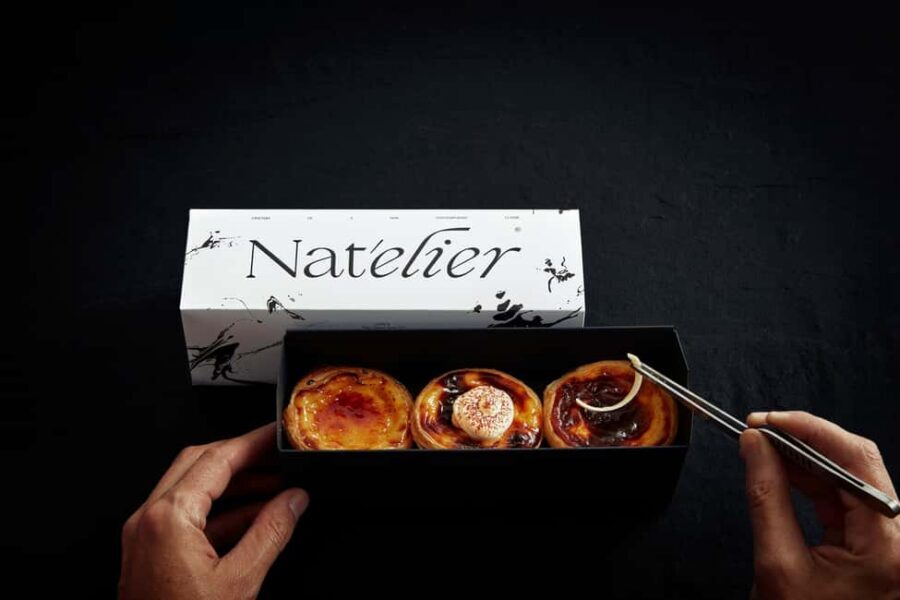
The masterclass begins with a short intro that sets context: where Pastel de Nata comes from, and why the tart’s texture and bake matter. That sounds “academic,” but in practice it’s useful. When someone explains the goal—crisp pastry edges and that custard set—you understand why the dough handling and the filling technique are so strict.
Then you gear up. You’ll get aprons and hair nets, and you’ll step into the professional prep space where the team works. The kitchen is built for efficiency, so expect the class to feel organized and fast-moving, without feeling rushed. You’re also not stuck watching one person do everything. This is a “everyone gets turns” style workshop.
Chef-led classes rotate. The masterclass can be hosted by award-winning João Batalha (co-founder of Nat’elier), or other in-house pastry chefs such as Silvia Sousa or Adriano Cardoso. If you’re there on a day with one of those names, that’s a nice bonus. If you’re not, you’ll still be taught by an experienced in-house pastry chef, and the process is the point.
Inside the pro kitchen: puff pastry and lamination, step by step
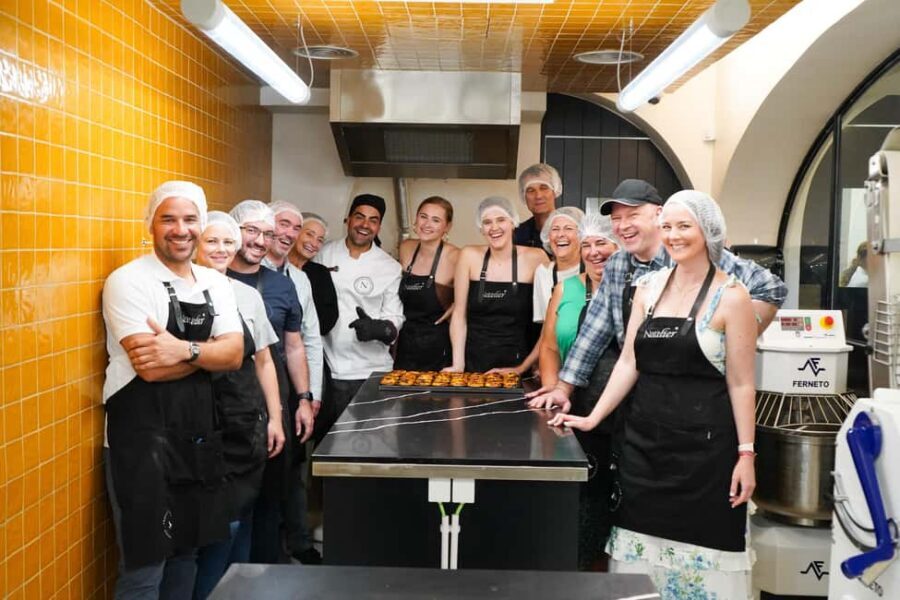
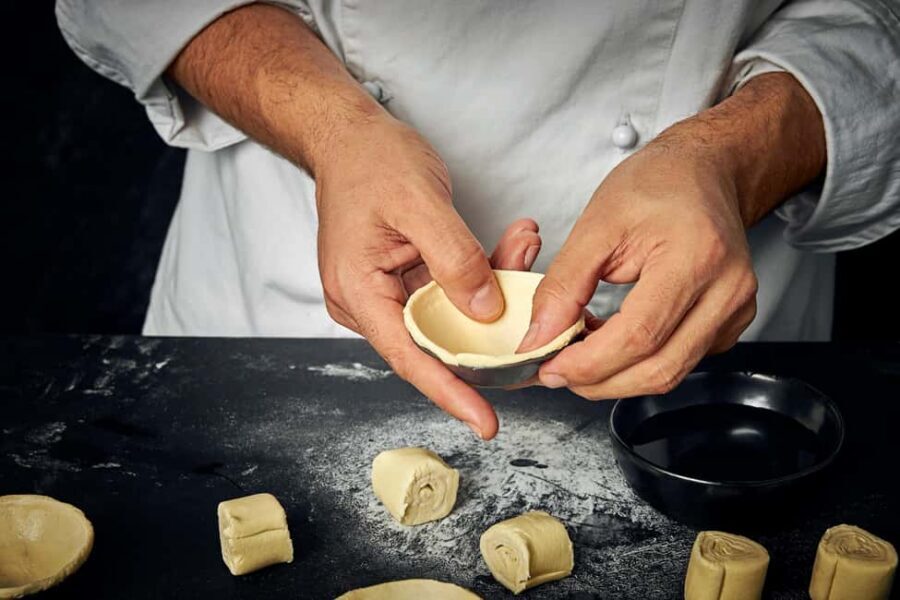
Here’s what makes this class feel different from typical cookie-cutter baking workshops: you don’t just assemble pre-made dough. You learn to create authentic Pastel de Nata structure with puff pastry from zero.
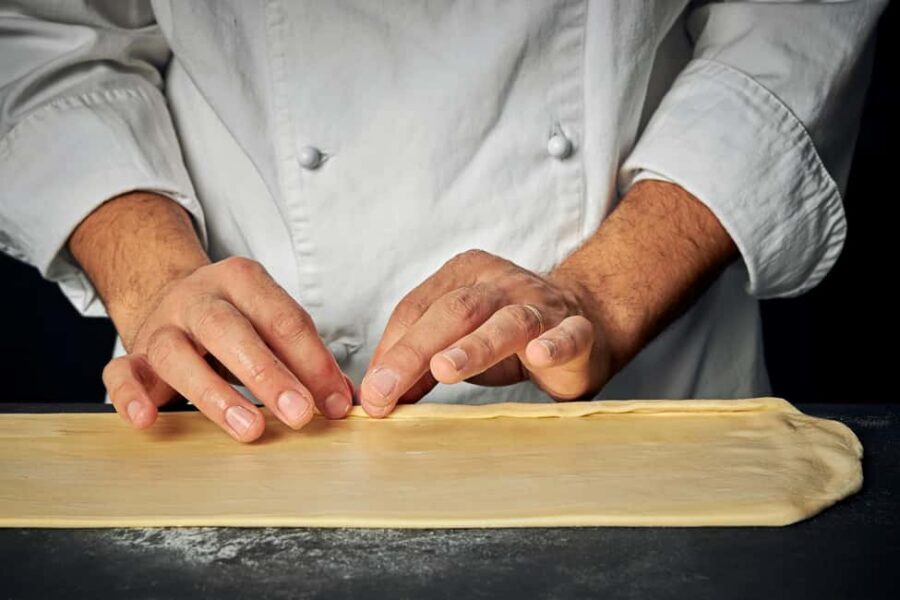
The dough part usually intimidates first-timers, but that’s exactly why the hands-on format is a win. The staff guides you through the technique at the level you can actually repeat later. You work in pairs for the dough work, which helps if you’re new to baking and still figuring out how the dough should look and feel.
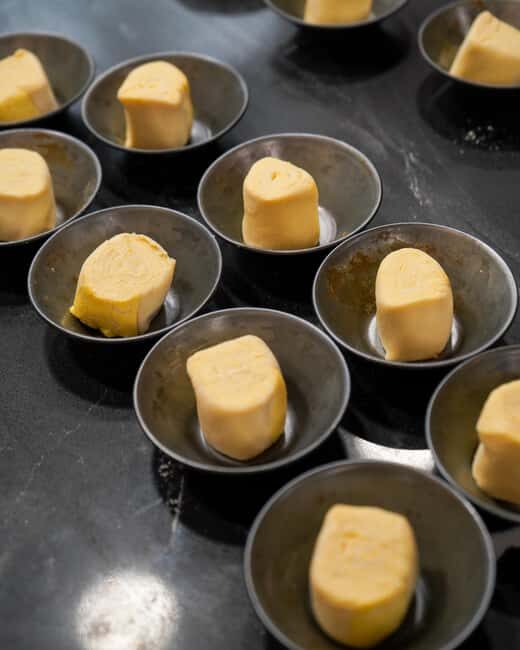
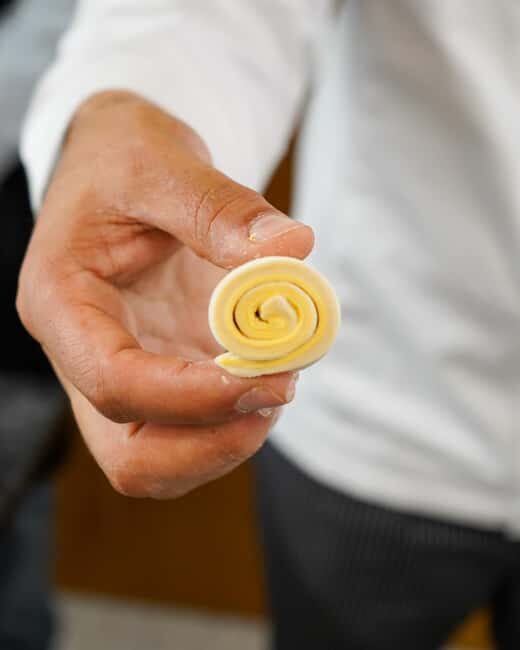
You’ll learn the pastry handling that leads to lamination—those thin layers that make the crust crisp and flaky instead of doughy. In other words, the tart isn’t just a custard cup. It’s pastry engineering.
Also pay attention to the reasons behind the choices. Even if you don’t memorize every step, you’ll start to see what changes when you handle the dough differently—how it affects texture and how it bakes.
The best part for me: you’re not left with vague instructions. You’re coached in the moment, then you practice with your own hands.
Assembling your tarts: the Pastel de Nata technique that people talk about
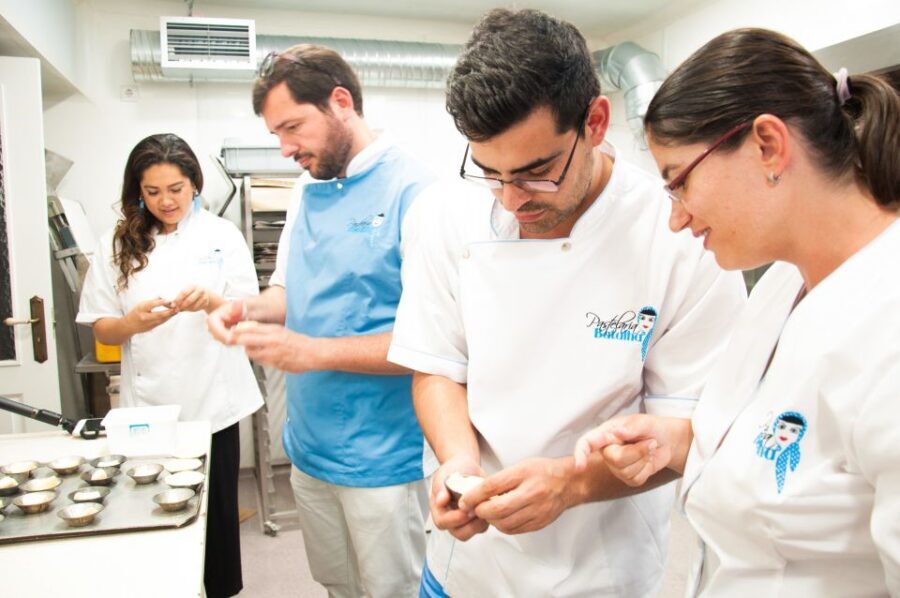
Once the pastry foundation is ready, the class shifts to assembly. This is where you learn the Pastel de Nata-specific way of spreading and forming the dough so it bakes into the classic edge-to-custard balance.
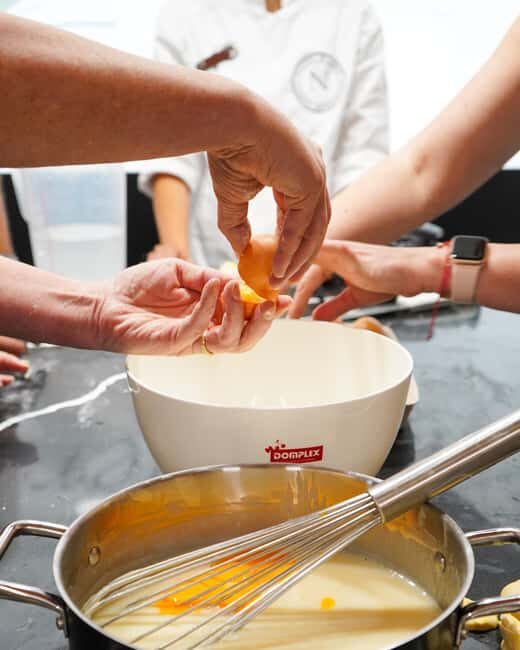
Then comes the custard. You’ll make the custard and fill the tart shells. During the workshop, everyone works together as a team—max 12 participants—so you’re moving as a group but still doing real work at your station.
A key detail: the format is built around participation. Everyone makes at least three tarts by hand. That’s not just “you’ll assemble one.” You get multiple tries, which is important for beginners. Your first one might be slightly imperfect, but you’ll improve by your third tart, because you’ll finally understand the technique.
That’s also why the group size is small. If the class were bigger, you’d spend more time waiting and less time learning. With the small cap, staff can actually correct your technique before you bake.
Professional oven moment: bake, set, and smell like Lisbon
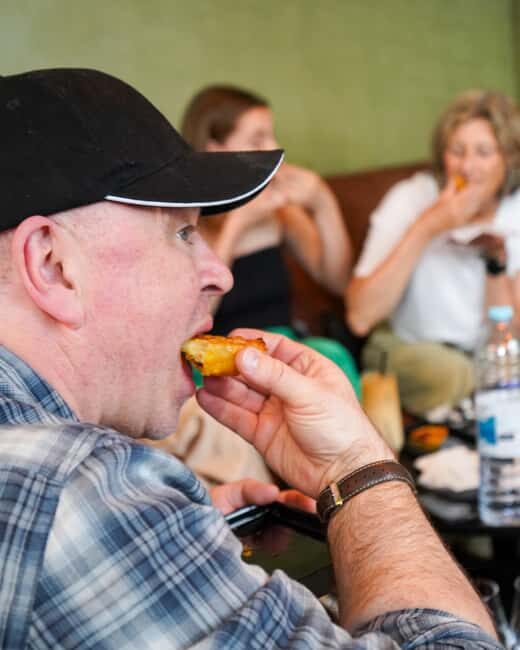
The class includes baking in a professional oven. That’s a big deal. A home oven can be unpredictable, but a bakery-grade oven gives more consistent results, especially for pastry and custard setting.
After you fill and assemble, you bake your tarts. The timing is managed so you can focus on learning rather than micromanaging the oven. When the pastries come out warm, you get that unmistakable Pastel de Nata smell—custard, browned sugar notes, and pastry layers doing their thing.
This part is short but powerful. You’ll feel the result of the earlier steps. If your lamination was right, you’ll see the pastry behavior. If your filling was too rushed, you’ll notice in how the custard sets.
And yes, the tarts are fresh. You’re not eating something that’s been reheated to death. The class is designed so you can taste the payoff right away.



The barista finish: warm tarts with your drink of choice
At the end, you taste the warm Pastéis de Nata with a beverage of choice. Beverages are crafted by baristas and can be hot or cold. Alcohol, milkshakes, and hot chocolate are excluded, but you still get a proper drink pairing instead of just water.
This is a practical time too. Once you’re sitting with your finished tarts, you can compare your results to the group’s and make sense of what you did well. Staff can answer questions, and the vibe stays relaxed instead of turning into a formal lecture.
You’ll also leave with more than pastry crumbs. The workshop includes a certificate of participation, and based on past classes, you can also receive the recipe by email. That’s useful because it helps you recreate your results at home, instead of guessing what you did.
Price and value: why $74 makes sense if you want real skill
At $74 per person for a 2-hour class, this isn’t a budget “activity.” But it also isn’t paying for atmosphere. You’re paying for professional kitchen access, real instruction, ingredients, equipment, and the fact that you bake and take home multiple tarts.
Here’s what’s included:
- 3 Pastéis de Nata (and you’ll make at least 3 by hand)
- A barista-crafted hot or cold beverage (non-alcoholic; exclusions apply)
- Ingredients, all baking equipment
- Aprons and hair nets
- Water
- Certificate of Participation
When I judge value, I look for three things: time, teaching, and hands-on output. This checks all three. You’re in a controlled timeframe (2 hours), taught by a professional pastry chef, and you produce multiple tarts yourself. If your goal is learning a process you can repeat, the price starts to feel fair. If your goal is purely to eat one pastry and stroll away, you might prefer a simpler tasting elsewhere.
Who this masterclass suits (and who should pick something else)
This is a strong pick if you:
- want a hands-on food activity in Lisbon that feels authentic
- have no baking background and want guidance that doesn’t assume experience
- enjoy small-group formats where you actually work, not just watch
- want a memorable way to understand Portuguese custard tarts beyond buying them
It also works for families in a defined way. Adults and kids +8 years old are welcome. If you have younger kids, you’ll want to book a private experience.
One practical note: it’s not suitable for people with mobility impairments. That alone is enough to rule it out for some folks, because bakery layouts and work stations don’t always align with accessibility needs.
Language-wise, the class is taught in English and Portuguese. If you’re more comfortable with another language, you can send a message before booking for a French course, and the same for Spanish. If you show up without English or Portuguese, you might miss parts of the explanation—especially the why behind the technique.
My decision guide: should you book this Pastel de Nata class?
Book it if you want to leave Lisbon with actual baking know-how, not just a photo. The combination of a real bakery kitchen, a pro pastry chef, and the chance to make and bake multiple tarts gives you strong value for the money. It’s also a fun social setup since the group size is small and the vibe stays friendly and relaxed.
Skip it if mobility is an issue, or if you only care about sampling. For people who want to learn the technique—puff pastry, lamination, custard filling, and baking—this class fits perfectly. And if you’re traveling solo, it’s also a solid way to meet people because everyone is working at stations and sharing the same outcome in the end.
FAQ
How long is the Pastel de Nata masterclass in Lisbon?
The class lasts about 2 hours. Starting times vary by availability.
Where do I meet for the masterclass?
Meet at the pastry store Nat’elier, located outside the metro station of Baixa-Chiado on the blue line.
What’s included in the price?
You get 3 Pastéis de Nata, a barista-crafted hot or cold beverage (excluding alcohol, milkshakes, and hot chocolate), ingredients for the baking class, all baking equipment, aprons and hair nets, water, and a certificate of participation.
How many tarts will I make?
Everyone makes at least 3 tarts by hand during the class.
Is it beginner-friendly and are kids allowed?
Yes. No previous cooking experience is required. Adults and kids age 8+ are welcome.
What languages are the classes taught in?
The masterclass is taught in English and Portuguese. French or Spanish instruction may be available if you message before booking.