REVIEW · LISBON
Lisbon: Electric Tuk Tuk Private Tour of the Seven Hills
Book on GetYourGuide →Operated by SPR Tours · Bookable on GetYourGuide
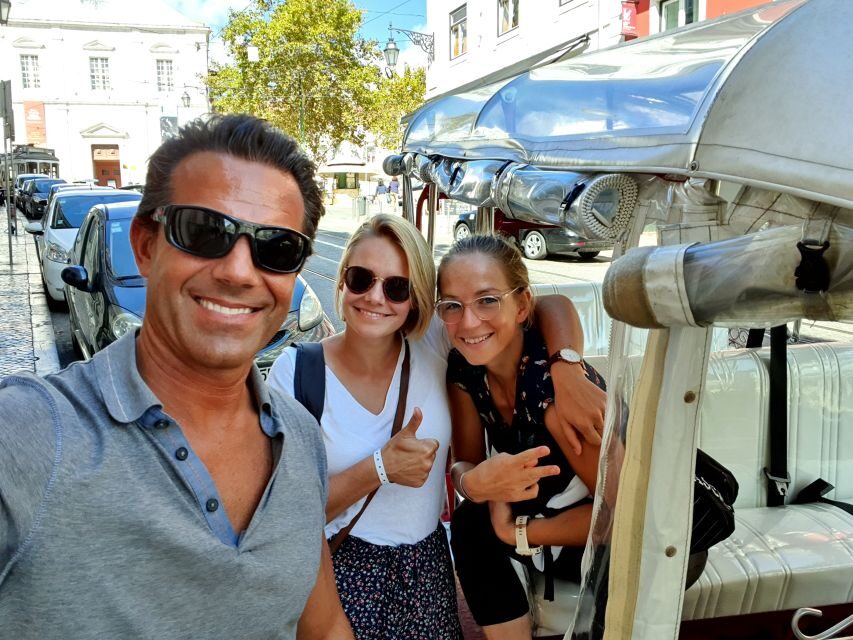
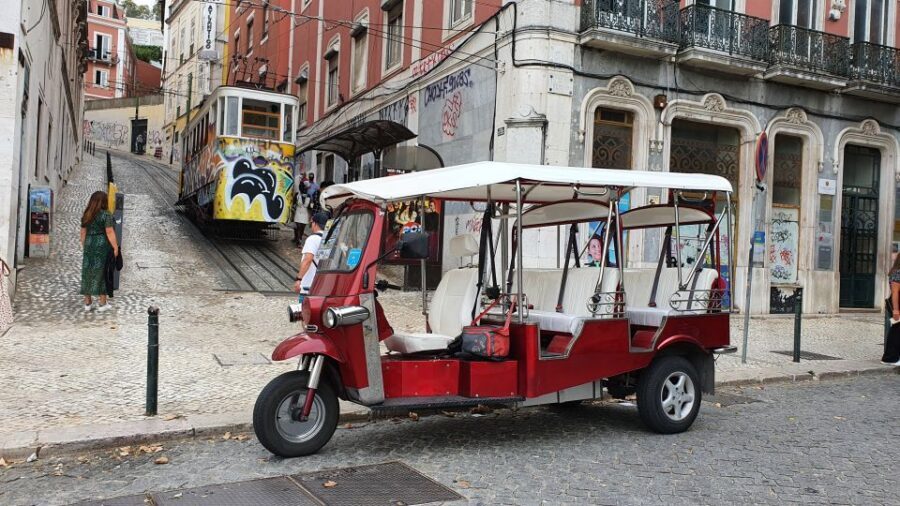
Lisbon climbs fast. An electric tuk tuk makes it fun instead of exhausting. I like the quiet, no-exhaust ride and the way the no-glass sides help you snap photos right out on the route. One thing to consider: you’ll still do short walks at a few stops, and the tour isn’t meant for guests with mobility impairments.
You’ll start in the Restauradores area and move through classic neighborhoods and landmarks tied to the city’s story—miradouros, viewpoints, cathedrals, and the political symbols of modern Portugal. The guides (I’ve heard plenty of praise for names like Jorge, Pedro, Fabio, and Romeo) focus on what you’re seeing and why it matters, not just where to look. If you want a first-pass orientation to Lisbon’s hills with minimal effort, this is a strong match.
In This Review
- Key takeaways
- Why a glass-free electric tuk tuk works in Lisbon’s steep lanes
- The 2.5-hour route: from Restauradores across the Seven Hills viewpoints
- Stop-by-stop: what each area is really good for
- Restauradores and the Gloria lift start
- Rossio Square for the old-city backbone
- Santa Justa Lift and the view-tower energy
- Largo do Carmo and Sao Pedro de Alcântara viewpoints
- Príncipe Real and the political center angles
- Pink Street and Mercado da Ribeira for practical breaks
- Praça Luís de Camões and classic theater blocks
- Commerce Square and the open-sky contrast
- St. Anthony’s Church and Lisbon Cathedral: landmarks with meaning
- Portas do Sol and Santa Luzia: tile-and-view territory
- Graça historic district and São Vicente de Fora
- National Pantheon (Santa Engrácia) and fado-linked stops
- Miradouro da Senhora do Monte: the big finish viewpoint
- Mouraria and the last walk toward home base
- Price and value: is $114 for 2.5 hours worth it?
- How the guide turns viewpoints into real Lisbon
- Who this tour suits best (and who should choose something else)
- Should you book this Lisbon electric tuk tuk Seven Hills tour?
- FAQ
- How long is the Lisbon Electric Tuk Tuk Private Tour of the Seven Hills?
- What’s included in the price?
- Are food and drinks included?
- What languages are the tours offered in?
- Is this tour private?
- Where does the tour start and end?
- What’s the cancellation policy?
- Who is this tour not suitable for?
Key takeaways
- Electric, glass-free tuk tuk helps you photograph streets and viewpoints without glare
- Designed for steep, narrow lanes where parking and access are tricky on foot
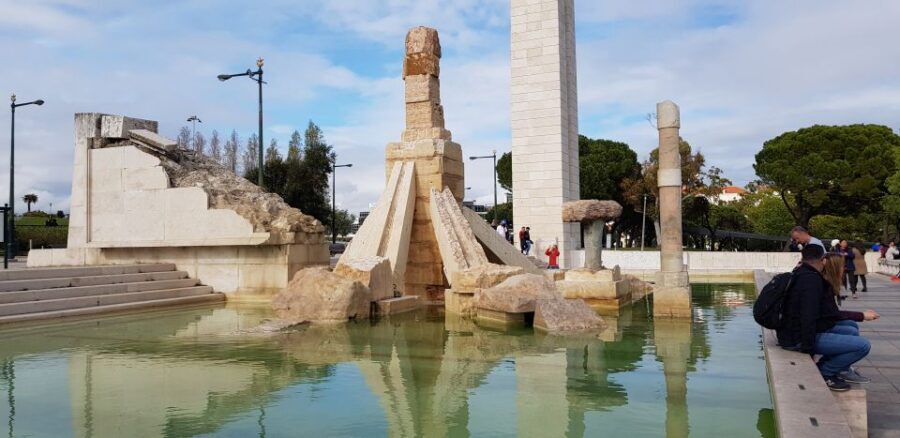
- Stops hit big Lisbon landmarks from Rossio and Santa Justa to Alfama views and Parque Eduardo VII
- Short walk photo breaks keep the pace manageable while still letting you stretch
- Private group feel means your guide can set the rhythm for your time and photos
- No food included, but there’s a built-in chance for a quick regional bite near Mercado da Ribeira
Why a glass-free electric tuk tuk works in Lisbon’s steep lanes
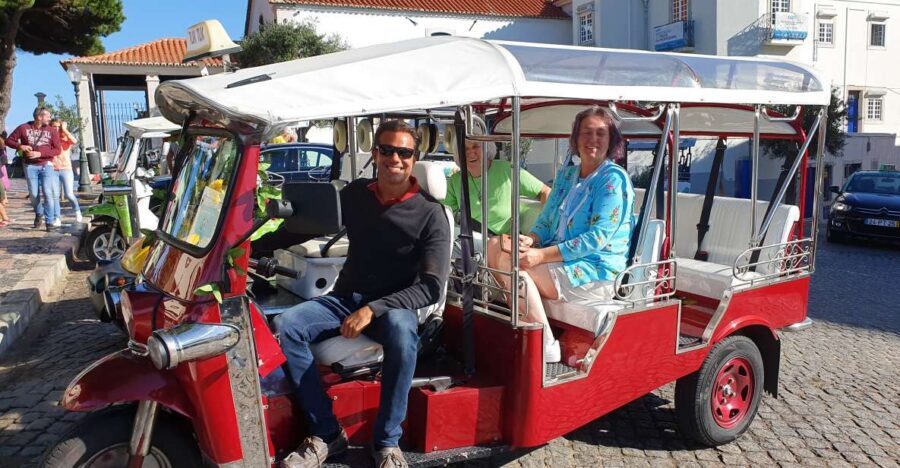
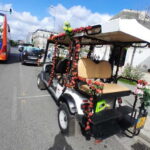
Lisbon is a city of hills, steps, and tight streets. That’s exactly why this tour style makes sense. The electric tuk tuk glides through narrow roads with no noise and no exhaust fumes, so you can actually enjoy the street vibe instead of fighting traffic stress.
The other practical win is the no-glass setup. When the sides are open, it’s easier to frame photos of the places you pass—especially viewpoints where you want the skyline and the tiled facades in the same shot. If you’ve ever dealt with reflections from bus windows or the awkward angle of glass on a standard tour vehicle, you’ll appreciate this right away.
And yes, there’s a logistics trick here: the tuk tuk lets the operator park in places where most vehicles can’t, which means less walking between key viewpoint zones. You still get short photo-stop walks, but the big “stair-climb punishment” is reduced.
Possible catch: because you’re riding, you won’t feel the same “I’m wandering” freedom as on foot. This is still sightseeing with a planned route and stops—not a drop-off-and-roam day.
You can also read our reviews of more private tours in Lisbon

The 2.5-hour route: from Restauradores across the Seven Hills viewpoints
The tour runs about 2.5 hours, and it’s built like a paced “see it all” loop. You’ll meet in Lisbon at Restauradores, near the Obelisk area and the Elevador da Glória. From the start, you’re set up for an easy win: you begin in the city center and quickly move into the hill zones.
The flow generally goes like this:
- Centro-historic core (Rossio, Augusta-area sights)
- Up to major miradouros for city views
- Down and across classic districts tied to Lisbon’s cultural identity
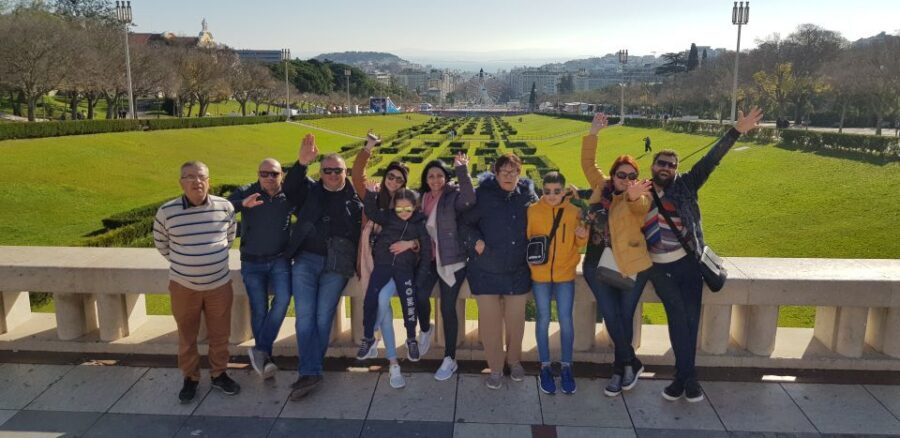
- Back toward where you started, with a final viewpoint stop near Parque Eduardo VII
This kind of route is ideal when you’re arriving in Lisbon and want a sense of geography fast—how the neighborhoods stack up, where the big view points sit, and which areas feel connected.
Stop-by-stop: what each area is really good for
This tour includes a lot of famous stops, but what makes it useful is how they’re sequenced. You’re not just ticking boxes—you’re seeing Lisbon’s “layers” in the order your legs can handle.
Restauradores and the Gloria lift start
You begin around Restauradores, where the Obelisk and Elevador da Glória are nearby. It’s a good kickoff because this is a central area from which Lisbon’s hill logic becomes clearer. You’ll feel the city’s rhythm immediately: staircases and inclines pulling you toward higher viewpoints.
Rossio Square for the old-city backbone
Next up: Rossio Square. This is the kind of place that anchors the story of the city’s growth. In a short time, you’ll get context for how Lisbon developed beyond just “pretty buildings”—more like how the city formed, expanded, and branded itself with recognizable symbols.





Santa Justa Lift and the view-tower energy
You’ll pass Elevador de Santa Justa, a landmark that visually explains why Lisbon is built for movement between elevations. Even if you’re not riding the lift during this stop, seeing it from the street helps you understand the city’s vertical design.
It’s also a natural photo waypoint, because the surrounding streets give you an “architecture plus engineering” moment.
Largo do Carmo and Sao Pedro de Alcântara viewpoints
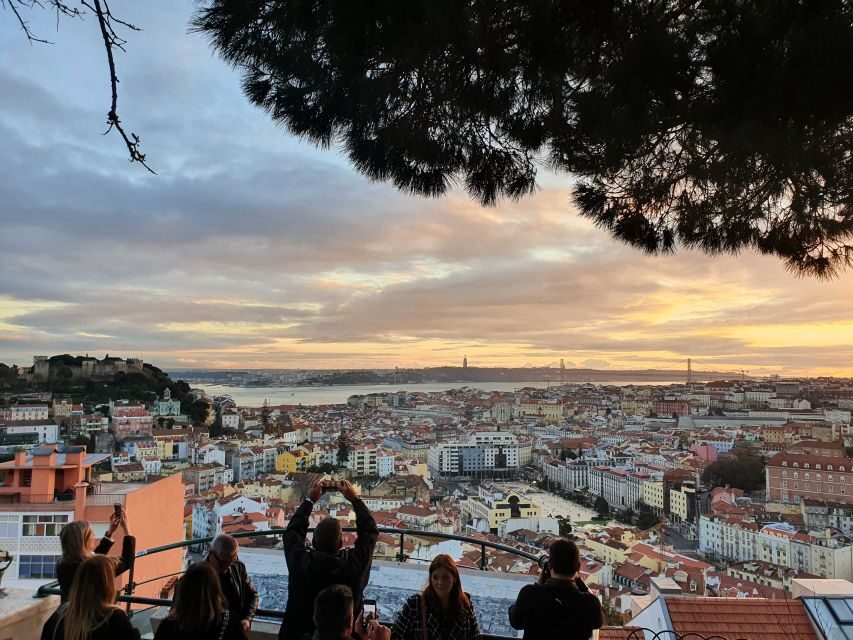
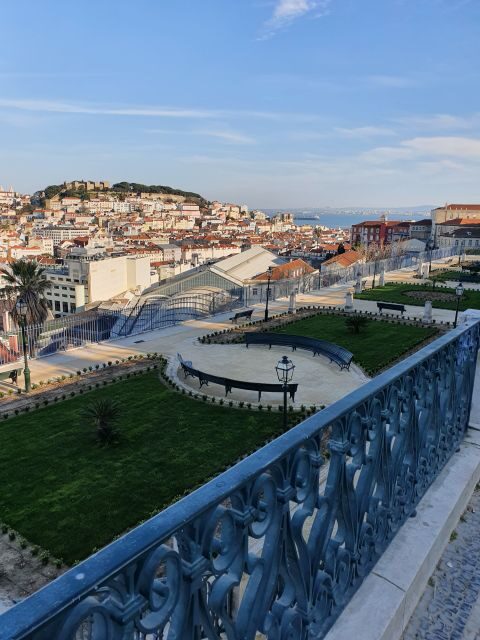
There are a couple of places where a brief walk is worth it. The tour includes Largo do Carmo (with a short walk) and then Miradouro de São Pedro de Alcântara for another photo break.
This matters because miradouros are where Lisbon rewards you most. They’re not just scenic. They’re also orientation points. Once you’ve seen one viewpoint from higher ground, the rest of the route starts to make sense—what’s close, what’s far, and which districts hold what energy.
Príncipe Real and the political center angles
From there you head into Príncipe Real and pass by key civic landmarks, including Assembleia da República (the Portuguese Parliament) with a photo stop.
This stretch adds balance. It’s easy to think of Lisbon as only tiles and viewpoints. But the route keeps pulling you into Lisbon as a living modern city—still guided by old streets, but anchored by institutions and public spaces.
Pink Street and Mercado da Ribeira for practical breaks
You’ll pass by the Pink Street (photo stop) and then stop near Mercado da Ribeira for regional food time (about 10 minutes).
Two notes for value here:
- Food isn’t included, so use this window for something quick and local rather than expecting a full meal.
- The tour duration is tight, so bring your appetite plan. If you want a sit-down experience, this isn’t that. Think snack + reset, then back to sightseeing.
Praça Luís de Camões and classic theater blocks
You’ll see Largo de Camões and then move through theater-adjacent areas like Teatro S. Carlos and Teatro S. Luiz. Even if you’re not attending a show, it’s a good cultural contrast to keep Lisbon feeling real and not museum-only.
Commerce Square and the open-sky contrast
Commerce Square is a major shift in feel. After narrow lanes and steep climbs, this open public space gives your eyes a rest. It’s also a strong backdrop for photos because the scale is different—wider views, more sky, easier framing.
St. Anthony’s Church and Lisbon Cathedral: landmarks with meaning
You’ll do photo stops at Church of Santo António (connected to where Santo António was born and grew up) and then at Lisbon Cathedral.
This is where the guide adds real value: those stops aren’t just famous names. They connect to Lisbon’s identity through religious roots and civic symbolism—exactly what helps a first-time visit feel coherent instead of random.
Portas do Sol and Santa Luzia: tile-and-view territory
Next comes Portas do Sol, followed by Miradouro de Santa Luzia with a short walk.
These spots are worth it because they’re all about the combo: viewpoint + tile details. You’ll be able to see areas like São Vicente (linked with the symbol of Lisbon), and you’ll get a clear sense of why Alfama is so visually distinct.
If you love street texture—ceramics, walls, balconies—this is a moment where the tour’s route makes sense. You’re getting to the places that actually look like the photos.
Graça historic district and São Vicente de Fora
You’ll pass through Graça historic district and visit Monastery of São Vicente de Fora for sightseeing.
Graça and the São Vicente zone tend to feel more lived-in than the most tourist-saturated blocks. That’s part of why a ride helps: it gets you close without turning the day into an all-day leg workout.
National Pantheon (Santa Engrácia) and fado-linked stops
You’ll also stop at National Pantheon of Santa Engrácia with a photo stop, and you’ll pass by areas linked with fado, including the Fado Museum.
Fado can feel abstract if you only read about it. Seeing it in the neighborhood where it belongs helps it click—especially when the guide ties music, history, and the city’s social character together.
Miradouro da Senhora do Monte: the big finish viewpoint
The tour includes Miradouro da Nossa Senhora do Monte, described as the main viewpoint in the city, with a longer photo-walk break (about 15 minutes).
This stop is where the Seven Hills theme becomes real. You’re high enough to see the city’s shape, the way districts layer into each other, and where the hills force the streets to twist.
Mouraria and the last walk toward home base
The route rounds out around Mouraria, another historic district. Then you head back to Restauradores to end the tour where you started.
At this point, you’ll likely feel less lost. Even if you don’t remember every street name, you’ll understand where key zones sit relative to each other.
Price and value: is $114 for 2.5 hours worth it?
At $114 per person for about 2.5 hours, you’re paying for convenience, not just sightseeing.
Here’s where that price can feel like good value:
- Private group means you’re not stuck waiting for large-group pacing.
- The electric tuk tuk is purpose-built for Lisbon’s tight lanes, so you get access and viewpoint efficiency.
- You get multiple major photo areas plus structured context, not a random hopscotch of stops.
Where you should think twice:
- Food and drinks aren’t included. If you’ll end up spending money anyway, factor that into your total day budget.
- You’re on a fixed route, so if you love wandering without structure, you might feel constrained.
My take: if this is your first visit or you’re short on time, it’s a smart spend. If you already know Lisbon well and want deep neighborhood exploration, it may feel less necessary.
How the guide turns viewpoints into real Lisbon

A good Lisbon guide doesn’t just name places. They connect them. On this tour, that’s a big part of why it earns a strong rating.
Across guides like Jorge, Pedro, Fabio, Guilermo, Romeo, and Sarah (all names that have shown up in praise), the common thread is patience and story. People love that the guide can answer questions, keep an upbeat pace, and share small facts that make you look twice at things you’d otherwise pass.
You’ll also likely benefit from the guide’s practical mindset. One theme in the feedback is that guides help with timing and flexibility—like making space for a quick bite near Mercado da Ribeira when the schedule allows. That sort of small adjustment can matter a lot when your day includes photos, viewpoints, and steep steps.
One more practical note: the tour language coverage includes Portuguese, English, and Spanish, so you’ll be able to get the meaning behind the sights rather than only listening to place names.
Who this tour suits best (and who should choose something else)
This is a strong fit for:
- First-time Lisbon visitors who want quick orientation across multiple hills and districts
- People who want viewpoints without a stair-heavy day
- Anyone who enjoys history and symbols tied to specific places (churches, civic centers, and Lisbon’s iconography)
It may not fit if:
- You’re traveling with children under 7 (not suitable)
- You have mobility impairments (not suitable)
- You want a full-day, slow-walk, everything-at-your-own-pace experience
Because there are short walk segments at several photo stops, it’s wise to plan for about 10–15 minutes of walking here and there. Comfortable shoes matter more than you’d think.
Should you book this Lisbon electric tuk tuk Seven Hills tour?
Book it if you want the best of Lisbon with less effort: major viewpoints, iconic neighborhoods, and clear city context in a tight 2.5-hour window. The electric tuk tuk is the key advantage—especially the quiet ride and the no-glass photo angle, plus the ability to park where a normal vehicle can’t.
Skip it if you prefer to roam freely with no schedule pressure, or if you need a more mobility-friendly format. Lisbon can be toured in many ways. This one is for efficiency and seeing the city’s big picture fast.
If you’re deciding between “a quick orientation” and “a deep wander,” this tour leans hard toward the first. And for a first day in Lisbon, that’s often exactly what you want.
FAQ
How long is the Lisbon Electric Tuk Tuk Private Tour of the Seven Hills?
The tour lasts about 2.5 hours.
What’s included in the price?
Hotel pickup and drop-off are included if your hotel is within 1 km of the city center (the Hard Rock Café area). A live tour guide is also included.
Are food and drinks included?
No. Food and drinks aren’t included, though the route includes time near Mercado da Ribeira for regional food.
What languages are the tours offered in?
The live guide provides commentary in Portuguese, English, and Spanish.
Is this tour private?
Yes. It’s set up as a private group.
Where does the tour start and end?
It starts and ends at Restauradores.
What’s the cancellation policy?
You can cancel up to 24 hours in advance for a full refund.
Who is this tour not suitable for?
It isn’t suitable for children under 7, and it isn’t suitable for people with mobility impairments.