REVIEW · LISBON
Lisbon: Best of City Private Walking Tour
Book on GetYourGuide →Operated by Inside Lisbon tours · Bookable on GetYourGuide
Lisbon changes every few blocks. This private walking route strings together the city’s biggest stories in one smooth loop—squares, old neighborhoods, and a couple of well-timed tastes. I love that it’s built around the major landmarks you’ll keep seeing later (Rossio, Restauradores, Carmo, Baixa, Alfama). And I especially like the mix of history and food: you’ll pause for Pastel de Nata and end with a wine stop, so the tour feels practical, not just scenic.
You do move at a walking pace for about 3 hours. If you want lots of inside-monument time, you’ll need to plan that separately, because this experience is focused on streets and viewpoints rather than entry tickets.
Key takeaways
A guided orientation from Rossio Square so you know where you are fast
Restauradores Square and the 1640 Restoration story tied to the Obelisk
Carmo Square and the Carnation Revolution connection near the church ruins
Chiado stroll with pastries and old-school stops that fit the route
Alfama’s Moorish maze + Fado talk with a real sense of place
Food and drink included: pastel de nata, 1 tapa, and wine tasting
In This Review
- The Big Picture: A Private Lisbon Loop You Can Actually Use
- Start at Rossio Square: Where Old and New Lisbon Intersect
- Restauradores Square Obelisk: The 1640 Independence Story in Stone
- Carmo Square and Carmo Church: Revolution Grounded in a Public Place
- Chiado Walking: Cafés, Bookshops, and a Pastel de Nata Break
- Baixa Downtown Rebuilt: Earthquake Planning You Can See
- Alfama’s Moorish Alleyways: Fado Talk in the Right Setting
- Food and Drink: Pastel de Nata, a Tapa, and Wine
- Private Guide Value: Why People Keep Naming Their Guide
- Timing and Practical Logistics That Matter on Foot
- Who Should Book This Tour (and Who Might Want Something Else)
- Should You Book This Lisbon Private Walking Tour?
- FAQ
- Where do I meet the guide?
- How long is the walking tour?
- What does the tour include for food and drinks?
- Are tickets to monuments or attractions included?
- What languages are available for the live guide?
- Is hotel pickup available?
- What are the rules for cancellation and payment?
The Big Picture: A Private Lisbon Loop You Can Actually Use
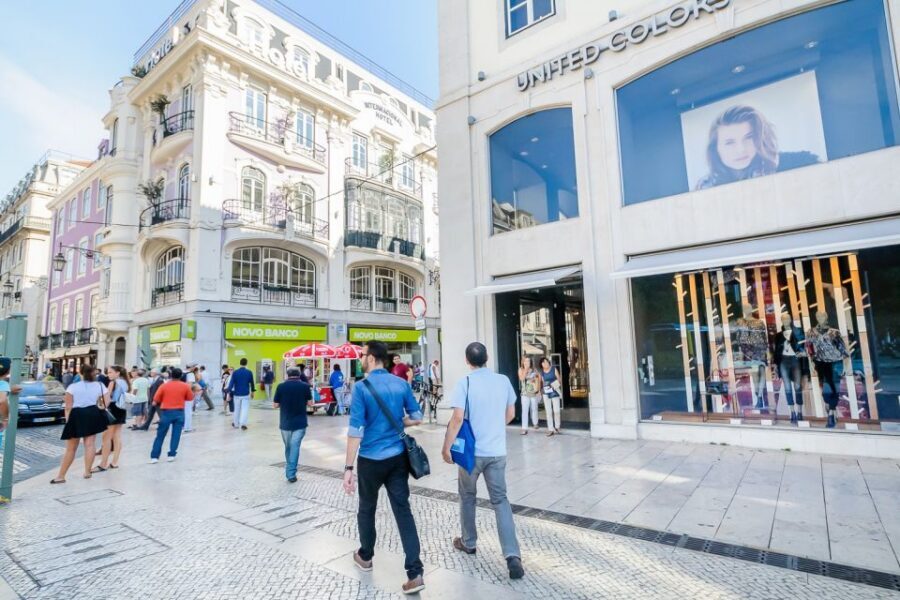
If this is your first full day in Lisbon, you’re doing yourself a favor by starting with a guided walk through the city’s main neighborhoods. You’ll cover a lot of ground—Rossio’s city heart, downtown Baixa, the hilly medieval lanes of Alfama—without needing to stitch together buses, trams, and map-reading. It’s the kind of tour that helps you build mental “zones” in your head. That matters, because Lisbon’s layout can feel confusing at first: you’re always going up, down, and sideways between eras.
This tour is private, so the guide can match the energy level of your group and answer questions on the fly. In the past, guides like João, Filipa, Ines, Beatrice, and Pedro Osario have been singled out for keeping the story clear and the pace right. You get that benefit immediately: you’re not just hearing dates—you’re getting reasons. Why the squares look the way they do. Why Baixa was rebuilt with new rules after the 18th-century earthquake. Why Fado fits Alfama so naturally.
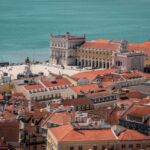
And yes, there are stops that keep the walk from turning into a lecture. You’ll taste a typical Portuguese pastry (Pastel de Nata), enjoy 1 tapa, and have a wine tasting stop before you finish near Praça do Comércio.
Start at Rossio Square: Where Old and New Lisbon Intersect
You meet at Praça Dom Pedro IV (Rossio Square), right in front of the Column of King Pedro IV. It’s a smart meeting point because Rossio is a literal anchor for the city center. From here, Lisbon’s different “styles” become easier to spot as you move: civic monuments, commercial streets, and the stair-stepped shift toward older districts.
Walking off from Rossio also sets your expectations for the rest of the tour. The guide uses the square as a quick orientation: where major streets run, how neighborhoods connect, and where Lisbon’s historic power centers sit. If you’re the kind of traveler who likes to understand a city before you photograph it, this opening works well.
Also, because the group is private, you can ask those practical questions early: what to do later that day, how to pace your sightseeing, and where to find classic Lisbon snacks.
You can also read our reviews of more walking tours in Lisbon



Restauradores Square Obelisk: The 1640 Independence Story in Stone
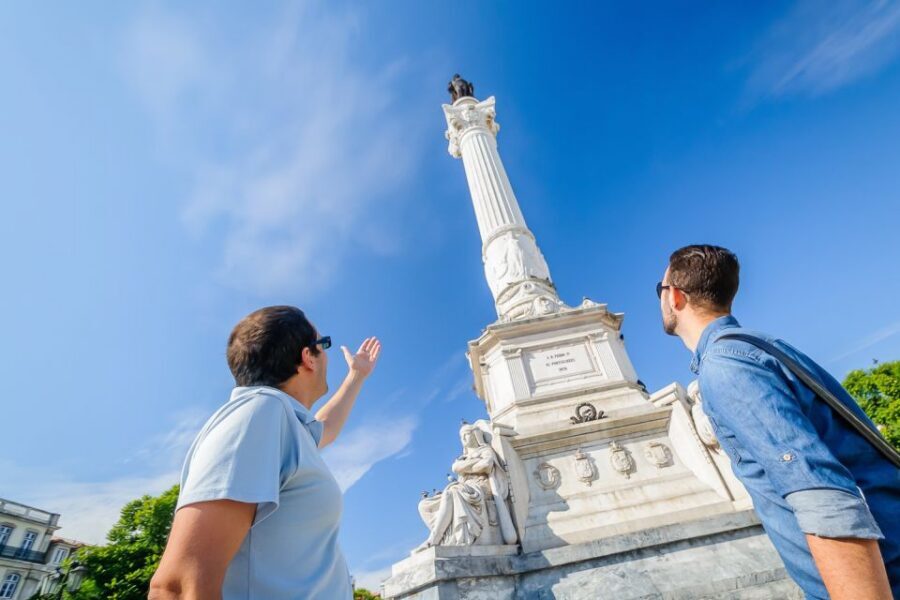
One of the signature moments is the imposing Obelisk in the center of Restauradores Square. This isn’t just a “pretty monument stop.” It’s a clear marker tied to Portugal’s Restoration of independence from Spain in 1640. When you see it with a guide explaining what it commemorates, it turns from a landmark into a timeline tool.
Restauradores is also a useful “transition” square. You’re moving between the city’s modern pulse and its older layers, and it helps to have a guide point out those shifts. Lisbon loves contrasts—broad streets beside tight lanes, formal squares beside working neighborhoods. The Obelisk moment gives your brain a handle on the theme: Lisbon’s identity has been rebuilt and reinvented more than once.
Carmo Square and Carmo Church: Revolution Grounded in a Public Place

Carmo Square is where the tour changes gear from monarchy-era stories to 20th-century political turning points. The guide connects the space to the Carnation Revolution of 1974, when Portugal’s dictatorial regime fell after 48 years. It’s a heavy topic, but it lands well because it’s tied to a real public space you can stand in.
Carmo Church is part of the emotional atmosphere here. You’ll see the church area as a physical reminder of the past—one of those places where you feel the city’s history rather than just hearing it. For me, that’s why this stop is valuable: the tour uses the city itself as the textbook, and Carmo is one of Lisbon’s strongest pages.
There’s also a practical reason to like this moment. After Carmo, you’re walking toward Chiado, and the tone shifts toward everyday Lisbon life—cafés, shops, theaters, and bookstores. You go from national events back to local rhythms without whiplash.
Chiado Walking: Cafés, Bookshops, and a Pastel de Nata Break
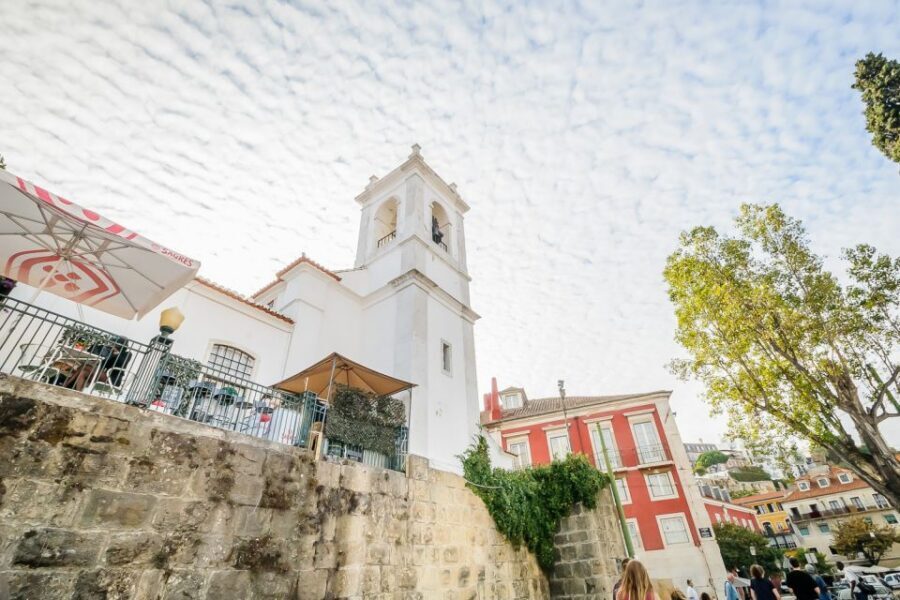
Chiado is the neighborhood of elegant streets and classic Lisbon browsing. As you walk through, you’ll pass the types of places that make this district feel like a living stage set: old cafés, boutiques, theaters, and bookstores. The guide’s job here is to connect the architecture and street layout with how Lisbon culture has moved through the area over time.
The tour also includes a taste of a typical Portuguese pastry—Pastel de Nata. This is more than a snack; it’s a smart pause. It resets your energy before you head toward downtown and then up toward Alfama’s steeper maze of streets. If you’re the kind of traveler who tends to skip food breaks because you don’t want to lose time, this one actually helps you stay comfortable and keep your pace.
One small drawback to know: you’re tasting classic food, not doing a full-on sit-down meal. If you want a long lunch, you’ll have to plan it outside the tour.
Baixa Downtown Rebuilt: Earthquake Planning You Can See
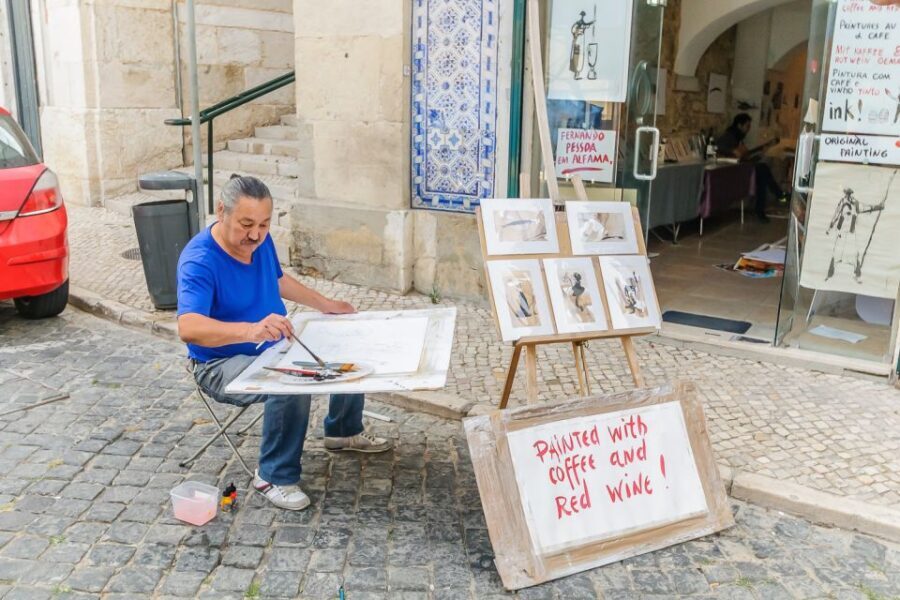
When the tour reaches Baixa—Downtown—it explains the big 18th-century earthquake story and how Lisbon responded. You’ll learn how the city was rebuilt and that the plan followed new rules of urbanism and what the guide describes as anti-systemic architecture, using innovative solutions for its time.
What makes Baixa special on a walking tour is that you can read the city design as you go. Instead of only hearing about destruction and rebuilding, you’re walking through the outcome: straighter street patterns, clear urban planning logic, and a sense that the city was designed to function differently than before.
This is also a good spot to get oriented for later. If you want to self-explore after the guide leaves you, understanding Baixa’s structure makes it easier to decide where to wander next—shopping streets, viewpoint shortcuts, and connections to trams and transit routes.
You can also read our reviews of more city tours in Lisbon




Alfama’s Moorish Alleyways: Fado Talk in the Right Setting
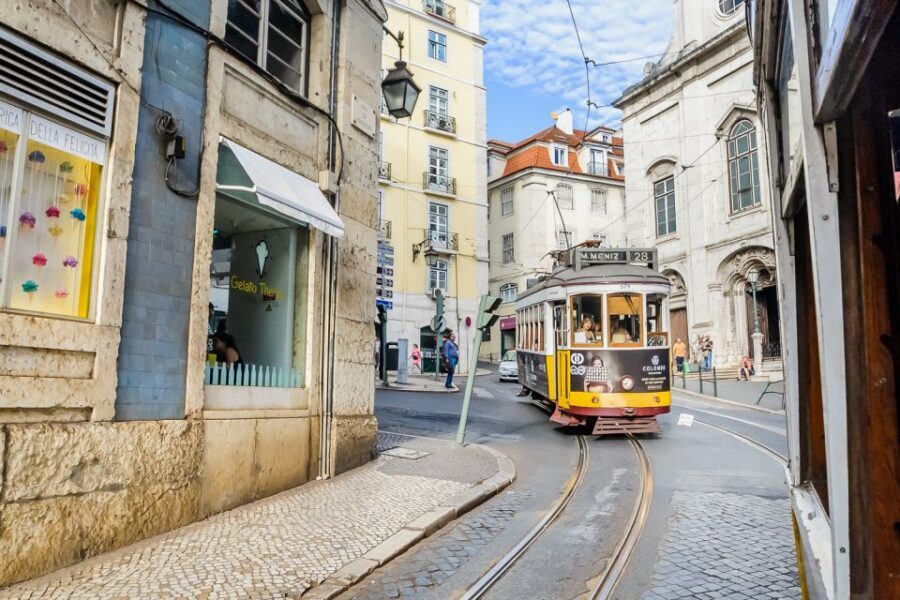
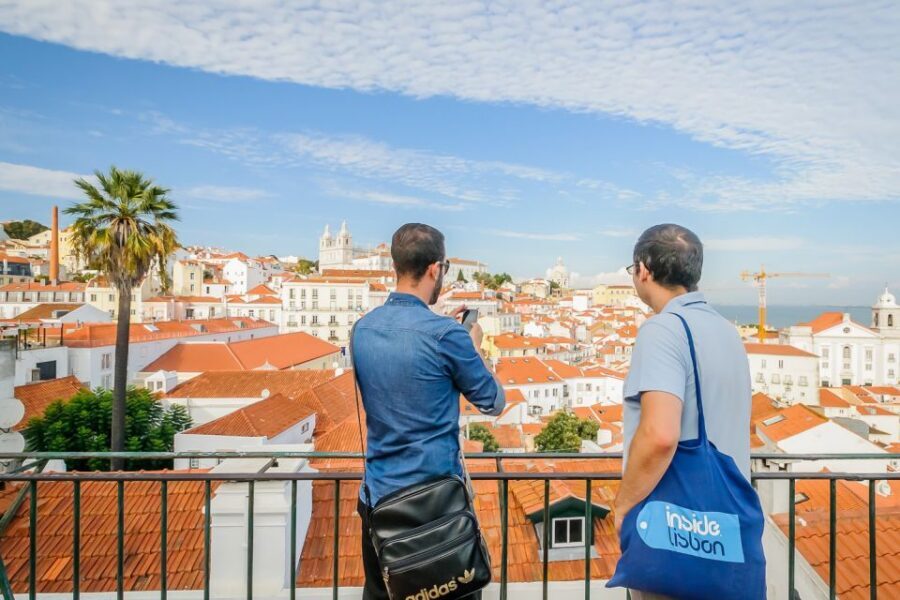
Then comes Alfama, Lisbon’s older, Moorish-influenced maze of small squares and narrow alleyways. The guide frames Alfama as a place where time feels like it has slowed down—close to that 1,000-year feeling you get when streets twist like they were built for defense and community life instead of cars.
The tour also makes space for the sound of Lisbon: you’ll learn about Fado, and the guide points out ways you can spot it in Alfama, including mention of hidden (or less-obvious) Fado restaurants you can look for later. You’re not going inside a show during this walk, but you’re given enough context to make your next choice smarter.
Walking Alfama is where the tour feels most “Lisbon.” The scenery is less postcard-perfect and more human: tiny street corners, sudden viewpoints, and street-level life. It’s also where a comfortable shoe matters more than ever, because the streets are narrow and the slopes can add up.
Food and Drink: Pastel de Nata, a Tapa, and Wine
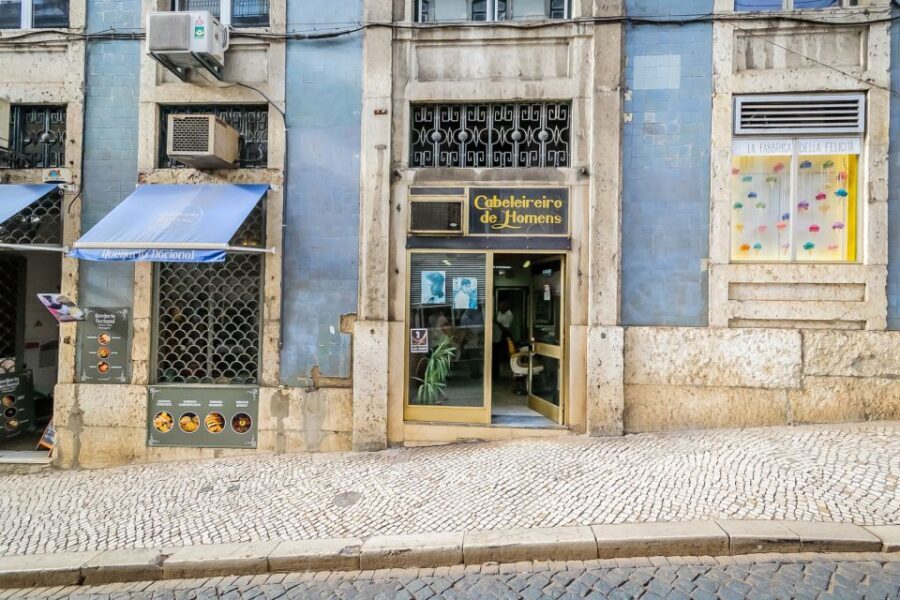
This is one of the better-value parts of the tour. Instead of offering a token snack, it includes:
- Pastel de Nata
- 1 tapa
- Wine tasting
I like this approach because it keeps the experience balanced. You get classic Lisbon food, but you’re not pushed into a long meal that slows the walk. The wine tasting stop is also a nice way to cap the tour with a local adult ritual—something you can carry forward by knowing where to go for another glass later.
If you’re picky about food, you should still feel comfortable that the included items are simple, classic choices rather than experimental meals. And if you’re traveling with someone who insists they need coffee or something sweet mid-walk, this tour solves that problem for you.
Private Guide Value: Why People Keep Naming Their Guide
The ratings are extremely high (4.9 with hundreds of reviews), but the more useful pattern is how often guides are praised for pacing and for making the tour feel tailored. Names like Chon, Filipa, Ines, Beatrice, Raquel, Catarina Fonseca, Carolina, Nina, and Miguel show up as standout guides—often described as enthusiastic, funny, and responsive.
For you, that matters more than “knowledge” buzzwords. What you want from a private guide is:
- clear explanations without drowning you in names
- enough stops to break up walking
- smart advice for what to do next, after you finish
This tour repeatedly lands on that exact sweet spot: you get stories, but you also leave with practical guidance and a sense of direction.
Timing and Practical Logistics That Matter on Foot
The tour runs for 3 hours. That’s long enough to cover Rossio, Restauradores, Carmo/Chiado, Baixa, and Alfama, but it’s short enough that you still have time to plan lunch and a later neighborhood wander.
A couple of practical things to plan for:
- Bring comfortable shoes. Alfama alone can be a leg workout.
- Inside attractions and monument entry are not included, so you’ll mostly be seeing exteriors, squares, and viewpoints.
- Pickup is available for hotels in Lisbon city center, which can reduce pre-walk stress.
- If you’re arriving as a shore excursion, the operator notes flexibility: lunch time can be excluded and the walk shortened if you contact them after booking.
Who Should Book This Tour (and Who Might Want Something Else)
You’ll love this private walking tour if you want a first-day Lisbon orientation with strong city context. It’s also a great match for travelers who like history, architecture, and street-level atmosphere but don’t want to build an itinerary from scratch.
It may not be the best fit if your top priority is entering museums and monuments. Since entrances aren’t included, you’ll need separate ticketed plans for any indoor stops you care about.
Also, if your group struggles with hills and longer walks, be ready: this route includes Alfama’s narrow streets and slopes.
Should You Book This Lisbon Private Walking Tour?
For most first-time visitors, I think this is a smart buy. At $102 per person for a private 3-hour walk, you’re paying for three things you can’t easily replicate on your own: a guided story through Lisbon’s major squares and neighborhoods, included tastes (Pastel de Nata, tapa, wine), and a human guide who can point you toward what’s worth your next hour.
If you want a classic, confidence-building “see the city, understand the city, eat like a local” introduction, book it. If you already have deep plans for museum hours and long seated meals, you might pair it with a separate ticketed day and keep this walk as your orientation-only session. Either way, you’ll finish with a better sense of how Lisbon fits together—and you’ll know where to go next without feeling lost.
FAQ
Where do I meet the guide?
You meet at Praça Dom Pedro IV (Rossio Square), in front of the Column of King Pedro IV.
How long is the walking tour?
The tour lasts 3 hours.
What does the tour include for food and drinks?
It includes Pastel de Nata (custard tart), 1 tapa, and a wine tasting.
Are tickets to monuments or attractions included?
No. Guided tours inside monuments and entrance tickets are not included.
What languages are available for the live guide?
The guide is available in English, Spanish, and Portuguese.
Is hotel pickup available?
Pickup is available for hotels located in Lisbon city center.
What are the rules for cancellation and payment?
Free cancellation is available up to 24 hours in advance for a full refund, and you can reserve now and pay later.