REVIEW · LISBON
Lisbon: Private Tour by Tuk Tuk
Book on GetYourGuide →Operated by EliricaTour · Bookable on GetYourGuide
Lisbon by tuk-tuk feels like a shortcut with style. You’ll get private local storytelling plus multiple miradouros (viewpoints) without spending the whole day inching uphill on foot. I really like that the route covers both big landmarks and lesser-seen corners, so the city stays coherent instead of just looking pretty. One thing to consider: this isn’t a stroller-friendly or wheelchair-friendly ride, and it’s not a great fit if you have back issues.
Two stops in particular make this tour feel worth your time: the sweeping viewpoint sequence around Alfama and the mix of history-and-views at places like Convento do Carmo exterior and Miradouro das Portas do Sol. I also like the small touches included, like a bottle of water, and the fact that hotel pickup/drop-off can reduce stress when your day is already full. The potential drawback is practical: you’ll be on and off the vehicle at several viewpoints, and those hills can still feel steep even with tuk-tuk transport.
In This Review
- Key moments you’ll actually remember
- Why Lisbon shines from a private tuk-tuk route
- Starting at Restauradores Square and the Rossio-to-Sintra thread
- Convento do Carmo exterior and the Santa Justa elevator context
- Viewpoint trio: Portas do Sol, São Pedro de Alcântara, and the “other side” angle
- Miradouro das Portas do Sol
- Miradouro São Pedro de Alcântara and the Castle of São Jorge framing
- Miradouro da Senhora do Monte
- Parks and city bearings: Eduardo VII and Marquês de Pombal
- Alfama on a human scale: fado roots, 1755 earthquake scars, and June festivals
- Baixa and the long-stretch Lisbon core
- Praca do Comercio: your final big photo moment by the river
- So how long is this really, and what’s the pacing like?
- Languages, private format, and why Diego (and guides like him) matter
- Price and value: what $106 buys you in Lisbon’s real conditions
- Who this Lisbon tuk-tuk tour is for (and who should skip it)
- Should you book this Lisbon Private Tour by Tuk Tuk?
- FAQ
- How long is the Lisbon private tuk-tuk tour?
- Where does the tour start?
- Does the tour include hotel pickup and drop-off?
- Is this a private tour or a group tour?
- What language options are available for the guide?
- Which major Lisbon spots does the tour include?
- Is Santa Justa included?
- What’s included in the price besides the tuk-tuk transport?
- Is the tour wheelchair accessible?
- Is it refundable if plans change?
Key moments you’ll actually remember
- Restauradores Square to Rossio Station area: Lisbon’s major axes, with the Sintra connection in view.
- Carmo exterior + Santa Justa reference: quick architecture context without a museum detour.
- Three viewpoint stops: Portas do Sol, São Pedro de Alcântara, and Senhora do Monte for different angles of the same neighborhoods.
- Alfama with earthquake-era context: you’ll connect Lisbon’s layout to the 1755 earthquake story and everyday life.
- Praca do Comercio photo moment: King José I’s statue and the long riverfront square vibe.
- Hotel pickup/drop-off available: makes a 2–7 hour tour much easier to plug into your itinerary.
Why Lisbon shines from a private tuk-tuk route
Lisbon can be a lot. Not because it’s hard to enjoy, but because it’s built on hills. A private tuk-tuk tour is a smart way to see more in less time, and you still get real conversation with a local guide instead of just following a map.
This is also a value play. At $106 per person, you’re not just paying for transport. You’re paying for context: why places are where they are, what changed after the 1755 earthquake, and how neighborhoods grew. That’s what turns “nice views” into “I get it now.”
The tuk-tuk format is also gentler for your legs. You’ll still walk a bit at viewpoints and squares, but you avoid turning the day into a steep-stair endurance test.
You can also read our reviews of more private tours in Lisbon



Starting at Restauradores Square and the Rossio-to-Sintra thread
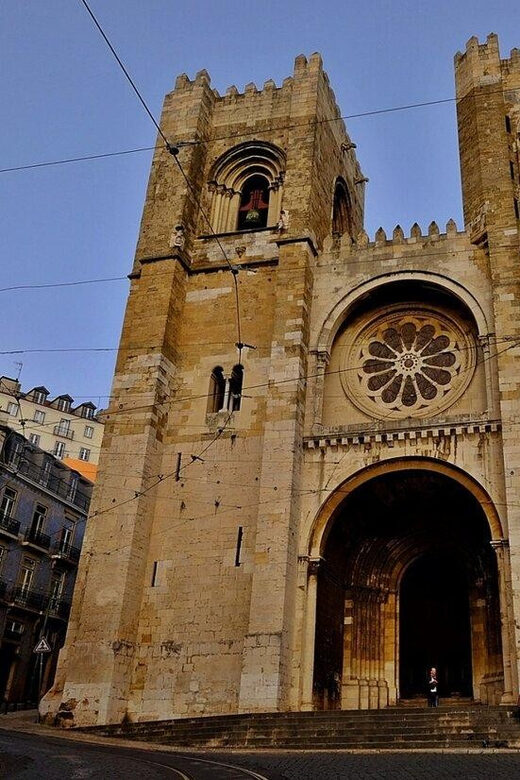
You begin at Lisbon’s Restauradores Square, then roll through central Lisbon while the guide sets the bigger map in your head. One key pass is by Rossio Station, the connection point to the region of Sintra. Even without going to Sintra, you’ll understand why Lisbon’s rail lines matter and how that broader day-trip culture connects back to the city center.
This opening matters because it gives you orientation fast. Once you see the city’s structure early, later viewpoints feel like they’re answering questions you didn’t know you had.
Convento do Carmo exterior and the Santa Justa elevator context
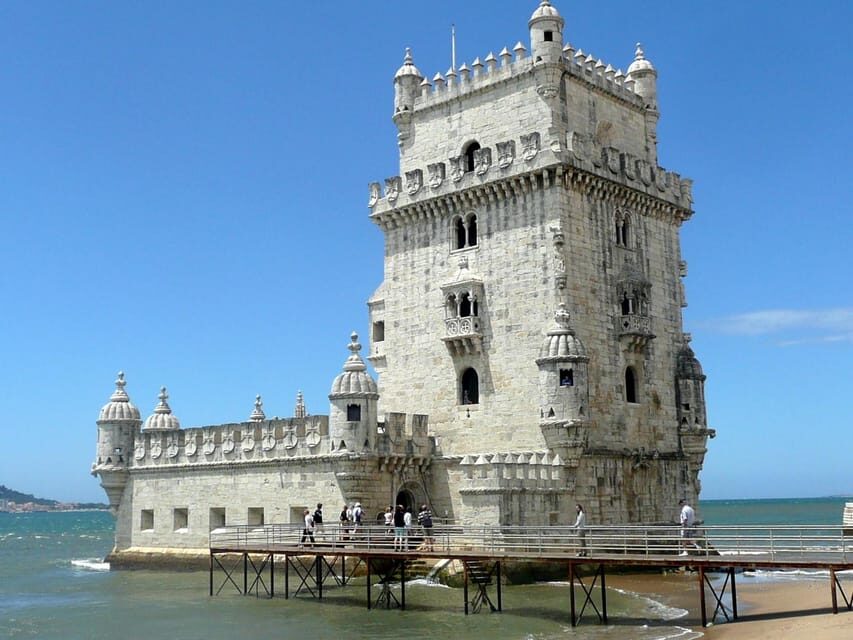
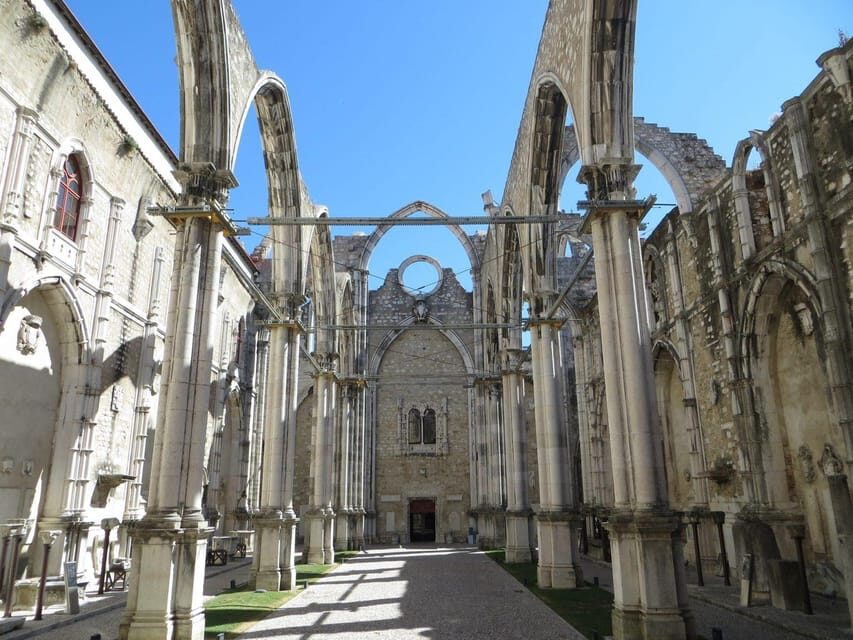
Next comes a short exterior stop at Convento do Carmo. You’re not going into every corner here, but you do get architectural and historical framing for what you’re seeing from the street. That kind of “look closer” guidance makes Lisbon’s landmark streets feel less random.
Right around this area, you’ll also visit the popular Santa Justa elevator stop (at least by sight, since this tour mentions visiting it as part of the sequence). Even if you don’t ride it, it helps to understand what it represents in Lisbon: a vertical shortcut for a city that keeps pushing you uphill.
The drawback to note: if you’re the type who wants a deep, slow visit inside major monuments, this will feel like a quick hit. The tour’s strength is moving between viewpoints and neighborhoods efficiently.
Viewpoint trio: Portas do Sol, São Pedro de Alcântara, and the “other side” angle
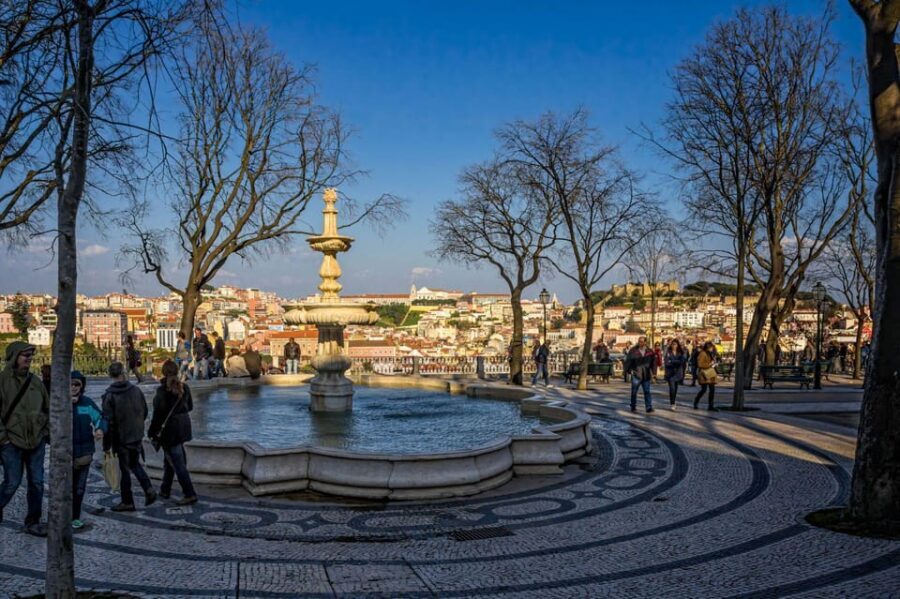
Lisbon viewpoint hopping is where this tour earns its keep.
Miradouro das Portas do Sol
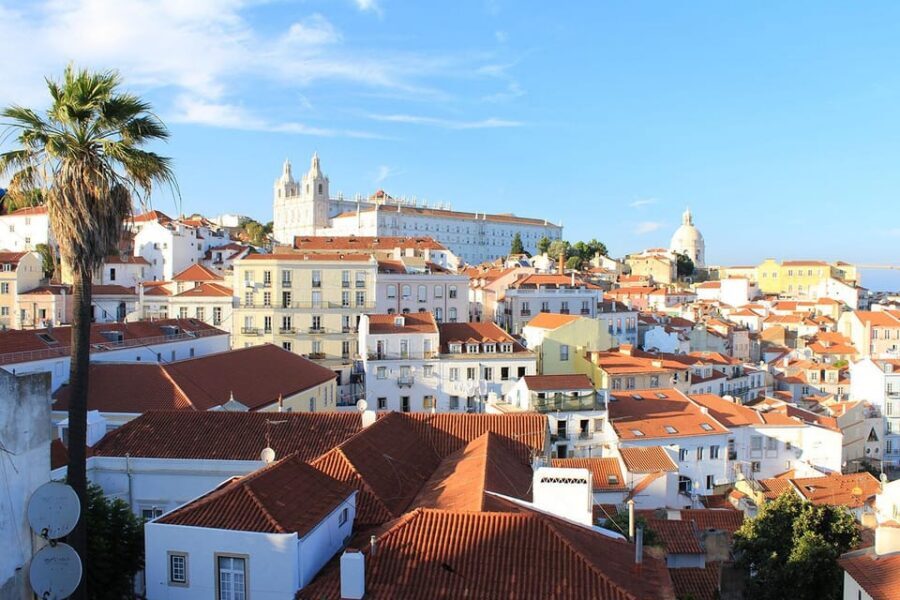
The tour then heads to Miradouro das Portas do Sol. This is one of those places where Lisbon looks like Lisbon—tight rooftops, winding streets, and the Alfama hillside spread out in front of you. The guide’s narration helps you connect what you see to the neighborhood’s character, not just the postcard angle.
Photo tip: plan to take pictures, then spend a few minutes just looking with your eyes first. The city keeps changing as you shift your stance, and you’ll notice details you missed on the first click.





Miradouro São Pedro de Alcântara and the Castle of São Jorge framing
From there, you move to Miradouro São Pedro de Alcântara, with Castle of São Jorge nearby. This stop is especially good because it positions you in relation to one of Lisbon’s most famous historic landmarks. You’re essentially learning how the fortress sits over the old city.
The guide also sets up a clever perspective idea: you’ll later visit Our Lady of the Mount, and you’ll see the opposite angle of the same overall region. That “same place, different viewpoint” rhythm keeps the day from feeling repetitive.
Miradouro da Senhora do Monte
Finally, you reach Miradouro da Senhora do Monte, one of the highest viewpoints in the city. Expect a more complete panorama. This stop tends to make the whole Lisbon picture click—where the downtown grid meets the hill neighborhoods, and how Alfama’s layers fit into the broader city.
Consideration: higher viewpoints mean wind and sometimes cooler air. Bring a layer you can stash quickly so your day doesn’t get cut short by comfort issues.
Parks and city bearings: Eduardo VII and Marquês de Pombal
Between the miradouros, you’ll pass through Parque Eduardo VII, a well-known park area, and also see Marquês de Pombal roundabout, a major roundabout in Lisbon. These parts of the route help you switch from “old city view” mode to “big-picture Lisbon” mode.
Why it matters: after several viewpoints, it’s easy to think Lisbon is only hills and houses. The park and main traffic circle give you a sense of how the city also functions like a modern capital—wide avenues, traffic flow, and urban planning.
Also, parks are a nice reset. Even with a private tour, a short pause like this can make the rest of the day feel smoother.
Alfama on a human scale: fado roots, 1755 earthquake scars, and June festivals
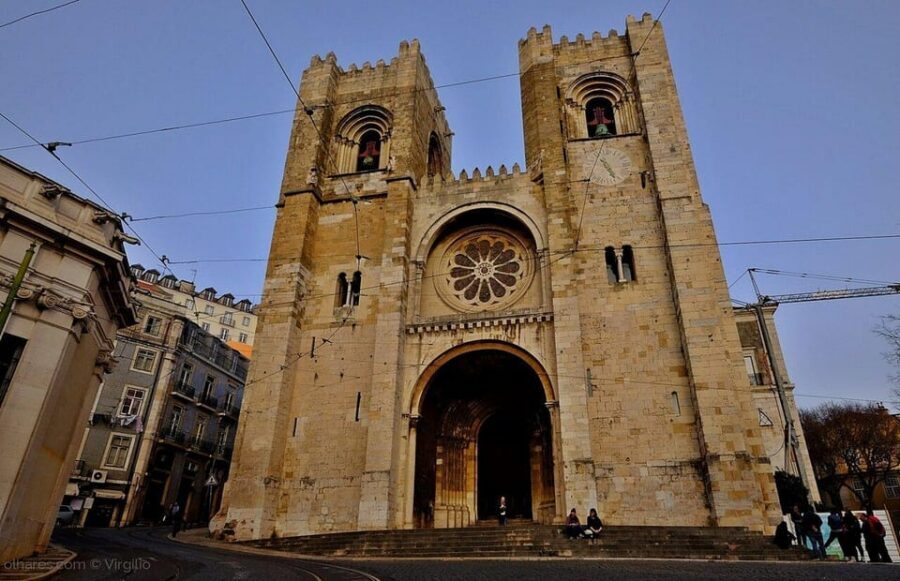
Then you move into Alfama, one of Lisbon’s oldest neighborhoods. This is the heart of the city’s “slow” Lisbon feeling: narrow streets, layered buildings, and a sense that the past is still part of the daily route.
The guide’s narrative connects three things that often get mentioned separately, but make more sense together:
- Fado, the traditional music associated with Lisbon’s culture
- the survival and rebuilding after the 1755 earthquake
- the neighborhood life around Santo António, celebrated in June
That earthquake context is practical, not academic. You start to understand why certain areas look the way they do, and why Lisbon rebuilt with a different mindset afterward. You also see the emotional side of Lisbon history—the part people still live with.
Photo and pacing tip: Alfama is photogenic, but it’s also easy to walk too slowly and run late. If you’re on the shorter time option, focus on viewpoints and main streets first, then let the guide point you to the quieter corners.
Baixa and the long-stretch Lisbon core

After Alfama, you’ll head to Baixa de Lisboa. This is where Lisbon’s geometry comes through: straighter streets, classic city-center architecture, and a sense of “organized rebuilding.” The tour gives you guided time here, which helps you interpret what you might otherwise treat as just another downtown block.
This stop is also useful for your travel brain. Once you’ve spent time with hills and viewpoints, Baixa acts like your visual reset—clean lines, open space, and an easier route for getting your bearings before the last big square.
Praca do Comercio: your final big photo moment by the river
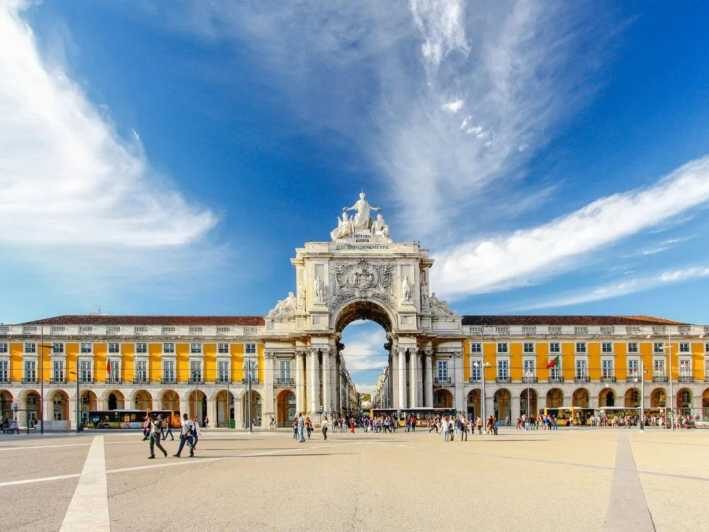
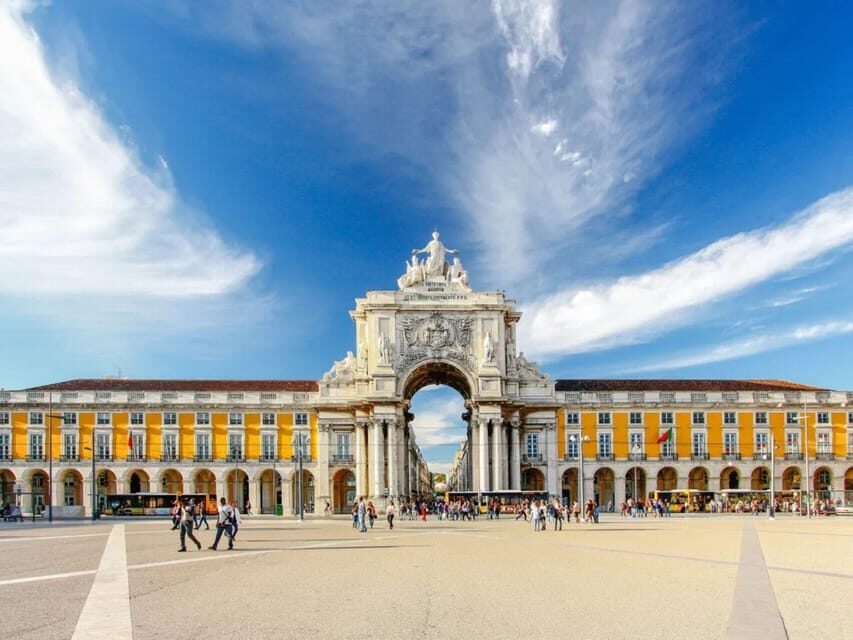
The tour finishes with Praca do Comercio, Lisbon’s important, long riverfront square. You’ll get a short guided look here—about 10 minutes—so it’s not a long ceremony, but it’s timed for impact.
The key detail is the statue of King José I, described as symbolically crushing snakes in his path. Whether you read it as propaganda, mythology, or a post-disaster message, it’s a memorable detail that makes the square more than just a pretty open space.
Practical note: this square area can be breezy. If you’re going in shoulder season, it’s one of the places where you’ll feel it.
So how long is this really, and what’s the pacing like?
The experience can run from 2 to 7 hours, depending on your selected timing and how much time you want in the stops. The scheduled visit times for major points add up to roughly 5 to 6 hours when you do the full set of sightseeing blocks. That’s a sweet spot for a first-time Lisbon day: enough time to see major sights, but not so long that your attention collapses.
Pacing-wise, the route is built around short guided segments and viewpoint time, which is smart. You’re getting story while you move, then you stop long enough to absorb and photograph.
Languages, private format, and why Diego (and guides like him) matter
This is a private group tour, and the live guide offers English, Spanish, Portuguese, or Italian. That matters more than it sounds. In Lisbon, details like earthquake-era rebuilding, neighborhood character, and architectural clues can get lost if the guide is explaining everything in vague terms.
One guide associated with this experience, Diego, has been praised for delivering a strong, engaging experience. That lines up with what you want: clear explanations that connect the city’s look to its story without turning the day into a lecture.
Price and value: what $106 buys you in Lisbon’s real conditions
$106 per person isn’t cheap, but in Lisbon it’s not random pricing either. Here’s what you’re paying for:
- Private transportation by tuk-tuk (so you’re not stuck with slow group logistics)
- a guide with description and history of each place
- hotel pickup and drop-off (optional, but included in the overall offer)
- GST and insurance coverage
- a bottle of water
For value, I think the real question is this: do you want fewer stops with more meaning, or more stops with less meaning? If you want the city to make sense fast, the cost starts to feel fair. If you just want photos and don’t care about context, you could do it cheaper on your own. But you’d likely spend more time asking questions, backtracking, and fighting the hills.
Who this Lisbon tuk-tuk tour is for (and who should skip it)
This tour is a great fit if you:
- want a guided Lisbon day with multiple viewpoints
- prefer private pacing over joining a larger group
- want an easier way to cover hills, especially if you don’t want the day to become mostly walking
It may not be your match if you have any of these constraints:
- not suitable for pregnant women
- not suitable for people with back problems
- not suitable for wheelchair users
Also, if you’re the type who hates vehicle noise or frequent stops, note that this route is designed around rolling between highlights.
Should you book this Lisbon Private Tour by Tuk Tuk?
Book it if you want a one-day orientation to Lisbon that mixes panoramas, neighborhood character, and history in a way that keeps your energy intact. The sequence makes sense: start central, connect to the rail-to-Sintra story, hit key landmarks, then build into viewpoint after viewpoint, ending with the big riverfront square.
Skip it if you already know Lisbon well and mostly want free time to wander. Also skip if mobility or comfort issues would make the repeated transfers and hill context hard for you.
If you’re visiting for the first time and want the city to feel connected instead of chaotic, this is the kind of tour that helps you get your bearings fast.
FAQ
How long is the Lisbon private tuk-tuk tour?
The tour duration is listed as 2 to 7 hours, depending on the selected option and starting times available.
Where does the tour start?
It starts in Lisbon, with pickup and meeting at your chosen pickup location in Lisbon (hotel pickup/drop-off is available).
Does the tour include hotel pickup and drop-off?
Yes. Hotel pick-up and drop-off are optional and offered as part of the experience.
Is this a private tour or a group tour?
It’s a private group tour.
What language options are available for the guide?
The live guide is available in English, Spanish, Portuguese, and Italian.
Which major Lisbon spots does the tour include?
The tour includes viewpoints such as Miradouro das Portas do Sol, Miradouro São Pedro de Alcântara, and Miradouro da Senhora do Monte, plus stops around Eduardo VII Park, Alfama, Baixa de Lisboa, and Praca do Comercio.
Is Santa Justa included?
You’ll visit the popular Santa Justa elevator area as part of the sequence near the Convento do Carmo exterior.
What’s included in the price besides the tuk-tuk transport?
Included items are GST, private transportation, insurance coverage, historical descriptions by the local guide, and a bottle of water.
Is the tour wheelchair accessible?
No. It’s listed as not suitable for wheelchair users.
Is it refundable if plans change?
There is free cancellation up to 24 hours in advance for a full refund.