REVIEW · SESIMBRA
Arrábida: Setubal, Sesimbra Coasteering & Speedboat Tour
Book on GetYourGuide →Operated by WIND · Bookable on GetYourGuide
Coasteering in Portugal is a rush. This Arrábida Natural Park tour combines a speedboat ride with climbing, swimming, and jumps off the Sesimbra–Setúbal coast, plus time to explore secret-looking coves and caves. You’ll get the best part fast: you travel by boat to the action, then move along the intertidal zone at water level.
I love that it’s not just jumps for the adrenaline crowd. The equipment setup is full-on (neoprene wetsuit, helmet, life jacket) and you’ll use a range of skills, not one trick. I also like that the guides explain the area with wildlife and geology context, including time with local biologists, so the scenery comes with a reason to care.
One consideration: this is physical and water-based, so it’s not for everyone. If you’re dealing with back issues, heart problems, mobility limits, or fear of heights, you may feel out of place even with options and coaching.
In This Review
- Key takeaways before you go
- Arrábida Natural Park: Why Sesimbra–Setúbal Coasteering Feels Like Real Portugal
- Meeting at Creiro’s Beach (and Getting Kitted Up Quickly)
- Speedboat Ride: The Fast Start to the Best Coasteering Stretches
- The Coasteering Route: Climbing, Swimming, Caves, and Repeated Jumps
- Portinho da Arrábida and Ribeiro do Cavalo: Where the Day Starts to Feel Mysterious
- Wildlife and Geology Talk With Local Biologists (So You Look Longer)
- Safety System That Doesn’t Rely on Guesswork
- What Gear You Bring vs. What They Provide
- Pace, Duration, and Group Energy in a 4-Hour Adventure
- Price and Value: Why $70 Can Be Worth It Here
- Who Should Book This (and Who Should Skip It)
- Should You Book Arrábida Coasteering and Speedboat?
- FAQ
- How long is the Arrábida: Setúbal, Sesimbra Coasteering & Speedboat Tour?
- What does the tour cost?
- Where is the meeting point?
- Is equipment included?
- What should I bring?
- Are open-toed shoes allowed?
- What languages do the instructors speak?
- What if the weather is bad?
- Is there a cancellation window?
Key takeaways before you go
- Speedboat access gets you to the best coastline stretches quickly between Sesimbra and Setúbal
- 2–8 meter jumps happen throughout the route, so expect repeated chances to go bigger or stay cautious
- Caves and secret beaches like Portinho da Arrábida and Ribeiro do Cavalo keep the day from feeling repetitive
- Local biologists and geology talk add meaning to the scenery, not just a safety lecture
- NCC-style safety practices use trained guides, rescue certifications, and flotation gear without relying on steel cables
Arrábida Natural Park: Why Sesimbra–Setúbal Coasteering Feels Like Real Portugal
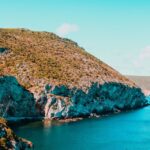
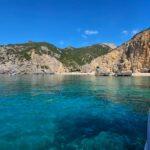
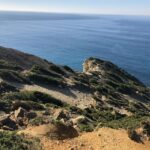
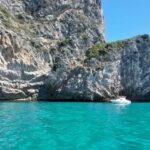
Arrábida Natural Park sits right where the Atlantic energy meets limestone cliffs. That mix creates coastlines that look dramatic from the shore and even better when you’re inside it, moving along the waterline.
What makes this tour click is the pace. You’re not hiking for hours just to reach one viewpoint. You’re in the intertidal coastal zone, climbing and swimming, then leaving by speedboat to the next patch of coast.
You also get a sense of place that goes beyond postcard views. The tour includes learning about the regional fauna, flora, and geology, with support from local biologists, which helps you connect what you see to what’s happening beneath the surface.
You can also read our reviews of more tours and experiences in Sesimbra.

Meeting at Creiro’s Beach (and Getting Kitted Up Quickly)
Your day starts at Creiro’s Beach. The directions are simple: when you reach Creiro’s Beach, turn right and look for the group after Anicha Bar.
From there, the flow is set up for momentum. You meet your instructor/guide, get a safety briefing, then get fitted with the gear before you step into the water.
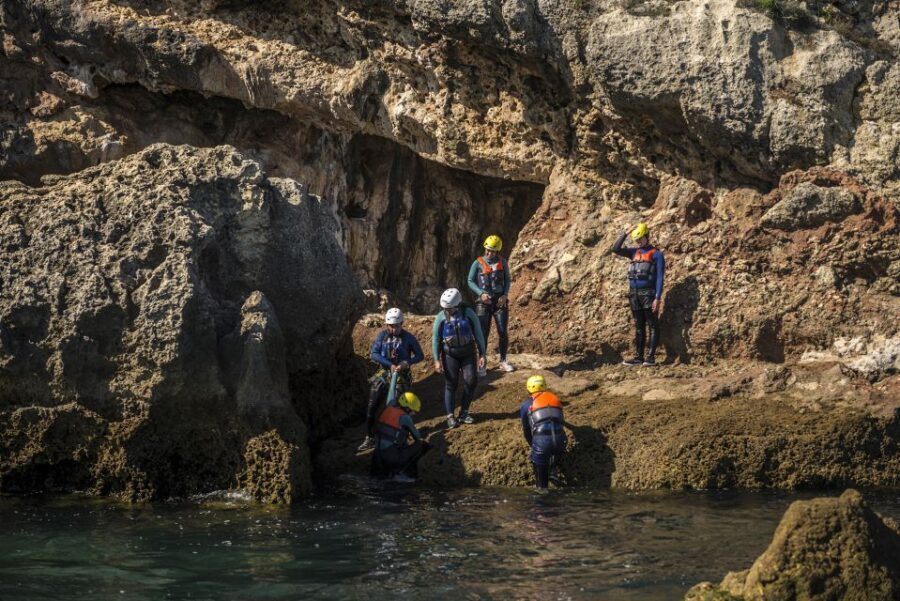
The included kit matters because it changes how you move. A neoprene isothermal wetsuit plus helmet and life jacket means you can focus on technique, not on freezing or awkward buoyancy. You’ll also have buoyancy aids and individual protection gear during the progression along the coast.
Speedboat Ride: The Fast Start to the Best Coasteering Stretches
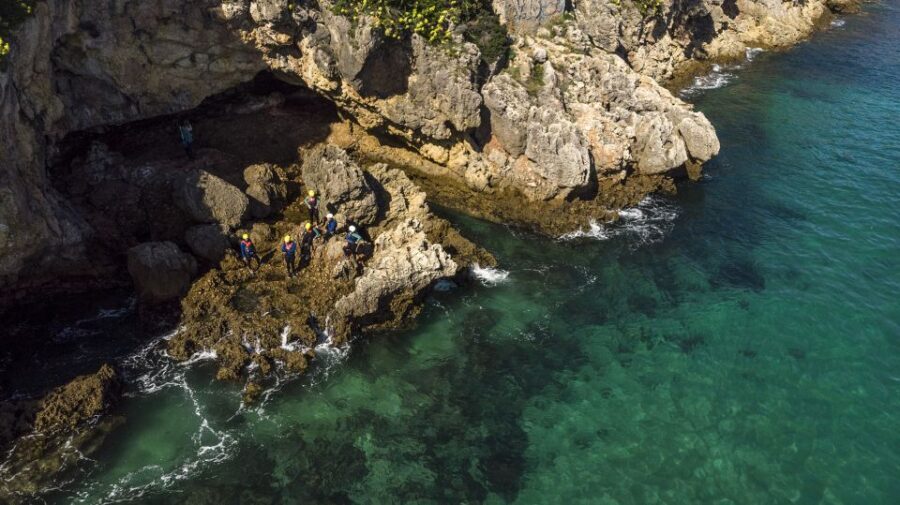
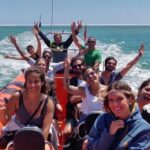
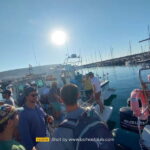
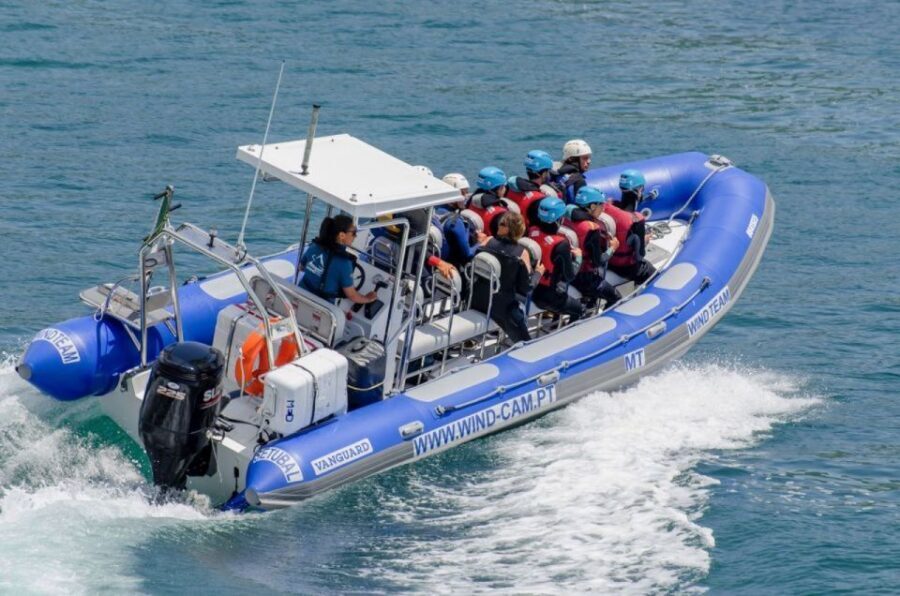
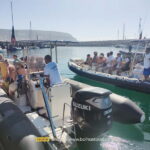
After the briefing, you hop on a speedboat to the activity’s starting point. This saves you time and also keeps the tour feeling like an adventure instead of a transfer followed by activities.
The boat ride is part of the experience, not just logistics. It’s your chance to see how the cliffs and inlets line up before you’re climbing around them, and it helps you understand why the route is laid out the way it is.
There’s also a practical upside for hot days. Being on the water early means you’re already wet, already moving, and you won’t spend the day working up from dry-land to fully active.
The Coasteering Route: Climbing, Swimming, Caves, and Repeated Jumps
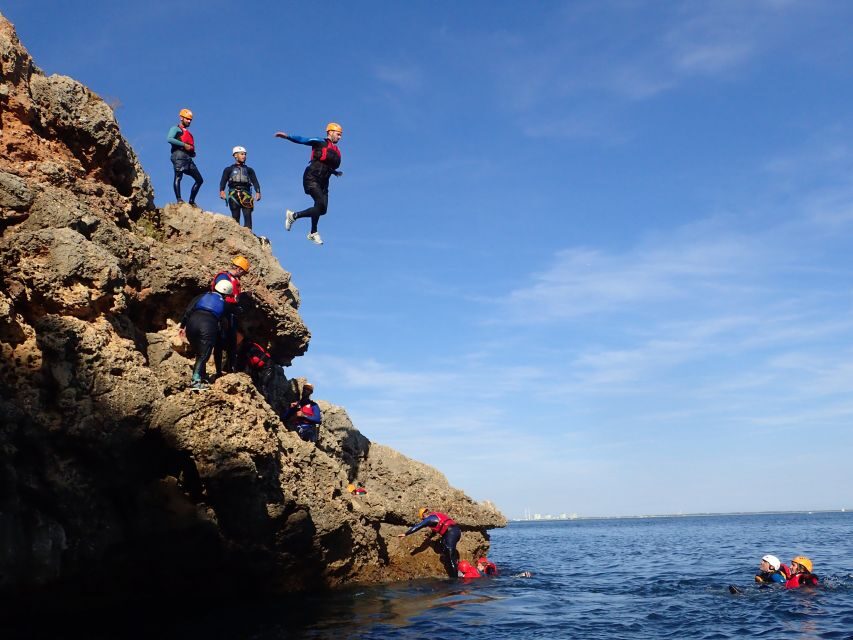
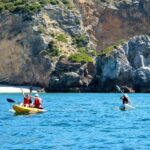
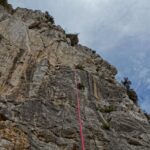
The core of the tour is coasteering in the Arrábida Natural Park coastline. You’ll use multiple techniques: low technical and low difficulty rock climbing, swimming, and jumping into the water.
You should picture it as a sequence of different actions in short bursts. One moment you’re getting your footing on rock, the next you’re floating or swimming along, then you’re lined up for a jump and a fresh landing.
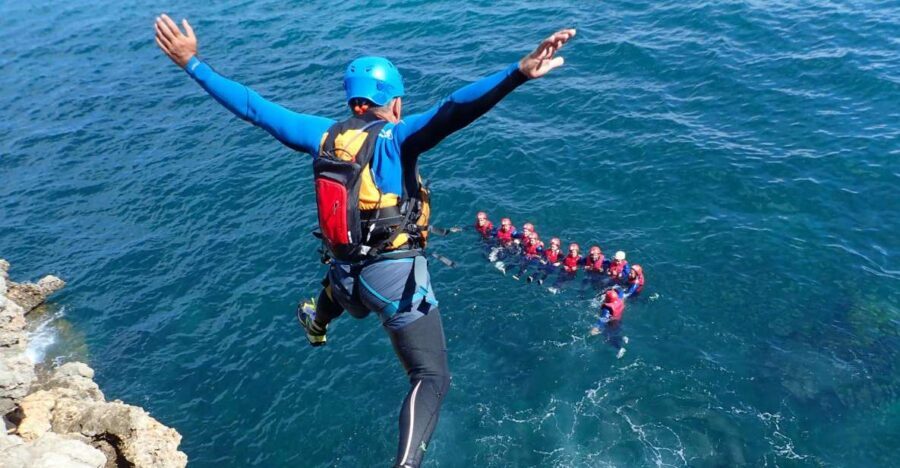
And yes, the jumps are real. You’ll do more than a dozen jumps during the 4-hour session, with heights in the 2 to 8 meter range. That means you get repetition, not just one dramatic leap.
If you’re nervous, pay attention to how the tour is described: it’s designed for progression without artificial aids like steel cables. That tends to mean the guides focus on technique and decision-making. Some jump options will feel bigger, but you’re not forced into a single style of risk.
Portinho da Arrábida and Ribeiro do Cavalo: Where the Day Starts to Feel Mysterious
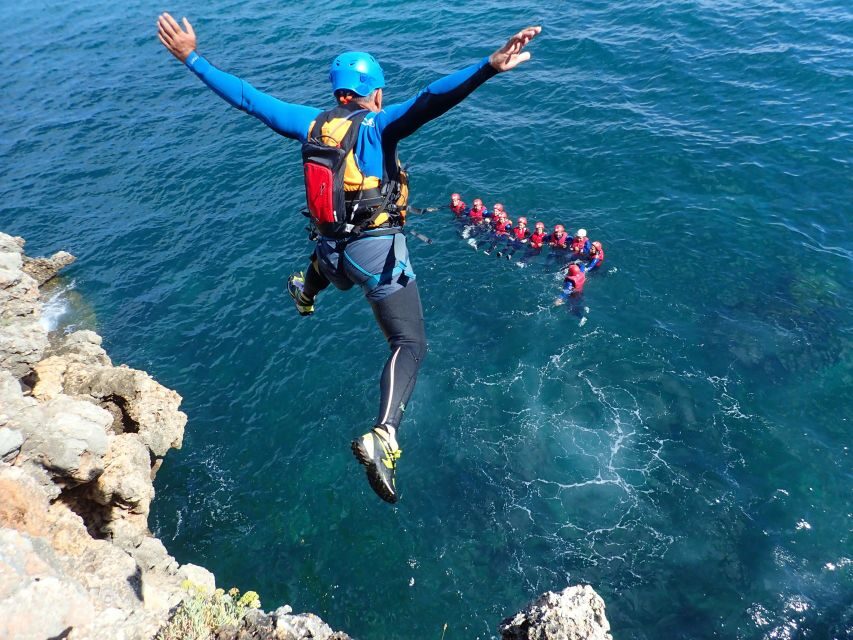
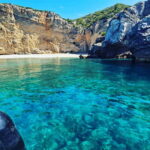
A big reason people remember this tour is how many “you can’t just stroll here” moments you get. Expect caves and secret beaches as you move along the coast.
Two named places you should know: Portinho da Arrábida and Ribeiro do Cavalo. These show up in the tour design as destinations where the coastline shape creates natural paths and water access.
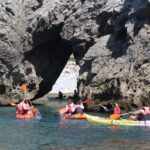
Caves are especially fun because they change your senses. Inside a sea cave you feel sheltered, you hear water moving differently, and you notice how the light hits the rock. It’s a nice break from cliff-edge jumping, even though you’re still very active.
The trade-off is that cave time and certain landing spots can depend on conditions. Weather and other safety logistics can shift the route, so go in ready for a little flexibility rather than expecting exact repeats of every stop.
Wildlife and Geology Talk With Local Biologists (So You Look Longer)
The tour doesn’t treat nature as background noise. You learn more about Arrábida Natural Park’s wildlife with local biologists, and you also get context on fauna, flora, and geology as you travel through rocky and aquatic areas.
This matters because you’ll be moving past small details. Without a bit of explanation, you’d mostly see “rock, water, and cliffs.” With the talk, you start noticing patterns: what the coast is made of, why certain areas look the way they do, and how the local ecosystem fits into the same picture.
You’ll also hear practical coaching tied to the environment you’re in. The guides can connect what to watch for—footing, water movement, and when a route section makes sense for your comfort level.
Safety System That Doesn’t Rely on Guesswork
This is not a do-it-yourself day. Instructors are Swiftwater Rescue Technician certified, and the provider is an active member of the National Coasteering Charter (NCC), following strict directives and high safety standards.
That safety setup shows up in the way the day is structured. You start with a briefing, get geared up before entering the action zone, then move along with direct supervision throughout.
You’ll also have protection that supports safe movement: buoyancy aids plus individual safety gear, and a wetsuit that helps with temperature and comfort. Importantly, the progression is described as happening without artificial means like steel cables.
So what are you relying on? Skill coaching, controlled conditions, and the guides’ judgment. Reviews also highlight guides who keep people comfortable while still letting you have fun, so the training isn’t only about preventing accidents—it’s about making the experience feel manageable.
What Gear You Bring vs. What They Provide
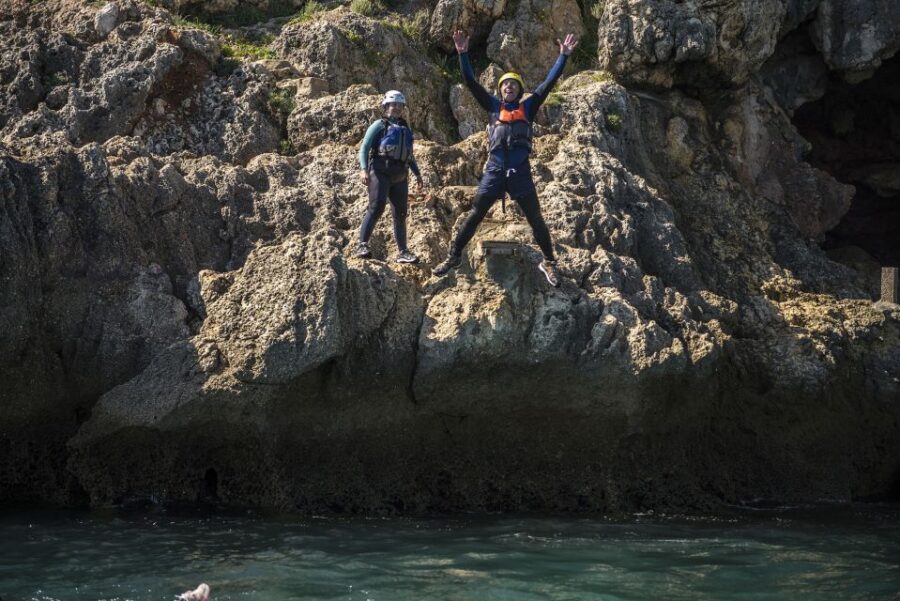
Included gear is a big part of the value. You’ll get a neoprene isothermal wetsuit, helmet, and life jacket, plus water and energy bars.
For what you bring, keep it simple and water-focused:
- Swimwear (under the wetsuit)
- A towel
- Biodegradable sunscreen
- Water shoes
- Hair tie
Also note what’s not allowed: open-toed shoes. That’s because your feet need stable protection in and out of the water.
If you only remember one thing, remember water shoes. They reduce the risk of slipping on wet rock and make it easier to climb and scramble without worrying about your footing.
Pace, Duration, and Group Energy in a 4-Hour Adventure
The tour runs for about 4 hours. That’s long enough for real variety—speedboat time, briefing, climbing and swimming segments, plus caves and repeated jumps. It’s short enough that the day doesn’t turn into an all-day slog.
It’s also designed around an active rhythm. You’re changing body positions constantly, using your core for balance and your legs for movement on rock and in the water.
Group size can vary based on the minimum run requirement. The tour needs at least 2 people to run, and if that minimum isn’t met, your tour will be rescheduled or you’ll be offered an alternative experience.
As for languages, instructors cover Spanish, English, French, and Portuguese, so you’re not stuck with only one communication lane.
Price and Value: Why $70 Can Be Worth It Here
At $70 per person for a 4-hour coasteering + speedboat experience, the price is really about what’s included and what it replaces.
You’re not only paying for the activity itself. You’re also paying for:
- Certified guidance
- Boat transportation to the right starting zone
- Full safety and comfort gear (wetsuit, helmet, life jacket)
- Snacks (water and energy bars)
If you were to recreate this day on your own, you’d likely spend time and money figuring out gear, finding a safe route, and arranging water access and supervision. Here, the structure is already assembled for you.
Is it a bargain compared to a casual boat trip? No. But it’s also not the same category of experience. This is a half-day adventure where you’re actively climbing and jumping with trained support and included equipment.
Who Should Book This (and Who Should Skip It)
This tour fits best if you want a hands-on coastal adventure, not a passive sightseeing day.
It’s suited to people who are comfortable getting wet and using basic movement skills. You’ll do climbing on low technical sections, swimming, and jumps with options to match what feels safe and fun for you.
From the not-suitable list, you should skip if you are:
- Children under 8
- Pregnant
- Someone with back problems
- People with mobility impairments
- People with heart problems
- People who are visually impaired
That’s not just legal wording. This is an active environment on rock and water where conditions can change. The tour’s safety approach depends on your ability to move and respond quickly to instructions.
If you’re traveling as a couple or a group, the format is also easy. It’s structured enough to keep things organized, but it still feels personal because instructors adjust pace and options.
Should You Book Arrábida Coasteering and Speedboat?
Book it if you want a true active coastline day in Portugal and you like the idea of repeated jumps between 2 and 8 meters, plus sea caves and secret-feeling beaches like Portinho da Arrábida and Ribeiro do Cavalo. The included wetsuit-and-helmet setup and the Swiftwater-trained guidance reduce the stress so you can focus on the fun.
Skip it if your comfort level doesn’t match water-based climbing, scrambling, and jumping. Even with coaching, this is still a physical, water-centric activity.
If you’re on the fence, here’s my practical advice: go for it only if you can handle getting into cold-ish Atlantic water for extended periods and you’re willing to follow safety instructions closely. When those boxes are checked, this is the kind of day that turns into a core memory of the Arrábida coast.
FAQ
How long is the Arrábida: Setúbal, Sesimbra Coasteering & Speedboat Tour?
It lasts 4 hours.
What does the tour cost?
The price is $70 per person.
Where is the meeting point?
Meet at Creiro’s Beach. When you reach Creiro’s Beach, turn right and you’ll find the team after Anicha Bar.
Is equipment included?
Yes. You get a neoprene isothermal wetsuit, helmet, and life jacket.
What should I bring?
Bring swimwear, a towel, biodegradable sunscreen, water shoes, and a hair tie.
Are open-toed shoes allowed?
No. Open-toed shoes are not allowed.
What languages do the instructors speak?
Instructors speak Spanish, English, French, and Portuguese.
What if the weather is bad?
The tour may change based on weather conditions or other logistic and safety concerns.
Is there a cancellation window?
Yes. It offers free cancellation up to 24 hours in advance for a full refund.