REVIEW · EVORA
Between Life & Death: Roman Temple, Cathedral & Bone Chapel
Book on GetYourGuide →Operated by TourExplora · Bookable on GetYourGuide
Évora hits you fast: Roman grandeur and skeleton whispers. Roman Temple of Évora is one of the best-preserved Roman stops in Portugal, and I also love the Chapel of Bones inside Igreja de São Francisco, where the decoration makes you think about how short life really is. One possible drawback: it’s a long day, so if you hate getting up early and switching from site to site, you may feel the pace.
What makes this trip practical is how smoothly you move between places with hotel pickup and an air-conditioned vehicle, plus a guide who handles the story at each stop. You also get a proper feel for the region—Alentejo’s open countryside, cork trees, and those slow, sun-soaked town squares.
In This Review
- Key things to know before you go
- Entering Évora: why this day feels like a history shortcut
- Roman Temple of Évora: the forum’s most intact moment
- Évora Cathedral rooftop views: Gothic, Romanesque, and city-breath
- Chapel of Bones: the Church of St. Francis and a blunt reminder
- Praça do Giraldo and the Royal Palace: where everyday Évora happens
- Almendres Cromlech: Portugal’s Stonehenge under cork trees
- Getting there without stress: pickup, private group pace, and comfort
- Skipping ticket lines and what’s not included
- English guide delivery: the difference between facts and a good day
- Price and value: is $203 worth it?
- Who should book this Évora day trip (and who shouldn’t)
- Should you book this Évora day trip?
- FAQ
- How long is the Évora day trip?
- Where does pickup happen?
- What sites are included in the day?
- Are entrance tickets included?
- Is this tour for private groups?
- Is the tour conducted in English?
- Is hotel pickup and drop-off included?
- Are there any notable add-ons if there is extra time?
Key things to know before you go
- Hotel pickup in central Lisbon: multiple pickup options (Lisbon, Estoril, Algés, Oeiras, Cascais) make it easier to start cleanly.
- A strong mix of eras: Roman Temple, medieval cathedral, the bone chapel, then a Neolithic stone circle.
- Time to wander: you get free time at several stops, not just camera-and-go.
- English driver and guide support: the day is run in English, with guided time at key moments like Almendres Cromlech and the Royal Palace.
- Entrance tickets aren’t included: plan for entry costs at the monuments.
Entering Évora: why this day feels like a history shortcut
Évora is the kind of city where the past doesn’t sit politely behind glass. It presses in from every angle: Roman stone, medieval churches, royal reminders, and prehistoric rocks all living in the same town. The fun part is the pacing—this day trip lines up the big emotional hits and the big “how old is that?” moments.
From Lisbon, you trade the city traffic for wide Alentejo views and a more relaxed feel. You’ll be in a private group setting, so the day doesn’t feel like a cattle lineup. You’re also not stuck with navigation stress: pickup, drop-off, and transport are handled for you.
You can also read our reviews of more tours and experiences in Evora.



Roman Temple of Évora: the forum’s most intact moment
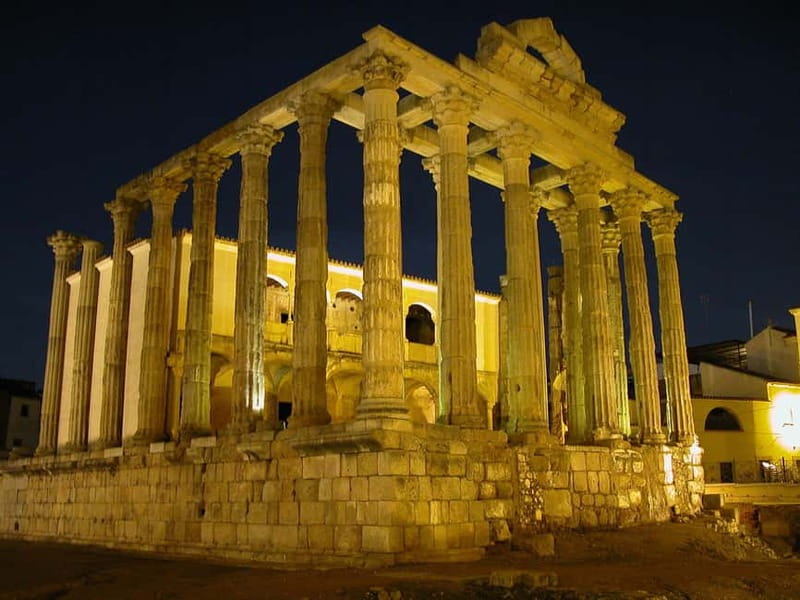
Your first major stop is the Templo de Diana, one of the Iberian Peninsula’s best-preserved Roman ruins. It dates to the 1st century AD, and it once belonged to the Roman forum. That’s the key: you’re not just seeing a random old building. You’re seeing part of a civic center—power, religion, and daily life rolled into one.
The temple’s Corinthian style matters too. Corinthian columns can look fancy in museums, but in person they feel built to last. You’ll likely get time for photos and a slower look around before the day moves on—worth it, because the angles change the mood. If you like architecture, this is the “set your baseline” stop. You’ll start noticing how later eras reused space, materials, and symbolism.
Watch for your own tempo here. This is a short visit window, so if Roman details are your thing, spend your time close to the columns and take one steady circuit rather than scattering your attention.
Évora Cathedral rooftop views: Gothic, Romanesque, and city-breath
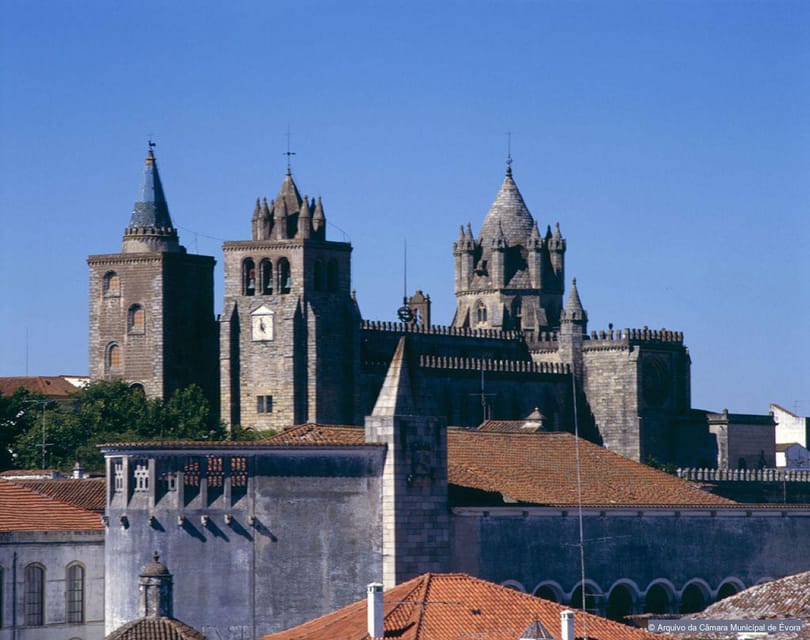
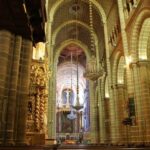
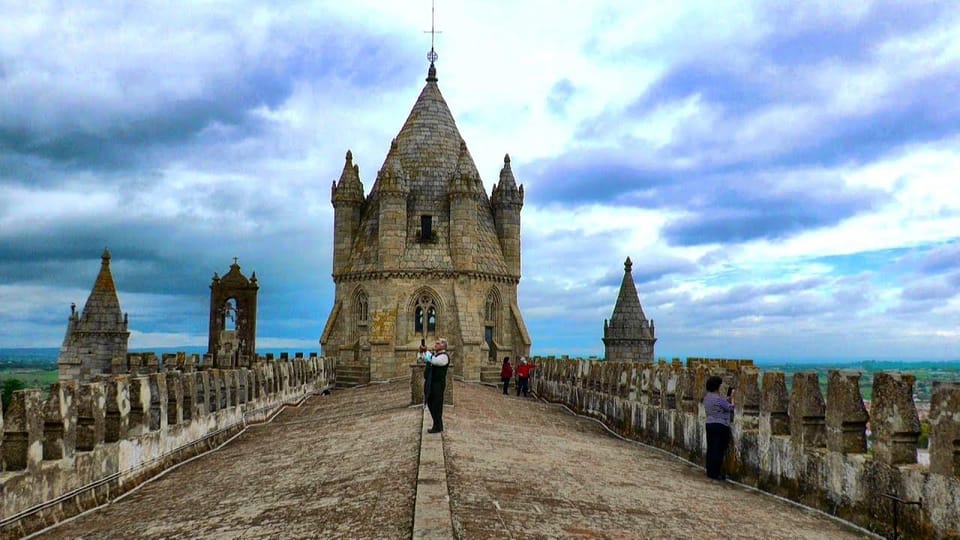
Next comes the Sé de Évora. This is where Évora turns from Roman stone into medieval ambition. The cathedral is known for Gothic and Romanesque architecture, and it has that “big presence” effect you feel before you even enter.
Two practical reasons to care:
1) you get panoramic views if you climb up to the rooftop area, and
2) inside you can see sacred art and the cloisters—plus the Virgin Mary statue that’s described as a key medieval devotion point.
That statue detail isn’t just trivia. It helps explain why cathedrals feel less like landmarks and more like living places of meaning. When you pair that with the rooftop sightlines over Évora and the Alentejo plains, you see how the town was built for both faith and survival.
Possible drawback to consider: if you’re not into church interiors, this stop can feel long compared to the exterior sights. If that’s you, focus on the rooftop views and move through the interior efficiently.
Chapel of Bones: the Church of St. Francis and a blunt reminder
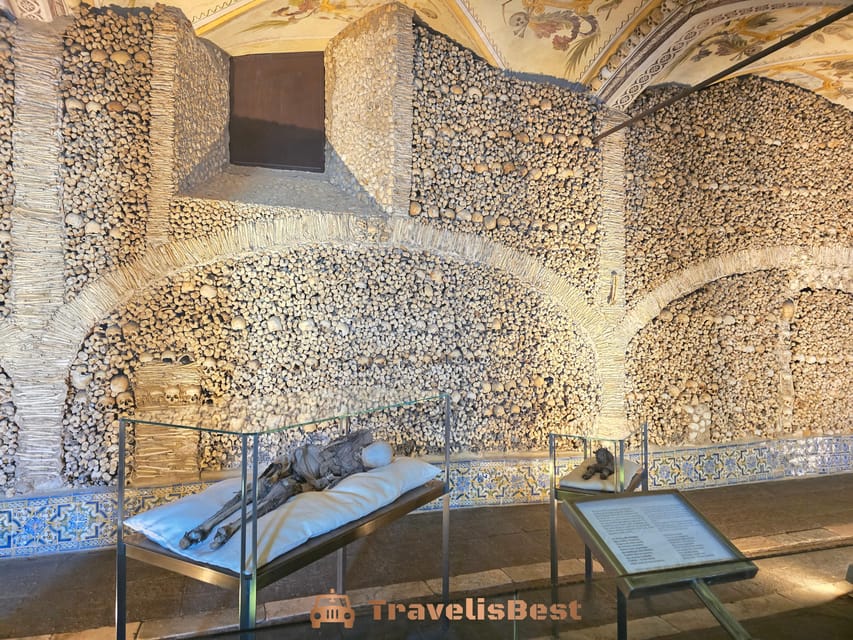
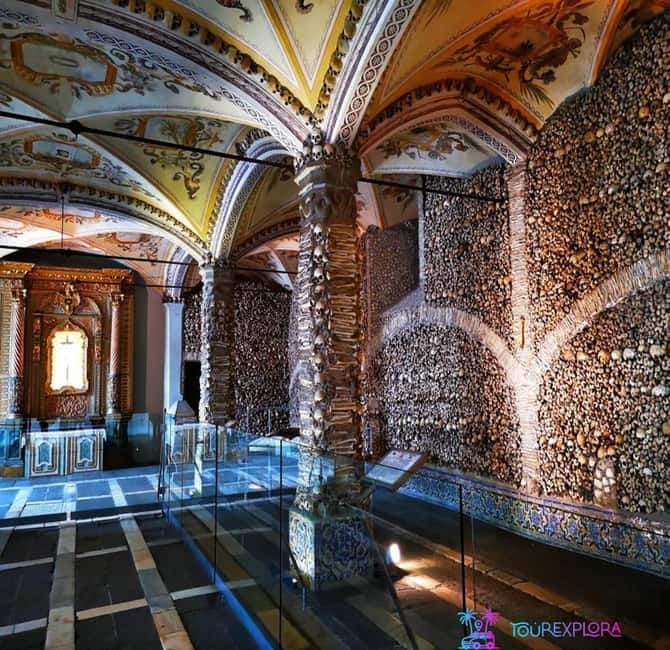
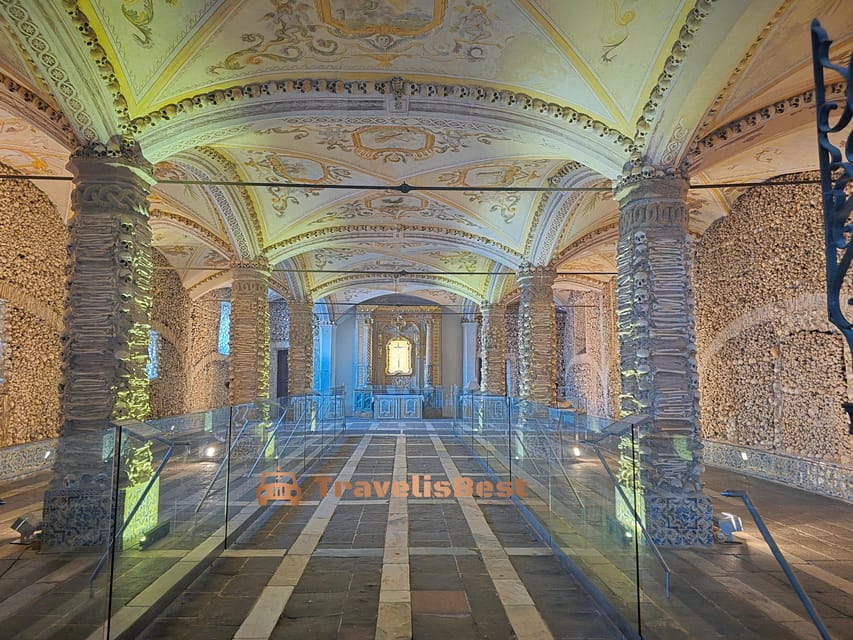
Then you hit the stop that most people remember months later: the Capela dos Ossos (Chapel of Bones) in the Church of St. Francis. It’s lined with the skulls and bones of over 5,000 monks, and the emotional punch is immediate.
Here’s what makes it more than just an odd attraction: it forces a direct conversation with mortality. The chapel’s inscription reads, We bones that are here, for yours await. That message is the real “tour guide” in the room.
You’ll want to handle this stop the way you’d handle a serious exhibit: slow down. Your brain can “admire” weird things quickly, but it takes longer to process why a society built a chapel like this. If you’re traveling with kids, teens, or anyone who gets uneasy around death imagery, it’s worth deciding in advance how you want to approach it.
Consideration: this is an intense visual stop. If you need gentle pacing, give yourself extra time right before or after to reset.
Praça do Giraldo and the Royal Palace: where everyday Évora happens
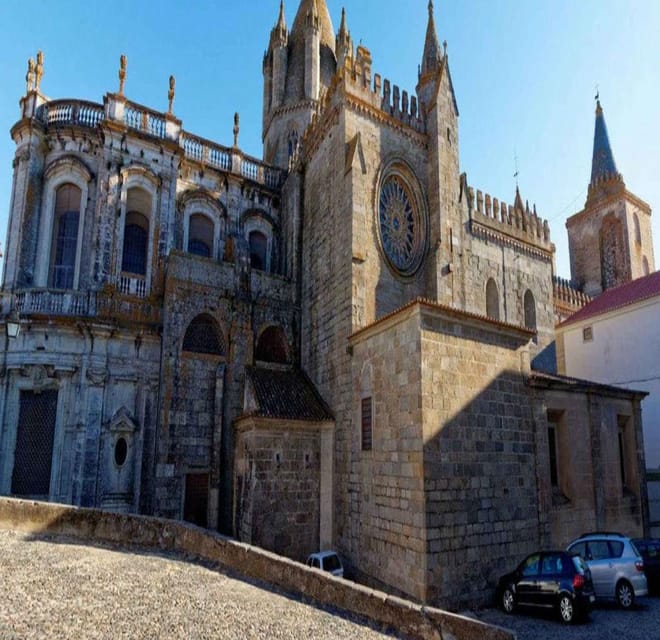
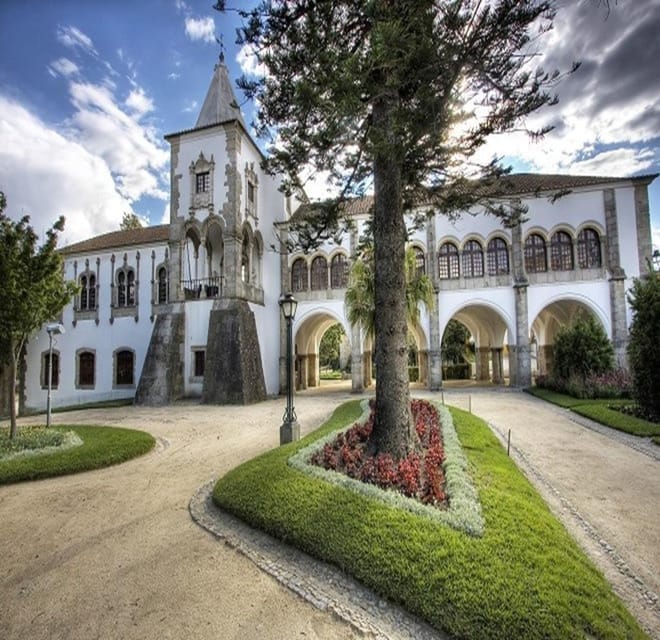
After the heavy stuff, the day shifts back toward atmosphere. You’ll pass remnants tied to the Royal Palace of Évora—where Portuguese kings once resided—and then step into the city’s central hub: Praça do Giraldo.
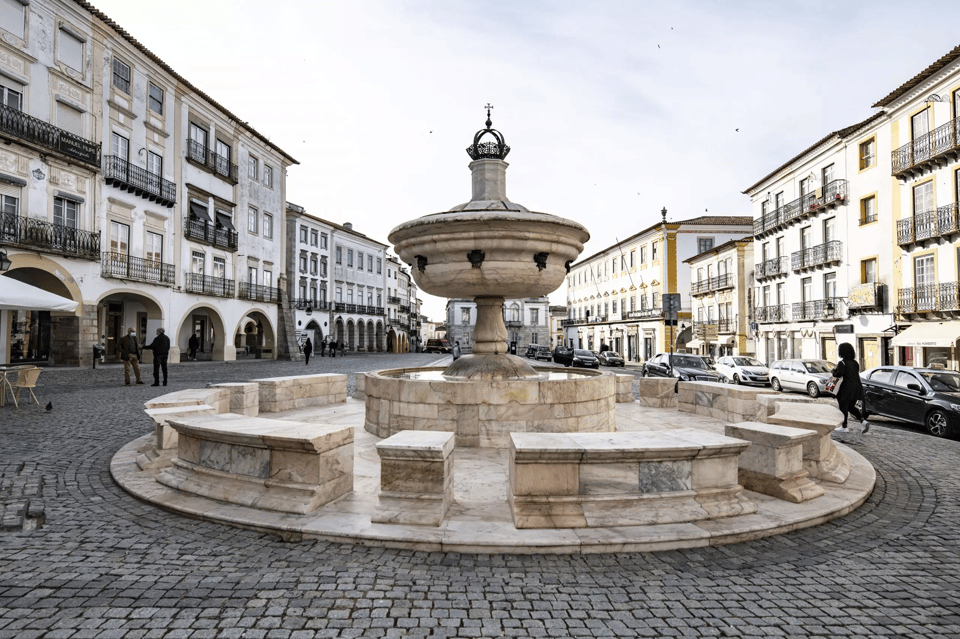
This square is the social heart of town. It’s lined with cafés, artisan shops, and a 16th-century marble fountain. The practical win is that you get real “live here” time—time to browse, grab a drink, and eat without feeling rushed. It’s also where the Alentejo vibe makes sense: you don’t just tour stone and bones. You pause where locals would.
Right nearby, the Royal Palace stop adds a different kind of weight. Even if you only get a short guided glimpse, the idea is clear: this was power, not just architecture. You get that sense of who ruled, who visited, and why.
One tip for enjoying this segment: plan your snack or meal based on energy, not hunger. The square is ideal for a sit-down pause because it resets you before the final big countryside stop.




Almendres Cromlech: Portugal’s Stonehenge under cork trees
The last major site is outside town: Almendres Cromlech. It’s often compared to Stonehenge because it’s a stone circle, but it’s older—around 7,000 years old. It’s described as an ancient astronomical observatory, and that changes the way you look at it. You stop seeing random rocks and start imagining intentional alignment.
This site sits among cork trees, which matters for how it feels. Instead of a “park attraction” vibe, it has more of an open-air, weather-and-shadow mood. You also get guided time, plus the chance to walk among standing stones and notice symbolic carvings on some of them.
The visit window is short, so I’d treat this as a short attention game: pick one stone cluster to study from one spot, then do a second pass walking a different angle. That way you get both scale and detail without burning your whole time moving.
Weather note: since this is outdoors, sun or cloud can change your comfort fast. Bring something light for sun and consider water, especially in warmer months.
Getting there without stress: pickup, private group pace, and comfort
This is a full-day run from Lisbon to Évora and back, built around comfort. You’ll be in a private group setting, riding in an air-conditioned vehicle with onboard WiFi and bottled water. Hotel pickup and drop-off are included, and pickup is offered from multiple central Lisbon-area locations (Lisbon, Estoril, Algés, Oeiras, Cascais).
For many people, the biggest value isn’t the sites. It’s not having to coordinate trains, rental cars, or confusing local transfers. You also avoid the “where do we meet?” panic that can turn a good day sour.
Timing-wise, the total duration is listed as 8 hours. That’s enough time to cover major stops, but not so much that you’ll feel totally relaxed. The free time blocks help, though. You’re not constantly walking with the guide. You get moments to slow down and breathe.
If you’re the type who likes strict schedules, this day can feel perfect. If you hate tight time windows, plan for “see the big things, then return later if you want more.”
Skipping ticket lines and what’s not included
The tour includes skip-the-ticket-line support, which is a big deal on popular days. Still, entrance tickets are listed as not included, so you should expect to pay for monument entry separately.
What this usually means in real life: you’ll move faster at entrances, but you won’t avoid all costs. Budget for ticket entry for the stops that require it, especially the major monuments.
Also, because the day is structured with multiple sites, skipping lines helps your schedule stay intact. If you hate losing time in queues, this matters more than it sounds.
English guide delivery: the difference between facts and a good day
The day is handled in English. The guide time is most explicit at parts like the Royal Palace and Almendres Cromlech, so you get context where it counts.
The most praised aspect from the provided experiences is the way guides manage the day. One example named in the review text is Rajib: people appreciated how prompt he was, how much he knew, and how he could shift plans when needed. That flexibility showed up as extra time at the end, when he added a stop at the Sanctuary of Christ the King and suggested pastel de nata at Pasteis de Belém as a fun finish.
You should not assume extra stops on every day, but the pattern is useful: if you show your interests (architecture, Roman details, or the meaning behind the bone chapel), you’re likely to get better storytelling and smarter use of time.
Price and value: is $203 worth it?
At $203 per person, this is not the cheapest way to visit Évora from Lisbon. But it can be good value if you factor in three things you’re otherwise paying for in time, stress, and logistics:
- Private or small-group transport: air-conditioned vehicle, WiFi, bottled water, and real pickup/drop-off convenience.
- Guided content: the guide adds meaning at the cathedral area, the Chapel of Bones stop, the Royal Palace time, and the Almendres Cromlech guidance.
- Multiple top sights in one go: Roman Temple, cathedral, bone chapel, major town squares, and the stone circle outside town.
If you’re traveling solo and plan to rent a car, the math can swing in your favor or not, depending on fuel and parking. If you don’t want to drive, this price becomes more reasonable fast. For most people, paying for a smooth day is the point.
For best value, come ready to walk and be mentally present. This day delivers when you treat it as a full cultural sprint, not a slow stroll.
Who should book this Évora day trip (and who shouldn’t)
This tour fits you well if:
- you want a one-day overview of Roman, medieval, and prehistoric Évora-area highlights
- you prefer guided storytelling over self-planning
- you like the emotional contrast of the cathedral and bone chapel, followed by open-air sites
You might skip it if:
- you want lots of time at each site to wander slowly and go deep
- you dislike intense imagery connected to death
- you’re traveling with someone who gets tired fast on long days
Should you book this Évora day trip?
If you’re trying to see the core of Évora without turning your vacation into a logistics project, I think this is a smart way to do it. The combination of Templo de Diana, Sé de Évora, the Chapel of Bones, and Almendres Cromlech covers a wide timeline with minimal wasted motion.
The decision comes down to your tolerance for pace and intensity. If you can handle a long day and you don’t mind the Chapel of Bones being emotionally heavy, you’ll likely leave feeling like you saw Évora’s main chapters in one sitting—Roman, spiritual, and ancient to the bone.
FAQ
How long is the Évora day trip?
The tour duration is listed as 8 hours.
Where does pickup happen?
Pickup is offered from Lisbon, Estoril, Algés, Oeiras, and Cascais.
What sites are included in the day?
You visit the Roman Temple of Évora, the Cathedral of Évora, the Chapel of Bones, Praça do Giraldo, the Royal Palace of Évora, and Almendres Cromlech (plus time around Évora town).
Are entrance tickets included?
No. Entrance tickets are not included.
Is this tour for private groups?
Yes. The group type is listed as private group.
Is the tour conducted in English?
Yes. The driver is listed as English.
Is hotel pickup and drop-off included?
Yes. Hotel pickup and drop-off are included.
Are there any notable add-ons if there is extra time?
One of the experiences described in the provided review text includes extra time where the guide added the Sanctuary of Christ the King and pastel de nata at Pasteis de Belém. This isn’t guaranteed for every day, but it shows the day can allow flexible finishing touches if timing works.