REVIEW · EVORA
Evora: Cromlech of Almendres and Great Dolmen of Zambujeiro
Book on GetYourGuide →Operated by Burriscas Adventure PT · Bookable on GetYourGuide
You can feel how old these stones are. This guided outing pairs two major megalith sites near Évora with a comfortable ride through Alentejo countryside and clear explanations you can actually picture. I especially like that the tour is short enough to fit easily, yet still focuses on the meaning of the monuments, not just the photos.
I love the scale and setting at Cromlech of Almendres, where you see one of the largest megalithic groups in Iberia. I also like the Great Dolmen of Zambujeiro stop, where the guide explains how the burial structure was built and why it mattered to Neolithic communities.
One drawback to consider: it’s not a sit-and-look tour. To reach the Great Dolmen, you walk about 950 metres one way along a rural path, for roughly 1,900 metres round trip, so bring sturdy shoes and plan for real walking.
In This Review
- Key highlights to look forward to
- Cromlech of Almendres: seeing one of Iberia’s biggest stone circles
- The Great Dolmen of Zambujeiro: a short walk to a serious burial monument
- How the guide makes prehistory click (especially if Pedro is driving)
- Timing and pacing in a 3-hour day
- Getting there: pickup options and where the tour starts
- What to bring: shoes, sun protection, and water
- Price and value: is $35 fair for Almendres and Zambujeiro?
- Who should book this Almendres and Zambujeiro tour
- My quick verdict: should you book?
- FAQ
- How long is the tour?
- Where are the pickup locations?
- Which sites are visited?
- Is there walking involved for the Great Dolmen?
- What’s included in the price?
- Are meals or drinks included?
- What languages are offered?
- What should I bring?
- Is the tour suitable for wheelchair users or mobility impairments?
- Can I cancel for a full refund?
Key highlights to look forward to
- Almendres’ sheer size: one of the largest and oldest megalithic sites in the Iberian Peninsula
- Great Dolmen construction explained: learn how the burial structure was built and used
- Guided context, not just coordinates: stories about prehistory and the Alentejo region
- A relaxed drive between stops: countryside route plus time to take photos
- Round-trip pickup and drop-off: you start and end at convenient meeting points
Cromlech of Almendres: seeing one of Iberia’s biggest stone circles
If you like your history visual, this stop is a knockout. The Cromlech of Almendres is one of the largest megalithic sites in Iberia, and the visit is designed to help you make sense of what you’re seeing instead of just standing in the dark-ages and taking snapshots.
Your guide gives you the essentials right on site: where the cromlech comes from, what people likely used it for in prehistory, and why it’s important in the broader Neolithic story. The best part is the way the explanation ties the stones to human decisions—building, aligning, and using a place over time.
You’ll typically have about 30 minutes here. That’s enough time to walk slowly, look for patterns, and take photos without the pressure of rushing. If you’re the type who likes to read your surroundings, you’ll probably want a little extra time, but the tour keeps things balanced across both monuments.
Practical note: the road situation can affect how you access the area near the cromlech. On at least some dates, the easiest approach can change and you may end up walking a bit more than expected. Wear comfortable shoes as if you’ll use them for the full day.
You can also read our reviews of more tours and experiences in Evora.



The Great Dolmen of Zambujeiro: a short walk to a serious burial monument
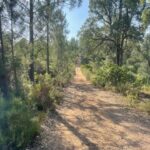
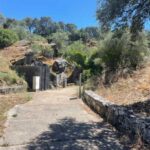
The Great Dolmen of Zambujeiro is the tour’s second big payoff, and it comes with one very clear condition: you walk to it. To reach the monument you need about 950 metres along a rural path, so the total walking comes to roughly 1,900 metres round trip.
Once you’re there, you get the reason this stop is worth the effort. The dolmen is a striking Neolithic burial structure, and the guide focuses on construction techniques and cultural significance. Instead of treating it like a random pile of stones, you learn how the monument functioned—how communities built a lasting place for remembrance.
This part of the experience also feels more grounded than the first stop. At Almendres you’re looking at a big megalithic landscape made of standing stones and spatial clues. At Zambujeiro you’re seeing a specific architectural idea: a designed structure meant to last, with meaning built into the form.
You’ll also get about 30 minutes at the dolmen. That’s a good match for what the site needs. You don’t need hours to understand the basics once the guide frames the structure, but you do want enough time to circle the area, notice the details, and take in the size of the stones.
How the guide makes prehistory click (especially if Pedro is driving)
This tour works because the guide knows how to connect the dots. The experience is offered in English and Portuguese, and the best moments are when the guide explains what the stones were for and what life was likely like around this region—then anchors it with local pride and practical detail about the countryside today.
If you get Pedro as your guide, you’re likely to see that blend of archaeology storytelling and local knowledge. He’s described as very friendly, with a talent for vivid explanations that make the monuments feel less abstract. He also tends to slow down for comfort when roads are bumpy, and he can adjust the flow if someone arrives late.
Even when you’re not focused on archaeology, this kind of guided talk helps you read the area. You start noticing the vegetation, the rhythms of rural life, and the way the Alentejo region shapes how people move and build—past and present.
That “small-group, guide-led” style also matters for value. You’re not paying just to be transported between two sites. You’re paying for guided interpretation at each stop, which is what makes the time worth it.
Timing and pacing in a 3-hour day
A lot of Évora-area tours sell “two sites” as if that automatically means you’ll see everything. Here, the pacing is more honest. You get a total duration of about 3 hours, with two main visits of around 30 minutes each.
The walking to the Great Dolmen is the time feature you can’t ignore. With roughly 1,900 metres round trip on a rural path, you’ll want to factor in a slower pace for comfort and footing, especially if the ground is uneven or warm.
The drive between the two locations is part of the experience. It’s not just transit; it’s a chance to shift gears. The tour aims for an educational yet relaxed rhythm, so you’re not constantly hopping in and out.
If you’re sensitive to tight seating in a small car, keep an eye on your seat position. On at least some tours, guests have noted the comfort difference depending on where you sit, especially in the back on uneven roads. It’s a minor point, but it can matter on a bumpy Alentejo route.
Getting there: pickup options and where the tour starts
You’ll get round-trip transportation from a designated meeting point. The two pickup options listed are Montemor-o-Novo and Évora, and you’ll return to those same areas at the end of the tour.
This is one reason the tour can feel efficient. You don’t have to plan parking, navigation, or multiple bus transfers. You also avoid the common problem of getting to one site with momentum and arriving at the other too rushed to appreciate it.
If you’re basing yourself in Évora, this can be a particularly easy day trip. You get a meaningful slice of prehistoric monument culture without committing to a full day out of town.





What to bring: shoes, sun protection, and water
The tour’s main physical challenge is walking. Bring comfortable shoes with good grip. Even if you consider yourself “fine for a walk,” remember the route is described as a rural path.
Because the monuments are outdoors, sun protection matters. Bring a hat and sunscreen, and plan on water so you’re not guessing about hydration once you’re on the path to Zambujeiro.
A camera is a smart add. The guidance specifically suggests it for capturing scenic views and the monuments. If you like wide-angle shots, Almendres is a great place to photograph from multiple angles; for Zambujeiro, you’ll get stronger results when you step back and include how massive the stone structure feels in context.
Price and value: is $35 fair for Almendres and Zambujeiro?
At $35 per person for a roughly 3-hour guided experience, the price looks reasonable—mainly because the tour includes the parts that can be annoying to DIY.
You’re paying for:
- pickup and drop-off at designated locations (no parking stress)
- guided visits at both monuments (construction and cultural significance, not just “here’s a sign”)
- transport between sites
The “value math” depends on your style. If you like minimal effort and clear interpretation, this is a strong deal. If you prefer to wander independently, you could drive yourself and spend less on transport, but you’d miss the framing that makes the monuments click.
For many people, the guiding factor is the time efficiency: you get a well-paced hit of two major sites without needing to build a logistics plan. That’s exactly what makes a short tour like this worth paying for.
Who should book this Almendres and Zambujeiro tour
This is best for you if you want a guided, interpretive visit and you’re okay with moderate walking. It’s especially good if you enjoy megaliths, archaeology context, and explanations that link stones to real human choices.
It’s less suitable if:
- you have mobility impairments or need wheelchair access (the tour is not suitable for wheelchair users)
- you’re uncomfortable walking around 950 metres on a rural path
- you dislike uneven ground or long outdoor exposure in warm weather
If you’re traveling with kids, it can work well because the guide’s storytelling style (when provided by a strong local guide like Pedro) tends to keep attention. Families have appreciated the way the explanations fit different ages.
Couples and solo travelers also do well here because the tour structure keeps you from getting lost in details while still giving you enough time to look closely.
My quick verdict: should you book?
Yes, book it if you want a short, meaningful megalith day around Évora with guided interpretation at both major sites. The Cromlech of Almendres stop gives you scale, while the Great Dolmen of Zambujeiro stop gives you the architectural and cultural “why” behind the stones.
Just be honest about the walk: plan for the full round trip to Zambujeiro (about 1,900 metres total) and wear shoes that can handle uneven rural ground. If you’re prepared for that, the experience is a smart value for the time you spend.
If you want, tell me where you’re staying (Évora vs Montemor-o-Novo) and what your walking comfort level is, and I’ll suggest how to time water, sun protection, and photo stops.
FAQ
How long is the tour?
The tour duration is listed as 3 hours.
Where are the pickup locations?
You can choose pickup from Montemor-o-Novo or Évora, and you return to drop-off at those same locations.
Which sites are visited?
The tour visits the Cromlech of Almendres and the Great Dolmen of Zambujeiro.
Is there walking involved for the Great Dolmen?
Yes. To reach the Great Dolmen of Zambujeiro, you walk about 950 metres along a rural path, which adds up to about 1,900 metres round trip.
What’s included in the price?
Included is pick-up and drop-off at designated locations, visits to both monuments, and insights into the construction and cultural significance of the sites.
Are meals or drinks included?
No. Meals and drinks are not included.
What languages are offered?
The host or greeter provides English and Portuguese.
What should I bring?
Bring comfortable shoes, a hat, sunscreen, a camera, and water.
Is the tour suitable for wheelchair users or mobility impairments?
No. It is not suitable for people with mobility impairments or for wheelchair users.
Can I cancel for a full refund?
Yes. Free cancellation is available up to 24 hours in advance for a full refund.