REVIEW · LISBON
From Lisbon: Sintra, Cabo da Roca, & Cascais Private Tour
Book on GetYourGuide →Operated by TOUR TUNER · Bookable on GetYourGuide
Sintra is the type of day that feels unreal. This private tour stitches together the fairytale palaces and gardens of Sintra with the wild Atlantic drama at Cabo da Roca and Boca do Inferno, then finishes with a relaxed seaside stroll in Cascais. I especially like the way the day is paced for real sightseeing, not a bus-rush.
Two things I’d bet on if you’re deciding: the guide-led history stops (I saw guides like Neel and Nayem turning architecture and legends into clear, human stories) and the photo-friendly timing at the coast, including viewpoints where you’re not just looking, you’re filming waves like a pro. One thing to consider: the day involves moderate walking and hillier ground at Sintra, so comfy shoes matter.
In This Review
- Key things that make this tour worth your time
- The Lisbon-to-Coast route that makes sense in 7.5 hours
- Pickup, van comfort, and why logistics can make or break your day
- Sintra starts with the right energy: pause, photo, and street-level context
- Pena Palace and Park: the fairytale peak, plus the timed-entry reality
- If Pena Palace closes
- Castle of the Moors: medieval power on a hill with big payoff views
- Quinta da Regaleira and Monserrate Palace: two different garden moods
- Azóia lunch and downtime: a needed breath before the cliff stops
- Cabo da Roca: where the map ends and the sea begins
- Cascais: aristocratic seaside, now with an easy walking rhythm
- Boca do Inferno: Hell’s Mouth turns waves into the show
- Price and what you’re really paying for at $82 per person
- Who this tour suits best (and who should think twice)
- Should you book this Sintra, Cabo da Roca, and Cascais private tour?
- FAQ
- Which entrance tickets are not included?
- Is there a skip-the-line advantage?
- How long is the tour?
- Where can I be picked up in the Lisbon area?
- How much walking should I expect?
- What happens if Pena Palace and Quinta da Regaleira close?
- Is the tour wheelchair accessible?
Key things that make this tour worth your time

- Private, flexible routing so you spend more minutes where you care and less time where you don’t
- Timed-entry access at Pena Palace and Quinta da Regaleira, which helps you beat the usual waiting games
- Coastal “wow” stops built around Cabo da Roca and Boca do Inferno, where the Atlantic does the work for your photos
- English-speaking driver/guide team with strong local context and help setting up tickets
- Small comfort touches like Wi-Fi in the vehicle and a bottle of fresh water on the way
The Lisbon-to-Coast route that makes sense in 7.5 hours
You get a full “Portugal highlights” day without the stress of buses, ticket lines, or figuring out parking. The logic is simple: Sintra first (palaces and gardens), then west to Cabo da Roca (the continent’s end vibes), then down the coast to Cascais (sea-air and easy wandering), with Boca do Inferno as the dramatic finale.
The private format matters here. With a group van, you often get stuck in crowd choreography. With this setup, you can usually slow down for photo stops, swap a viewpoint if weather shifts, and keep the day feeling like you’re sightseeing, not checking boxes.
You can also read our reviews of more private tours in Lisbon



Pickup, van comfort, and why logistics can make or break your day
Your pickup options are broad: central Lisbon areas, Belém, Oeiras, Algés, Sacavém, Estoril, and even the Lisbon cruise port and airport pickup point. In practice, that means you’re more likely to start on time and less likely to waste the first hour hunting down a meeting spot.
Inside the vehicle you’ll have air-conditioning (important in sunny months), Wi-Fi, and water. You’ll also get clear pickup instructions: be ready about 5 minutes early, you’ll get a WhatsApp/app notification, and the driver holds a sign with your name.
One practical note: the driver waits a maximum of 15 minutes after the scheduled pickup time. If you’re coming from a hotel lobby, double-check where you actually need to be standing.
Sintra starts with the right energy: pause, photo, and street-level context

Sintra isn’t just palaces. It’s a town of tiled facades, garden walls, and winding streets that climb toward the Atlantic view lines. The tour begins with a guided overview and time for quick breaks and photos, which helps you “get” the place before you head up toward the big-ticket sites.
This is one of the smartest parts of the day. When you walk into Pena Palace or Quinta da Regaleira already understanding the setting, the architecture stops feeling random and starts feeling intentional.
Expect moderate walking and some uphill paths. It’s not an all-flat stroll, and that’s before you even consider stairs and viewpoints.
Pena Palace and Park: the fairytale peak, plus the timed-entry reality
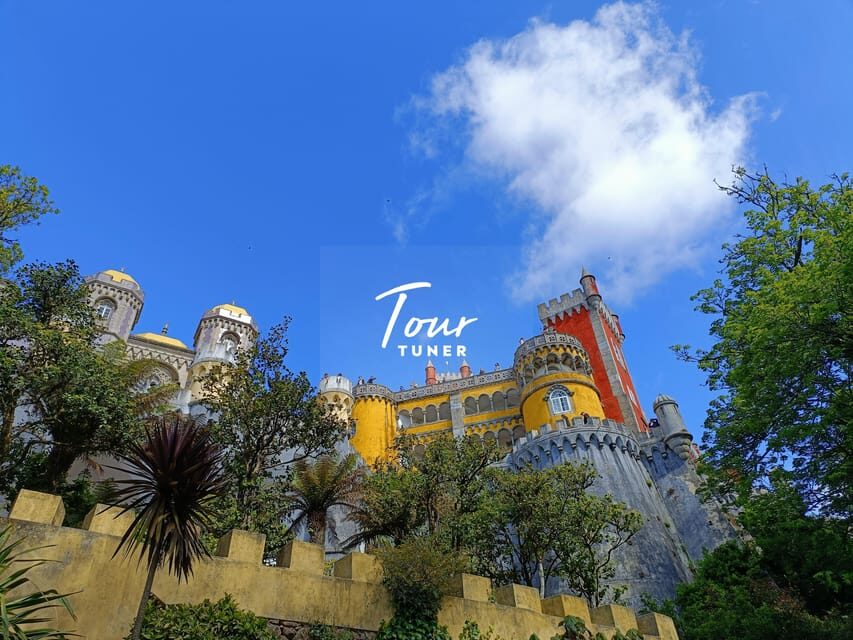
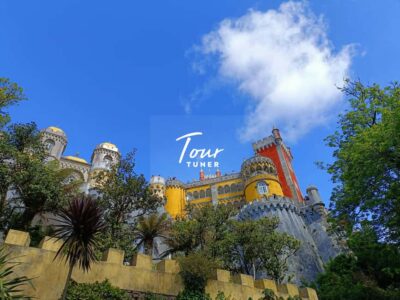
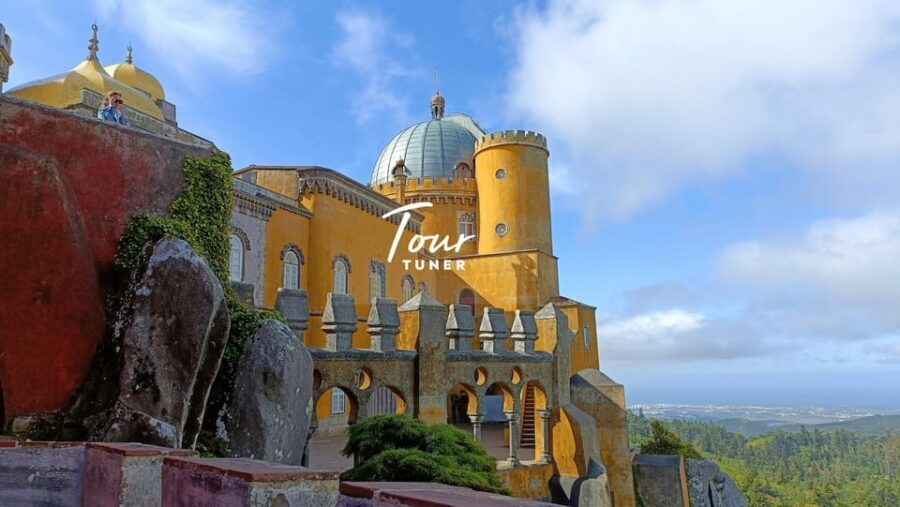
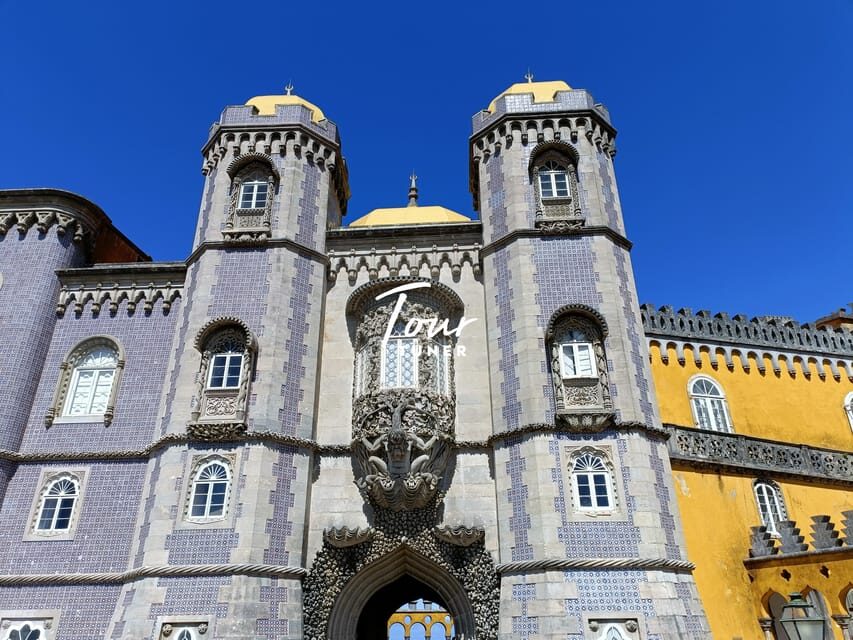
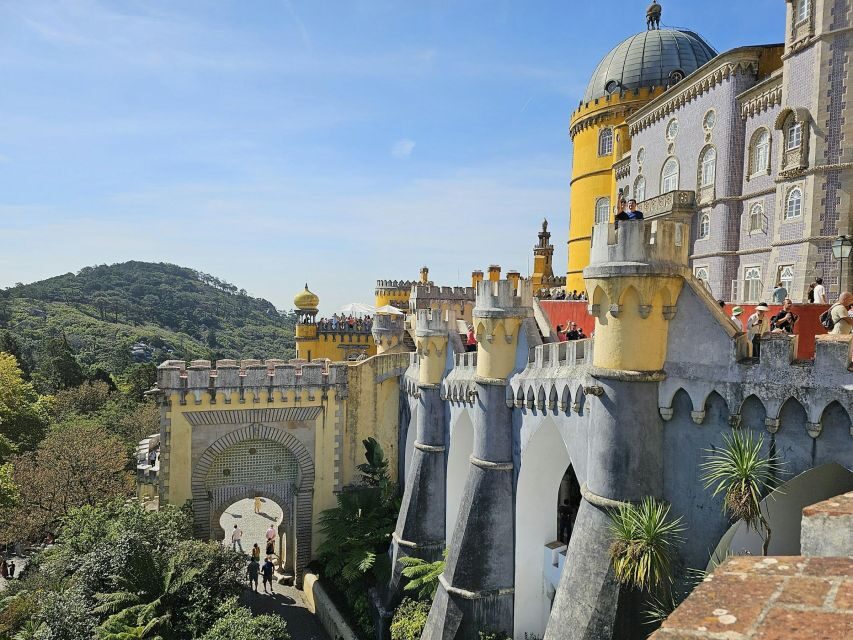
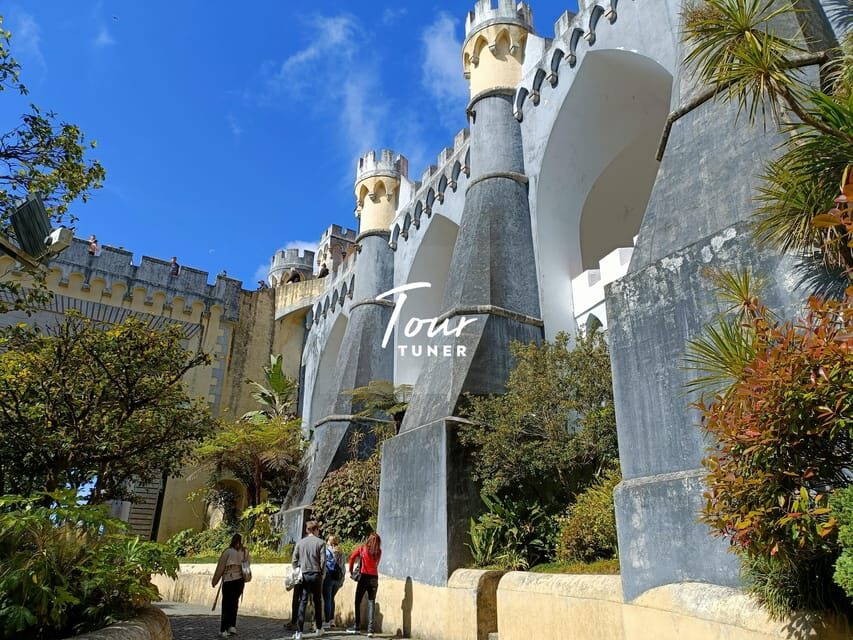
Pena Palace is the headline for a reason. It’s one of Portugal’s most recognizable looks: romantic-era architecture sitting on a rocky peak, with panoramic views over forests and gardens. When the weather is clear, you get sweeping sightlines toward the Atlantic. When it’s cloudy or foggy, the palace can feel even more dramatic, like a storybook in mist.
The key practical thing: Pena Palace and Park use access by time slots only. That’s exactly why having the guide coordinate timed entry can be worth it. You’re not just hoping you arrive before the crowds; you’re working within the schedule.
How the guide approach helps: your guide stays with you for interpretation and the major garden walkthrough, but they don’t go into individual rooms. That reduces crowd friction and keeps your time focused on the big elements you actually came for: the palace exterior, the views, and the overall design idea.
If Pena Palace closes
There’s a contingency plan. If Pena Palace and Quinta da Regaleira close due to fire risk, you’ll still get a day with Queluz National Palace, Cabo da Roca, and Cascais instead. In a past rainy/road-issue situation, guides also pivoted smoothly, so you’re not left staring at a closed gate.





Castle of the Moors: medieval power on a hill with big payoff views
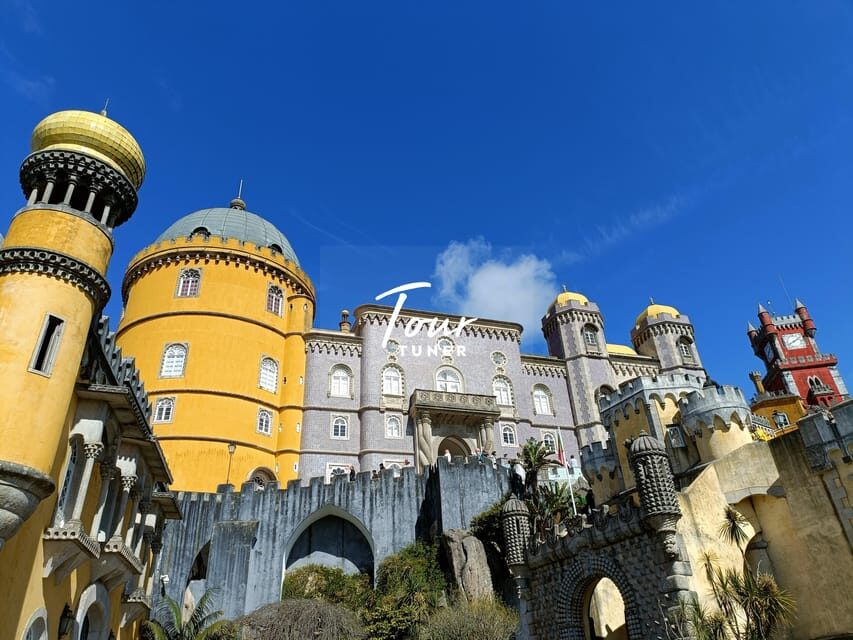
The Moorish Castle is a hilltop medieval fortification with a long story. It was built by the Moors in the 8th and 9th centuries, became a strategic point during the Reconquista, and then passed into Christian hands after 1147.
Here’s what makes this stop valuable for you: you’re not just learning dates. You’re standing in the geography that shaped those events—high ground, defensive lines, and an obvious reason people fought for control of this space.
The walk and stair sections can be uneven. If you have walking limits, say so early. Guides in the reviews, like Neel and Nayem, are described as adjusting the experience to match mobility needs, and private control makes that much easier.
Quinta da Regaleira and Monserrate Palace: two different garden moods
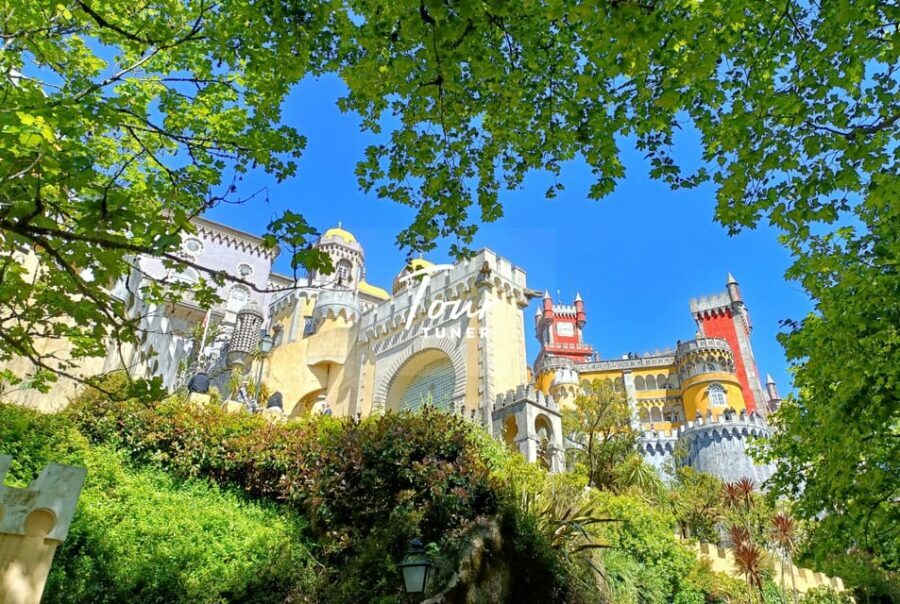
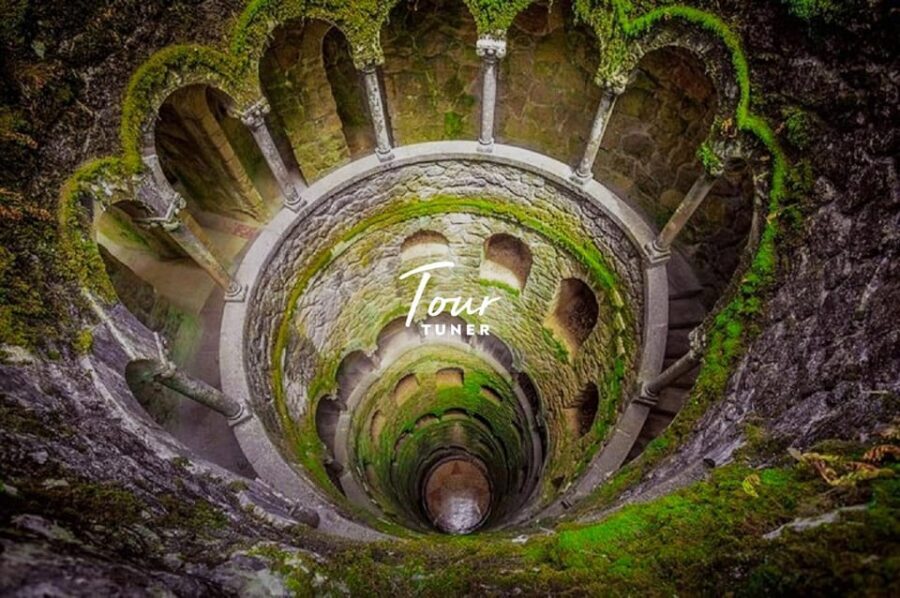
This tour gives you more than one “garden spell.” Quinta da Regaleira is a decorative 20th-century residence with a gothic façade, but the gardens are the real show. The grounds were designed with symbolism tied to secret orders—complete with hidden tunnels and concealed meaning. Even if you’re not chasing lore, the layout is a fun puzzle to walk through.
Then there’s Monserrate Palace, with its own style and vibe. You can treat it as the “different flavor” stop after the more iconic palace peak. The tour includes time for photo stops and sightseeing along the way, which helps you catch both the architecture and the garden atmosphere without turning it into a sprint.
One timed note: Quinta da Regaleira also uses access by time slots only. Since ticket coordination is handled with your guide’s help, it’s easier than trying to figure it out yourself while juggling parking and lines.
Azóia lunch and downtime: a needed breath before the cliff stops
Azóia is where the day’s tempo refreshes. The tour includes a photo stop and time for lunch and exploring, which matters because the rest of the itinerary is built around big sensations: the drop-off drama at Cabo da Roca and the wave impact at Boca do Inferno.
If you’re traveling with people who get tired easily—kids, older parents, anyone with limited stamina—this is a smart place to regroup. You’ll likely feel the change in energy here: fewer timed pressures, more “take it in” time.
Food itself isn’t included, so this is your moment to grab something you can actually digest before the coastal walking gets loud and windy.
Cabo da Roca: where the map ends and the sea begins
Cabo da Roca is the westernmost point of continental Europe, and the view lives up to that claim. You get cliffs around 150 meters high and a feeling of scale that’s hard to fake with a camera. It’s the kind of place where you understand why writers like Luís de Camões linked it to the line where earth ends and the sea begins.
This tour builds in a safety briefing and a short, focused visit time. That’s good because the area can be slippery and windy depending on conditions. You’ll have time for photos, sightseeing, and the option of sunset timing, which can turn this stop into a golden-light memory instead of a quick viewpoint check.
Even if you only get 30 minutes here, it’s enough if your guide helps you aim for the best angles quickly.
Cascais: aristocratic seaside, now with an easy walking rhythm
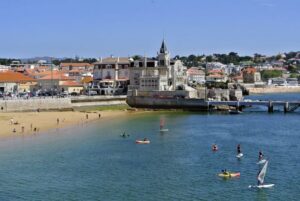
Cascais became a summer destination for European aristocracy in the 19th century, and you can still feel that old “coastal retreat” aura in the town’s feel. The tour gives you time for free exploration and a walking-style stroll so you can breathe, not just pose.
There’s also time for things that make Cascais more than a stop on the way:
- photo moments
- sightseeing time
- shopping, including an arts and crafts market visit (about 30 minutes)
Wine tasting is listed as part of this stop, but remember: food isn’t included. Plan to pay for what you want to try, and use the time to pick one or two tastes rather than trying to sample everything.
Boca do Inferno: Hell’s Mouth turns waves into the show
Boca do Inferno, or Hell’s Mouth, is a cliff seashore chasm where waves crash with real force. It’s believed the area used to be a cave that changed shape over time as the sea carved and broke through, leaving the dramatic opening you see today.
This is the stop where you’re least “tourist” and most “witness.” If the wind is strong, you’ll feel it in your clothes. If the sea is rough, the sound is part of the experience. Your guide helps you time the viewing and keeps the group moving so you don’t get stuck in the wrong spot.
The itinerary includes time for sunset and walking, plus options like wine tasting and food tasting. Again, food isn’t included, so consider these opportunities you can choose if you want them.
Price and what you’re really paying for at $82 per person
At $82 per person for a 7 to 7.5 hour private tour, you’re not just paying for transportation. You’re paying for three things that save you real stress:
- Private guide attention instead of watching someone else’s audio tour through your headphones
- Ticket and timed-entry coordination for places with access-by-time-slot rules
- A driver who knows the region, plus enough flexibility to shift around weather or closure issues
Entry tickets aren’t included (Pena Palace and Park, Castle of the Moors, Quinta da Regaleira, Monserrate Palace), so you should budget for those separately. But having the guide handle timing and help with ticket setup often reduces the risk of arriving at the wrong moment and losing half your visit.
The value gets stronger if you care about seeing more than one major site without turning it into a self-planned scramble.
Who this tour suits best (and who should think twice)
This private day trip works especially well if you want a classic Sintra-and-coast hit with minimal logistics. It’s a good fit for couples, friends, and families who don’t want to rent a car or figure out train times, transfers, and parking.
It’s not ideal if you need wheelchair access, and it also isn’t suitable for people over 331 lbs (150 kg) or over 95 years. The walking is described as moderate, and Sintra’s terrain is part of the charm and part of the challenge.
If mobility is limited, this tour can still be workable with early communication. Reviews mention guides and drivers being considerate and adjusting a few things to help people move at a slower pace.
Should you book this Sintra, Cabo da Roca, and Cascais private tour?
If you want a one-day route that covers the big symbols of Portugal’s west coast—Pena Palace, Cabo da Roca, Boca do Inferno, and Cascais—this is a strong choice. The private nature, timed-entry support, and photo-focused guidance (guides like Nayem and Neel are repeatedly praised for capturing great shots) add real value.
I’d book it if:
- you like structure but still want flexible time on-site
- you’re okay with moderate walking and hills
- you want the coast stops without DIY driving stress
I’d think twice if:
- you hate walking on uneven ground
- you’re not interested in multiple major “must-see” sites and would rather slow down in fewer places
FAQ
Which entrance tickets are not included?
Entry tickets for Pena Palace and Park, Castle of the Moors, Quinta da Regaleira, and Monserrate Palace are not included.
Is there a skip-the-line advantage?
The tour includes skip-the-ticket-line support, and your guide coordinates access so you can work within time slots where required.
How long is the tour?
The duration is about 7 to 7.5 hours.
Where can I be picked up in the Lisbon area?
Pickup options include Lisbon, Belém, Oeiras, Algés, Sacavém, Estoril, and also Lisbon Portela Airport, the Lisbon cruise port, plus Cascais.
How much walking should I expect?
The tour is rated as moderate activity and includes walking at multiple stops, including hillier areas in Sintra.
What happens if Pena Palace and Quinta da Regaleira close?
If they close due to fire risk, the plan shifts to Queluz National Palace, then Cabo da Roca and Cascais.
Is the tour wheelchair accessible?
No, it’s not suitable for wheelchair users.