REVIEW · LISBON
Lisbon: Belem Private Tuk-Tuk Tour for 2 hours
Book on GetYourGuide →Operated by Nicifeel Lisboa · Bookable on GetYourGuide
Belém hits different when you travel by tuk-tuk. You get a tight 2-hour loop that blends landmark photos with context you can actually use. I especially liked how the visit to Jerónimos Monastery explains Portugal’s faith-and-power story, and how the Monument to the Discoveries ties the area to Vasco da Gama and Luís de Cam.
This is also a nice setup for small groups: you’re not stuck hunting down viewpoints or fighting for time. One possible drawback: the stops include photo time and free time, so if you want long, slow museum-style visits, this may feel a bit fast.
In This Review
- Key highlights you’ll actually feel during the ride
- Why a tuk-tuk works for Belém’s biggest sights
- Starting at Hard Rock Café: your easy rendezvous
- Pastéis de Belém: the quick sugar break that locals take seriously
- Jerónimos Monastery: the Manuel I story behind the stonework
- Belém Tower: a short stop that’s worth it for the viewpoint
- Monument to the Discoveries: explorers and poets in one frame
- Electric or gasoline tuk-tuk: what to expect from the ride
- Guide quality and pacing: why the language options matter
- Price and value for a private group up to 6
- Should you book this Belém private tuk-tuk tour?
- FAQ
- Where does the tour start?
- How long is the tour?
- How much does the tour cost?
- Is this a private tour?
- What’s included in the price?
- What is not included?
- What languages are available?
- What kind of tuk-tuk will we ride in?
- Is free cancellation available?
- Is pay-later available?
Key highlights you’ll actually feel during the ride
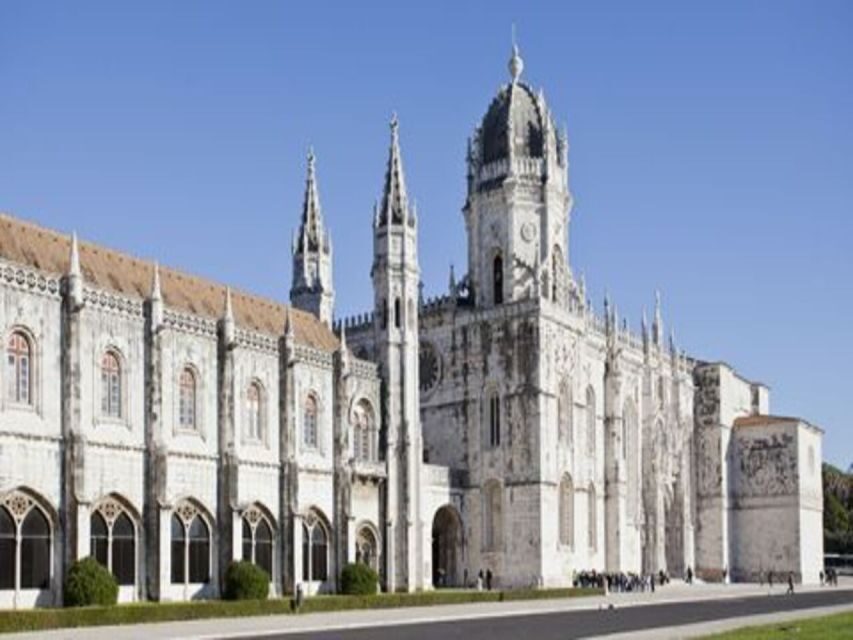
- Manueline (Portuguese late Gothic) details at Jerónimos Monastery, explained in plain terms
- UNESCO-era history from the late 15th century, connected to Portuguese identity
- Belém Tower photo stop with enough time to walk and orient yourself
- Monument to the Discoveries linked to explorers and Portuguese poets
- Private pacing with a guide who can teach in multiple languages
Why a tuk-tuk works for Belém’s biggest sights
Belém is compact enough to enjoy, but the streets can still feel like a maze once you’re there with only a map and your legs. A tuk-tuk solves that by turning your first hour into orientation. You see the big monuments in the order that makes sense, and you don’t burn energy just getting from one viewpoint to the next.
What makes this tour worth it in my book is the combination: fast transport plus commentary that gives meaning, not just names. You’re not only taking pictures; you’re learning why these sites matter to Portuguese identity and culture. That’s the difference between a checklist and a memorable walk-through.
Also, this is a private group. That matters because your guide can adjust the pace, pause for photos, and keep the story clear instead of rushing everyone through like a factory line.
You can also read our reviews of more private tours in Lisbon


Starting at Hard Rock Café: your easy rendezvous
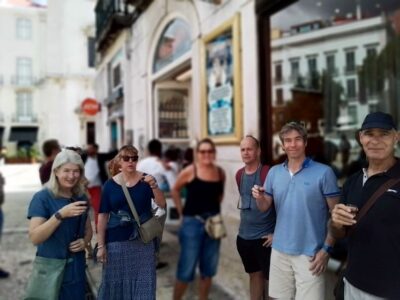
Your meeting point is simple: wait by the door of the Hard Rock Cafe. It’s the kind of landmark you can find even if you’ve been walking all morning.
From there, the tuk-tuk ride does an important job: it gets you into Belém’s rhythm before you hit the historic stops. You’re not arriving cold. You get that first look around, then the tour layers the “what am I seeing and why should I care” part right on top.
If you’re the type who likes to get bearings fast, this beginning helps. You’re set up to understand the geography of Belém—where the river-facing monuments sit and how they relate to the exploration-era story the guide is explaining.
Pastéis de Belém: the quick sugar break that locals take seriously
Right after you set off, you get a Pastéis de Belém break with time for photos and a short visit. The pastry stop isn’t designed as a long food pilgrimage. It’s a break in the middle of the monuments, so you can recharge without losing the flow of the tour.
Here’s the practical value: if you time your eating wrong in Belém, you can end up hungry during sightseeing or distracted by lines. A planned stop keeps you in sync with the day. And even if you don’t consider yourself a dessert person, this is one of those food moments that feels like part of Portuguese culture—not just a snack.
One note: pastries aren’t included, so plan to buy yours separately. But even without the pastry cost, the tour is structured so you don’t have to “figure it out” on the fly.
Jerónimos Monastery: the Manuel I story behind the stonework
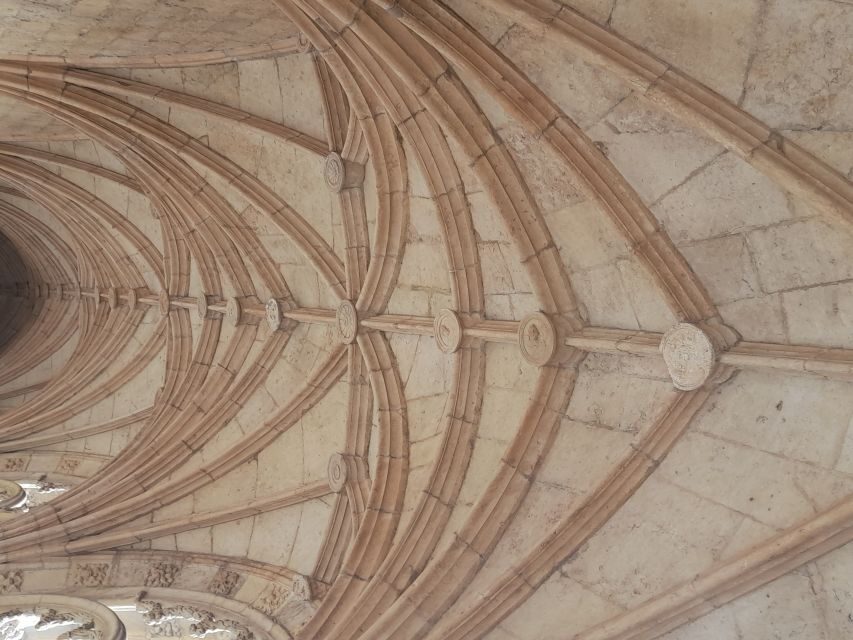
This is the emotional center of the tour, and it’s why the whole experience feels more meaningful than a simple photo hop.
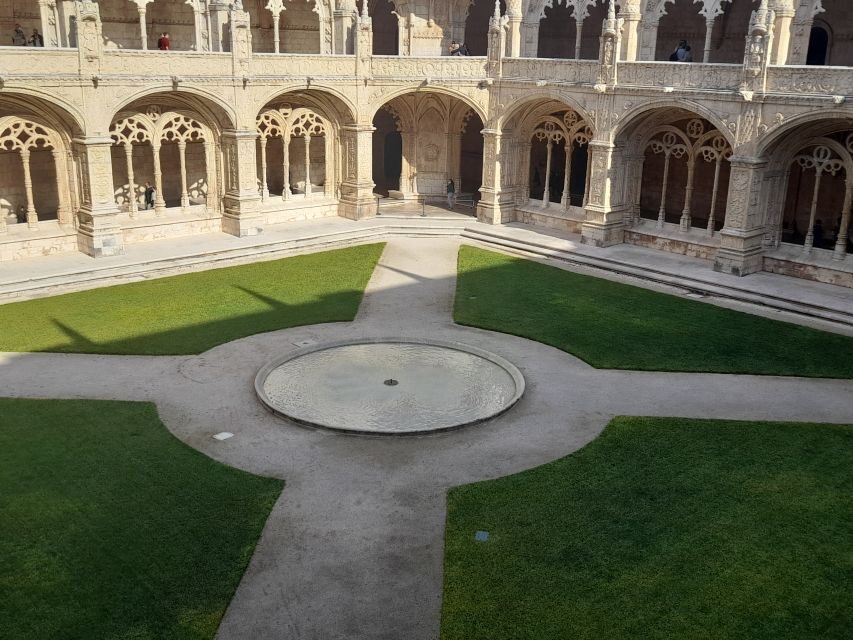
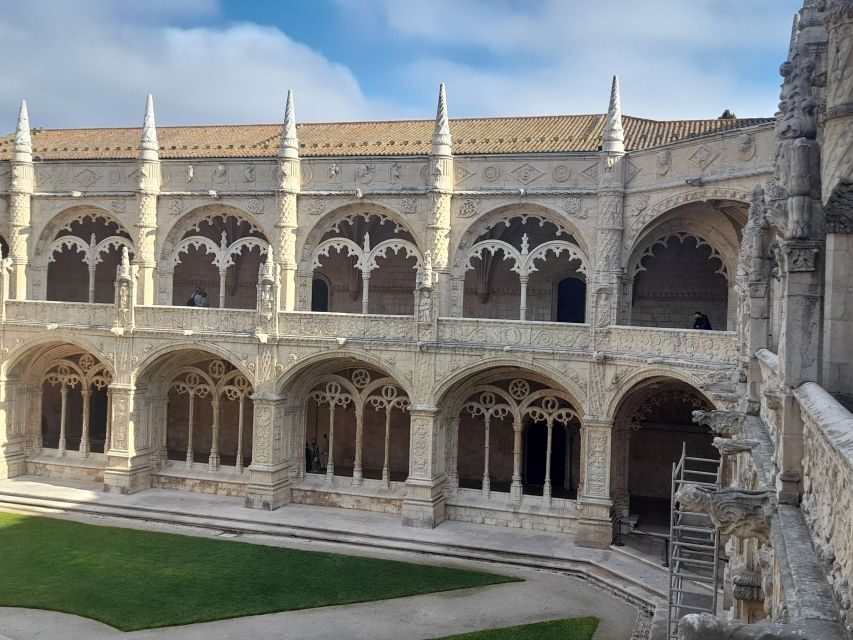
You’ll spend time at the Jerónimos Monastery with a photo stop and free time. More importantly, your guide puts the building into context. King Manuel I commissioned the monastery in 1496 to honor the Infante for his devotion to Our Lady and his faith in Saint Jerome. That connection—religion, royal power, and national identity—is what makes the stonework feel personal instead of ornamental.
Once you enter, look for the Manueline architecture, Portugal’s late Gothic style. The monastery is commonly known as the Jerónimos Monastery because it was donated to the monks of the Order of Jerome. Later, when the order was dissolved in 1833, the convent was used as a school and orphanage until 1940. Then in the 19th century, the church became a monument to local heroes and poets, including Luís de Camões and Vasco da Gama.
That’s the key takeaway: the monastery isn’t just old. It evolved, survived different eras, and kept being used to express Portuguese identity. If you remember only one thing from Belém, make it this. The building explains the country’s story through architecture.
Belém Tower: a short stop that’s worth it for the viewpoint
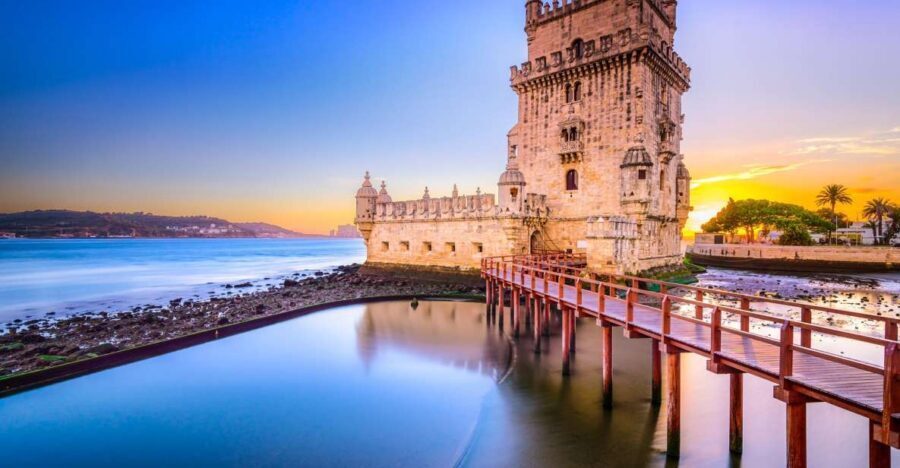
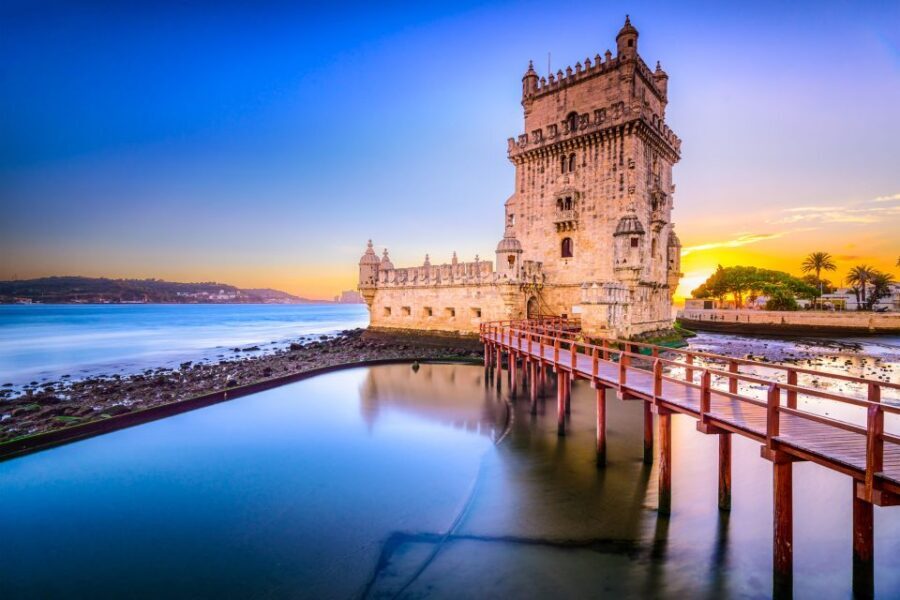
Next up is Belém Tower. You’ll have time for a photo stop plus free time and a short walk. Even though it’s not a long visit, it’s the right kind of stop for this tour length.
What I like about this part is the “orienting” effect. Tower stops work because they anchor your mental map. You can see how the site relates to the river and the exploration-era atmosphere your guide is already building. You’re not just seeing another monument; you’re tying together the theme of travel, faith, and Portugal’s seafaring identity.
Because your time here is limited, I’d keep your expectations realistic. Treat it like a viewpoint and a picture moment, not a deep dive. If you want more time later, you’ll know exactly what angle you care about and can return on your own.
You can also read our reviews of more tours and experiences in Lisbon






Monument to the Discoveries: explorers and poets in one frame
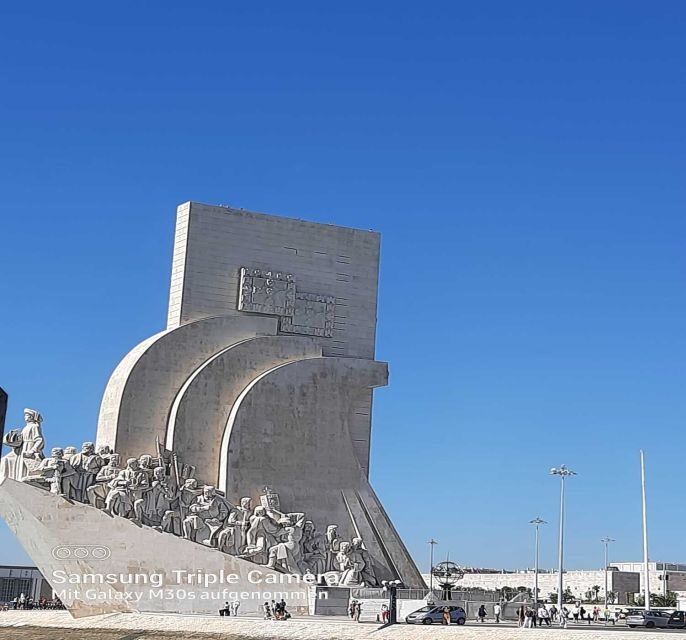
The Monument to the Discoveries is where the tour’s “Portuguese identity” theme becomes very concrete. You get a photo stop and time for sightseeing, and this stop is connected directly to major historical and literary figures, including Vasco da Gama and Luís de Cam.
Even with short timing, this monument lands because it’s designed for storytelling. Your guide helps connect what you’re seeing to the broader narrative: the era when exploration wasn’t just about ships and maps, but about national ambition and cultural memory.
It’s also a smart pairing with what you just learned at Jerónimos. The monastery gives you the spiritual and royal roots, while the monument points outward to the exploration legacy. Put together, they help you understand why Belém became the place where Portuguese history wanted to show itself.
Electric or gasoline tuk-tuk: what to expect from the ride
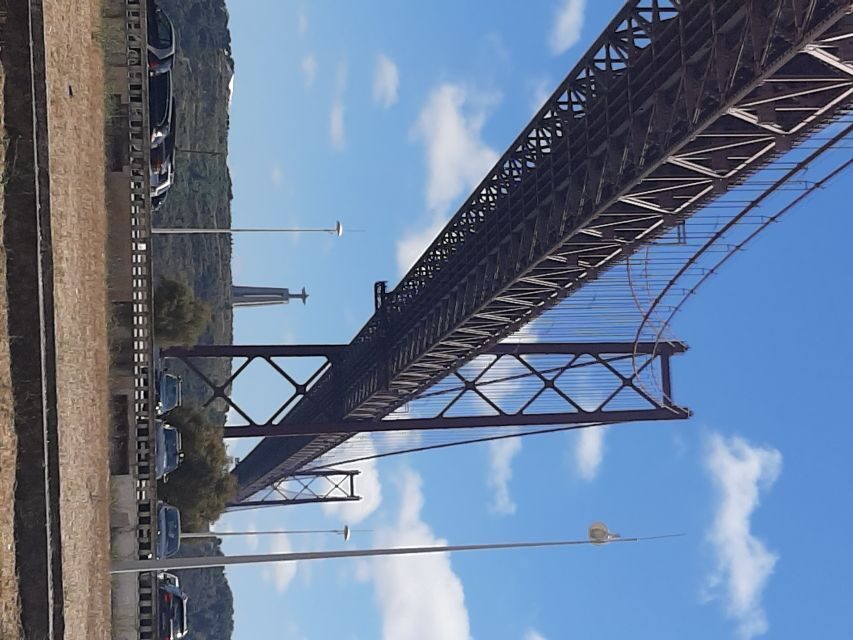
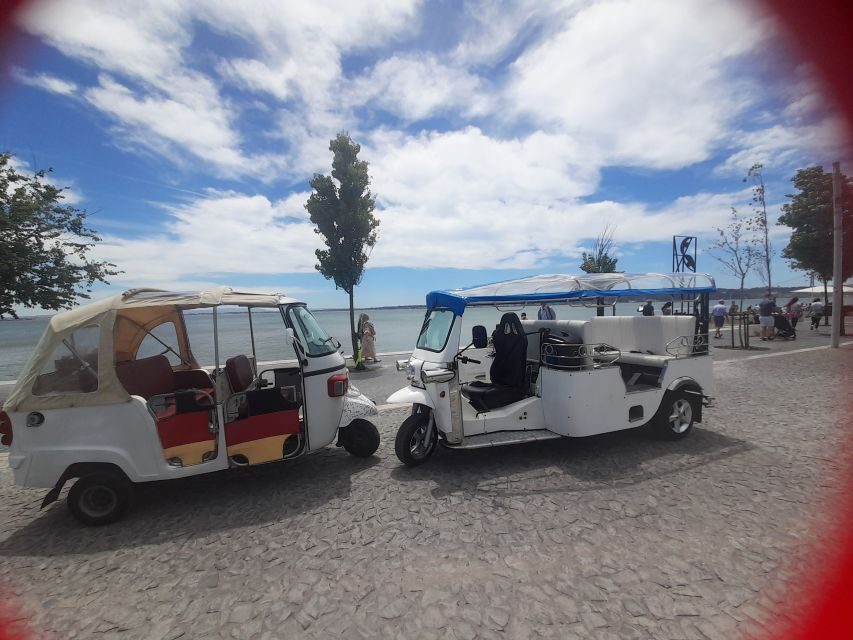
This tour can run in either a large electric tuk or a small gasoline tuk, depending on the participants. You don’t need to choose in advance. Just know that your experience may feel a little different depending on the vehicle.
In both cases, the goal stays the same: cover ground efficiently while keeping the ride comfortable enough for quick stops and photos. The benefit of a tuk-tuk is that you’re not hunched over a walking route. You can glance around, stay oriented, and keep your attention on what the guide is explaining.
If you get motion-sensitive, it’s still worth it to mention to the guide how you’re feeling, especially during short transitions between stops. Private groups make small adjustments easier.
Guide quality and pacing: why the language options matter
The guides here are central to the whole experience, and the standout theme is clear: the explanations are friendly and structured, and the guides make the sites understandable instead of turning it into a lecture.
You’ll see this in the way different guides have been praised for their teaching style and communication—people have specifically highlighted guides like Tanja and Jasmin, and also mentioned how well a Portuguese-speaking guide delivered explanations in German while driving through the old streets. That’s exactly what you want from a short tour: clarity, not confusion.
Also, the pacing fits the format. Each stop includes a mix of photo time and free time, which means you get both the guided part and a chance to look around without feeling rushed. This is ideal if you want to learn quickly and still enjoy being outside.
Language options are broad: French, German, English, Portuguese, Spanish, and Italian. That matters because Belém’s story isn’t just facts—it’s meanings, dates, and religious references. Hearing it in your language helps you remember it later.
Price and value for a private group up to 6
The cost is $212 per group, up to 6 people, for 2 hours. On paper, that might sound like a lot—until you break down what you’re actually buying.
You’re paying for three things that add up quickly if you do them separately:
- A private guide (so you get real context, not just a self-guided loop)
- Transport by tuk-tuk (saving time and navigation hassle)
- A structured sequence that hits the major Belém landmarks without turning your day into a logistics project
For two adults, it’s often more economical than it looks if you’d otherwise pay for individual guided access plus taxis or rides between sites. And for small groups, the price spreads naturally.
The best way to judge value is your goals. If you want a quick overview with meaning, this tour is a strong fit. If you want long, slow visits, you may prefer spending more time on fewer sites instead of covering everything in one go.
Should you book this Belém private tuk-tuk tour?
Book it if you:
- Want the big Belém highlights in about 2 hours
- Prefer a guide who explains why Jerónimos and the monuments matter
- Like the idea of a private, language-friendly experience with a smooth ride
Skip it if you:
- Plan to spend hours inside churches or want long museum-style visits
- Like to travel entirely on your own with no structured stops
My honest take: this is a smart first look at Belém. You’ll leave knowing what to return to, what angles you liked, and why Portuguese identity shows up so powerfully here.
FAQ
Where does the tour start?
It starts at the door of the Hard Rock Cafe in Lisbon.
How long is the tour?
The duration is 2 hours.
How much does the tour cost?
The price is $212 per group, for up to 6 people.
Is this a private tour?
Yes, it’s a private group tour.
What’s included in the price?
The tour includes a guide and the tuk tour.
What is not included?
Tips and Pastéis de Belém are not included.
What languages are available?
The guide can work in French, German, English, Portuguese, Spanish, and Italian.
What kind of tuk-tuk will we ride in?
Depending on the participants, it can be a large electric tuk or a small gasoline tuk.
Is free cancellation available?
Yes. You can cancel up to 24 hours in advance for a full refund.
Is pay-later available?
Yes. You can reserve now & pay later.