REVIEW · LISBON
Secret Lisbon Walking Tour
Book on GetYourGuide →Operated by Lisbon Lives Walking Tours · Bookable on GetYourGuide
Lisbon hides under your feet. This Secret Lisbon Walking Tour packs access to the Nossa Senhora da Graça area, including a secret crypt, plus stories about spies and freemasons that mainstream routes never seem to touch. I like the mix of big eras (Roman, medieval, 20th-century) with very human details, but the one catch is physical: it’s a walking tour with uneven streets and some steps, so it’s not a good fit for mobility issues or very young kids.
If you want a small, question-friendly group, this is built for it: up to 8 people, 2.5 hours, guided in English or French. You’ll pay $41, and you also get an entrance to Independence Palace or Doll’s Hospital, plus a bite—either pastel de nata or ginginha—with the tour ending at Praça do Comércio, the former site of the Royal Palace.
In This Review
- Key things I’d circle on your Lisbon map
- Why this Lisbon secrets tour feels like the city’s real level
- Nossa Senhora da Graça: monastery mysteries, a secret crypt, and Sintra’s shadow
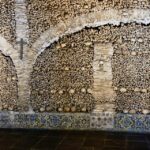
- Walking over bones: graves near the monastery and why the route matters
- A freemason hangout and the city’s habit of secrecy
- Mouraria: street art, medieval layers, and fado’s origin point
- Medieval cemeteries, inhabitants’ stories, and Lisbon’s oldest well
- Doll’s Hospital secret door vs Independence Palace secret garden
- Doll’s Hospital
- Independence Palace
- Roman hippodrome and a medieval hospital: when the city’s plan shows through
- Largo dos Domingos I: 1506 massacre and the burned-out Dominican Church
- Rossio Square during WW2: spies, Jewish refugees, and café life
- Lisbon’s Roaring 20s on an ancient street: casinos, nightclubs, and Roman echoes
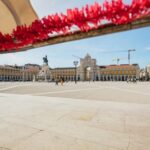
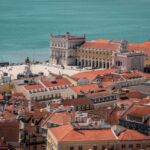
- The finish at Praça do Comércio: former Royal Palace ground under your feet
- Value check: is $41 worth it for this kind of access?
- Who should book this Secret Lisbon Walking Tour?
- FAQ
- How long is the Secret Lisbon Walking Tour?
- What does the tour cost?
- How many people are in the group?
- Which languages are offered?
- Do I get into Independence Palace and Doll’s Hospital?
- Is there food or a drink included?
- Where do we meet for the tour?
- Is the tour suitable for children or mobility needs?
- What’s the cancellation policy?
Key things I’d circle on your Lisbon map
- Nossa Senhora da Graça secret crypt and the 2017 discovery tied to it
- Walking over graves near the monastery and seeing Lisbon’s “in-between” sites
- Mouraria, where fado is said to have started 200 years ago
- Doll’s Hospital secret door OR Independence Palace secret garden
- WW2 spy and refuge stories around Rossio cafés, ending at Praça do Comércio
Why this Lisbon secrets tour feels like the city’s real level
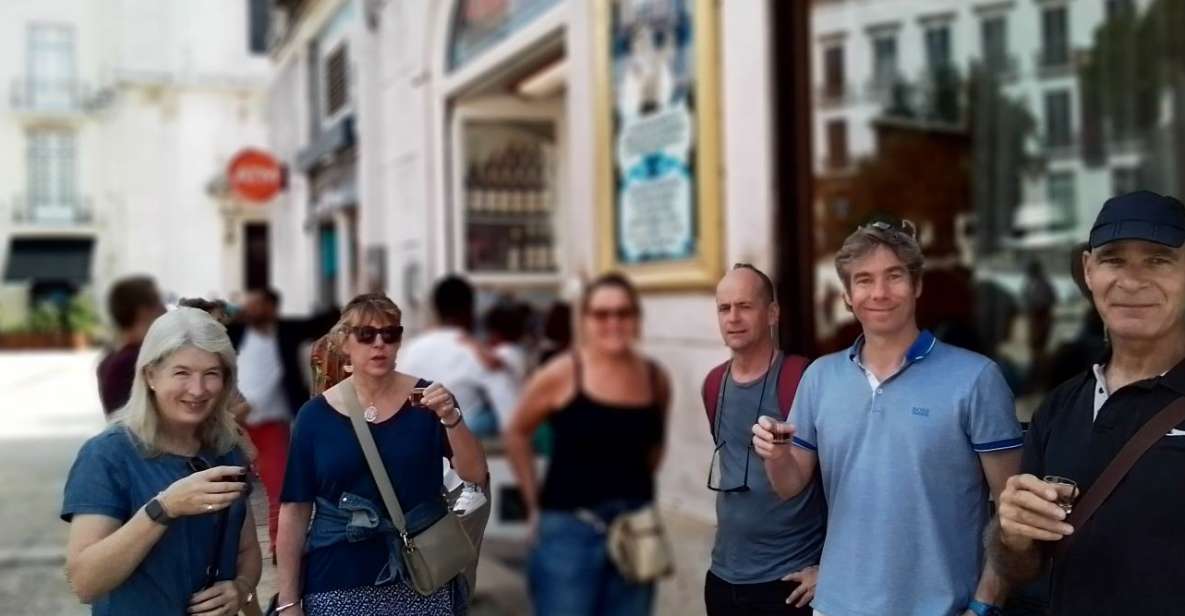
The best part of the Secret Lisbon Walking Tour is that it doesn’t treat Lisbon like a set of postcard stops. Instead, you get a guided walk that connects places you’d otherwise miss: an out-of-the-way monastery complex, quiet corners near cemeteries, and buildings you can spot from the street but wouldn’t know were worth entering.
That approach matters for you because Lisbon is layered. You can stand in one neighborhood and feel three different centuries at once. A good example is the way the route moves from medieval religious spaces to fado’s birthplace area, then onward to Roman traces and 20th-century wartime stories. If you like understanding how Lisbon got the way it looks now, this format makes the city click fast.
Also, with a group capped at 8, you’re not stuck waiting for answers. You can ask why a place is hiding in plain sight, or how a rumor turns into a historical footnote.
You can also read our reviews of more walking tours in Lisbon



Nossa Senhora da Graça: monastery mysteries, a secret crypt, and Sintra’s shadow
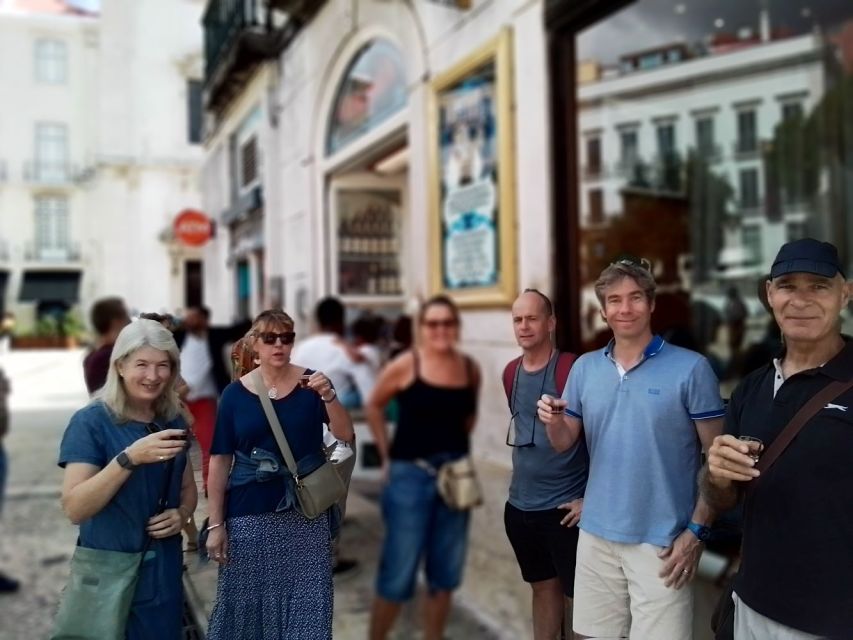
The tour kicks off with a short orientation, then steps straight into the medieval monastery of Nossa Senhora da Graça. This is where the “secrets” label turns practical. You’re not just hearing legends; you’re visiting spaces connected to an astonishing discovery from 2017 and learning why the site still matters today.
What I like here is the balance between the spiritual and the investigative. Monastery stories can sound vague, but here they’re tied to actual site features: a secret crypt, plus the sense that Lisbon’s past wasn’t neatly archived. It was protected, hidden, and rediscovered.
You also hear about Sintra’s royal inhabitants. Even if you don’t plan a separate day trip to Sintra, this gives you useful context. Lisbon and Sintra weren’t isolated stories—power, influence, and people moved between them, and the guide helps you see that connection while you’re standing on the right ground.
Walking over bones: graves near the monastery and why the route matters
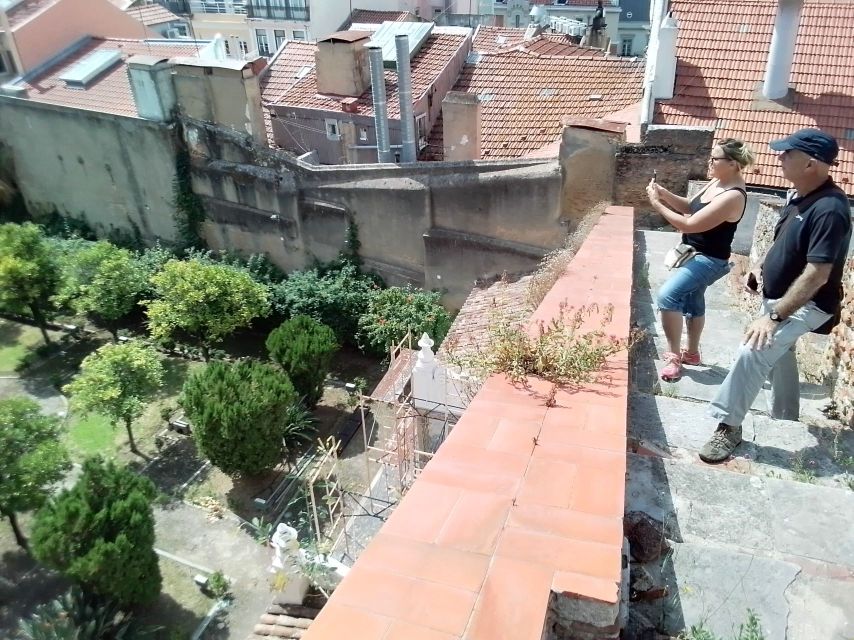
One of the tour’s boldest moments is the part described as walking over bones. It sounds intense, and it is, but the point isn’t shock. The point is scale and location: you learn that some of Lisbon’s past is literally underfoot, tucked near places people think are only religious, only historical, or only “pretty.”
As you move from the crypt area, you’ll walk over graves hidden near the monastery. The guide frames it clearly: you’re not visiting a museum display. You’re walking through a city where burial space and daily life overlap in ways many visitors don’t realize.
There’s often a street-level lesson here for you: when Lisbon looks calm on the surface, that’s sometimes because layers of history were built around it, not erased.
A freemason hangout and the city’s habit of secrecy
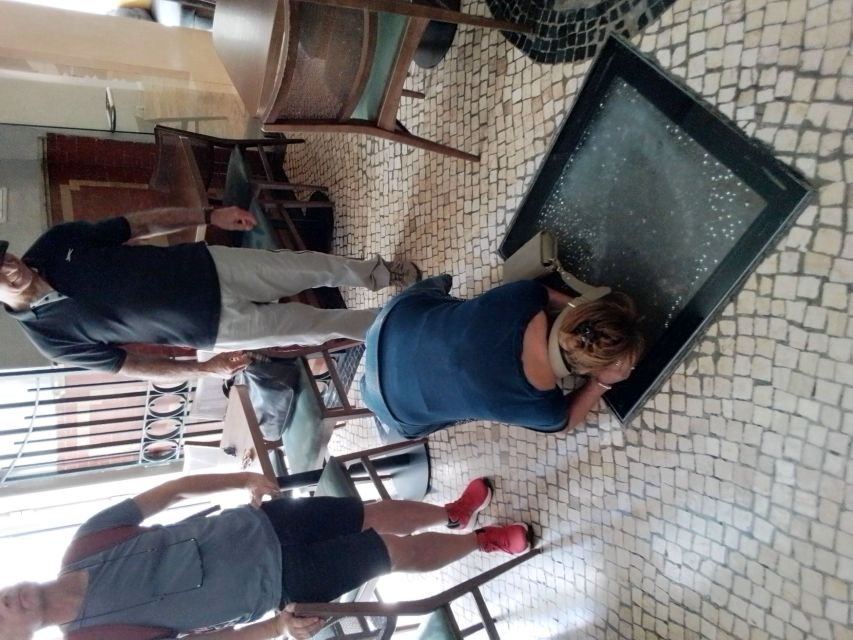
After the monastery area, the route takes you toward a freemason hangout—another theme straight out of the “classic tours don’t reach” promise. Freemasonry in Europe often gets treated like vague symbolism, but on this tour it’s grounded in place: you’re shown a spot tied to the group’s presence and activity in Lisbon.
This is where the guide’s storytelling style really helps. You’re hearing about spies and freemasons as part of Lisbon’s social life, not as separate spooky trivia. That makes the stories easier to remember when you’re back in your hotel trying to place what you saw.
If you’re the kind of traveler who likes patterns—who used what café, who met where, why certain streets mattered—this portion will make the city feel organized in your mind.
Mouraria: street art, medieval layers, and fado’s origin point
Next comes Mouraria, and the tour makes an effort to connect culture to geography. You’ll pass stunning street art, then head toward the spot where fado is said to have started 200 years ago.
Even if you already know Lisbon is famous for fado, I’d still recommend being mentally ready for this being more than a music stop. The guide’s job is to link sound to streets: where people gathered, what the neighborhood environment meant, and how a musical tradition forms in a real community rather than in a vacuum.
This also sets you up for what’s next: the tour doesn’t stay in one “vibe.” It shifts from the pulse of fado back toward older burial grounds and quieter remnants.




Medieval cemeteries, inhabitants’ stories, and Lisbon’s oldest well
You’ll visit another medieval cemetery and learn about its inhabitants. Cemetery tours can feel heavy, but here it’s handled as place-based history. The guide gives you names, roles, and context so the area isn’t just a visual backdrop.
Then comes a detail that feels like it belongs in a detective story: Lisbon’s oldest well, tucked away inside a hotel. The fact that this kind of thing hides in an everyday setting is exactly why walking tours like this are worth it. You see the city’s “behind the scenes” features without needing insider contacts or special planning.
The takeaway for you: Lisbon rewards slow observation. If you only look for viewpoints, you’ll miss the structural clues that explain how the city functioned.
Doll’s Hospital secret door vs Independence Palace secret garden
A big booking decision here is the entrance you’ll get. The tour includes entrance to Independence Palace OR Doll’s Hospital, and that choice affects which “secret” payoff you experience.
Doll’s Hospital
You’ll go to the Doll’s Hospital, where you learn the establishment’s history and view a secret door. It’s one of those Lisbon moments that feels both whimsical and slightly eerie—like the city is playing with the idea of repair, preservation, and hidden passageways.
If you like curious, human-scale history (not just grand palaces), this option fits.
Independence Palace
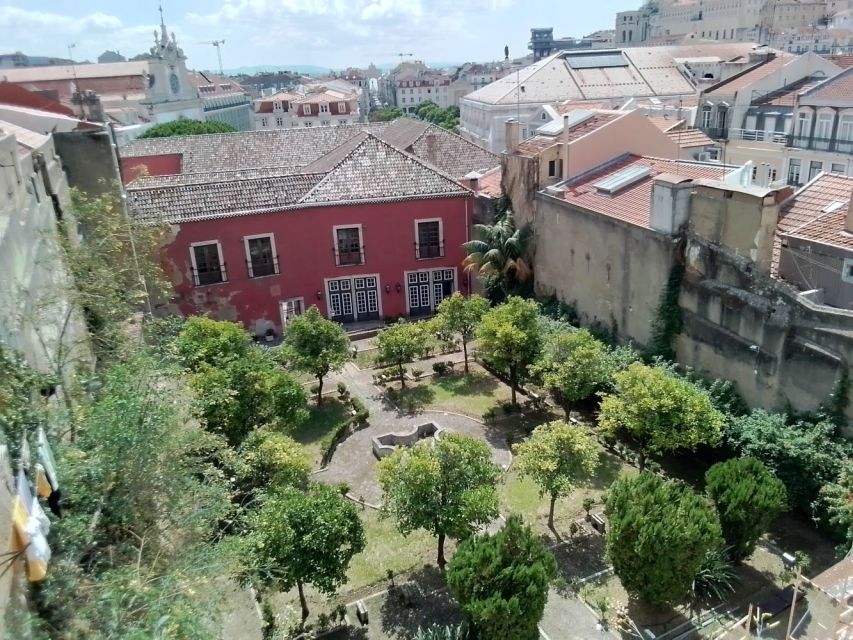
The other option is Independence Palace, including a secret garden. It’s described as a place very few people visit, which tells you something important: Lisbon’s best quiet spaces often aren’t advertised with giant signs.
This section is also useful for understanding Lisbon’s power structures. The palace setting gives you a different kind of context than the earlier religious and cemetery sites, and the garden adds a lived-in contrast: history isn’t only stone and dates; it’s also space for people to breathe.
Roman hippodrome and a medieval hospital: when the city’s plan shows through
As you keep walking, you’ll see the site of the Roman hippodrome and a medieval hospital. These stops work well together because they show Lisbon as a functioning city across time—built for gatherings, built for care, built for movement.
The Roman trace is a reminder that Lisbon isn’t just a medieval-onward story. And the medieval hospital gives you a sense of what “healthcare” meant before modern systems. Even if the physical remnants aren’t giant, the guide helps you read the location, so you understand why it would have mattered.
This portion also keeps the tour from becoming only spooky or only sad. It adds a practical angle: life, work, and community needs shaped how the city grew.
Largo dos Domingos I: 1506 massacre and the burned-out Dominican Church
Outside in Largo dos Domingos I, the tour takes a hard turn into one of Lisbon’s darker chapters: the massacre of the city’s Jews in 1506. It’s a heavy story, but it’s placed where it belongs—linked to the surrounding area, not dumped as a disconnected lecture.
Nearby, you visit the burned-out Dominican Church. The guide uses this as a visual anchor so you don’t just hear dates. You see a scar in the city’s built environment and understand that destruction doesn’t always vanish; sometimes it becomes part of what survives.
If you’re sensitive to difficult history, this is the moment to know you’ll be walking through it. The good news is that the tour treats the subject with seriousness and place-based context.
Rossio Square during WW2: spies, Jewish refugees, and café life
Passing Rossio Square is more than a sightseeing pause. The guide tells stories of spies and Jewish refugees who used the cafés in the square during World War II.
What’s smart about this approach is that it doesn’t just talk about espionage as movies. It places wartime movement into everyday spaces—cafés, street corners, and the kind of “normal” setting where danger could hide.
For you, this makes Lisbon’s wartime story feel real. You start to notice how public spaces in a city can double as stages for secret actions.
Lisbon’s Roaring 20s on an ancient street: casinos, nightclubs, and Roman echoes
Walking down one of Lisbon’s oldest streets—going back to Roman times—you’ll hear about casinos and nightclubs where Lisbon’s Roaring 20s happened.
This is one of those transitions that makes the entire tour feel cohesive. You move from persecution and war to nightlife history, but it’s not random. The street itself ties it together: the same long path that once mattered to Romans kept serving Lisbon’s social life across centuries.
It also helps you picture Lisbon as a city that reinvents itself without losing its backbone. When you get back to your independent wandering, you’ll likely spot the street layout with new eyes.
The finish at Praça do Comércio: former Royal Palace ground under your feet
The tour ends at Praça do Comércio, the former site of the Royal Palace. This is a satisfying way to wrap up: you go from hidden doors and crypts to one of Lisbon’s most open, famous spaces.
Practically, the ending location is useful. If you want to keep exploring afterward, you’re in a central area with lots of options for food and transport. Emotionally, it lands well too, because it highlights a contrast. The secrets you saw earlier weren’t isolated—they were part of the same city that later produced grand royal public spaces.
Value check: is $41 worth it for this kind of access?
At $41 per person for a 2.5-hour walk, you’re paying for three things that often cost extra when booked separately: small-group time, entrance access (Independence Palace or Doll’s Hospital), and a included Portuguese bite (pastel de nata or ginginha).
If you’re the type who’s tired of tours that point and move on, this value tends to work. You’re seeing indoor or semi-private areas that many visitors don’t stumble into on their own, and you’re getting context for why they mattered.
The main cost you should expect is effort. It’s not a sit-and-stare experience. You’ll be on your feet, reading the city as you walk it.
Who should book this Secret Lisbon Walking Tour?
Book it if you want:
- A small-group tour with room for questions
- Lisbon history that includes crypts, cemeteries, and hidden doors, not only viewpoints
- Stories that connect different eras: Roman traces, medieval sites, and WW2 café life
Skip it (or plan differently) if:
- You need mobility-friendly routes. This tour isn’t suitable for people with mobility impairments.
- You’re traveling with kids under 5.
- You hate walking on uneven streets and don’t enjoy step-heavy old neighborhoods.
FAQ
How long is the Secret Lisbon Walking Tour?
It lasts about 2.5 hours.
What does the tour cost?
The price is $41 per person.
How many people are in the group?
It’s a small group limited to 8 participants.
Which languages are offered?
The live guide speaks French and English.
Do I get into Independence Palace and Doll’s Hospital?
The tour includes entrance to Independence Palace OR Doll’s Hospital, depending on the option you booked.
Is there food or a drink included?
Yes. You’ll receive pastel de nata or ginginha.
Where do we meet for the tour?
The meeting point may vary depending on the option booked.
Is the tour suitable for children or mobility needs?
It’s not suitable for children under 5 years old, and it isn’t suitable for people with mobility impairments.
What’s the cancellation policy?
You can cancel up to 24 hours in advance for a full refund. There’s also a reserve now & pay later option.