REVIEW · LISBON
Lisbon: Belem Walking Tour with Jeronimos Monastery Entry
Book on GetYourGuide →Operated by LP FASSI SIMARDI VIAGENS E TURISMO ME · Bookable on GetYourGuide
If you like Portugal’s power-wrapped-in-stone, this route fits. You’ll start at Mosteiro dos Jerónimos, go inside when the day is still calm, then connect the dots to the Belém Tower and the age that put Portuguese ships on world maps.
What I like most is how this tour treats Jerónimos as more than a postcard. You get guided access to the upper cloister viewpoints, then explanations of how spaces like the Chapter Room and even Fernando Pessoa’s tomb (moved there in the 20th century) fit into the building’s story. I also love that you get the included stop for the real deal at Pastéis de Belém, not a random pastry detour.
The main thing to keep in mind: the Belém Tower is undergoing restoration work and cannot be visited, so you’ll get sightseeing and context, but not an interior tour.
In This Review
- Key things you should know before you go
- Jerónimos Monastery entry that gets you in fast
- The cloisters: the best place to start reading the building
- Santa Maria de Belém Church and Manueline architecture you can actually spot
- Empire Square Garden and the short walk to context
- Monument to the Discoveries: where the Age of Discoveries becomes public art
- Pastéis de Belém: the included tart is more than a snack
- Belém Tower right now: what you can expect during restoration
- Meeting point, pace, and why arriving early changes the whole feel
- Price and value: what you’re actually paying for at $70
- Who this Belém walking tour is best for
- Guides you may get: expect strong English and energy
- Should you book the Jerónimos + Belém tour?
- FAQ
- What’s included in the tour price?
- How long is the tour?
- Where do we meet for the tour?
- What time does entry into Jerónimos typically happen?
- Do we get to skip the line?
- Is the Belém Tower part of the tour?
- What food is provided?
- What should I bring?
- Is this tour suitable for wheelchair users or reduced mobility?
- Do I need a special level of fitness?
Key things you should know before you go
- Skip-the-line entry at Jerónimos with tickets already purchased, so you spend more time inside.
- Upper Cloister views help you understand the architecture instead of guessing.
- Church and cloister guided context includes what the construction represented in Portugal’s 15th-16th century navigation era.
- Manueline architecture focus, with reminders that this style links late Gothic and Renaissance ideas.
- Pastéis de Belém is included as the original custard tart from the monastery-era recipe tradition.
- Belém Tower may be exterior-only right now due to restoration.
Jerónimos Monastery entry that gets you in fast
Most Lisbon sightseeing is popular for a reason, but Jerónimos is one of those places where the wait can quietly eat your morning. This tour solves that with pre-purchased tickets and a guide who’s positioned at the entrance area where queues form. The goal is simple: you don’t waste time figuring out which line moves and which one doesn’t.
Timing matters here. You’ll meet at the Jerónimos complex, then enter the monastery building around 9:30 a.m. That’s a sweet spot. You get the first wave of the day’s visitors without arriving after the crowds have fully locked in.
Also, the tour pacing is built for seeing details. Jerónimos isn’t a “walk past and hope for the best” site—there are carved elements and architectural references where a guide’s explanations save you from turning it into a guessing game.
You can also read our reviews of more walking tours in Lisbon


The cloisters: the best place to start reading the building
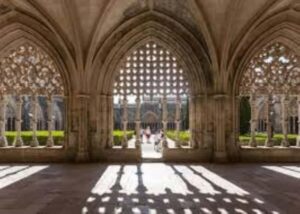
Jerónimos rewards you most when you understand the logic of the space. The tour begins with the Upper Cloister, and that’s smart. From there, you can get sweeping views of the architectural beauty contained in the complex. You also get a guided walkthrough of what the construction meant for society at the time.
This is where the tour connects architecture to Portugal’s era of expansion. The guide explains how Jerónimos ties into the Great Portuguese Navigations (the 15th and 16th centuries), so the monastery feels like part of a larger national story rather than an isolated monument.
Once you’ve got the big picture from the Upper Cloister, you move into lower cloister spaces where the meaning becomes more personal. The guide points out areas such as the Chapter Room and the old Refectory, plus the tomb of Fernando Pessoa—which matters because it was moved there only in the 20th century. That kind of time jump is useful. It reminds you the site isn’t frozen in one era; Portugal keeps reinterpreting it.
Santa Maria de Belém Church and Manueline architecture you can actually spot
After the cloisters, you head into the church of Santa Maria de Belém, described for a reason as majestic. This is where the guide’s explanations become your cheat sheet for what you’re looking at.
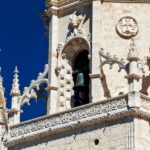
The church is strongly associated with Manueline architecture, a style that developed in Portugal at the beginning of the 16th century. The key idea is that it blends late Gothic structures with Renaissance elements. Without guidance, that would be hard to translate into something tangible. With guidance, you start to recognize the “why” behind the ornamental language.
You’ll also learn why certain burials matter. The church includes prominent burials tied to the Avis dynasty, including King D. Manuel I and his son João III. The tour also connects the site to the navigation era by noting names such as Vasco da Gama and Luís de Camões.
Even if you’re not obsessed with Portuguese royalty, this part is worth your time because it answers a practical question: Why are these names here, and what did they represent in their period? A guided visit helps you see these as part of a narrative, not just names on stone.
Empire Square Garden and the short walk to context
Between major monuments, you’ll get a short transition—around 15 minutes in the area of Empire Square Garden—before you move on to the Monument to the Discoveries. This brief break is practical. It keeps the morning from becoming one long museum-stumble, and it gives you a chance to re-orient your sense of place in Belém.
You’ll be learning as you go, but you won’t feel trapped in a lecture. The walking time helps you absorb the neighborhood layout, which makes the next stops land harder.
Monument to the Discoveries: where the Age of Discoveries becomes public art
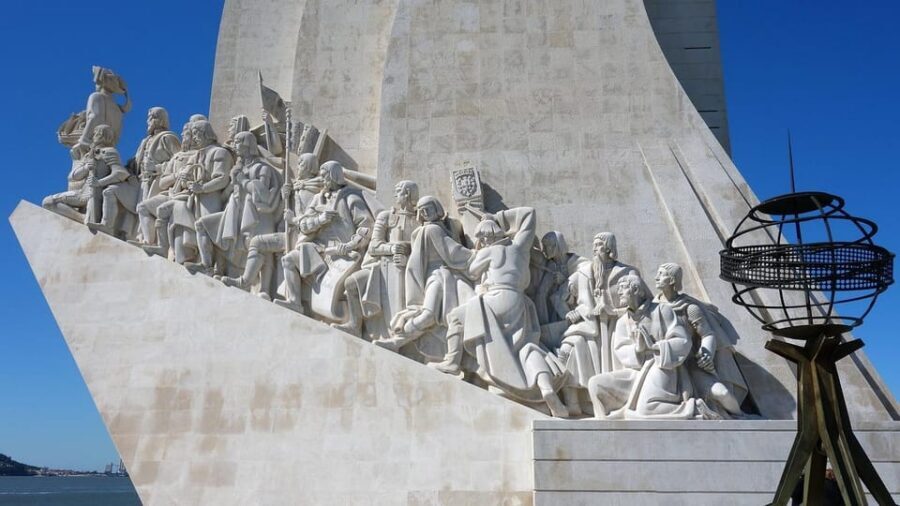
Next up is the Monument to the Discoveries, erected in 1960 to commemorate the 500th anniversary of the death of Infante D. Henrique (often seen as the main figure of Portuguese navigations). This stop is short—about 20 minutes—but it’s designed to be meaningful.
The guide explains how the monument includes other figures linked to the expansion of Portuguese culture through the world. That matters because the monument can look like just another sculpture park if you don’t know what you’re looking for. With guidance, you start to interpret the symbolism and remember that Belém is where Portugal put its ambitions into physical form—ships, trade routes, and the people who made them real.



Pastéis de Belém: the included tart is more than a snack
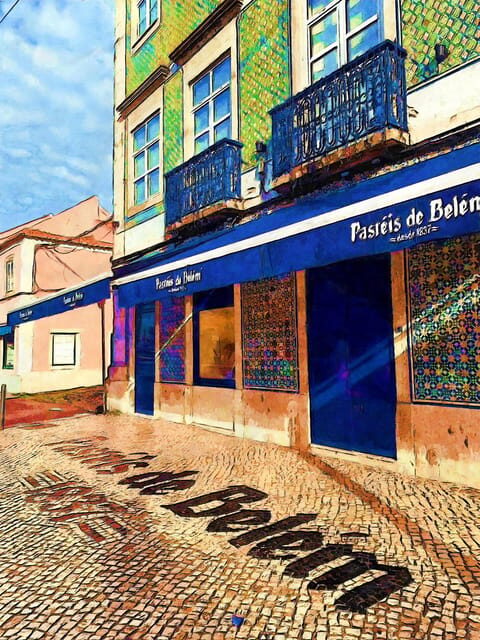
The included stop at Pastéis de Belém is timed right after you’ve seen the monastery’s religious and historic layers. That’s a smart sequencing choice. When you eat, you’re not just refueling—you’re connecting the place to a living tradition.
The tour uses the story of the recipe: an ancient custard tart recipe created by the monks of Jerónimos Monastery, sold in the same establishment since the mid-19th century. You try the original custard tart from Lisbon as part of the experience.
What you’ll take away from this isn’t only that the tart is good (it is). It’s also that Belém’s identity isn’t only stone monuments. It’s food culture that grew out of historic institutions, then survived long enough to become a daily habit for locals and a must-do for visitors.
If you’re thinking about calories, factor in the fact that you’ve walked a good chunk already. I’d plan on treating the pastry as your real break, not a quick bite while standing.
Belém Tower right now: what you can expect during restoration
Belém Tower is one of those Lisbon images that most people recognize immediately. It’s also a UNESCO World Heritage Site alongside Jerónimos. Here’s the catch: the tour notes that the tower is undergoing restoration work and cannot be visited.
So you should mentally adjust your expectations. You’ll still make it to the tower area, and you’ll get sightseeing plus guided information, but the interior and close-up tour that many people picture will not be available at the moment.
That said, restoration doesn’t mean the stop is pointless. The guide can still frame why the tower mattered and how it relates to defending Lisbon against invaders approaching the capital. Even from an outside view, you’ll leave with a better grasp of the tower as a defensive work tied to a much bigger story.
If you’re coming in hopes of an interior tour, plan one more Belém Tower visit later on your trip—or accept that this version is more about meaning than access.
Meeting point, pace, and why arriving early changes the whole feel
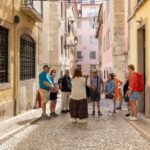
Your guide meets you in front of the entrance to the Jerónimos Monastery, near the south entrance to the church, where queues form. The tour notes that there’s a photo indicated for the meeting place—use it. In a busy site like Jerónimos, matching a vague landmark is how you end up late and stressed.
The tour runs about 3 to 3.5 hours. That’s long enough for real explanation, but short enough to keep the day from feeling like a chore. It also means you’re walking between sites at a comfortable rhythm instead of sprinting like you’re chasing a checklist.
This is rain-or-shine. You should bring an umbrella and sunscreen, and wear comfortable shoes. Belém mornings can start pleasant and then turn hot, so a sun hat is a smart move.
One more practical note: the tour instructions ask you not to be late and to keep noise down. It’s a small rule, but it affects the experience when you’re entering enclosed spaces and listening to the guide.
Price and value: what you’re actually paying for at $70
At $70 per person for roughly 3 to 3.5 hours, the value depends on one thing: what you’d otherwise do on your own.
Here’s what you’re getting included:
- Entrance tickets to Jerónimos Monastery
- Skip-the-line access via a separate entrance route
- Expert English-speaking guide
- One original Pastéis de Belém custard tart
That’s not just “a guide.” A lot of the cost is tied to saving time at Jerónimos and getting clarity once you’re inside. If you go without a guide, you can absolutely admire the buildings. But you’ll likely miss the connections: why the spaces are arranged as they are, what Manueline ornament is doing, and why the monument stops aren’t random.
Also, the tour language is English, and the guide is positioned to keep the flow moving even when the main entrances are slow. Some reviews mention devices like headsets being provided for clearer audio, which is another small quality-of-life feature if you’re dealing with crowds.
So for $70, I see this as good value if:
- you care about architecture and names tied to the navigation era
- you want to reduce queue time
- you’re planning to eat Pastéis de Belém anyway and want it included in a structured morning
Who this Belém walking tour is best for
This tour fits best if you want a guided “read” of Belém rather than a loose self-walk.
You’ll likely enjoy it if you:
- like history that points to specific places (cloisters, refectory areas, church burials)
- want the architecture explained in plain terms, including Manueline details
- prefer a morning plan that combines major monuments with one real food stop
It’s less ideal if you:
- have mobility limitations. The tour states it’s not suitable for people with mobility impairments or wheelchair users.
If you’re traveling solo, the English guide can help you move efficiently. If you’re traveling as a couple or group, private group availability can be a strong option if you want a more tailored pace.
Guides you may get: expect strong English and energy
One thing that shows up repeatedly in this tour’s experience is the guide quality. Names that come up include Luis, Leonardo, Leo, Federico, Frederick, Daniel, and Ricardo—and the common theme is energetic, structured storytelling.
That matters because Jerónimos can be quiet and easy to wander through without direction. A good guide turns it into an active experience—pointing out carving meanings, explaining who is buried where, and keeping the group moving at a digestible pace.
If you’re the kind of person who likes asking questions, this format also tends to work well. Several guides are described as answering questions and giving tips for what to do after the tour, which is handy when you still have a full day in Lisbon.
Should you book the Jerónimos + Belém tour?
I’d book it if you want a smooth, guided Belém morning where Jerónimos Monastery entry is handled for you, you get a clear explanation of the cloisters and church, and you’re happy to accept that the Belém Tower interior isn’t available due to restoration.
I’d think twice only if you’re expecting the tower as a major interior highlight, or if mobility constraints make a walking tour difficult. In that case, you might want a different plan that focuses more on what you can access.
Bottom line: for $70 you’re buying time saved, guidance that helps you interpret what you see, and an included iconic Lisbon bite at Pastéis de Belém. For many first-timers, that combo makes Belém feel less overwhelming and more meaningful—without turning your morning into an endurance test.
FAQ
What’s included in the tour price?
The tour includes entrance tickets to Jerónimos Monastery, an original Pastéis de Belém custard tart, and an expert English-speaking tour guide.
How long is the tour?
The experience lasts about 3 to 3.5 hours.
Where do we meet for the tour?
You meet your guide in front of the Jerónimos Monastery entrance, near the south entrance to the church where queues form. There’s also a photo indicated to help you find the right spot.
What time does entry into Jerónimos typically happen?
The tour is set up so you enter the monastery building around 9:30 a.m.
Do we get to skip the line?
Yes. The tour includes skip-the-line access via a separate entrance, with tickets already purchased.
Is the Belém Tower part of the tour?
You do visit the Belém Tower area for sightseeing and guide context, but the tower itself cannot be visited because it is under restoration.
What food is provided?
You’ll stop at Pastéis de Belém and try the original custard tart. Lunch is not included.
What should I bring?
Bring comfortable shoes, sun hat, sunscreen, and plan for weather with an umbrella since it runs rain or shine.
Is this tour suitable for wheelchair users or reduced mobility?
No. The tour is listed as not suitable for people with mobility impairments or wheelchair users.
Do I need a special level of fitness?
It’s a walking tour with multiple monuments in a short time window, so you’ll want to be comfortable walking several segments on foot.