REVIEW · LISBON
Lisbon Street Art Tour
Book on GetYourGuide →Operated by Lisbon Lives Walking Tours · Bookable on GetYourGuide
Street art in Lisbon teaches you to look harder. In just two hours, you’ll see major international names alongside Portuguese street artists, and you’ll get the stories and techniques behind the walls in Graça and Mouraria.
I love that the guide connects each piece to what it’s saying about society, politics, and the whole role of art. I also like the small-group feel (limited to 8), with guide Peter keeping things conversational as you walk. One thing to plan for: it’s still a walking tour, and it isn’t suitable for people with mobility impairments.
In This Review
- Key highlights worth planning for
- Start in front of the church: how the 2-hour walk is paced
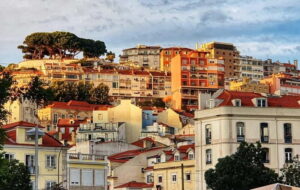
- Graça and Mouraria: two neighbourhoods where street art feels “grown in”
- Shepard Fairey on the wall: why the US icon lands differently in Lisbon
- Portuguese heavyweights: Vhils, Bordalo II, and the art of technique
- When street art turns political, the conversation starts with you
- Women entering the street art scene: changing who gets the spotlight
- More than murals: tiles, sculptures, and the public art you walk past
- Pastel de nata or ginginha: the included Lisbon taste break
- Price and logistics: is $41 worth your two hours?
- Who should book this street art walk (and who should skip it)
- Should you book the Lisbon Street Art Tour with Lisbon Lives Walking Tours?
- FAQ
- Where does the tour meet?
- How long is the Lisbon Street Art Tour?
- What’s included in the price?
- Are drinks included?
- How big is the group?
- What language is the tour guide?
- Which neighbourhoods does the tour focus on?
- What should I bring?
- Is it suitable for people with mobility impairments?
- How flexible is cancellation?
Key highlights worth planning for
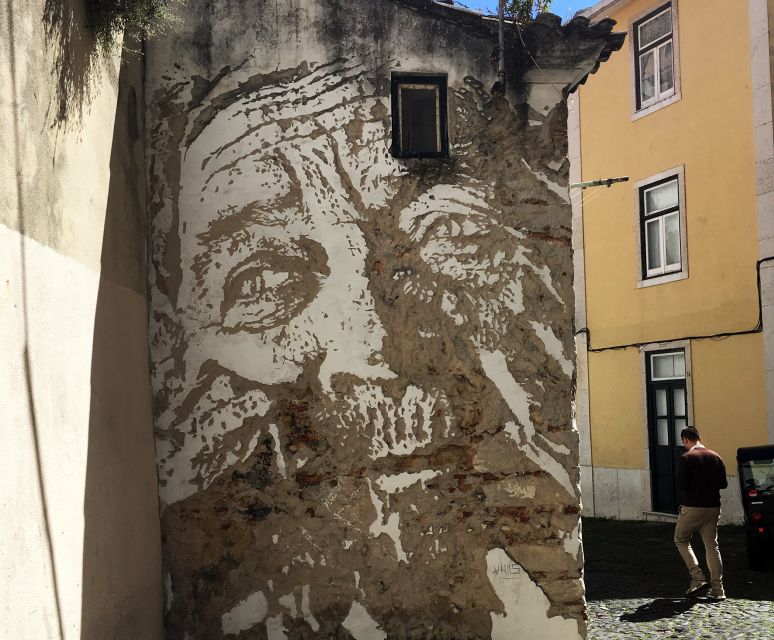
- Shepard Fairey street works in Lisbon, explained in context rather than just pointed out
- Portuguese standouts like Vhils and Bordalo II, plus other known names you’ll recognize from around the world
- Artist techniques and words: you’ll hear about methods, and the artists’ own statements when available
- Graça and Mouraria focus, so you see concentrated collections instead of random stops
- Public art beyond murals, including Lisbon tiles and sculptures
- A conversation about women in street art, in a scene that’s historically been male-dominated
Start in front of the church: how the 2-hour walk is paced
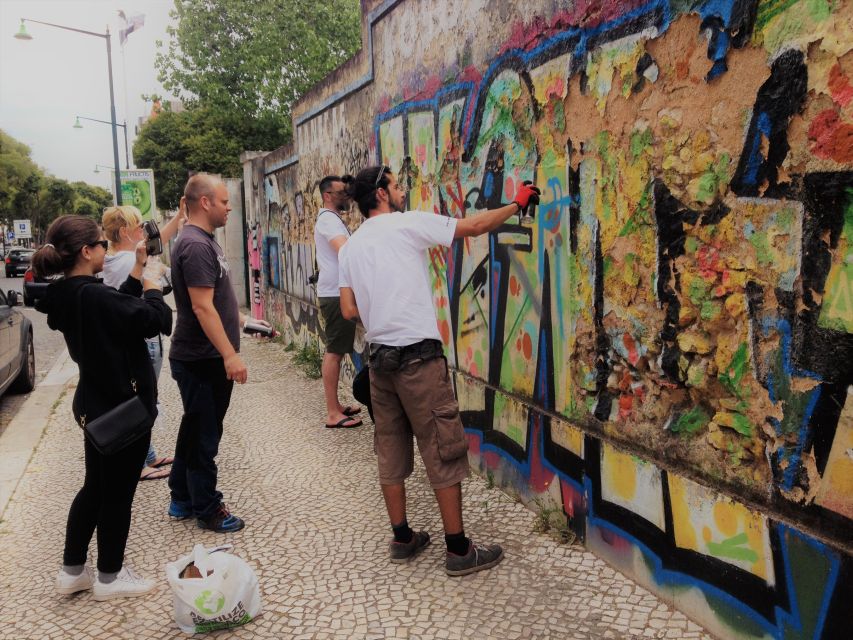
The meeting point is simple: meet the guide in front of the church. Expect a tight schedule built around walking between two neighbourhoods—Graça and Mouraria—where the street art scene is dense enough that a short tour actually feels satisfying.
This is a small-group tour, limited to 8 people, and the guide speaks French. That matters because the explanations are part of the value. You’re not just getting photos; you’re getting meaning, with the guide commenting on works as you pass them.
Bring comfortable shoes and water. You’ll be on your feet the whole time, and since the tour isn’t designed for mobility impairments, you’ll want to pick footwear you can walk in without thinking about it.
You can also read our reviews of more tours and experiences in Lisbon
Graça and Mouraria: two neighbourhoods where street art feels “grown in”
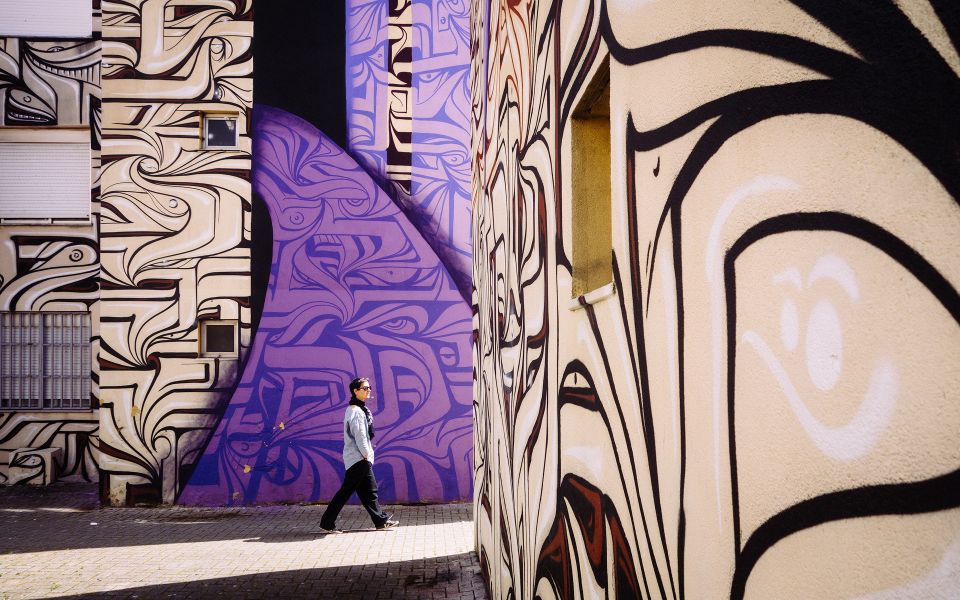
Instead of trying to cover all of Lisbon’s street art, this tour concentrates on Graça and Mouraria. That choice is smart for two reasons. First, you avoid the “we drove past it” problem. Second, you get enough repetition in styles and themes to notice patterns.
In both areas, you’ll see works ranging from big mural-scale statements to smaller pieces that can get overlooked when you’re sightseeing fast. The guide’s job is to slow you down just enough to notice details—materials, methods, and how the artists use the wall itself as part of the message.
You’ll also keep running into the idea that street art isn’t separate from the city’s everyday life. It’s literally on your walking route, sitting next to normal storefronts, stairs, and street corners. That makes the discussion about art in society feel real, not theoretical.
Shepard Fairey on the wall: why the US icon lands differently in Lisbon
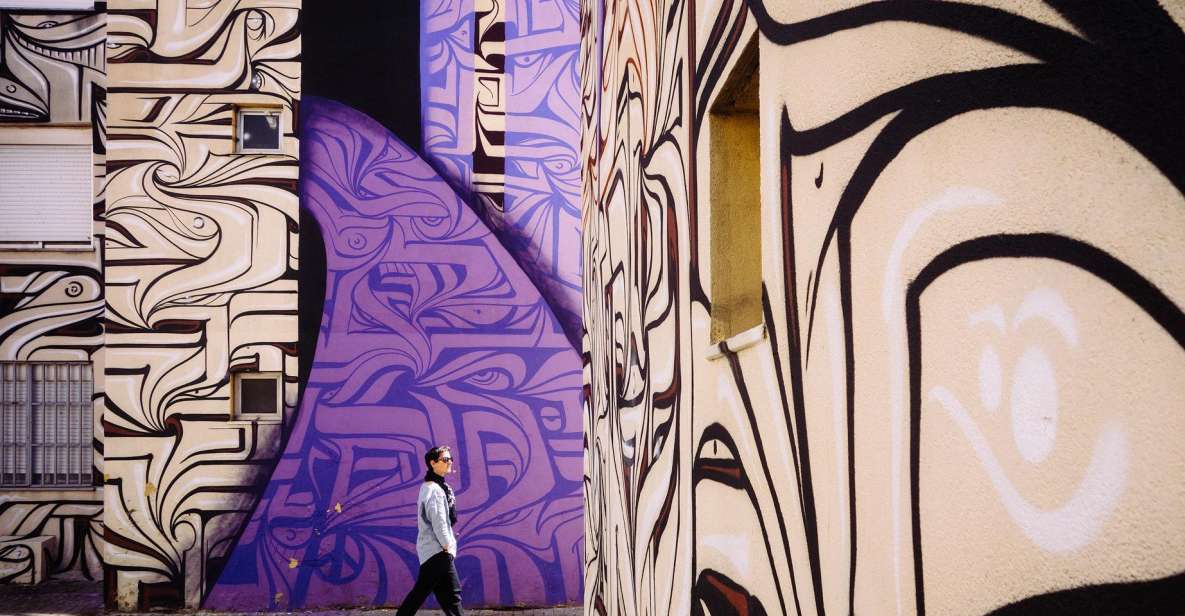
One of the headline draws is seeing works by Shepard Fairey. You might know his style from posters and activism-related street imagery, and that’s exactly why this stop works well on a short tour. Recognizing the name gives you a hook; the guide then helps you read what’s going on locally and politically.
What I like about tours that include Fairey is that they let you compare contexts. His work often carries a strong message about power, messaging, and who gets heard. Here, you’re seeing how that kind of pop-and-protest language looks when it’s layered onto Lisbon walls and Lisbon streets.
The guide doesn’t treat the art like a museum label. You’ll get commentary on the piece, including technique, and when available, the artist’s own words. That turns a familiar graphic style into something you can interpret on your own.
Portuguese heavyweights: Vhils, Bordalo II, and the art of technique
Portuguese street artists are at the core of the experience, and the tour specifically calls out names such as Vhils and Bordalo II. You’ll also encounter additional artists whose styles vary a lot, which is helpful because street art in Lisbon isn’t one look—it’s many different approaches to making a statement.
Here’s what you’re really paying for in these sections: explanations of technique and how the method supports the message. The tour talks about the techniques used for each work, and it uses the artists’ words when they’re available. That’s not just trivia. Technique is often the whole point—whether it’s about carving, layering, sculpting, or turning everyday materials into something that forces attention.
You’ll also get the sense that Portuguese street art can be both sharp and playful. Bordalo II, for example, is often associated with animals and repurposed imagery, which can carry big questions about consumption and waste without turning everything into a lecture. Seeing multiple artists back-to-back helps you notice how the same street “surface” can carry different meanings.
When street art turns political, the conversation starts with you

The tour doesn’t just list artists. The guide uses the works to spark discussion about the place of art in society and social and political issues. That’s one of the best parts, because it gives your eyes a job.
As you walk, you’ll be encouraged to think about questions like:
- Who is street art for?
- What counts as art, and who decides?
- How does a public wall change the message?
This is where the neighbourhoods matter. Graça and Mouraria are not blank galleries—they’re lived-in areas with real communities nearby. So when the art raises political or social issues, it lands with more weight than if it were behind glass.
Even if you don’t speak French perfectly, the structure still works. The guide is the translator between the wall and your understanding, and the pacing keeps you engaged.






Women entering the street art scene: changing who gets the spotlight
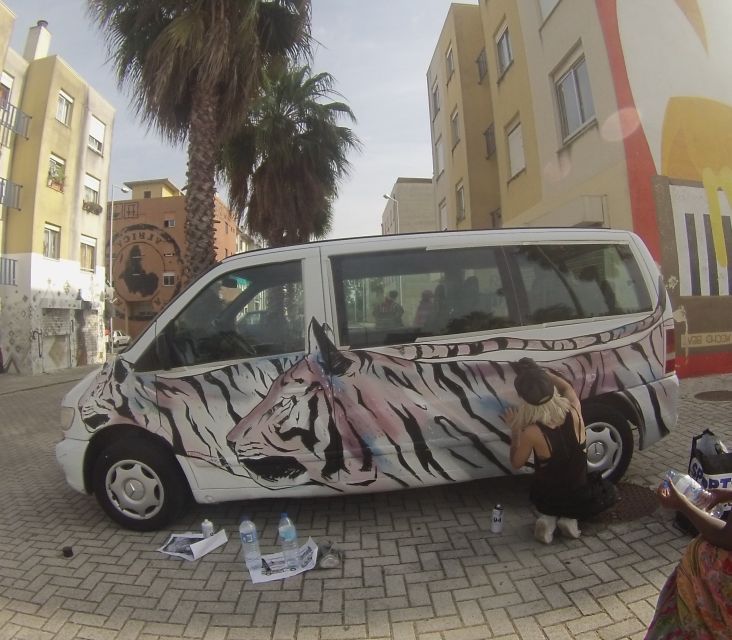
One of the stated highlights is learning about how women are entering a traditionally male-dominated preserve. That theme matters because street art is often discussed as if it’s one voice or one genre.
On this tour, the focus isn’t only on adding “more names.” It’s about the shift in perspective—who makes the work, whose stories become visible, and how the public reads those messages when the artist is a woman in a space that has historically been harder to access.
You’ll also notice how street art itself can be a tool for claiming space. When you link that idea with the tour’s broader questions about art’s role in society, the gender discussion becomes part of the bigger argument, not a side note.
More than murals: tiles, sculptures, and the public art you walk past
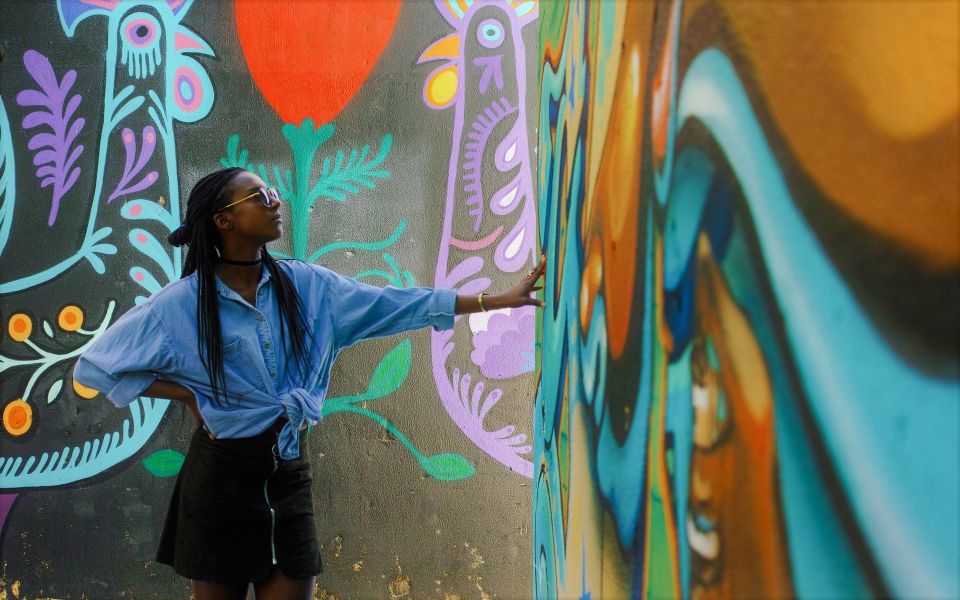
Street art tours can sometimes ignore the rest of the city. This one doesn’t. It also points out other public art forms, including Lisbon tiles and sculptures along the way.
Why this is a win: it gives you a broader sense of how Lisbon treats public space. Tiles are everywhere in Lisbon, and they can be decorative, historical, or tied to specific streets and neighborhoods. Sculptures add another layer—art that isn’t “temporary wall talk,” but physical presence in the urban environment.
By folding these elements into the walk, you’ll stop thinking of street art as a separate category. Instead, you start seeing it as part of a bigger map of how Lisbon displays ideas outdoors.
Pastel de nata or ginginha: the included Lisbon taste break
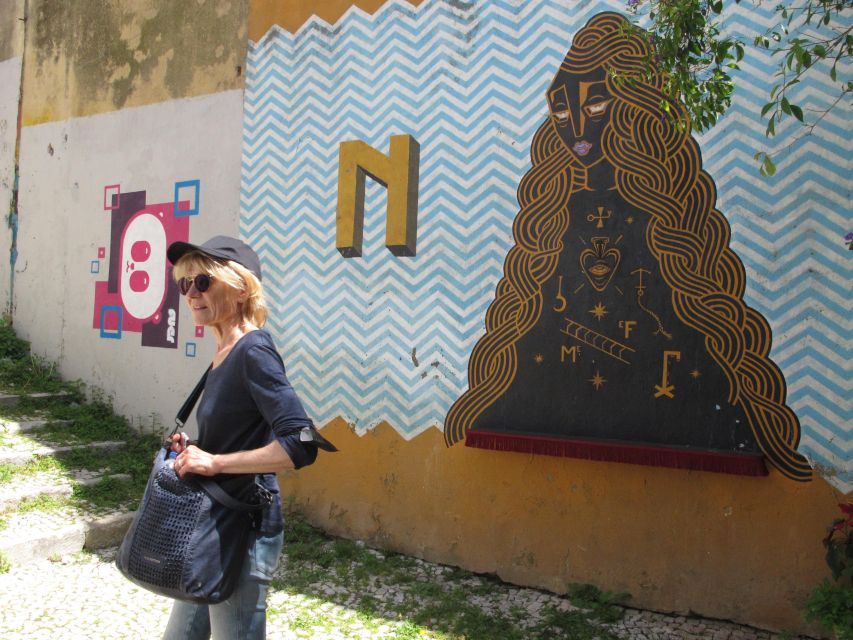
The tour includes Lisbon specialities: either pastel de nata (cream tart) or ginginha (wild cherry liqueur). This is one of those small inclusions that actually helps the experience, because you get a local taste during the walk instead of needing to plan a separate stop.
One practical point: coffee or other hot or cold drinks are not included. So if you’re the type who needs caffeine to keep going, plan to buy drinks on your own before or during the route.
That’s also why water matters. You’re only out for two hours, but you’ll be moving, and Lisbon walking on uneven streets can add up faster than you expect.
Price and logistics: is $41 worth your two hours?
At $41 per person for a 2-hour walking tour with a live guide, the value depends on what you want from the experience.
If your goal is to simply see street art, you might find free ways to walk and photograph murals on your own. But if you want context—the techniques, the artist intent, and the social and political questions—this tour is built for that. The small group limit (8 people) helps keep the explanations from turning into a rushed lecture.
Also, you’re getting something tangible with the included food or drink option (pastel de nata or ginginha). It’s not a meal, but it reduces the “what now” friction mid-walk.
The main trade-off is the guide is French, and the tour isn’t designed for mobility impairments. If those fit your needs, the price feels fair for a guided art-reading walk.
Who should book this street art walk (and who should skip it)
This is a great fit if you:
- like walking and want your sightseeing to include real explanations, not just signage
- enjoy street art but want help understanding symbolism and technique
- want a compact route that focuses on the best-covered collections in Lisbon rather than chasing everything
You might skip it if:
- you need a low-walking option (the route isn’t suitable for mobility impairments)
- you’re looking for a purely visual photo walk with minimal discussion
- you don’t want to spend your two hours walking between neighbourhoods
And if you care about conversations—art’s role, social themes, gender in street art—this tour’s format supports that.
Should you book the Lisbon Street Art Tour with Lisbon Lives Walking Tours?
If you want Lisbon street art with context, I’d say yes—this is one of the more purposeful ways to spend two hours. The best part is the mix: you get big-name international work like Shepard Fairey, you get major Portuguese artists such as Vhils and Bordalo II, and you also get smaller local pieces that help the story feel connected rather than random.
The discussion-driven approach is what makes it feel worth the money. With a small group and a guide like Peter leading the walk, you’re not just seeing street art—you’re learning how to read it.
So book this if you like guided meaning, street-level culture, and walking with your eyes open. If you prefer art as silent scenery, you may find it less satisfying.
FAQ
Where does the tour meet?
You meet the guide in front of the church.
How long is the Lisbon Street Art Tour?
The tour lasts 2 hours.
What’s included in the price?
You’ll get Lisbon specialities as part of the tour: pastel de nata (cream tart) or ginginha (wild cherry liqueur).
Are drinks included?
Coffee or other hot or cold drinks are not included.
How big is the group?
The group is small, limited to 8 participants.
What language is the tour guide?
The live tour guide speaks French.
Which neighbourhoods does the tour focus on?
The tour focuses on Graça and Mouraria, with attention to public art like tiles and sculptures.
What should I bring?
Bring comfortable shoes and water.
Is it suitable for people with mobility impairments?
No, it is not suitable for people with mobility impairments.
How flexible is cancellation?
Free cancellation is available up to 24 hours in advance for a full refund. You can also reserve now and pay later.