REVIEW · LISBON
Lisbon: Street Art TukTuk Tour
Book on GetYourGuide →Operated by Live Portugal - Tours & Tales · Bookable on GetYourGuide
Lisbon street art has a way of finding you. This 2-hour private tuk-tuk street art tour turns the city into an open-air gallery, with a guide who explains the art and where it fits in Lisbon and worldwide street-art culture. I especially like the mix of famous international names with local context, and the fact you ride in an electric tuk tuk instead of grinding through steep streets on foot. One thing to plan for: the route includes cobblestone streets and some bumpiness, and you’ll need enough mobility to climb into the vehicle.
The payoff is that you see murals you might miss on your own, while also getting quick looks at classic neighborhoods like Alfama and Graça. Guides such as Claudio, Tiago, Tomas, and Felipe are repeatedly described as friendly and energetic, with explanations that connect artists to the wall and the neighborhood. Still, this tour isn’t for everyone: it isn’t recommended for people with back problems or mobility impairments, and it’s not suitable for children under 4.
If you’re short on time but want more than a generic photo stop, this format makes sense. You get hotel pickup and drop-off, a local guide, and a smooth pace that works even if you’re touring while jet-lagged.
In This Review
- Key things to know before you go
- Why Lisbon street art looks better from a tuk-tuk
- The art lineup: international artists meet Portuguese street culture
- Baixa de Lisboa start: quick orientation before the hills
- Alfama and Graça: photo stops, guided walking pauses, and viewpoint breaks
- Xabregas: the neighborhood shift that makes the tour feel real
- The guide experience: stories that connect murals to place
- Price and what $94 buys you in real terms
- Practical tips: who this tuk-tuk tour suits best
- Should you book the Lisbon street art tuk-tuk tour?
- FAQ
- FAQ
- How long is the Lisbon Street Art TukTuk Tour?
- Is this tour private?
- What’s included in the price?
- What is not included?
- Which neighborhoods does the tour visit?
- Do I need to speak a specific language?
- Is the tour suitable for small children or mobility needs?
Key things to know before you go

- Electric tuk-tuk transport keeps the tour moving without tiring out your legs on steep streets
- Street art with artist context: you’re not just looking, you’re understanding what you’re seeing
- Neighborhood variety in 2 hours: Baixa, Alfama, Graça, and Xabregas each add a different vibe
- Big-name artists on the wall include Vhils, Obey Giant, Pichiavo, and Bordalo II
- Private group size stays small (max 6; most comfortable with up to 4 adults + 2 children)
- Cobblestones and bumps are expected, so build in patience on the ride
Why Lisbon street art looks better from a tuk-tuk

Lisbon has always had color, but street art adds a second layer of meaning on top of the tiles, balconies, and stone lanes. What I like about this tour is the pacing. Instead of a long walking slog in hilly neighborhoods, you ride between stops in an electric tuk tuk, then pause long enough to actually look.
You also get a practical advantage: a lot of the most interesting murals are tucked into streets that don’t behave like a tidy museum route. The tuk-tuk route helps you reach those areas without turning it into a full-day hike. That matters if you want street art but also want to spend the rest of your trip doing the usual Lisbon classics.
The only real “watch it” factor is comfort on the move. The tour includes cobblestone streets and some bumpiness, so if you’re sensitive to jostling, you’ll want to plan for slower moments and hold on during turns.
You can also read our reviews of more tours and experiences in Lisbon



The art lineup: international artists meet Portuguese street culture
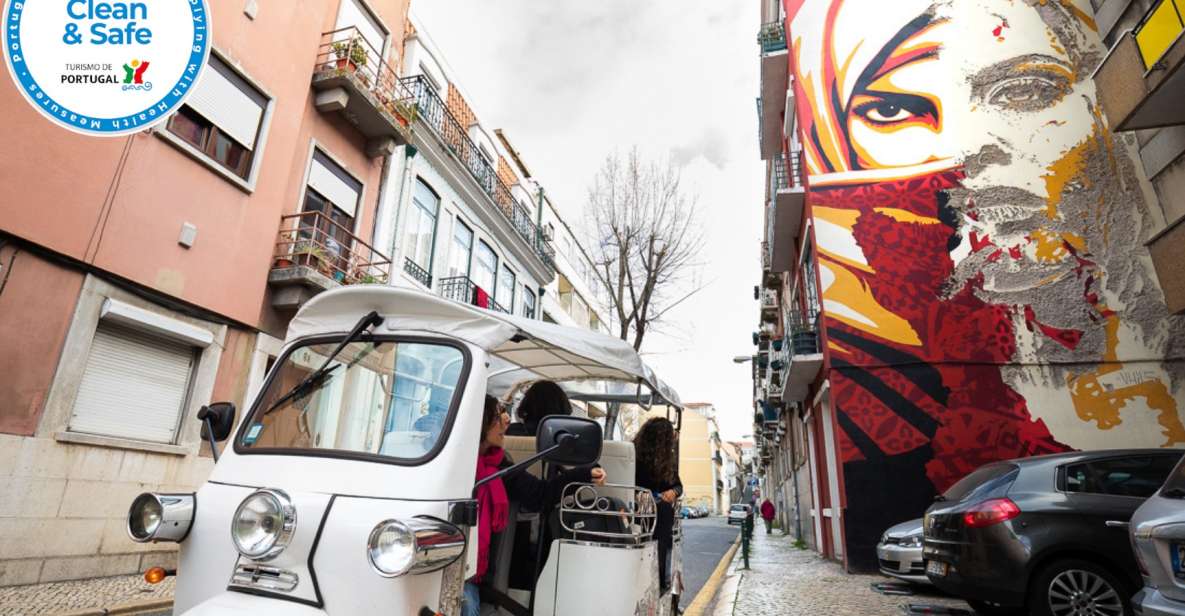
This isn’t a random mural crawl. You’re guided through works linked to artists whose styles are recognizable even when you can’t place the name at first glance. Expect references to artists like Vhils, known for carved-stone and portrait-like work; Obey Giant, tied to bold, graphic street icons; Pichiavo, often associated with strong graphic characters; and Bordalo II, famous for sculptural, animal-like street art forms.
What you gain from a tour like this is context. A guide explains how street art developed as a global language, then connects that to Portugal’s local scene. That turns a mural from decoration into communication—why the artist used that style, what themes are showing up, and how the city’s history and everyday life shape the messages.
And because the stops include historic neighborhoods, you get contrast. You’ll see old stone and viewpoints, then look at modern art layered into the same real streets. That back-and-forth makes the city feel like it’s speaking in two time periods at once.
Baixa de Lisboa start: quick orientation before the hills
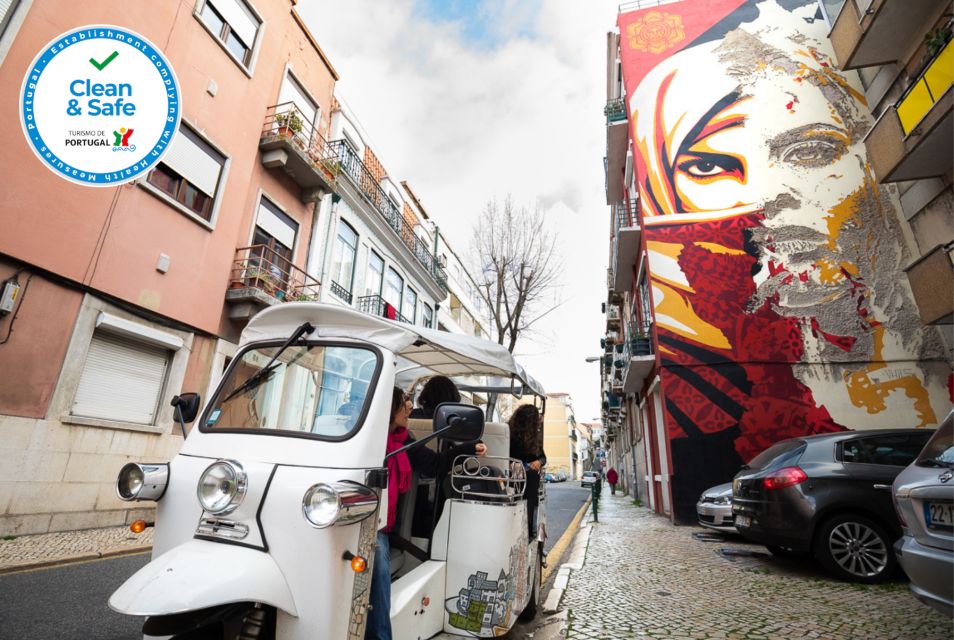
The tour begins back in Baixa de Lisboa, with a guided introduction and a short scenic drive segment (about 15 minutes). Baixa is where you can often orient yourself fast: it’s a natural starting point for understanding how the city is laid out and how neighborhoods connect.
This first stage isn’t about one single mural moment. It’s about getting your bearings and learning how to read the streets. A good guide will point out what to watch for—materials, wall surfaces, placement, and how certain streets tend to attract certain kinds of artists.
Practical note: Baixa is also where you’ll feel the transition from open squares and busy street grids into the tighter, hillier lanes. If you’re prone to motion discomfort, this early portion is a helpful “warm-up” before the more winding streets.
Alfama and Graça: photo stops, guided walking pauses, and viewpoint breaks
Next comes Alfama, where the tour includes a photo stop plus a guided tour, along with scenic driving and scenic views en route (about 30 minutes total for this section). Alfama’s character comes through in the angles—streets that feel like they twist uphill, buildings close enough to frame the walls, and viewpoints that change what you can see each minute.
Then you head to the Graça Historic District, again with about 30 minutes of photo stop, guided time, scenic drive, and views. Graça is a strong pairing with street art because it’s already visual. When you add murals, the area shifts from “old neighborhood scenery” into a place where modern messages sit directly beside heritage stonework.
The guided portion is the real value here. A mural can look impressive, but without context it’s easy to treat it like a picture background. With a good storyteller, you start noticing patterns: how artists reference local issues, how international styles adapt to Lisbon’s walls, and how the setting changes the meaning. This is also where the tour’s small-group format helps—you can linger without feeling like you’re holding up a huge crowd.
One consideration: because this is a historic hill area, you may be dealing with uneven ground and cobbles. The tour is designed for comfort via tuk-tuk, but the stops still require you to be ready for small surfaces and occasional steps around photo points.
Xabregas: the neighborhood shift that makes the tour feel real
The tour’s next segment is Xabregas (about 30 minutes), with another photo stop, guided time, and scenic drive. Xabregas is a good reminder that Lisbon street art isn’t only about the postcard spots. It also lives in neighborhoods where locals pass by daily and where the art becomes part of the street’s identity, not just a destination.
Even if you don’t know the neighborhood yet, the guide’s storytelling helps it click. You’ll learn how street art in Lisbon connects to global trends while still carrying Portuguese tone. That’s the sweet spot: you’re not chasing “pretty murals,” you’re seeing a city using art as a public voice.
If you’re someone who likes to understand why a place feels the way it does, this stop is worth paying attention to. Street art here is presented as part of the city’s texture—something you’d notice more clearly if you slowed down and watched the street instead of only photographing the wall.






The guide experience: stories that connect murals to place
The strongest repeat theme is the guide. Names like Claudio and Tiago come up with praise for being caring, friendly, and easy to talk to. Other guides—such as Tomas and Felipe—are described as energetic and funny, with explanations that land well.
What that tells me (and what you should look for in a booking) is that this tour is built around live storytelling, not just a driver with a route. The guide is your translator: turning what you see into a readable street-art timeline. You get live explanations about the history of street art in the world and in Portugal, then context specifically tied to pieces and artists you encounter.
You also get more than one kind of learning. Some moments are art-focused—techniques, materials, and artist styles. Other moments are city-focused—where you are in Lisbon’s neighborhoods and how the street setting changes the effect of the mural.
One nice detail from the overall experience: the tour can run longer at times, depending on how the group is going and how much the guide wants to share. That usually happens when the guide’s momentum clicks and the group stays engaged. In a short tour, that flexibility can feel like a bonus.
And since this is a private group, you’re not stuck listening to someone’s headset. You’re more likely to get a back-and-forth flow—useful if you like asking quick questions.
Price and what $94 buys you in real terms
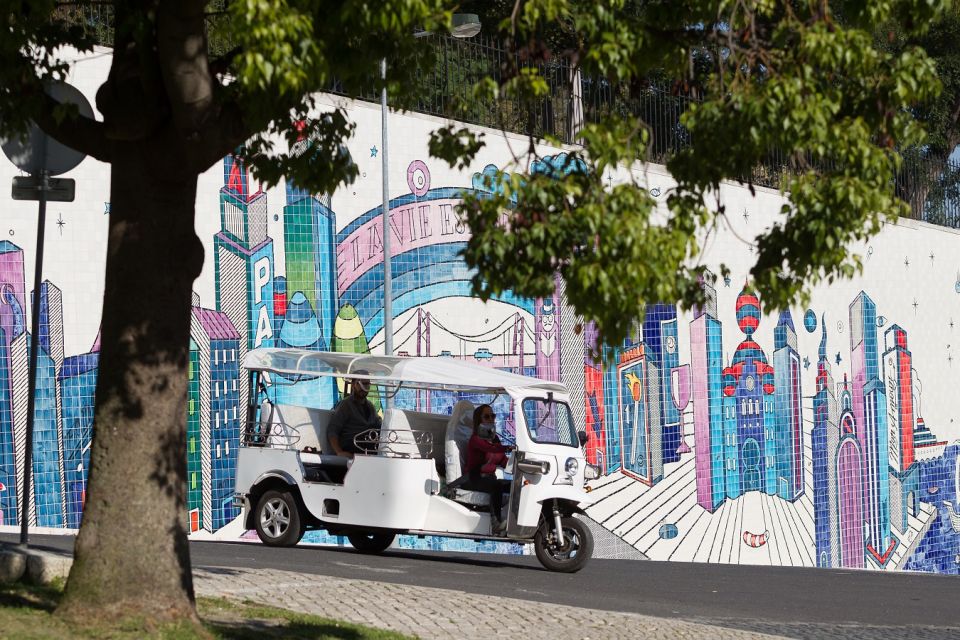
At $94 per person for 2 hours, the price can look steep if you compare it to self-guided wandering. But this isn’t just “transport plus photos.” You’re paying for several things at once:
- Electric tuk-tuk ride instead of long, tiring uphill walking
- A local guide giving live art history and artist context
- Hotel pickup and drop-off, so you don’t waste time figuring out where to start
- Insurance included
If you’re traveling in a small group, this is one of those tours that often feels more reasonable than the headline price suggests. It compresses logistics. You don’t have to route yourself between neighborhoods or worry about missing the less-obvious mural pockets.
Also, street art alone can be a hit-or-miss experience when you DIY. You might find great pieces, but you might also just see what’s easiest to photograph. With a guide, you get a planned sequence and a consistent theme: street art as culture, not just street decoration.
The one thing not included is entrance fees for monuments. The tour is designed around street art and neighborhood views, so you’re not buying a museum ticket here. If you want to enter specific historic sites later, you’ll handle that separately.
Practical tips: who this tuk-tuk tour suits best
This tour has a few clear boundaries, and it helps to respect them. Luggage or large bags aren’t allowed, so pack light. You’ll also want to wear comfortable shoes, because even with tuk-tuk transport, you’ll still deal with uneven streets at stops.
Mobility matters. The vehicle requires some ability to climb in, and you should expect some bumpiness. If you have limitations, it may not be the right fit, especially since the tour is not suitable for people with mobility impairments or back problems, and it’s not recommended for pregnant women.
For families, the group limits matter too. The maximum occupancy is 6 people total, and it tends to be most comfortable for groups with up to 4 adults and 2 children. It’s not suitable for children under 4, so if you’re traveling with little kids, double-check age requirements before you plan around this.
Language-wise, you can pick among English, French, Portuguese, Spanish, and German, so you should be able to match your comfort level easily. That matters on a story-heavy tour, because art context works best when you can follow every thread.
Finally, a small timing tip: since the tour is only 2 hours, you’ll get the most out of it if you treat it as your street-art intro. Then later, when you’re wandering on your own, you’ll recognize what you saw and understand what to look for.
Should you book the Lisbon street art tuk-tuk tour?
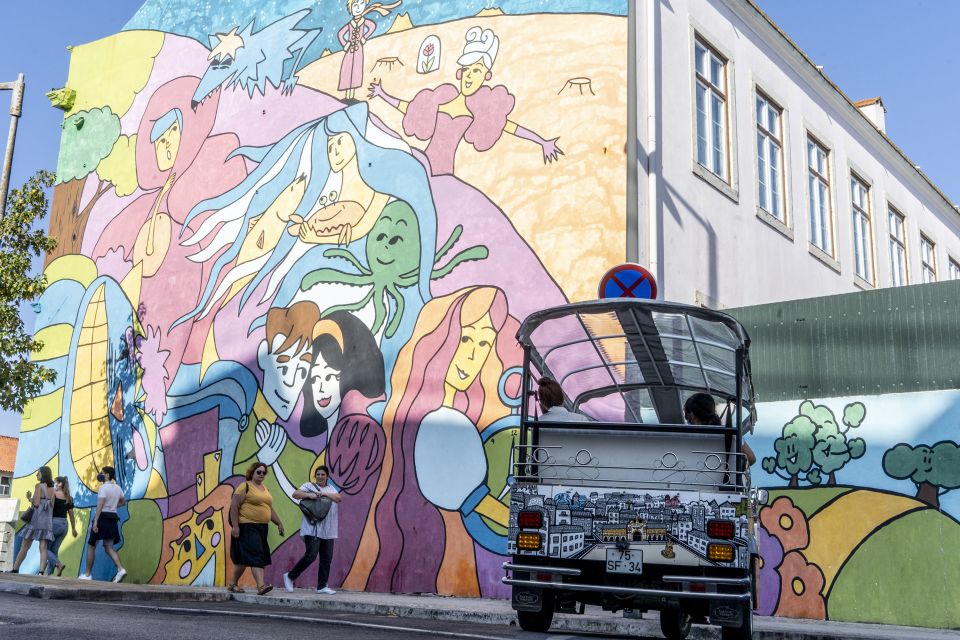
Book it if you want street art plus context, and you’d rather spend your limited time riding between neighborhoods than doing a long walking loop. This is especially a good choice if you’re curious about how Lisbon street art connects to the wider global scene, and you like tours where the guide explains the why behind what you see.
Skip it if your body can’t handle cobblestones and bumps, if you need to travel with larger luggage, or if you fall into any of the categories the tour lists as not suitable (like mobility impairments, back problems, or pregnancy). Also, if you only want a quick photo hunt and don’t care about artist stories, you might prefer self-guided exploring.
FAQ
FAQ
How long is the Lisbon Street Art TukTuk Tour?
It lasts 2 hours.
Is this tour private?
Yes, it’s a private group. The total occupancy is up to 6 people, and it’s most comfortable with up to 4 adults and 2 children.
What’s included in the price?
The price includes the tuk tuk ride, a local guide, hotel pickup and drop-off, and insurance.
What is not included?
Entrance fees for monuments are not included.
Which neighborhoods does the tour visit?
You’ll go through Baixa de Lisboa, Alfama, Graça Historic District, and Xabregas, then return to Baixa de Lisboa.
Do I need to speak a specific language?
The live guide is available in English, French, Portuguese, Spanish, and German.
Is the tour suitable for small children or mobility needs?
It’s not suitable for children under 4, and it’s also not recommended for pregnant women, people with back problems, or people with mobility impairments. You also need some mobility to climb into the vehicle.