REVIEW · LISBON
Lisbon Tiles and Tales: Full-Day Tile Workshop and Tour
Book on GetYourGuide →Operated by Around Lisbon Tours · Bookable on GetYourGuide
You can see Lisbon’s art on walls every day. This full-day azulejo workshop and tour connects the dots from old tile-making methods in Azeitão to the best collections in Lisbon’s museum spaces. I love that you don’t just look—you paint your own tile—and I also like how the day balances hands-on making with big-picture art spotting around town. One thing to note: lunch isn’t included, so you’ll need to pick your plan for that mid-day break.
Expect a smooth flow south of Lisbon first, then back for museum time and church interiors that feel like a total artwork. With English guidance from Nuno, the tone stays practical and friendly, and you’ll get help understanding what you’re seeing (not just where to stand for photos). A realistic consideration: it’s an 8-hour day with some driving, so pack for a full-day outing and bring your patience for a busy schedule.
If you’re the kind of traveler who loves craft, design, and why a place looks the way it does, this is a great match. You’ll learn how azulejo grew from historic influences in Portugal and how centuries-old styles still shape what you see today. If your priority is quick, skip-the-museum sightseeing, this may feel longer than you want.
In This Review
- Key things to look forward to
- Why azulejo matters before you even arrive
- Morning start: Azeitão and the Azulejos de Azeitão workshop
- Painting your own tile: hands-on, not just hands-waving
- How the tile drive helps you “read” Lisbon
- Lunch options: Sesimbra if you want seafood-town energy
- Madre de Deus Convent: a Baroque interior built as one artwork
- The Azulejo Museum: from older schools to Portuguese masters
- When plans change: the Royal Palace tile option
- Price and value: what you’re really paying for at $117
- Who this tour suits best
- Practical tips for a smoother day
- Should you book Lisbon Tiles and Tales?
- FAQ
- How long is the Lisbon Tiles and Tales tour?
- What does the price include?
- Does the tour include lunch?
- Will I take my painted tile home the same day?
- What language is the tour guide?
- Is museum admission included?
- What happens if the museum is closed?
Key things to look forward to
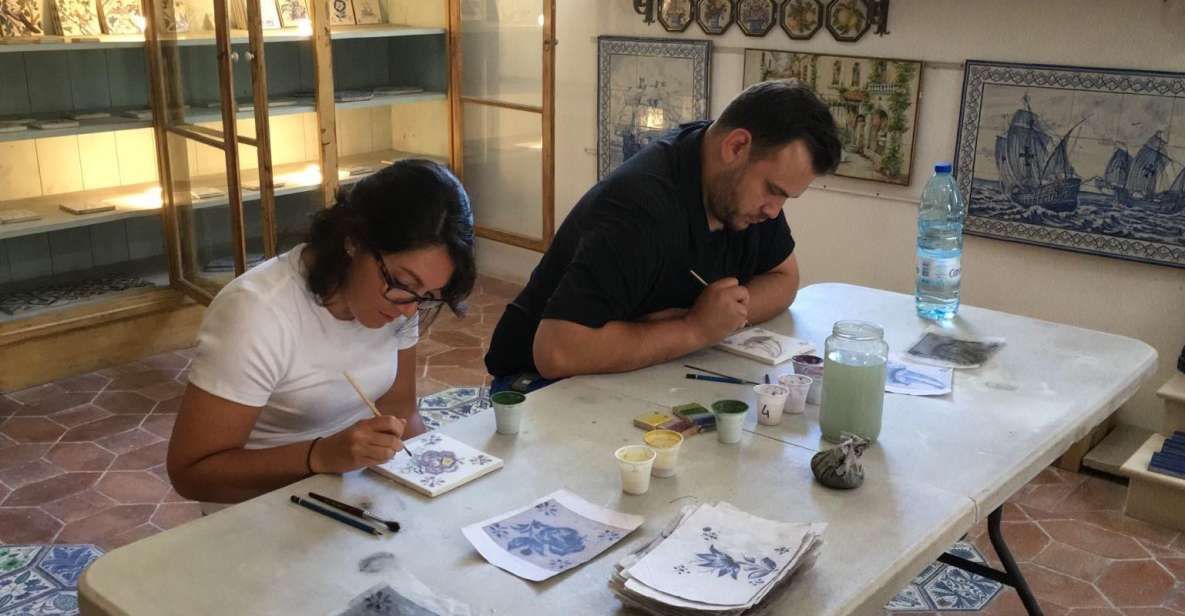
- Azeitão tile workshop with old-school techniques you can actually watch and understand
- Hands-on painting that becomes a finished tile later, with delivery arranged to your Lisbon hotel or home (shipping not included)
- A Lisbon tile-spotting drive that helps you read the city’s facades like a map
- Madre de Deus Convent and Azulejo Museum inside a Baroque church setting
- Portuguese artists to watch for including Bordalo Pinheiro, Raúl Lino, and Maria Keil
- Flexible alternatives when the museum is closed, with options that still show you tile art
Why azulejo matters before you even arrive
Lisbon’s blue-and-white tiles aren’t just decoration. Azulejo is a whole visual language—stories, architecture, religious scenes, and graphic style—translated into ceramic. The workshop tour framing hits an important point: this tradition in Portugal has roots that stretch back to the long period of Arabic presence on the Iberian Peninsula, and the craft evolved in Portugal into something distinct.
That background makes the day feel more meaningful. When you later stop in front of a church interior or a museum gallery, you’re not just asking what the tile looks like—you’re asking what the tile is doing. Is it teaching? Marking status? Creating a sense of order? Or turning a blank wall into a scene you can walk into?
You can also read our reviews of more tours and experiences in Lisbon



Morning start: Azeitão and the Azulejos de Azeitão workshop
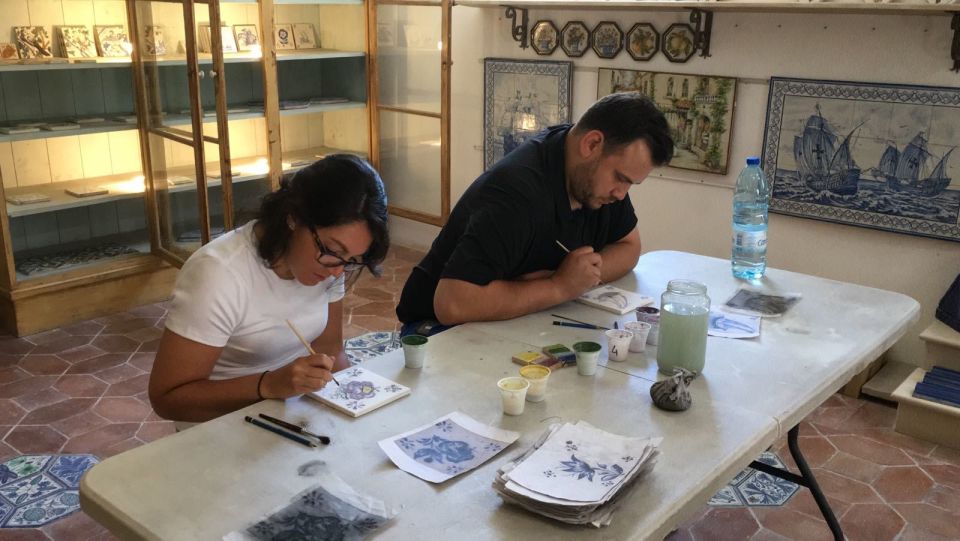
Your day begins by heading south of Lisbon toward Azeitão, a region known for its tile craft. This is the part I like best for first-time azulejo fans: you get to see the making process in a place built for it, not just in a museum display case.
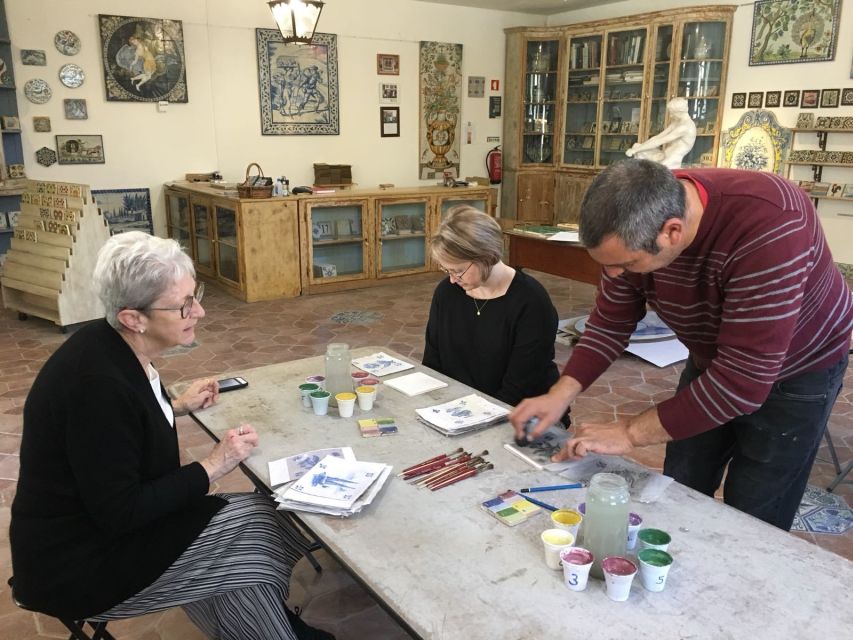
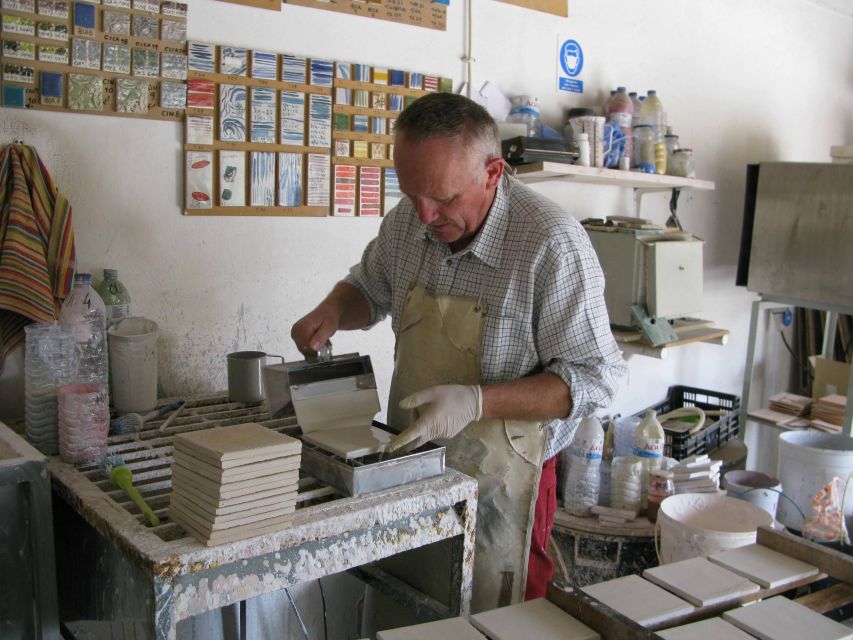
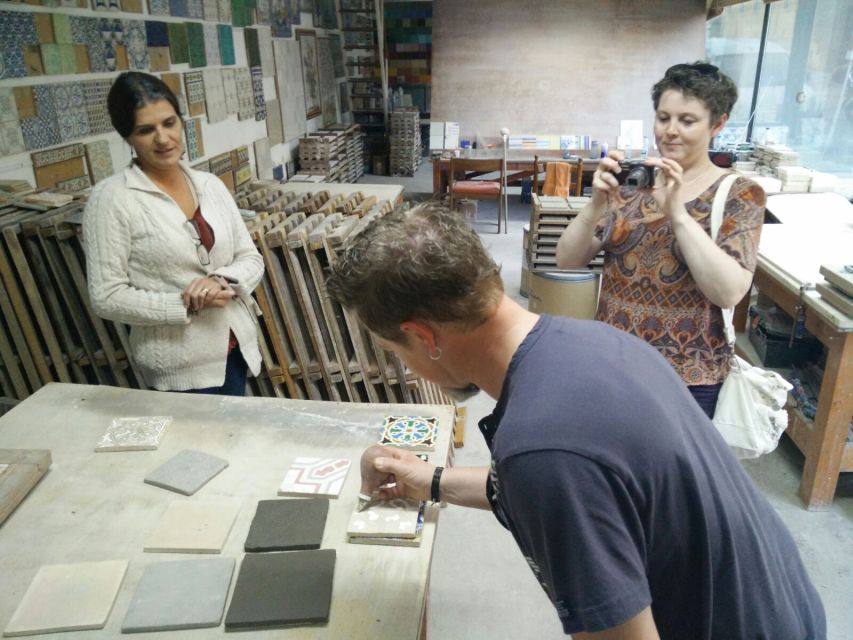
At the workshop, you learn how tiles have been produced over time, with old techniques still used to replicate styles from earlier centuries. The key value here is that you understand the workflow. Tiles don’t appear magically as finished art; they go through steps that affect the final look, from the patterns you’re shown to how glaze and firing work as part of the process.
You’ll also get a clearer sense of what “replicating centuries-old art” really means. It’s not only copying a picture. It’s keeping a craft tradition that includes methods and timing—ways of preparing surfaces and producing the crisp lines and color tones you associate with Portuguese azulejo.
Painting your own tile: hands-on, not just hands-waving
After the basics, you paint your own tile design. This is the moment that turns the day from educational to personal. You’ll learn the fundamentals, then translate them into your own small artwork, guided by the workshop setting and your instructor’s explanations.
Here’s what to expect practically: you’ll finish your painting at the workshop, and later the tile gets baked. Then it’s sent to your hotel in Lisbon—or to your home if you prefer. The one cost detail to know is that shipping isn’t included, so if you want it mailed home, you should expect to pay that extra.
I like that this part of the day gives you a souvenir with meaning. Most Lisbon tile purchases are ready-made. This one has a learning curve behind it, so it feels like a takeaway from the craft itself, not just a memento.
Tip: since your tile is created for later delivery, you don’t need to worry about packing a fragile artwork at the end of the tour. You’ll still want to keep your hands from smudging paint while you’re working, but after that, the logistics simplify.
How the tile drive helps you “read” Lisbon
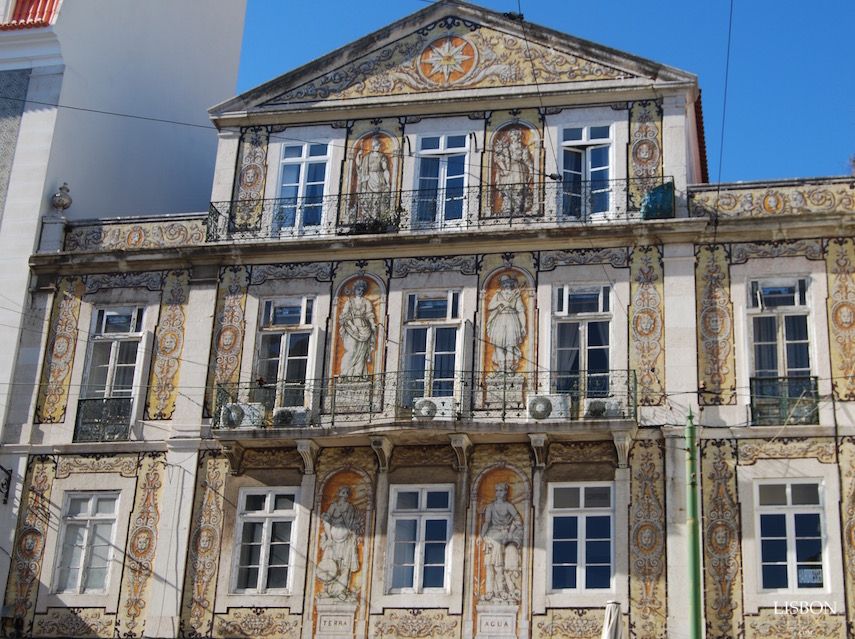
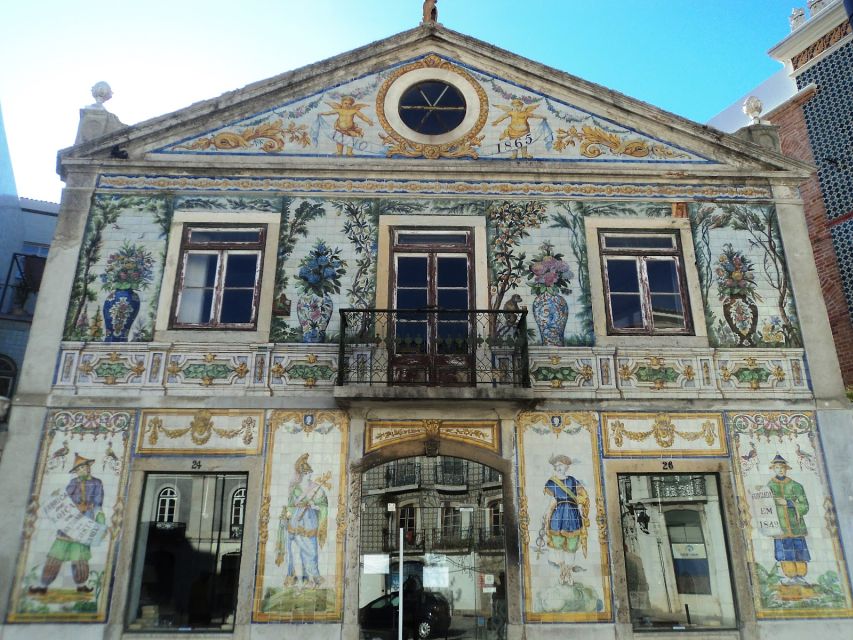
Once you’re done with the workshop portion, the tour shifts from making to spotting. Along the drive back toward Lisbon, you’ll admire impressive tile artwork around the city.
This is more useful than it sounds. If you’ve ever looked at Lisbon and thought there’s tile everywhere but you can’t tell what you’re looking at, this drive helps your brain build a set of recognition cues. You start noticing things like how tiled scenes frame doors and windows, how patterns repeat across neighborhoods, and how design styles can change from one area to another.
Also, the driving time isn’t wasted. It gives context between the hands-on workshop and the formal museum visit later. By the time you reach Madre de Deus, you’ll have a better sense of how tile functions in real architecture, not only as a museum object.
Lunch options: Sesimbra if you want seafood-town energy
Lunch is not included, and that matters because it gives you control. The guide offers a strong suggestion: Sesimbra, a fishing village a short drive away.
This is a good choice if you want a break from city streets and tiles for a few hours. A fishing village lunch typically means a menu that fits the coast—something simple, local, and easy to enjoy without overthinking. If your schedule feels tight, you can also choose a different option in Lisbon, but Sesimbra is the tour’s natural pairing.
Since the day is 8 hours, I recommend treating lunch as a recharge, not a second sightseeing program. You’ll need energy for the afternoon museum stop and the convent church visit.
You can also read our reviews of more tours and experiences in Lisbon






Madre de Deus Convent: a Baroque interior built as one artwork
In the afternoon, you visit Madre de Deus Convent, dating from the 15th century, which includes the Azulejo Museum. This stop is a standout because it adds a stage set to the tiles.
First, the church interior is described as a Baroque masterpiece and considered a total piece of art, where every element was designed to form the perfect whole. That matters because azulejo isn’t always shown alone. It’s often part of an overall design plan—architecture, sculptural detail, and color working together.
So even if you’re not a hardcore Baroque fan, the setting helps you understand why tiles became such a strong visual tool. When you’re surrounded by carefully designed interiors, tiles stop looking like “nice wall art” and start looking like part of the space’s identity.
The Azulejo Museum: from older schools to Portuguese masters
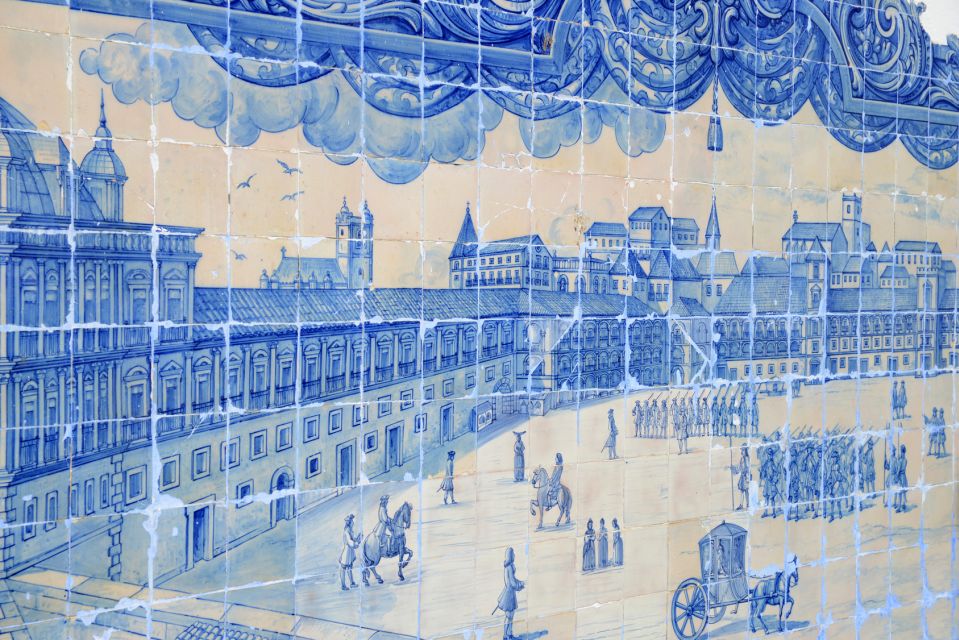
The Azulejo Museum is where the tour delivers on the big-picture art education. The collection runs from the 15th century to contemporary work, so you can track how style and subject matter changed over time.
One of the most helpful ideas mentioned for the museum is that it includes the most important international schools, such as Spanish and Dutch influences. That gives you a sense that Portuguese azulejo didn’t evolve in isolation. It absorbed ideas, techniques, and aesthetics from other places, then translated them into a Portuguese visual language.
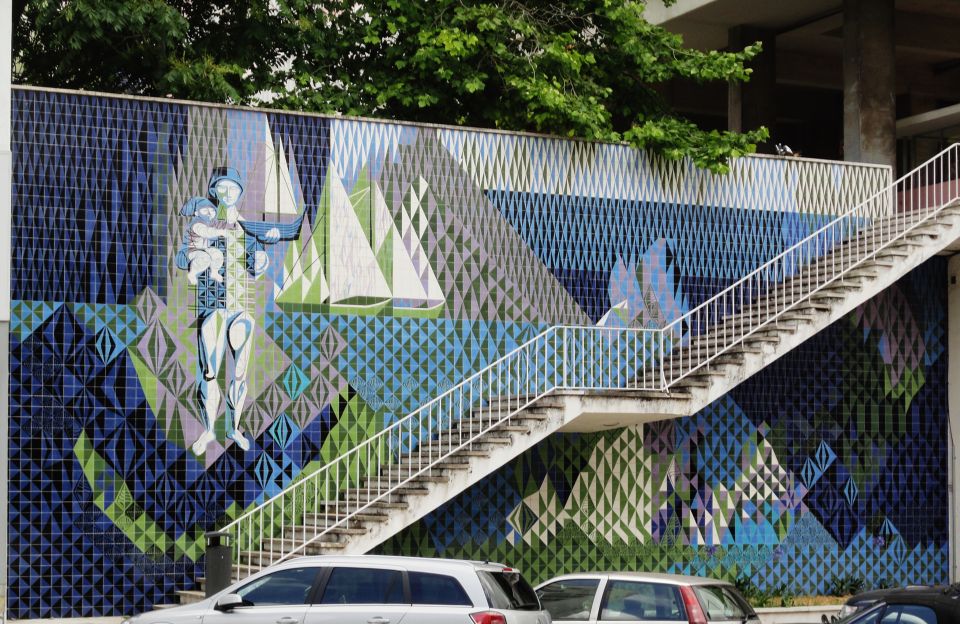
As the visit continues, the tour focuses on Portuguese tile masters. You’ll see iconic works connected to artists including Bordalo Pinheiro, Raúl Lino, and Maria Keil. If you want a souvenir takeaway that goes beyond your painted tile, this is where you can spot recognizable names and styles tied to Portugal’s modern tile expression.
A quick practical note: museums can move fast if you let them. Don’t rush through. Give yourself a moment at each room to connect the dates and influences to the visual elements you noticed earlier in Lisbon.
When plans change: the Royal Palace tile option
One of the most reassuring details: if the museum is closed unexpectedly, the guide can offer alternative options. For example, Nuno may shift the plan so you can still see tile art at the Royal Palace in Sintra.
I appreciate this because tile lovers don’t just want a schedule—they want the art. This kind of backup matters on a day that’s already full. It also signals the tour is run with attention to the experience, not just the clock.
Price and value: what you’re really paying for at $117
The price is $117 per person, and the value depends on what you want from a day like this.
Here’s what’s included:
- Pick-up and drop-off at your hotel or apartment
- Tile workshop experience
- Azulejo Museum entrance
So you’re paying for more than museum entry. You’re covering transport within the day, a guided craft session, and access to the museum environment where tile history comes alive. The workshop includes the painting activity and the tile gets baked and sent to your destination (shipping cost not included), which is a meaningful add-on if you were planning to buy a handmade or custom tile anyway.
What’s not included:
- Lunch
I’d treat the day as a “one-ticket art class + museum” value. If you’d rather do a self-guided museum crawl and skip the workshop, you’ll likely find cheaper options. If you want a guided craft experience plus a museum that puts tiles in context, this price starts to look fair.
Who this tour suits best
This is a strong match if:
- You enjoy hands-on activities where you learn by doing
- You want your Lisbon sightseeing to connect to local craft and design
- You’re curious about how historic influences shaped Portuguese art
It’s less ideal if:
- You only want short sightseeing blocks and minimal driving
- You dislike craft activities or painting
- You’re mainly after quick photo stops rather than structured learning
Practical tips for a smoother day
- Wear comfortable shoes. You’ll move through museum spaces and the convent setting.
- Plan for a full 8 hours. Bring water and basic snacks only if you know you’ll need them (lunch is not included).
- If you’re getting your tile shipped, mentally budget for shipping if you choose home delivery.
- Bring a little curiosity. Azulejo gets more interesting when you pay attention to how it’s used in architecture, not only how it looks.
You’ll also be traveling with COVID-era precautions still being noted: vehicles are disinfected daily, social distancing measures are in place, masks are available and mandatory inside vehicles, and hand sanitizer is provided. It’s easy enough to follow, but it’s worth keeping in mind so you don’t get caught without a mask.
Should you book Lisbon Tiles and Tales?
I think it’s worth booking if you want a guided day that treats azulejo like more than decorative background. The workshop is the headliner because you learn the process and leave with a painted tile that gets baked and sent to you. Then Madre de Deus gives you the context—international schools, centuries of design, and Portuguese masters you can name afterward.
If you’re on the fence, ask yourself this: do you want to understand tile art, or just look at it? This tour leans hard toward understanding, with a fun paint-your-own payoff.
If you’re flexible about lunch and don’t mind an 8-hour day, Lisbon Tiles and Tales is one of the better ways to see the city’s tile culture in a single pass.
FAQ
How long is the Lisbon Tiles and Tales tour?
It lasts 8 hours.
What does the price include?
The price includes pick-up and drop-off at your hotel or apartment, the tile workshop, and entrance to the Azulejo Museum.
Does the tour include lunch?
No. Lunch is not included, and you’ll choose where to eat with your guide.
Will I take my painted tile home the same day?
No. You’ll paint a tile at the workshop, and it’s baked later and sent to your hotel in Lisbon or to your home. Shipping cost is not included.
What language is the tour guide?
The tour is guided in English.
Is museum admission included?
Yes, the Azulejo Museum entrance fee is included.
What happens if the museum is closed?
If the Azulejo Museum is closed unexpectedly, the guide can provide alternative options, such as tile viewing at the Royal Palace in Sintra.