REVIEW · LISBON
Lisbon Tuktuk Old-town Sightseeing Tour
Book on GetYourGuide →Operated by Ticket Online · Bookable on GetYourGuide
A ride on a tuktuk is the fast lane to Lisbon. This 80-minute old-town sightseeing tour takes you up and around the seven hills with a historical guide and plenty of photo stops.
I really like two things about it: you get a guided look at Lisbon’s old neighborhoods (Alfama and Mouraria) and you also learn why the city’s tiles and tight streets look the way they do.
The only thing to consider: it is not set up for everyone—it is not suitable for wheelchair users and young kids under 5 aren’t included.
In This Review
- Key Things I’d Mark on Your Map
- A Fun, Focused Way to See Lisbon’s 7 Hills
- Getting In: Timeout Market Is the Smart Starting Point
- Alfama and Mouraria: Lisbon’s Oldest Streets First
- Tiles and Narrow Streets: What You Learn While You Roll
- Lisbon Cathedral Area: The Old Church Stop That Grounds the Trip
- Saint Anthony Church and the Castle Neighborhood
- Porta ta Sol: A Pivot Point for Views
- Nossa Senhora da Monte: Lisbon’s Best Sunset Viewpoint
- Saint Vincent Monastery and the Flea Market
- National Pantheon and Fado Museum: Culture Stops Without the Time Sink
- Downtown of Alfama, the Cruise Ship Terminal, and Pink Street
- Time on the Clock: How 80 Minutes Plays Out in Real Life
- Price and Value: Is $38 Worth It?
- Who This Tour Suits Best (and Who Might Want Something Else)
- Should You Book This Tuktuk Tour?
- FAQ
- Where does the tour pick up and drop off?
- How long is the Lisbon Tuktuk Old-town Sightseeing Tour?
- How much does it cost?
- What neighborhoods and landmarks does the tour include?
- What’s included in the price?
- What isn’t included?
- What languages are available for the live guide?
- Is the tour suitable for children or wheelchair users?
Key Things I’d Mark on Your Map

- Pickup is easy: start at Timeout Market (and you may also be picked up at Hard Rock Cafe), then return there at the end.
- A real old-town route: Alfama and Mouraria first, then key landmarks like the cathedral area and Saint Vincent Monastery.
- Viewpoint timing matters: the guide Rana makes sure you reach the lookout point in time.
- You get photo-friendly stops: from the castle area to Nossa Senhora da Monte and the Pink Street streetscape.
- Short and focused: 80 minutes is enough to get oriented without burning your whole day.
A Fun, Focused Way to See Lisbon’s 7 Hills

Lisbon can feel like a maze at first—steep streets, viewpoints, and neighborhoods that start to blur together. This tuktuk tour helps you “connect the dots” by taking the routes you’d otherwise struggle to piece together on foot.
The big value here is that you’re not just taking photos out the window. You’re getting a guided thread through Lisbon’s older quarters, with context for the sights: where you are, why it matters, and what you’re looking at beyond the obvious.
I also like the pacing. At 80 minutes, you’re moving around enough to feel productive, but you’re not trapped on a long tour that cuts into dinner plans.
You can also read our reviews of more tours and experiences in Lisbon.



Getting In: Timeout Market Is the Smart Starting Point
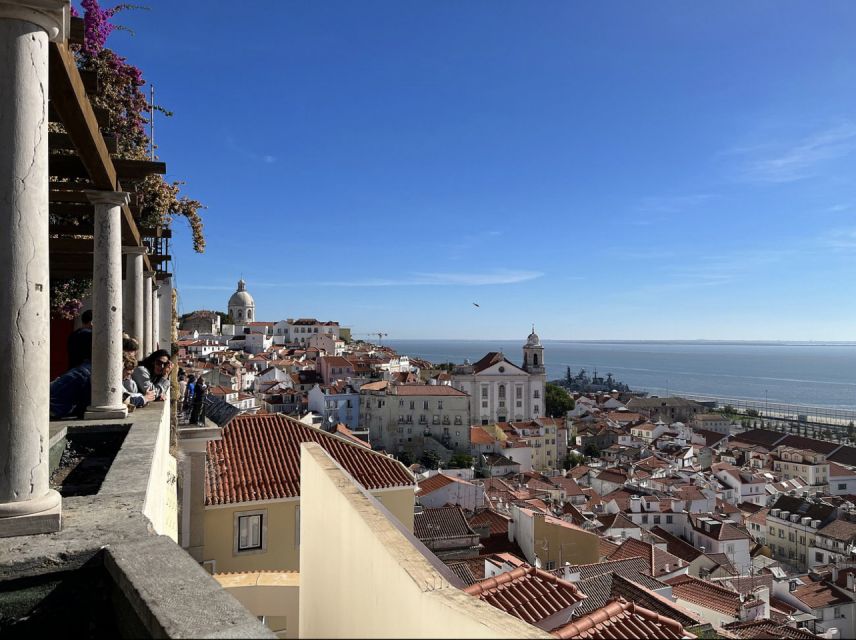
Most Lisbon tours start in a random spot you have to hunt down. Here, you meet near the heart of the city at Timeout Market, and the tour also mentions pickup from Hard Rock Cafe.
That matters because Lisbon old town can drain your time before you even start. When your meeting point is central and recognizable, you show up calm, not rushed—and you can enjoy the ride instead of sprinting across town.
At the end, you’re dropped back at Timeout Market, which is a nice way to keep the rest of your day flexible. You’re already near places to grab a snack, plan your next walk, or just regroup before heading elsewhere.
Alfama and Mouraria: Lisbon’s Oldest Streets First

The tour starts in Alfama and Mouraria, Lisbon’s oldest neighborhoods and often described as among the oldest residential areas in Europe. This is a practical choice: once you’ve got a feel for the street layout here, the rest of your Lisbon walking makes more sense.
Alfama-style streets are narrow, and the buildings seem to climb toward the sky. That’s exactly the sort of place where a guide helps—because without local context, you might just see “old stone” instead of understanding how the neighborhood formed and why it looks the way it does.
Tiles and Narrow Streets: What You Learn While You Roll
One of the tour’s promises is history tied to Lisbon tiles and the look of the narrow streets. You’ll be hearing about why these features matter, not just spotting them.
Tiles are more than decoration in Lisbon. They help explain the city’s aesthetic identity—small visual language that keeps repeating in churches, facades, and street-adjacent corners. When you know to look for that pattern, your photos improve fast.
Likewise, narrow streets aren’t just quaint. They shape daily movement, views, and how neighborhoods knit together. On a tuktuk, you can see the street geometry without exhausting yourself trying to climb and reposition constantly.
Lisbon Cathedral Area: The Old Church Stop That Grounds the Trip
Next up is Lisbon’s Cathedral, described as the oldest church in the city. This stop gives you a solid anchor point—one of those places that helps you mentally map Lisbon’s age and depth.
Cathedrals also change your photo approach. Even when you’re viewing from the vehicle, you start noticing angles: where the structure sits relative to the street and how the surrounding lanes guide sightlines.
The key is that this isn’t just a quick drive-by. The tour is built around viewpoints and neighborhood rhythm, so the cathedral area helps tie the older city sections together.



Saint Anthony Church and the Castle Neighborhood
Then the route moves toward Saint Anthony Church and the Castle neighborhood. This is where Lisbon begins to feel like it’s layered: church fronts, hilltop geometry, and streets that funnel into dramatic viewpoints.
The Castle area is also a turning point for many first-time visitors. After seeing the tight lanes of Alfama/Mouraria, the shift up into castle territory gives you perspective on why Lisbon has so many lookouts.
If you like photography, this is a zone where your pictures will get more interesting. You can start capturing Lisbon’s height changes—something you can’t fully appreciate from a flat map.
Porta ta Sol: A Pivot Point for Views
The itinerary includes Porta ta Sol. This works well as a mid-route pivot because it’s a place where you can feel Lisbon’s streets opening toward viewpoints.
Think of this stop as a visual breath. You’re between older neighborhood texture and higher vantage points, and the route sets you up to enjoy what comes next without tiring out.
If you’re the type who likes to plan photo angles, this is one of those locations where your eyes recalibrate—suddenly the city looks like a set of connected terraces instead of one complicated street network.
Nossa Senhora da Monte: Lisbon’s Best Sunset Viewpoint
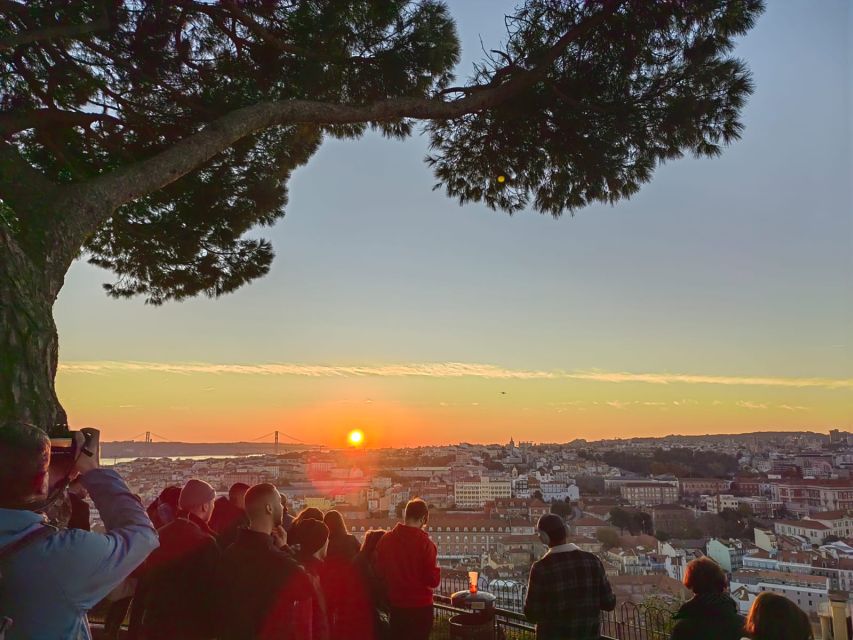
The tour highlights Nosso Senhora da Monte as the top point, and specifically calls it the best sunset point in Lisbon. Even if you’re not there for the actual sunset moment, it’s still one of the best places to understand the city’s “from above” layout.
A useful detail from a past participant: the guide Rana makes sure you reach the lookout point in time. That matters because Lisbon viewpoints can be busy, and timing is everything when you want good light and space for photos.
This stop is a strong reason to book if you’re doing Lisbon for the first time. It’s hard to replicate this viewpoint hopping efficiently on your own, especially when you don’t want to spend the whole day walking up and down.
Saint Vincent Monastery and the Flea Market
After the viewpoint, you’ll move to Saint Vincent Monastery and then toward the Flea Market area. Monastery stops have a different kind of payoff than churches on narrow streets. They often feel more open, more structured, and easier to frame in photos.
The flea market element also adds texture. Lisbon old town isn’t just monuments—it’s everyday city life mixed with centuries of street culture. Even a short stop like this can help you understand how the city breathes at ground level.
This section is about variety in the same compact ride. You keep the old-town theme, but the vibe shifts from sacred stone to lived-in street energy.
National Pantheon and Fado Museum: Culture Stops Without the Time Sink
The tour includes the National Pantheon and the Fado Museum. This is a smart pairing for visitors who want cultural context, not only scenic viewpoints.
The National Pantheon helps you connect Lisbon’s past to a sense of national identity. The Fado Museum supports the other half of the story—how music and tradition fit into Lisbon’s older neighborhoods and storytelling culture.
One practical tip: with stops like museums, don’t expect a long deep visit unless you buy extra time separately. The tour’s strength is that it routes you through the areas, so you learn enough to decide what to explore later on your own.
Downtown of Alfama, the Cruise Ship Terminal, and Pink Street
Toward the end, you’ll circle back through Downtown of Alfama, you’ll pass the cruise ship terminal, and you’ll include Pink Street—noted for the street color being pink.
Including the cruise ship terminal isn’t random. It’s a reminder that Lisbon is a working city, and old neighborhoods sit alongside big visitor flows. You’ll see how the city handles arrivals and how quickly the scene changes from grand views to city-scale movement.
Then comes the fun part: Pink Street. It’s a quick visual delight that adds variety to your photo set and gives you something uniquely Lisbon in a single frame.
Time on the Clock: How 80 Minutes Plays Out in Real Life
The whole ride is about 80 minutes, which is the right length for many first-time visits. It’s long enough to hit several key zones across Lisbon’s hill system, but short enough that you can still do a focused walk afterward.
If your day is packed—arrival day, or you’ve already planned dinner and a separate evening activity—this time window helps. You get a guided orientation and a batch of photos without turning your schedule into a full-day marathon.
And because the tour covers multiple “levels” of the city, you’ll finish feeling like you’ve seen more than just one neighborhood.
Price and Value: Is $38 Worth It?
At $38 per person, this tour sits in the “small splurge” range—especially for a trip where you might be tempted to just walk and take public transit.
Here’s where the value comes from:
- You save energy. Old town sightseeing in Lisbon can be punishing on your legs, and the tuktuk removes much of that friction.
- You save planning time. The route connects old neighborhoods, viewpoints, and cultural sites in one tight loop.
- You get context. Learning about tiles, narrow street history, and why key areas matter makes your photos and subsequent walks more meaningful.
If you enjoy guided history and you’re doing Lisbon for the first time, the price starts to look fair. If you’re already comfortable navigating steep hills and you don’t want a guided route, you might prefer free walking routes and public transit. But for most visitors, this is a practical way to “get it” quickly.
Who This Tour Suits Best (and Who Might Want Something Else)
This is a great fit if you:
- want a short, guided orientation to Lisbon old town
- enjoy scenic viewpoints and photo stops
- like learning why a city looks the way it does—tiles, streets, and neighborhood formation
It’s less ideal if you:
- need wheelchair-accessible transportation (the tour notes it isn’t suitable)
- are traveling with children under 5
If you’re traveling solo, as a couple, or with friends and you want to see a lot without over-planning, this tour is an easy yes.
Should You Book This Tuktuk Tour?
I’d book it if you want a guided Lisbon old-town overview that mixes history, viewpoints, and photo-friendly stops in just 80 minutes. The central pickup at Timeout Market keeps logistics simple, and the stop at Nossa Senhora da Monte is a standout because the guide Rana works to get you there in time.
Skip it (or choose another option) if you need wheelchair-friendly access or if you’d rather spend your time on longer, slower museum visits instead of quick cultural and scenic highlights.
For many first-timers, this is one of those “good use of limited time” choices—the kind that helps your later Lisbon wandering feel intentional.
FAQ
Where does the tour pick up and drop off?
Pickup is at Timeout Market in Lisbon (and it also mentions pickup from Hard Rock Cafe). Drop-off is back at Timeout Market.
How long is the Lisbon Tuktuk Old-town Sightseeing Tour?
The duration is 80 minutes.
How much does it cost?
It costs $38 per person.
What neighborhoods and landmarks does the tour include?
The tour covers areas such as Alfama and Mouraria, Lisbon Cathedral, Saint Anthony Church, the Castle neighborhood, Porta ta Sol, Nosso Senhora da Monte, Saint Vincent Monastery, the Flea Market, the National Pantheon, the Fado Museum, Downtown of Alfama, the cruise ship terminal, and Pink Street.
What’s included in the price?
Included: insurance, a tour guide, pickup from Timeout Market/Hard Rock Cafe, and drop-off in Timeout Market.
What isn’t included?
Tickets and food are not included.
What languages are available for the live guide?
The live tour guide is available in English and Arabic.
Is the tour suitable for children or wheelchair users?
It is not suitable for children under 5 and it is not suitable for wheelchair users.