REVIEW · LISBON
Lisbon: Old Town Private Walking Tour
Book on GetYourGuide →Operated by Greenwalk · Bookable on GetYourGuide
Lisbon’s old streets are layered like a palimpsest. A private walking tour with a local guide helps you make sense of Roman traces, medieval walls, and tile-covered facades in one smooth route. You also get inside-monument access when the tour’s timing allows, not just photos from the pavement.
What I like most is the way the walk is built around Lisbon’s “you-can-feel-it” geography: Rossio, Baixa, Mouraria, Alfama, plus the castle viewpoints. I also appreciate the human touch—this is a tour that can be tailored to what you care about, and it’s paced with real-life comfort in mind.
One consideration: this is a hilly, long-walk experience. Plan for roughly up to 8 km and bring comfortable shoes and clothing that can handle weather changes.
In This Review
- Key points before you go
- A private guided walk through Lisbon’s layers
- Starting at D. Maria II Theater: where the old city begins
- Rossio and Baixa: squares, tiling, and practical city geometry
- Mouraria and Alfama: the neighborhoods where Lisbon feels personal
- Coffee, pastry, and ginginha: a smart break, not a pit stop
- St. Jorge Castle viewpoints: the climb that changes your perspective
- Cathedral time: interpreting Lisbon’s religious stonework
- Traditional craft shop browsing: cultural curiosity without pressure
- How much walking is this, really?
- Price and value: what $47 buys in 4 hours
- Who should book this Lisbon Old Town tour?
- Should you book it?
- FAQ
- FAQ
- How long is the Lisbon Old Town private walking tour?
- How much does it cost per person?
- Where do I meet the guide?
- Is the tour private?
- What languages does the live guide speak?
- Is the tour focused on walking only?
- What’s included in the price?
- What’s not included?
- What should I bring or wear?
- Is there an option to skip ticket lines?
Key points before you go
- Private guide time means you can ask questions and set the pace.
- Geo-style interpretation turns street corners and ruins into a story you can follow.
- Monument moments include going inside when possible, plus line-skipping.
- Big highlights in 4 hours: Rossio to Baixa, Mouraria to Alfama, and St. Jorge Castle viewpoints.
- A scheduled refreshment break with coffee/pastry and ginginha keeps the energy steady.
- Traditional craft shops are included as a browsing stop, not a pushy sales mission.
A private guided walk through Lisbon’s layers
Lisbon looks like a postcard until you start walking and notice how the city keeps changing its face every few blocks. That’s why a private walking tour works so well here. You don’t just see landmarks—you learn why they’re placed where they are, how neighborhoods relate, and what different eras left behind.
The big promise is a native guide who threads together the visible evidence: Roman ruins, medieval stonework, religious structures with odd histories, and the colorful azulejo tile facades you’ll keep spotting. It’s the kind of explanation that makes you stop at a corner and think, wait, that detail matters.
Two other things make this format appealing. First, the guide isn’t only reciting facts; the tour emphasizes interpretation—how to read the city. Second, you’re not stuck in a rigid group rhythm. If you’re tired or you want to focus on a specific part of Lisbon, you can usually steer the attention.
You can also read our reviews of more walking tours in Lisbon



Starting at D. Maria II Theater: where the old city begins
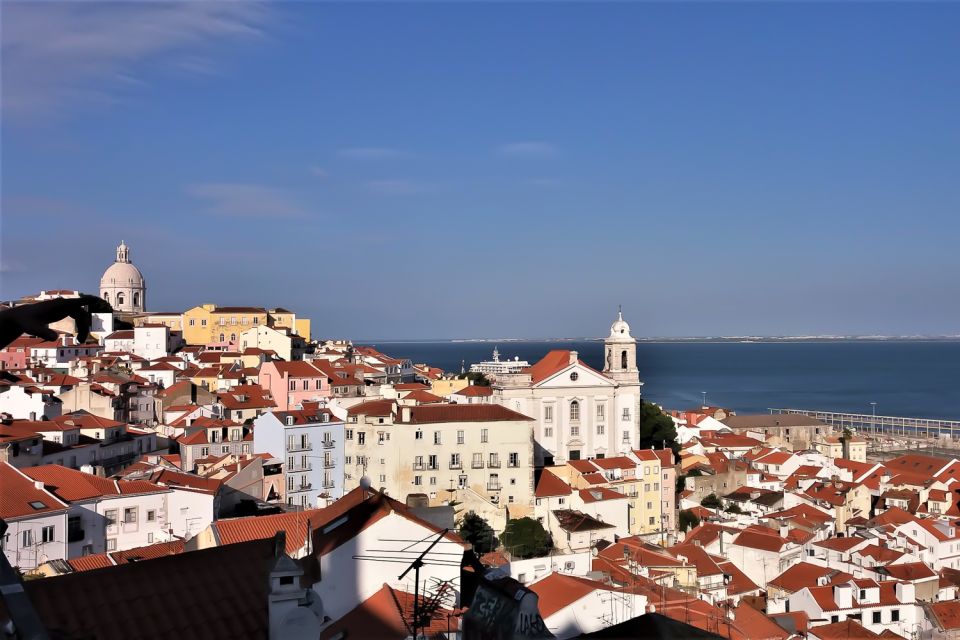
Your tour meets at the front steps of D. Maria II theater (Teatro Nacional D. Maria II). This is a smart starting point because it puts you close to the heart of the old center, where you can transition quickly from major squares into narrow streets.
From there, you’ll get your bearings without feeling overwhelmed. Expect your guide to help you understand the city’s “map logic”: where the open squares connect to the dense quarters, and how routes make sense on foot. That matters in Lisbon, because the city rewards walking—but it can also trick you if you don’t know what you’re looking for.
Also, keep an eye on your outfit for the start. This kind of tour gets active fast, and the weather can shift in Lisbon. Wear clothes you can move in, not just clothes that look good on a bench.
Rossio and Baixa: squares, tiling, and practical city geometry
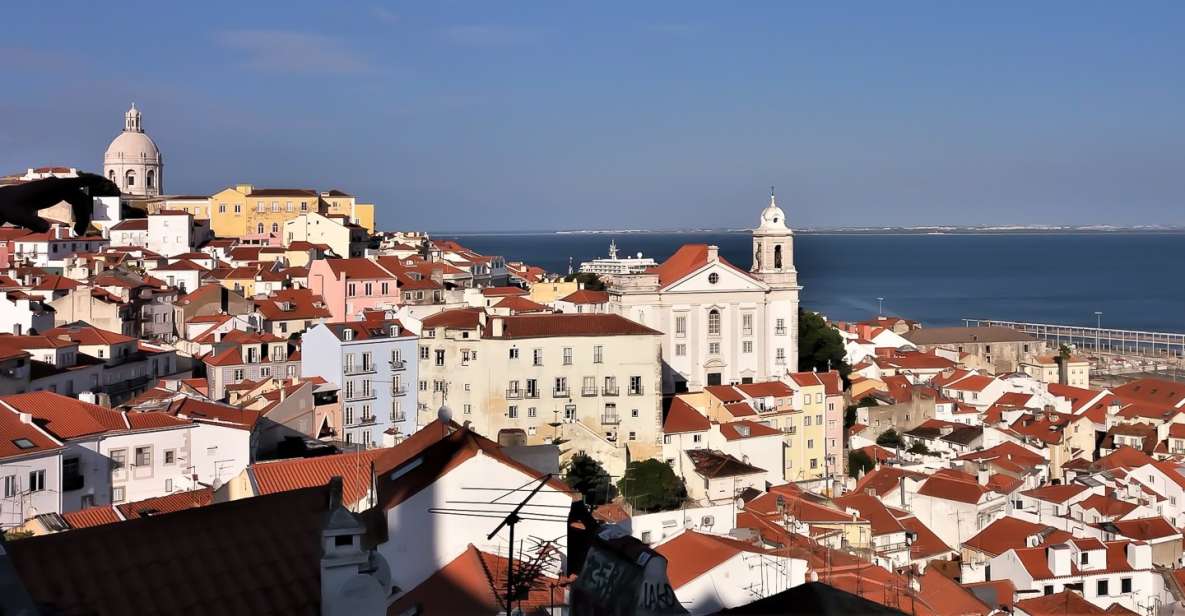
You’ll likely spend time around Rossio and Baixa, and this is where the tour’s tone becomes clear. Rossio gives you the “central Lisbon” feeling—space, movement, and energy. Then Baixa shows you the structured side of the city, where streets feel planned compared to the winding neighborhoods that come later.
What you should watch for: the relationship between architecture and everyday life. In Baixa, it’s easy to notice tiles and facades, but the guide’s job is to connect those visuals to the way Lisbon rebuilt and adapted over time. You’ll get explanations that help you see beyond decoration—how certain styles and layouts represent different chapters in the city’s history.
If you like walking tours that focus on story and navigation, this is a good start. You’ll leave the early segment with an easier mental map, so later neighborhoods like Mouraria and Alfama feel like logical steps rather than detours.
Mouraria and Alfama: the neighborhoods where Lisbon feels personal
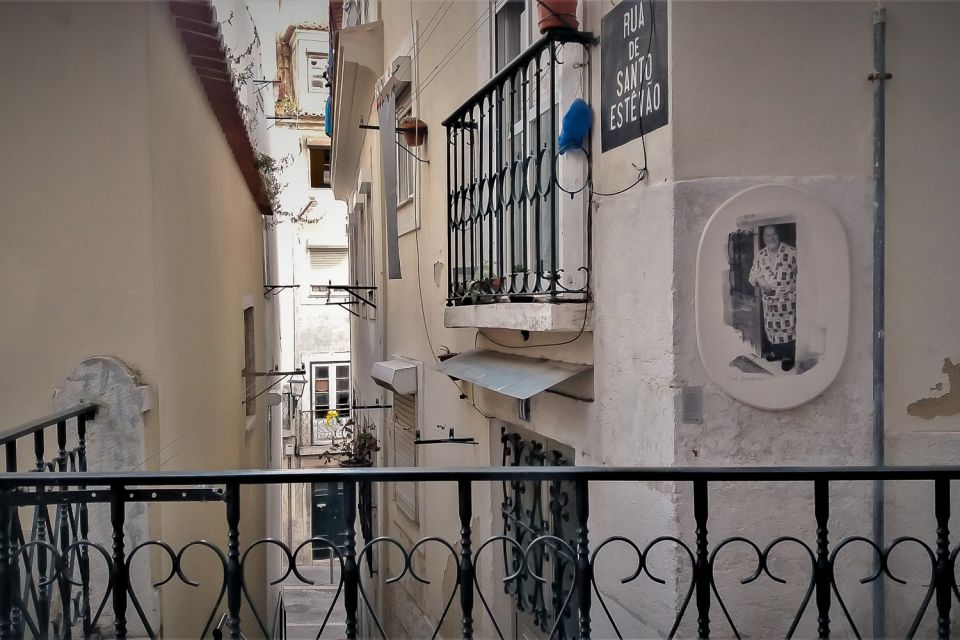
Next comes Mouraria and Alfama, and this is where Lisbon often wins people over. These quarters have that “small street, big atmosphere” feel—tight passages, sudden views, and buildings that show their age in layers.
Here’s what makes this part valuable: your guide doesn’t treat the area like a single attraction. Instead, you’ll learn to recognize what’s in front of you—stonework, street turns, and religious sites—plus how these elements fit into the broader narrative of the city.
A standout feature mentioned is the focus on “puzzling districts” and different historical traces. That’s exactly what Mouraria and Alfama deliver. It’s easy to get lost on your own (and easy to waste time), so the guided approach helps you cover meaningful ground without feeling like you’re running.
And yes, you should expect hills and steps. This is the part where comfortable shoes stop being a suggestion and become a survival plan.
Coffee, pastry, and ginginha: a smart break, not a pit stop
One of the most practical highlights: there’s a planned break for coffee and a pastry, plus time to enjoy ginginha. This isn’t just a “taste test” moment. It’s built into the flow so you can recharge before the steeper segments and viewpoints.
Why this matters: Lisbon walking can feel deceptively tiring. You may not notice fatigue until you’re ready to climb toward the castle. A scheduled refreshment break helps you keep the pace enjoyable for the whole tour.
If you’re trying to travel light, this segment is also helpful. You’ll already be aware of where you are and what’s next, so the break doesn’t feel like the tour loses momentum. It’s more like a reset button.
You can also read our reviews of more private tours in Lisbon






St. Jorge Castle viewpoints: the climb that changes your perspective
Reaching St. Jorge Castle and its surroundings is one of the tour’s headline payoffs. Even if you start the day thinking you’ll skip the castle climb, this tour structure is designed to help you get there in a manageable way.
Expect lookout time. The goal isn’t just to stand near the walls and point. With a local guide, the viewpoints become part of the story. You can connect what you’re seeing—river direction, neighborhood shapes, and street patterns—to what you heard earlier about the city’s development.
This is also where the “private and tailored” element tends to shine. If jet lag, heat, or fatigue is real for you, the pacing can be adjusted so you still reach the core viewpoints.
One consideration: castle areas involve hills and uneven terrain. Plan to move slowly, take in the views when you can, and don’t treat the climb like a race. You’ll enjoy it more, and you’ll take better photos.
Cathedral time: interpreting Lisbon’s religious stonework
The tour also includes time around the Cathedral (Lisbon’s main cathedral area) and often ties this to broader layers of belief and architecture across the centuries. Religious sites can be visually dramatic, but they’re also easy to treat as “another building” unless someone explains what you’re seeing.
That’s the value here. You’ll connect religious architecture to what came before and after—why certain chapels exist, how names and dedications show up, and how churches reflect shifts in the city’s identity.
Another good reason to include the Cathedral segment: it provides a different kind of Lisbon texture. After walking through tight quarters, tiles, and stone passages, you get a more open sense of place. It helps break up the physical intensity of the day with a setting that’s less about twisting alleys and more about readable space and landmark presence.
Traditional craft shop browsing: cultural curiosity without pressure
There’s time to look in traditional craft shops. This is a smaller part of the experience, but it matters because it adds a “slow” moment amid the major sightseeing.
A key point from the tour’s overall reputation is that it doesn’t feel like a sales mission. You’re given time to browse, not pushed into buying. If you love picking up one thoughtful souvenir—something made locally rather than mass-produced—you’ll appreciate this pause.
Keep your expectations realistic: craft shops can vary, and the tour doesn’t promise a specific workshop demonstration (at least not from the available details). Think of it as an opportunity to see what’s made and how people present their craft.
How much walking is this, really?
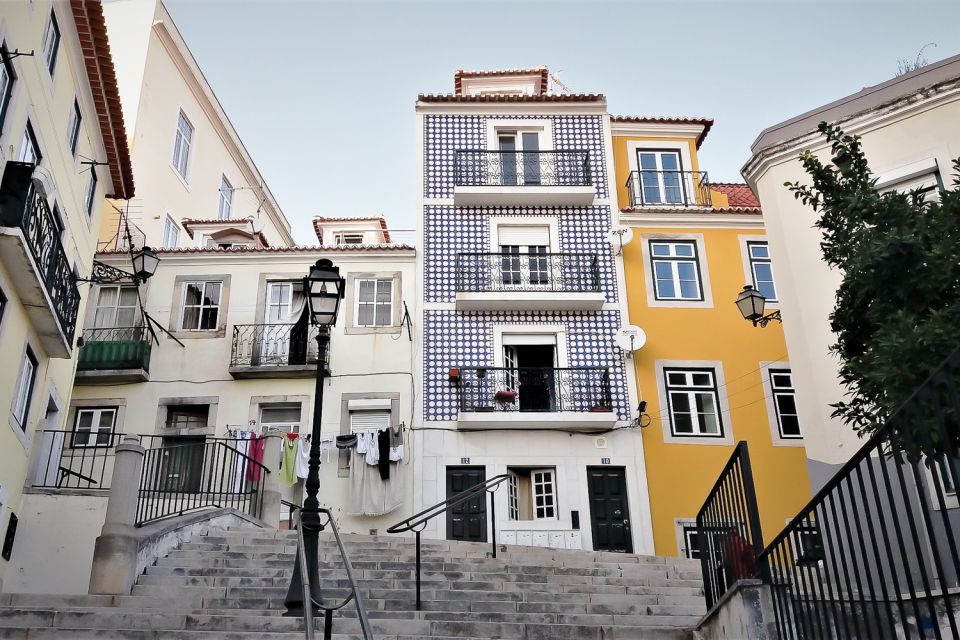
This is not a sit-and-stroll tour. It’s a four-hour walking route in hilly Old Lisbon, and you should assume it can extend up to 8 kilometers depending on the exact route and how the day unfolds.
So here’s your practical checklist:
- Comfortable shoes are non-negotiable.
- Wear comfortable clothes you can move in.
- Bring layers if weather might change.
- Don’t plan to carry large bags—luggage isn’t allowed.
If you’re sensitive to steep climbs, you may want to take it slow and prioritize rest stops and viewpoints when you arrive. The tour’s design includes at least one planned refreshment break, which helps, but your body still needs you to be kind.
Price and value: what $47 buys in 4 hours
At $47 per person for about 4 hours, this tour positions itself as solid value for what you get: a professional guide, a private group, and guidance that goes beyond surface-level landmark hopping.
The value isn’t just that it’s “cheaper than a bigger tour.” It’s that the format includes:
- close-up interpretation of neighborhoods you might struggle to understand alone,
- moments inside monuments when permitted,
- “skip the ticket line,” which can save time at key spots,
- and a structure that covers major Old Lisbon highlights without forcing shopping.
Meals and drinks aren’t included, so budget for your coffee/pastry/ginginha stop if you’re planning to order more than the basics. Still, the fact that a refreshment break is part of the tour flow usually feels worth it, especially if you’re walking all morning.
Who should book this Lisbon Old Town tour?
This is a great fit if you:
- want a private experience rather than a group schedule,
- enjoy learning how places connect—neighborhoods, viewpoints, and historic traces,
- want the big highlights (Rossio, Baixa, Mouraria, Alfama, castle, and Cathedral) without spending the day figuring out routes,
- and like tours that are not pushy about participation.
It’s also a good pick if you’re the kind of traveler who wants to understand what you’re seeing while still keeping the pace relaxed enough to enjoy street life.
Should you book it?
If you want Lisbon’s old quarters to feel like a coherent story, book this. The strongest reasons are the private guide attention, the effort to include inside-monument moments, and the inclusion of viewpoints plus a planned break for coffee and ginginha.
Don’t book it if you hate hills or you’re expecting a low-walking itinerary with easy footing. This is the kind of tour where comfortable shoes are part of the ticket, not optional.
FAQ
FAQ
How long is the Lisbon Old Town private walking tour?
It lasts about 4 hours.
How much does it cost per person?
The price is $47 per person.
Where do I meet the guide?
You meet at the front steps of D. Maria II theater.
Is the tour private?
Yes. It’s a private group tour.
What languages does the live guide speak?
The guide offers live narration in Spanish, English, and Portuguese.
Is the tour focused on walking only?
Yes. It’s a walking tour around the old city, and you should plan for significant walking in hilly areas.
What’s included in the price?
Included items are a professional guide and the walking tour.
What’s not included?
Entrance fees and meals and drinks are not included.
What should I bring or wear?
Bring comfortable shoes and comfortable clothes. Large bags or luggage are not allowed.
Is there an option to skip ticket lines?
Yes, the tour includes skipping the ticket line.