REVIEW · LISBON
Lisbon: Alfama and São Jorge Castle Quarters Walking Tour
Book on GetYourGuide →Operated by LISBOA AUTÊNTICA LDA · Bookable on GetYourGuide
Alfama feels like a living puzzle. This half-day walk ties together Alfama’s oldest streets, the birth of fado, and big panoramic moments around São Jorge. I especially like how the route mixes sweeping viewpoints with close-up details you’d miss on your own. One note to plan around: you’ll be near São Jorge Castle, but the interior entrance isn’t part of the tour.
What you’re really buying is a guide who turns neighborhoods into a story you can walk through. A lot of people love the engaging teaching style, and you may even get a guide who worked as a history teacher, like Ricardo, or a friendly guide with a talent for making facts feel personal, like Agatha. The route is also designed to help you get your bearings fast, which is huge if it’s your first day in Lisbon.
In This Review
- Key highlights at a glance
- Where the walk begins: Casa dos Bicos and the House of Spikes
- Roman Olisipo to Moorish Al-Hamma: following old water and old names
- Alfama’s maze: stairways, patios, and the feeling of getting lost (on purpose)
- Largo do Chafariz de Dentro: fado’s origins in everyday life
- Lisbon Cathedral (guided entry): a 12th-century foundation with mixed styles
- Portas do Sol and the view you’ll remember
- São Jorge Castle area: walls and meaning, not the castle entrance
- Price and value: what $23 buys you in the real world
- What you’ll learn from guides like Ricardo, Agatha, and Helena
- Getting the most out of 150 minutes: comfort and timing
- Should you book the Lisbon Alfama and São Jorge Quarters tour?
- FAQ
- How long is the Lisbon Alfama and São Jorge Castle Quarters Walking Tour?
- Where do I meet the guide, and what’s the nearest metro stop?
- Is São Jorge Castle entrance included?
- What’s included in the tour besides the walking?
- What languages are available for the live guide?
- Is the tour suitable for people with mobility impairments?
Key highlights at a glance

- House of Spikes (Casa dos Bicos): start at a 1520s landmark that survived the 1755 earthquake
- Olisipo to Al-Hamma: see traces of Roman life before the Muslim name for Alfama took hold
- Cetária evidence: spot what remains of Roman salting tanks tied to Lisbon’s old economy
- Fado origins around Largo do Chafariz de Dentro: hear how a daily custom became a musical identity
- Lisbon Cathedral guided entry: a 12th-century core with mixed architectural styles
- Portas do Sol panorama + São Jorge walls: wide views, with the option to explore the castle area later
Where the walk begins: Casa dos Bicos and the House of Spikes
The tour meets at Campo das Cebolas, right at the Casa dos Bicos—the building covered in spikes, the House of Spikes. This isn’t just a quirky photo stop. The architecture matters because it’s also a real survivor: it was built around 1523 and is known for surviving the 1755 Lisbon Earthquake. That sets the tone for the whole experience: you’re in a neighborhood where details are not decoration. They’re evidence.
The meetup spot is also easy to find if you use the metro. The nearest stop is Terreiro do Paço. Look for the guide holding a black bag with the Lisboa Autêntica logo.
One practical perk: starting at a recognizable landmark like this means you lose less time fumbling around. In a 150-minute walking tour, that matters. You want energy for the streets, not for logistics.
You can also read our reviews of more walking tours in Lisbon



Roman Olisipo to Moorish Al-Hamma: following old water and old names

Once you’re moving, the tour leans hard into how Lisbon was layered long before it was a tourist postcard. You’ll hear Lisbon’s old Roman identity—Olisipo—and how daily life connects to physical clues you can still see.
A key stop here is the Cetária, where you can find evidence of old Roman salting tanks. That’s a small detail with big meaning. Salting wasn’t random. It was how coastal cities built trade, stored food, and turned the sea into something that lasted through lean seasons. So when you see these traces, you’re not just looking at ruins—you’re watching the logic of an economy.
The tour also connects those Roman centuries to Alfama’s water. The Romans discovered the thermal waters of the area, and later the Muslims gave them the name Al-Hamma. It’s a simple naming shift, but it shows how the same place can be understood differently across cultures. You end up with a stronger sense of why Alfama grew the way it did: people went where the city’s natural advantages made everyday life better.
Alfama’s maze: stairways, patios, and the feeling of getting lost (on purpose)

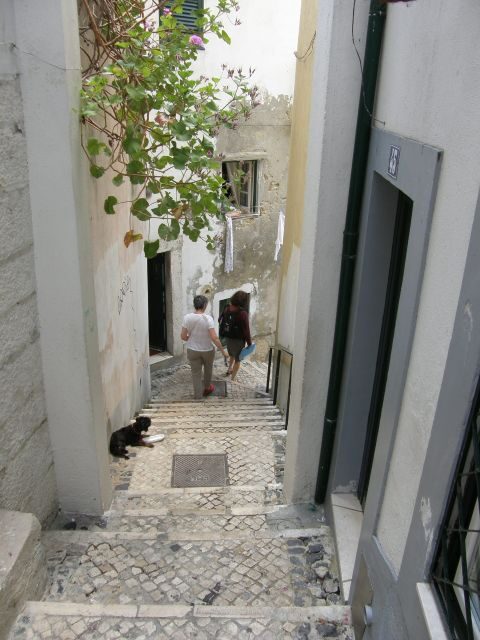
Alfama isn’t just old. It’s built like a maze. That’s why this tour works: it guides you through the kind of tight alley network where you’d likely wander in circles if you came alone.
You’ll walk around the historic city walls and the Moorish castle area of São Jorge, using the steep, twisting street plan as part of the lesson. The best moments tend to be when you stop and look back—when the guide explains how the street pattern shaped movement, defense, and daily routines.
You’ll also get a look at interior patios and hidden squares, plus secret stairways that are easy to miss. These places are exactly why I like guided walking tours in old quarters. The streets aren’t laid out for convenience; they’re laid out for survival, privacy, and community. With a guide, those architectural quirks turn into a map you can remember later.
Another thread you’ll hear about is the old Jewish Quarter, with traces you can spot as you go. The tour treats these not as vague “history points,” but as part of the neighborhood’s physical layout—what was where, and what that meant for how people lived.
Largo do Chafariz de Dentro: fado’s origins in everyday life
One of the most talked-about parts of Lisbon storytelling is fado, and this tour gives you context instead of leaving you with just the vibe. You’ll learn about the birth of fado music and the customs tied to it as you pass by Largo do Chafariz de Dentro.
What I like about this approach is that it links music to daily routines. Fado isn’t presented as an abstract art form. It’s framed as something that grew from people being people—neighbors gathering, passing news, and using shared public spaces as meeting points.
That makes your later Lisbon experience easier. If you end up at a fado house the same week, you’ll recognize the social rhythm behind the songs. You won’t just be watching a performance. You’ll understand why these streets have always mattered.
Lisbon Cathedral (guided entry): a 12th-century foundation with mixed styles
Next comes Lisbon Cathedral, built in the 12th century and later modified in a mix of architectural styles. This is the sort of stop where a guide makes your eyes sharper. Otherwise, it’s easy to stand in the doorway and think, I’ve seen cathedrals before.
With a guided entry included, you get a clearer sense of what changed over time and why. The building becomes a physical timeline: additions, renovations, and style shifts that mirror the city’s shifting eras.
Even with only a short cathedral visit in a 150-minute walk, the payoff can be strong. It rounds out the morning’s focus on neighborhoods with a landmark that shows Lisbon’s broader story, not only Alfama’s story.




Portas do Sol and the view you’ll remember
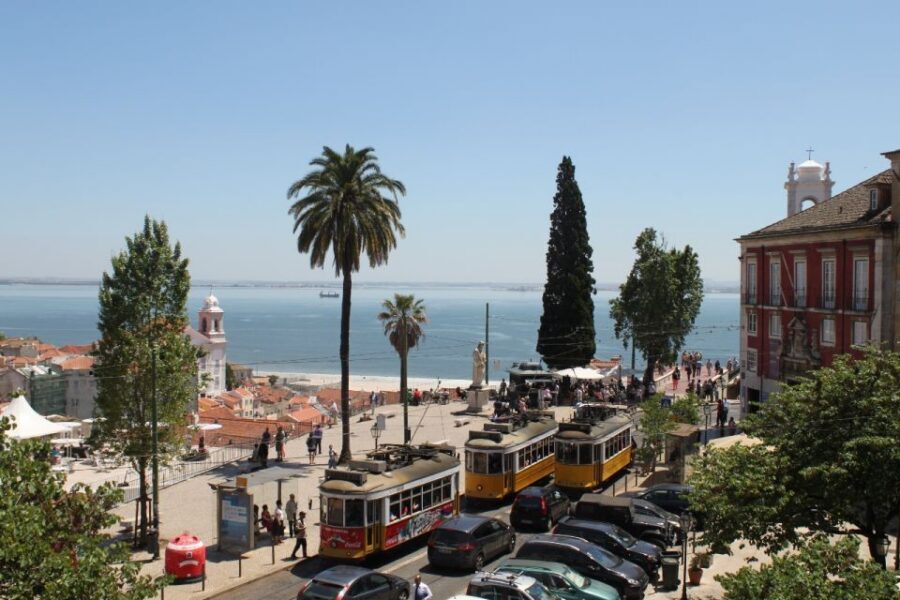
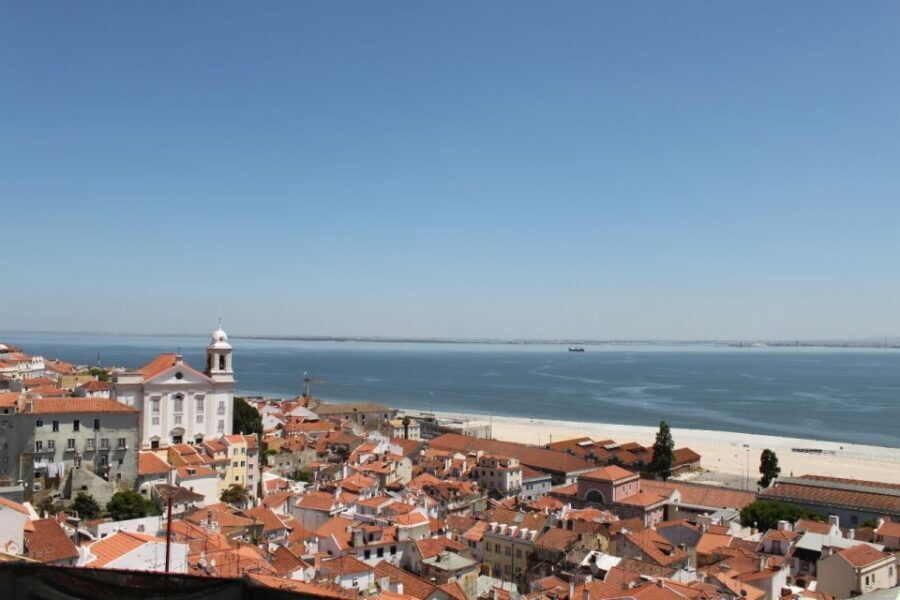
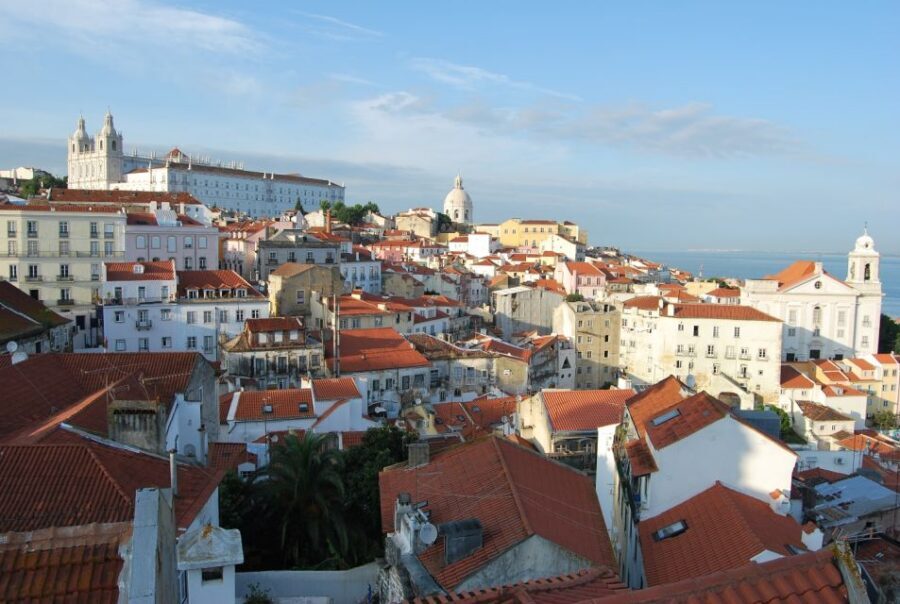
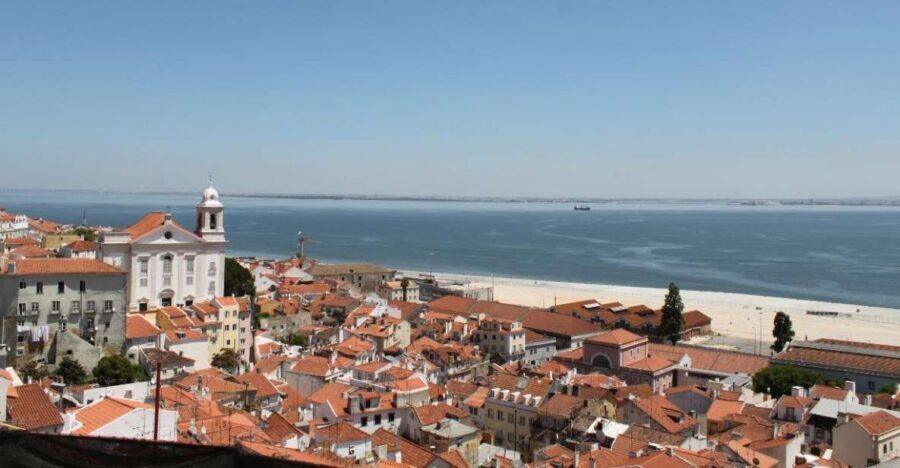
Then you’ll hit the Portas do Sol belvedere, one of the classic viewpoint spots for a reason. From here, you can look out over Lisbon and connect what you just learned to what you can see from above.
This is also where the tour becomes very practical. On a first visit to Lisbon, viewpoints aren’t just for photos. They help you understand geography—where Alfama sits, how the slopes work, and how the city’s layout fits together. That makes your self-guided exploring later feel smarter instead of random.
And because this tour keeps moving, you get the best of both worlds: street-level details plus a high-level view that stitches it into one mental picture.
São Jorge Castle area: walls and meaning, not the castle entrance

The tour follows the path connected to São Jorge and the castle walls, so you get that sense of Lisbon’s defensive past. You’ll be close enough to connect the street grid to fortification and power.
But here’s the key expectation to set: entrance to São Jorge Castle is not included. One review pointed out that the name can sound like you’ll go inside, but the experience is more about the surrounding walls and the viewpoints you reach through the neighborhood.
So think of this as a “castle-adjacent” tour. You’ll learn why the castle mattered, and you’ll get the views. If you want interior rooms, towers, and the full castle ticket experience, you’ll likely want to plan that separately.
Price and value: what $23 buys you in the real world
At $23 per person for 150 minutes, this is the kind of price that feels reasonable in Lisbon, where many walking experiences cost close to this range once you factor in guide time.
What makes the value feel strong is what’s included:
- A live guide who teaches as you walk
- Guided entry to Lisbon Cathedral
- PPE (mask and disinfectant gel), so you’re not scrambling for basics
This matters because cathedral tickets plus guide time add up fast on your own. And the guided route is also the money saver: you’ll cover multiple “can’t miss” concepts—Roman Olisipo traces, Muslim naming, Jewish Quarter clues, fado context, and then the cathedral—without spending your energy building a logical route.
A final value point from the way the tour tends to run: people often describe it as feeling small-group or even private when schedules align. That’s not something you can guarantee, but it’s a good sign about how the experience is structured.
What you’ll learn from guides like Ricardo, Agatha, and Helena
This is one of those tours where the guide is the product, and you can see that in the feedback. I like that the storytelling isn’t just dates and names. It’s tied to physical spaces you can stand in while listening.
A few guide styles show up often in real experiences:
- Ricardo’s approach as a history teacher style of explaining Lisbon
- Agatha’s mix of knowledge and friendly pacing
- Helena’s ability to stay responsive if you want a small route tweak
- Elena’s flexible, personable way of keeping the walk comfortable
- Lucy’s ability to make alleyway details feel like part of a single unfolding story
- Fatima’s structured, detail-heavy explanations that don’t feel scattered
Even if you don’t get those exact names, the pattern is consistent: you’re not being rushed through a checklist. You’re getting a route designed to make you notice.
Getting the most out of 150 minutes: comfort and timing
This is a walking tour in Alfama, and Alfama is famous for uneven streets and lots of stairs. The tour isn’t listed as suitable for people with mobility impairments, so keep that in mind for your own comfort and safety.
What to bring is simple: comfortable clothes. I’d treat that as a hint to dress for a real walk, not a stroll in nice outfits.
Also, if this is your first day in Lisbon, this tour is a smart “orientation layer.” You learn what the neighborhood offers, and then you’ll know what to return to on your own. You’ll also understand how Alfama’s maze connects to key stops like Portas do Sol and the cathedral area.
Should you book the Lisbon Alfama and São Jorge Quarters tour?
I think you should book it if you want Lisbon explained in place. This is for people who like walking through real neighborhoods and learning how different eras shaped the streets you’re standing on. If you’re excited by fado context, Roman Olisipo traces, and the way Alfama’s layout tells a story, this half-day route is a strong use of time.
Skip it or plan carefully if your top priority is going inside São Jorge Castle itself. The tour is about the surrounding walls and viewpoints, not the interior ticket experience. Also, if mobility is a concern, this one likely won’t feel comfortable.
If you match those conditions, this is a good value at $23 because you’re getting guided entry to Lisbon Cathedral and a route that makes Alfama feel navigable instead of just chaotic.
FAQ
How long is the Lisbon Alfama and São Jorge Castle Quarters Walking Tour?
The tour lasts 150 minutes, about a half-day.
Where do I meet the guide, and what’s the nearest metro stop?
Meet at Campo das Cebolas, at Casa dos Bicos (House of Spikes). The nearest metro is Terreiro do Paço. The guide will be holding a black bag with the Lisboa Autêntica logo.
Is São Jorge Castle entrance included?
No. Entrance to São Jorge Castle is not included. The tour focuses on the castle area and surroundings.
What’s included in the tour besides the walking?
You get a live guide, entrance and guided tour of Lisbon Cathedral, and PPE (mask and disinfectant gel).
What languages are available for the live guide?
The live guide is available in Spanish, Portuguese, German, English, and French.
Is the tour suitable for people with mobility impairments?
No, the tour is listed as not suitable for people with mobility impairments.